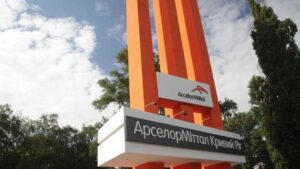
In 2025, the Kryvyi Rih Iron and Steel Works PJSC ArcelorMittal Kryvyi Rih (AMKR, Dnipropetrovsk region) was quite successful in selling metal products on the EU market, but now, due to CBAM and electricity shortages, it is reducing production and operating at a loss.
As AMKR Director of Government Relations Oleg Krykavsky noted during the event “How does the shelling of the power grid affect business operations?” organized by the Center for Economic Strategy (CES), the fact that the company is part of a large multinational corporation helps it to operate and stay afloat.
“We were helped by the fact that we received more than $1 billion in aid from a multinational corporation, which was used to keep the company running. Currently, the company is operating at an average of 50% of its capacity. We were quite successful in the EU market last year, partly thanks to the government’s actions, as a good agreement was reached with the European Union to extend duty-free trade for another three years. In 2025, we exported 1.2 million tons of metal products to the European market, down from 3 million tons. But because of the CETA, our costs are rising, which means we will have to close one workshop – the blooming shop,” said the top manager.
He added that AMKR is at a disadvantage compared to European producers under CETA, as it will have to pay $63-90/ton, depending on the type of product. Also, electricity tariffs are high, and electricity import contracts are very short.
“We had several cases where we did not meet the electricity consumption volumes, and our trader sold it on the market for UAH 0. Not only did we not receive what we bought, but we were also forced to reduce production, which resulted in direct losses. And, of course, we are in dialogue with the government on this issue,” the company explained.
Responding to a question about equipment arrivals, Krykavsky noted that the equipment works during alarms. But there are losses due to emergency situations, and they are painful. Under normal conditions, the enterprise consumes 400 MW*h, but due to restrictions, we now consume 230-250 MW*h, and there are limits of 70 MW*h.
“That is, the rest is peak hours, and you have to think about what to do with that. Usually, you think about importing, because you have to work somehow. Plus, you can’t fire people for five to seven hours without paying them. People get paid at work, so you have to work,” said the AMKR representative.
He added that there was a case at the enterprise when a coke battery was damaged due to a power outage caused by a network failure.
“We are investigating who is to blame for this. But one coke battery burned down. A coke battery is, in essence, a chemical process, which means it cannot be stopped. We have installed industrial generators for such cases, but even they need 16 hours or more to start up,” the manager explained.
With half of its capacity in operation, the company is trying to cover some capacities with others, while repairing something that is idle so that it can be started up at some point.
“We are thinking about our own generation, about cogeneration. There are limited resources and limited potential. It is very expensive. But we are working on it in parallel; we have our own CHP plants and technologies today that allow us to do this. But we are a large enterprise and require large capacities,” summarized the AMKR director for relations with state authorities.
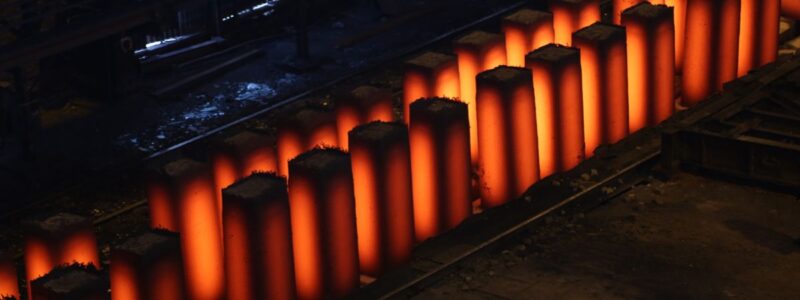
ArcelorMittal Kryvyi Rih is the largest producer of rolled steel in Ukraine. It specializes in the production of long products, in particular, rebar and wire rod. The company has a full production cycle, with production capacities designed for an annual output of over 6 million tons of steel, more than 5 million tons of rolled products, and over 5.5 million tons of pig iron.
ArcelorMittal owns Ukraine’s largest mining and metallurgical complex, ArcelorMittal Kryvyi Rih, and a number of small companies, including ArcelorMittal Beryslav.