

According to Fixygen, PJSC Kharkiv Tractor Plant will hold a remote general meeting of shareholders on March 27, 2026, through the Ukrainian depository system.
The agenda includes the approval of annual results and reports, review of management reports, decisions on the distribution of profits or coverage of losses, as well as organizational issues.
Kharkiv Tractor Plant PJSC is one of the largest machine-building enterprises in Ukraine, founded in 1930 in Kharkiv. The plant specializes in the production of tractors and equipment for the agricultural sector.
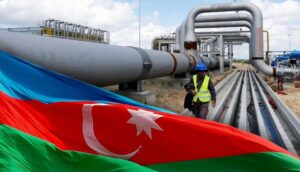
According to Serbian Economist, Azerbaijan has expressed its readiness to assist Montenegro in connecting to the Trans Adriatic Pipeline (TAP), said Dino Tutundzic, State Secretary of the Ministry of Energy and Mining of Montenegro, in an interview with Report.az. According to him, Podgorica considers the Ionian-Adriatic Pipeline (IAP) to be a strategic regional project that should connect Montenegro to TAP and, through it, to the Southern Gas Corridor and Caspian supplies.
Tutundzic said that Montenegro plans to intensify negotiations with neighboring countries – Croatia and Albania – and focus on preparing the infrastructure base, after which it will be possible to talk about gas delivery to end consumers. He also noted Azerbaijan’s interest in participating in Montenegro’s energy projects, including in the renewable energy segment.
The issue of connecting Montenegro to TAP has its own specific features: the country still makes virtually no use of natural gas, as it has no gas market or gas distribution network. This is evident from the report of the Energy Community Secretariat, which explicitly states that “there is no gas market in Montenegro” and “there is no gas network.”
TAP is part of the Southern Gas Corridor, connecting supplies from the Caspian region to European markets via Greece, Albania, and the Adriatic Sea, with access to Italy.
https://t.me/relocationrs/2379
China has announced plans to invest 300 billion yuan ($44 billion) in state-owned banks this year to protect against systemic risks and increase funding for technology companies.
These measures were outlined in the annual government work report presented at the opening of the National People’s Congress (NPC) session.
It states that Beijing will continue to replenish the capital of financial institutions and prudently dispose of non-performing assets in this sector. The authorities also plan to regulate competition between financial companies and promote consolidation among small and medium-sized local financial institutions.
The government announced the creation of an additional fund of 100 billion yuan to stimulate domestic demand through measures such as subsidizing interest rates on loans, financing guarantees, and risk compensation.
Beijing has also promised to continue to combat “risks arising in the real estate sector, local government debt, and small and medium-sized local financial institutions.”
According to Western media reports, the country’s authorities are likely to replenish the capital of the Industrial & Commercial Bank of China and the Agricultural Bank of China this year. They were not included in a similar program last year, when the capital of four other major banks was increased by $69 billion.

Furniture manufacturer AMF (Dnipro) is completing the construction of a new plant in the InPark Boryslav industrial park (Boryslav, Lviv region), with investments in its creation exceeding $10 million, according to Dmytro Kysilevsky, deputy chairman of the Verkhovna Rada Committee on Economic Development.
“The construction of a new furniture factory in the industrial park has reached its final stage. The customer for the construction of the first factory is AMF, which already has similar production facilities in Dnipro. The volume of investment in this project alone will reach more than $10 million,” he wrote on his Facebook page on Thursday.
He noted that the installation of sandwich panels and roof structures for the first phase of the premises, which covers 10,000 square meters, is currently being completed, but the total area of the entire plant will be 24,000 square meters. Engineering networks have been connected, and floor pouring and window installation are continuing. The ceiling height of the production facility is 6 meters, and the warehouse section is 12 meters.
“Construction is scheduled to be completed in the summer of 2026. Once the plant is fully operational, it will employ about 800 workers,” the statement said.
According to Kiselevsky, construction of another 12,000 square meter production and warehouse facility designed for small and medium-sized businesses is also planned to begin this year in the same industrial park. Negotiations with potential residents are already underway.
“The management company has entered the market with an offer of $420/1 sq. m. for modern production premises in the industrial park,” the MP added.
“InPark Borislav,” registered in March 2024, covers an area of 20 hectares. The site has medium-pressure gas, and water supply and drainage are provided by the centralized system of Boryslav. A 5 MW substation is located nearby.
Kysilevsky noted that workers for the industrial park’s enterprises are planned to be brought in from the settlements of the Boryslav-Drohobych agglomeration, where about 110,000 people live.
In June 2024, the Boryslav City Council established a preferential land tax rate for IP “InPark Boryslav” for 10 years – 0.25% for the first three years, with a gradual increase to 2.1% thereafter.
Art Metal Furniture is a large office furniture manufacturer founded in 1994.
According to its website, it comprises four manufacturing enterprises that produce furniture and accessories. It has three of its own warehouse complexes in Kyiv, Dnipro, and Lviv. Its distribution network covers 36 countries around the world.
The company’s capacity allows it to produce more than one million chairs per year.
According to You Control, AMF Ukraine LLC is co-owned by eight individuals, with the largest share (32.56%) held by German citizen Leonid Belyaev, who is the ultimate beneficiary of the company.
In January-September 2025, the company increased its net profit by 21% compared to the same period in 2024, to UAH 33 million, with net income growing by 16.6% to UAH 500 million.

A large inter-museum project, “Carpathians. These Mountains Know No Submission,“ which will use paintings, graphics, and decorative and applied arts to tell the story of the cultural image of the mountainous region and its significance for Ukrainian identity. This was reported by the museum’s press service.
”The Carpathians are an inexhaustible source of creative inspiration and national spirit. The region of Cheremosh and Prut was a Ukrainian citadel even in times when artists were deprived of the freedom to freely create national art,“ said Oksana Pidsukha, acting director general of the National Museum ”Kyiv Art Gallery.”
According to the organizers, the exhibition reveals the multifaceted image of the Carpathians through mountain landscapes, portraits of the freedom-loving inhabitants of the region, and genre scenes from the life of the highlanders. The museum emphasizes that the natural landscape has shaped the national character of Ukrainians for centuries, influenced the historical fate of the people, and found reflection in art.
The official presentation of the project will take place on March 10 at 5 p.m.
The exhibition is based on paintings, graphic works, and decorative and applied art by Ukrainian artists from the 1950s to the 1970s. A special place among them is occupied by the works of the Shistdesiatnyky artists — a generation of artists for whom the Carpathians became a symbol of spiritual freedom and a space for the search for national identity.
After World War II, artists went to the mountains to learn more about Ukrainian culture, feel the power of traditions, and demonstrate their inner freedom at a time when the Soviet system was trying to subordinate art to the canons of socialist realism. It was in the Carpathians that they sought new meanings and explored the interconnection between nature, man, and everyday life.
The exhibition features works by famous Ukrainian artists, including Veniamin Kushnir and Lyubov Panchenko, whose paintings convey the atmosphere of the mountainous region and its cultural depth.
A separate section of the exhibition is dedicated to the Transcarpathian school of painting, represented by works by Yosyp Bokshay, Adalbert and Janos Erdeli, Ernest Kontratovich, Gavril Gluck, Zoltan Sholtes, Anton Kashshay, Adalbert Marton, and Vladimir Sidoruk. In their works, the beauty of the Carpathians is conveyed through a subtle sense of light, a rich color palette, and the special atmosphere of the highland landscapes.
The thematic and stylistic palette of the exhibition is complemented by works by Ukrainian classics of the 20th century — Mykola Hluschenko, Serhiy Shyshko, Mykola Maksymenko, and Roman Selsky.
Special emphasis is placed on the graphic works of Heorhii Yakutovych, in particular the illustrations for Mykhailo Kotsyubynsky’s novel “Shadows of Forgotten Ancestors,” as well as his linocuts from the series “People of the Village of Dzembronia,” which deeply convey the spirit of Carpathian culture and the life of mountain communities.
The exhibition is also complemented by porcelain figurines and majolica by famous Ukrainian sculptors. Some of these works were created for the anniversary dates of the Soviet period associated with the so-called annexation of Western Ukraine to the USSR.
The exhibition includes works from the collections of the National Museum “Kyiv Art Gallery,” the Museum of the Sixties — a branch of the Museum of the History of Kyiv, the galleries “NYU ART,” ARS Kerylos, “Nostalgia,” “Vernissage,” as well as from private collections.
The magazine DNA is the project’s information partner.
The museum is open from 11:00 a.m. to 6:00 p.m. (except Mondays and Thursdays), and until 7:00 p.m. on Tuesdays. The full ticket price is 200 UAH, and 100 UAH for eligible categories.

According to Serbian Economist, Serbia has introduced a special procedure that determines which EXPO 2027 Belgrade participants will be eligible for VAT (PDV) and excise duty exemptions, as well as the conditions and procedure for obtaining such benefits.
According to the explanations, the right to benefits is granted, in particular, to the offices of section commissioners of countries and international organizations participating in the exhibition for the purchase of goods and services related to the construction, installation, operation, and dismantling of national pavilions, as well as for administrative needs. A separate category is authorized personnel of national sections, and in some cases their family members, on a principle comparable to the privileges enjoyed by diplomatic personnel.
The privileges apply to operations directly related to EXPO, including the temporary importation of exhibition equipment and materials, as well as certain supplies within the exhibition infrastructure, such as power supply and operating resources. For official personnel, there are conditions under which VAT exemptions may also apply to personal goods, including furniture and one car per person, and excise duty exemptions may apply to fuel and lubricants for transport serving the commissioners’ offices, within established limits.
Exemptions are not automatic – participants must obtain confirmation from the EXPO organizer. This document, known as the EXPO 2027 certificate, is issued upon request and must be presented before the goods are imported or before the goods and services are delivered within the country; the certificate is issued in triplicate, and without it, the exemption does not apply.
At the end of January 2026, the Expo 2027 organizing committee reported that more than 130 countries had already officially confirmed their participation in the exhibition. Among the largest economies listed as confirmed participants are China, the United States, India, Germany, and many others. Ukraine has not yet confirmed its participation in EXPO-2027 in Belgrade.
https://t.me/relocationrs/2368



