
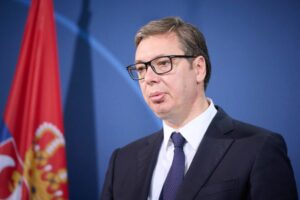
Serbia’s presidential election may take place on December 13, 2026—this date is currently considered the most likely, according to the Serbian business news site Parametar, citing the Center for Local Self-Government (CLS).
According to the center, the presidential election would in that case be scheduled after the conclusion of the parliamentary election, and the campaign would last no more than 30 days.
However, the CLS emphasizes that a final decision has not yet been made and other options remain on the table.
Early presidential elections became necessary after Aleksandar Vučić resigned on September 27, ending his second presidential term early.
Ana Brnabić, Speaker of the National Assembly, has assumed the duties of acting president. Under Serbian law, the speaker of parliament may serve as acting head of state for no more than three months.
Following the early termination of the presidential term, an election must be held no later than three months thereafter. There must be no fewer than 30 and no more than 60 days between the official announcement of the election and Election Day.
Thus, the deadline for holding the presidential election is December 27, 2026; therefore, the date of December 13 cited by CLS falls within the timeframe prescribed by law.
Serbia’s political landscape now presents an unusual configuration. First, the country will hold early parliamentary elections, after which a new parliamentary composition is expected to take shape; then, Serbs will have to elect a new president.
Vucic himself stated after his resignation that he intends to participate in the parliamentary election campaign as an ordinary citizen.
Therefore, the December presidential election could become the second key vote for Serbia in less than two months and finally determine the new power structure following the conclusion of Vučić’s nine-year presidency.
The candidates for president have not yet been definitively determined.
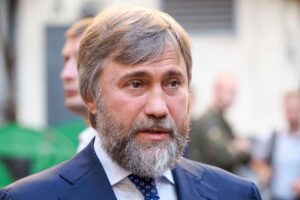
Ukrainian businessman, former member of parliament, and one of the most prominent major investors in Ukraine’s metallurgical industry, Vadim Novinsky, has been granted Serbian citizenship, according to the Serbian business portal Parametar.
According to Parametar, the decision to grant Novinsky citizenship of the Republic of Serbia was made by the country’s government on September 24, 2026, and published in the official “Službeni Glasnik.” The document was signed by Serbian Prime Minister Džuro Matsut.
Novinsky was born on June 3, 1963, in Staraya Russa, in what is now Russia, but he has built a significant portion of his business career in Ukraine. He obtained Ukrainian citizenship in 2012.
In Ukraine, Novinsky is best known as the founder of Smart Holding and a long-time partner of Rinat Akhmetov’s SCM Group in the mining and metallurgical group Metinvest. Smart Holding held a 23.76% stake in Metinvest. The group’s business interests also spanned shipbuilding, the agricultural sector, real estate, and other areas.
In late 2022, Novinsky announced that he had transferred his assets to a trust. Metinvest subsequently stated that Novinsky is not a beneficiary of the company and does not exercise actual control over it.
Novinsky was also involved in politics. From 2013 to 2022, he served as a member of the Ukrainian Parliament for several terms, first as part of the Party of Regions faction and later as part of the “Opposition Bloc.”
In December 2022, Ukraine imposed personal sanctions against Novinsky. In January 2025, the State Bureau of Investigations and the Security Service of Ukraine reported that the former People’s Deputy was suspected of high treason and inciting religious hatred. Ukrainian media identified the suspect as Vadym Novinsky. The businessman himself denied the charges against him and called them politically motivated.
In June 2025, Ukrainian law enforcement agencies also reported an investigation into possible tax evasion totaling more than 4 billion UAH involving the former lawmaker, whom the media identified as Novinsky. At this point, these are allegations and investigations, not final, legally binding convictions.
After the start of Russia’s full-scale invasion of Ukraine, Novinsky publicly spoke out against the war.
Serbian authorities have not yet publicly disclosed the specific reasons for granting Novinsky citizenship, nor have they reported on any potential investment projects by the businessman in Serbia.
Source: Serbian business portal Parametar.
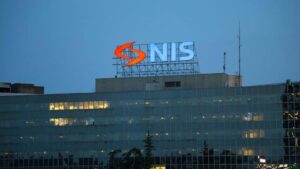
According to the Serbian business publication Parametar, the Serbian oil and gas company NIS has submitted a new request to the Office of Foreign Assets Control (OFAC) of the U.S. Department of the Treasury for a special license that would allow the company to continue its operations beyond September 30. The current license expires on that very day.
NIS emphasizes that the company’s uninterrupted operations, the stable operation of the oil refinery in Pančevo, and the regular supply of petroleum products to the Serbian market are crucial for the country’s energy stability.
U.S. sanctions against NIS were imposed in early 2025 due to Russian ownership stakes in the company. Since then, OFAC has repeatedly issued temporary licenses allowing NIS to continue its operations.
At the same time, the process of restructuring NIS’s ownership continues. Hungary’s MOL is in negotiations with Gazprom Neft regarding the acquisition of a 56.15% stake in NIS. In June, the Serbian government and MOL already signed a shareholders’ agreement outlining the future governance model for the company should the deal be finalized.
To finalize the deal, not only is a purchase and sale agreement between MOL and Gazprom Neft required, but also additional approvals from regulatory authorities, primarily OFAC. Serbia has also agreed to the possibility of increasing its stake in NIS by another 5 percentage points.
Serbian authorities had previously reported that a company from the UAE might also participate in the future structure of the deal. This refers to the possible entry of a Middle Eastern investor into NIS’s capital following the completion of the deal with MOL.
As of June 30, 2026, Gazprom Neft owned 44.85% of NIS, the Republic of Serbia owned 29.87%, and another 11.3% was held by JSC Intelligence. The remaining shares are held by minority investors.
NIS remains Serbia’s key oil company. It owns an oil refinery in Pančevo, and the company’s network of gas stations also operates in neighboring countries in the region.
Currently, the main question for the Serbian energy market is whether OFAC will extend the license before the current permit expires on September 30, while negotiations regarding the change in NIS ownership are still ongoing.
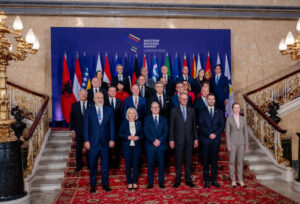
According to Parametar, Montenegro will host the Berlin Process Leaders’ Summit on October 21–22. The meeting will take place at the Sveti Stefan resort and will be the main event of Montenegro’s presidency of this regional forum in 2026, the country’s government announced.
Montenegrin Prime Minister Milojko Spajić and German Chancellor Friedrich Merz are scheduled to open the summit.
Leaders of six Western Balkan countries—Serbia, Montenegro, Albania, Bosnia and Herzegovina, North Macedonia, and Kosovo—have been invited to Sveti Stefan, along with representatives of Berlin Process member states, EU leadership, international financial institutions, and regional organizations.
For Serbia, this meeting will be important primarily in terms of regional trade, transport and energy links with the EU, a common regional market, and the further economic integration of the Western Balkans.
Montenegro will hold a series of sector-specific meetings leading up to the October summit. Economy ministers will meet on September 30 in Cetinje, foreign ministers on October 1 in Budva, and events dedicated to the digital agenda, Roma community issues, and science and research will also take place in October.
What is the Berlin Process?
The Berlin Process was launched by Germany in 2014 as a framework for EU cooperation with the six countries of the Western Balkans. Its goal is to accelerate regional economic integration, the development of transportation and energy infrastructure, and the free movement of people and businesses, as well as to help countries in the region align with EU standards. However, the Berlin Process does not replace official EU accession negotiations; rather, it complements them with specific regional initiatives and projects.
In addition to the countries of the Western Balkans, Germany, Austria, France, Italy, the United Kingdom, Poland, Greece, Croatia, Slovenia, and Bulgaria are participating in the process, as well as EU institutions and international organizations.
The Ukrainian government has officially approved the country’s participation in the World Specialized Exhibition EXPO 2027 Belgrade, which will take place in the Serbian capital from May 15 to August 15, 2027.
The Cabinet of Ministers of Ukraine adopted the relevant resolution on September 21. Deputy Prime Minister for Humanitarian Policy and Minister of Culture Tetiana Berezhna has been appointed General Commissioner of the Ukrainian national pavilion.
The costs of Ukraine’s participation are to be covered by funds from the EXPO 2027 organizer, donor and sponsor funding, charitable contributions, and other permitted sources. The Ministry of Economy and Environment will coordinate the preparation of the Ukrainian exhibition, and the Ministry of Foreign Affairs will officially notify the Serbian government of the appointment of the Commissioner-General.
Berezhna already has experience organizing Ukraine’s participation in world expos. She served as Commissioner-General of the Ukrainian pavilion at EXPO 2025 in Osaka.
The Belgrade expo will be held under the slogan “Play for Humanity: Sport and Music for All.” Organizers expect more than 4 million visitors over the 93 days of the expo.
EXPO 2027 will be the largest specialized expo in terms of the number of participants in the history of such events. According to the latest data from the organizers, 143 international participants have confirmed their participation. For comparison, the previous record for specialized EXPO events was held by Astana 2017, which featured 117 participating countries.
Among the largest countries that have confirmed or already registered their participation in the Belgrade exhibition are are the United States, China, Russia, India, Germany, France, Italy, Spain, Japan, South Korea, Turkey, Brazil, Mexico, Argentina, Saudi Arabia, the UAE, Israel, South Africa, and Egypt.
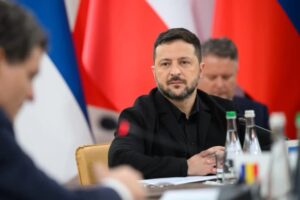
According to “Serbian Economist”, Ukrainian President Volodymyr Zelenskyy visited the Serbian pavilion at the first Carpathian Economic Forum in Bukovel, which is taking place on September 18–19 as part of the summit of the new regional format, the Carpathian Eight (C8). This was reported by the Serbian Chamber of Commerce and Industry.
Serbia is represented at the forum by the Serbian Chamber of Commerce and Industry, the Serbian Development Agency, Expo 2027 Belgrade, as well as Serbian companies, including Mind Park and Millennium Team. The main goal of Serbia’s participation is to present the country’s investment opportunities and establish new contacts with companies, investors, and financial organizations in the region.
The forum itself has become a major business platform: according to the Office of the President of Ukraine, approximately 1,400 people from 25 countries are participating, including representatives of nearly 400 companies from the C8 countries. The forum’s total investment portfolio includes 95 projects valued at over 42.5 billion euros in the energy, industrial, transportation and logistics, technology, agricultural, real estate, and other sectors.
Serbia is particularly interested in projects in the energy, rail and road transportation, logistics, industry, and cross-border trade sectors. At the summit, Aleksandar Vučić stated that trade between Serbia and Ukraine grew by 42% in the first half of 2026.
The new C8 format brings together Serbia, Ukraine, Romania, Poland, Slovakia, the Czech Republic, Austria, and Hungary. Its participants aim to develop infrastructure and energy links, investment projects, and closer integration of the Carpathian and Danube regions.
C8, FORUM, INVESTMENT, SERBIA, UKRAINE



