
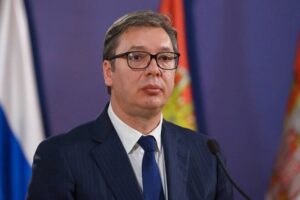
The Serbian business publication Parametar has prepared an interesting analysis of the parliamentary elections in Serbia. President Aleksandar Vučić has called for early parliamentary elections on October 25. Serbia has 250 parliamentary seats to fill, but in essence, the campaign is turning into a choice between preserving the current model of government and attempting a political reset.
The main favorite is the “Aleksandar Vučić—United Serbia” bloc centered around the SNS. Vucic himself is running as a candidate for prime minister. According to the Serbian media outlet Parametar, his campaign will focus on stability, infrastructure development, investment, economic growth, and the argument that the country must not return to a period of political instability.
For the first time, the main competitor is not a traditional party, but the Student List, which emerged from the protests following the tragedy in Novi Sad. Its main themes are corruption, government accountability, the independence of institutions, and bringing new people into politics. The movement’s slogans are as simple as possible: “Students Will Win” and “Either Serbia or the Mafia.”
Part of the opposition has already decided to support the students, but there will be no single anti-government list. Running separately are the pro-European “European Serbia,” the “People’s Serbia” bloc, Ivica Dačić’s Socialists, and several national-conservative and sovereigntist groups.
The campaigns of the two main power centers are also divided by fundamentally different emotional agendas. According to sociologist and co-founder of Active Group Aleksandar Pozniy, Vučić will build his campaign primarily around the theme of stability—reminding voters of economic growth, large-scale infrastructure projects, an influx of investment, and the overall progress Serbia has made in recent years. This strategy aims to convince voters that a change in government carries the risk of losing the country’s hard-won achievements. The Student List, on the other hand, will appeal to the long-standing demand for fighting corruption and reforming the political system, contrasting the current elite with new faces unaffiliated with traditional parties. Thus, the election may largely turn into a clash between two basic formulas—“stability and economic results” versus “a change in power and the cleansing of institutions.”
That is precisely why the key question will be what voters deem more important: preserving economic and political stability or the demand for profound systemic change.
Parties representing national minorities will traditionally form a separate segment. A special electoral system applies to minorities: they are not required to clear the general 3 percent threshold, and when seats are allocated, their results are adjusted using a special coefficient. At the start of the campaign, the Union of Vojvodina Hungarians (SVM), the Bosnian parties SPP and SDA, representatives of the Albanian and Romani populations, and a number of small regional groups are expected to participate. Their composition may still change before the registration deadline.
Polling data so far is conflicting. Faktor Plus gives the SNS about 47% and the Students’ Party about 32%. An earlier CRTA poll showed the opposite picture—about 45% for the Students’ Party versus 36% for the SNS.
On international betting platforms, Vučić currently appears to be the clear favorite, but there is still a month and a half until the election, and the final list of candidates is still taking shape.
Read more at Parametar.rs.
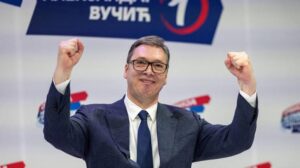
According to “Serbian Economist”, early parliamentary elections in Serbia are scheduled for October 25, 2026, according to local media reports.
Previously, President Aleksandar Vučić had mentioned two possible dates—October 18 or 25. Now, Serbian publications such as Blic, Danas, and others are reporting that October 25 has been chosen. The National Assembly is expected to be dissolved in the coming days, after which the campaign is set to officially begin.
The main question is whether the ruling Serbian Progressive Party (SNS) will be able to retain its majority amid protracted protests and growing support for the student movement.
Recent polls paint a very mixed picture. According to Faktor Plus, in the spring the SNS had about 46% support, while a potential student-led slate had about 29%. More recent surveys have shown that the gap may be even smaller: in July, CRTA estimated support for the student list at 44.9% and for the SNS at 35.7%. At the same time, other polls, as before, put the SNS at 45–47%.
At this point, a brief analysis is as follows:
SNS / the bloc centered on Vučić—the favorite, with a projected range of 36–47%
The Student List—the main competitor, with potential support of approximately 29–45%, but highly dependent on polls
Ivica Dačić’s SPS—5–7%, a likely coalition partner
The pro-European opposition—may achieve a notable result overall but remains fragmented
Mi—Snaga Naroda, NPS, SSP, ZLF, Nova DSS—are fighting to clear the electoral threshold and influence the future coalition
The baseline scenario for now is as follows: the SNS will most likely remain the leading force, but the election could be the most competitive in recent years.
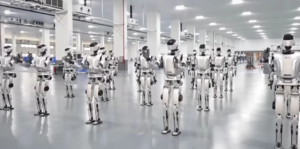
According to The Serbian Economist, mass production of humanoid robots officially began on August 29 in Šabac, Serbia, as part of a joint project between the Chinese companies Minth Group and AGIBOT. The Serbian Development Agency (RAS) calls this facility Europe’s first mass-production base for humanoid robots. The first phase of the project is estimated at 20 million euros.
Production is underway at the existing Minth Metal Parts Majur facility in Šabac. The first robot assembled there was assigned a serial number during the opening ceremony, which was attended by Serbian President Aleksandar Vučić, Minth Group founder Qing Zhonghua, and representatives of AGIBOT, the Serbian government, the city of Šabac, and the Serbian Development Agency.
“Today, Serbia has taken a step into the future and demonstrated that it is capable of moving forward at a pace unmatched by many more developed European countries,” Vučić stated at the plant’s opening.
According to the president, in the first phase, the plant expects to assemble more than 5,000 robots per year, and initially, about 200 people will work directly in this new division. In the future, the project is set to transition from assembly to deeper localization of production. Vučić emphasized that he considers it fundamentally important for the robots to bear the “Made in Serbia” label.
The next phase of the project is significantly larger in scale. Minth intends to build the Robotics Industrial Park in Indija, with a total planned investment of approximately 200 million euros. The park is designed to integrate the production of robots, unmanned systems, batteries, and other high-tech components. Once the project is implemented, the stated production capacity could reach 20,000 humanoid robots and robot dogs per year, targeting both the European and global markets.
The project is particularly interesting because the technology is coming to Serbia not from a small experimental company. Minth’s technology partner is the Shanghai-based company AGIBOT Innovation, founded in 2023 and specializing in embodied AI—the combination of artificial intelligence with robots capable of perceiving their surroundings, making decisions, and performing physical tasks.
According to research firm Smart Analytics Global, global shipments of humanoid robots totaled approximately 19,100 units in the first half of 2026, an increase of 272% compared to the previous year. AGIBOT shipped approximately 8,400 robots and captured 44% of the global market, ahead of Unitree Robotics, which held a 31% share. Thus, the Serbian project’s technology partner is currently the world’s largest supplier of humanoid robots in terms of shipment volume.
AGIBOT already has its own production facility in Shanghai. The company produced its first 1,000 general-purpose robots in early 2025, and by mid-2026, total production had reached 15,000 units, according to RAS.
The second project participant—Minth Group—is significantly older and larger. The company was founded by Qin Junhua in the 1990s and is now one of the world’s leading manufacturers of automotive components. Minth is listed on the Hong Kong Stock Exchange under the ticker 0425.HK and specializes in body panels, exterior automotive components, aluminum parts, and battery casings.
According to the group’s own data, as of the end of 2025, it had 27,400 employees, approximately 80 factories and offices in 15 countries across four continents.
Another component of the emerging cluster is expected to be the battery industry. Vučić stated that the first agreements are planned to be signed with Reliance regarding a battery plant in Indija worth approximately 100.5 million euros. This project is expected to be linked to a future robotics and unmanned systems park.
https://t.me/relocationrs/3563
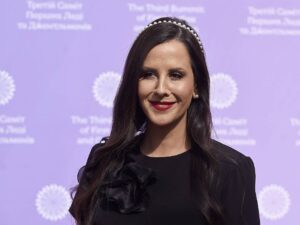
According to The Serbian Economist, Tamara Vučić, the wife of the President of Serbia, participated in the 6th Summit of First Ladies and Gentlemen, which took place on August 24 in Kyiv on Ukraine’s Independence Day. The theme of this year’s meeting was “Peace-2026: Finding Stability in Times of Uncertainty.”
The First Lady of Lithuania, Diana Nausėdenė; the wife of the President of Estonia, Sirje Karis; the wife of the President of Finland, Susanna Innes-Stubb; the First Lady of Romania, Mirabela Gredinaru; Tamara Vučić; and the First Gentleman of Slovenia, Ales Musar, all traveled to Kyiv in person. As is tradition, Olena Zelenska served as the host of the summit. Representatives from Germany, Turkey, Israel, the Czech Republic, Georgia, Belize, and Guatemala joined online. In total, the event brought together representatives from 14 countries.
An interesting part of the summit was the presentation of a unique “dictionary of resilience”—words and traditions from various nations that help society maintain unity in times of crisis.
Serbia presented “krsna slava”—a unique Serbian tradition of honoring the family’s patron saint.
Vucic called the slava “the living code of our identity” and explained that this tradition unites the family regardless of where its members are.
Speaking about the historical roots of Serbian resilience, she recalled the medieval rulers who, instead of palaces, left behind monasteries and charitable foundations. Vucic specifically mentioned the Serbian monasteries in Kosovo and Metohija, which are on UNESCO’s List of World Heritage Sites in Danger.
According to her, during difficult historical periods, Serbs effectively “brought the church under their own roof”: the home became a place for preserving faith, memory, and family unity, while glory became an intangible legacy passed down from generation to generation.
The First Ladies and Gentlemen Summit was launched at the initiative of Olena Zelenska in 2021 as an international platform for humanitarian and social projects. This year, the main focus was on what helps people, families, and nations maintain resilience during times of war and global uncertainty.
https://t.me/relocationrs/3532
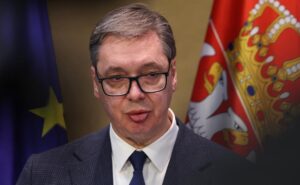
According to The Serbian Economist, early parliamentary elections in Serbia are scheduled to take place on October 18 or 25, 2026, as per current plans, President Aleksandar Vucic said on August 20.
“Parliamentary elections in Serbia will, apparently, take place on either October 18 or 25, and we will know the exact date in a few days,” Vučić said on Radio and Television of Serbia (RTS).
Previously, Serbian authorities had been considering holding the election in late October or early November; however, according to the president, the likely date has now been practically determined. That said, the election has not yet been officially scheduled, so October 18 and 25 remain the two dates under consideration.
According to Serbia’s Law on the Election of Members of Parliament, parliamentary elections are scheduled by the President of the Republic, and no fewer than 45 and no more than 60 days must elapse between the date of the announcement and Election Day. Election Day must fall on a non-working day.
As early as August 16, Vučić stated that the elections would be scheduled “very soon”—within the next 15 to 25 days. Prior to that, on August 14, he had indicated a broader timeframe for the elections—October or November.
At the same time, the parliamentary and presidential elections will most likely take place at different times. In July, Vučić stated that the parliamentary elections should take place first, followed by the presidential elections. On August 6, he also announced that he intends to resign from the presidency before joining the election campaign.
Commenting on the upcoming campaign on August 20, Vučić also confirmed that the Serbian Progressive Party (SNS) will run in the elections with its own electoral list. Referring to the decision by the Socialist Party of Serbia (SPS) to run independently, he noted that citizens should have the opportunity to choose between different political options.
The previous early parliamentary elections in Serbia took place on December 17, 2023. According to the results, the “Aleksandar Vučić—Serbia Must Not Stop” list received the most votes.
https://t.me/relocationrs/3504
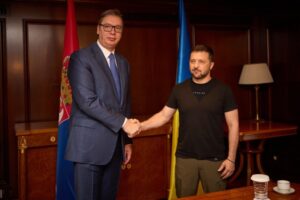
According to “Serbian Economist”, Ukrainian President Volodymyr Zelenskyy will pay an official visit to Serbia on August 8 and meet with Serbian President Aleksandar Vučić in Belgrade. The Serbian president’s press service has officially confirmed the visit. This will be Zelenskyy’s first visit to Serbia during his presidency.
A detailed agenda for the talks has not yet been published. However, judging by the contacts between Belgrade and Kyiv in recent months, the central topics are likely to include bilateral relations, the European integration of both countries, the expansion of economic cooperation, a possible free trade agreement, regional security, and Serbia’s participation in Ukraine’s reconstruction.
In May, Zelenskyy and Vučić had already discussed the development of bilateral relations over the phone. At that time, the Ukrainian president placed particular emphasis on resuming negotiations on a free trade zone with Serbia. Vučić, for his part, cited economic cooperation as one of the key areas for further rapprochement between the two countries.
Following this, talks between representatives of the two countries’ governments took place in Belgrade. On May 21, Serbian Minister of Domestic and Foreign Trade Jagoda Lazarević and Ukrainian Deputy Prime Minister and Trade Representative Taras Kachka signed a joint statement on the continuation of negotiations on a free trade agreement. At the same time, a Serbian-Ukrainian business forum was held with the participation of representatives from about 30 companies.
The upcoming visit continues a noticeable revival of political contacts between Belgrade and Kyiv.
In June 2025, Vučić visited Ukraine for the first time since the start of the full-scale Russian-Ukrainian war, taking part in the “Ukraine–Southeast Europe” summit in Odesa. At that time, he reaffirmed Serbia’s support for Ukraine’s territorial integrity and offered Serbia’s participation in the reconstruction of one or more Ukrainian cities or regions.
On July 15, 2026, Vučić was in Ukraine again—for the 5th “Ukraine–Southeast Europe” summit in Kyiv.
At the same time, Serbia’s position on the war remains unique. Belgrade supports Ukraine’s territorial integrity and has voted in favor of a number of relevant international documents, provides humanitarian aid, but has not joined the EU sanctions against Russia. Vucic has also repeatedly avoided signing certain regional declarations insofar as they called for increased pressure on Moscow.
Therefore, the very fact of the Ukrainian president’s visit to Belgrade carries political significance: Serbia is attempting to simultaneously maintain traditional relations with Russia, develop relations with Kyiv, and continue its path toward EU membership.
Another topic of discussion could be the new regional Carpathian Initiative proposed by Ukraine. Zelenskyy has previously stated that Serbia, in particular, is planned to be involved in the initiative, and cooperation could cover the economy, logistics, security, tourism, and Ukraine’s reconstruction.
The economic aspect of the visit is particularly relevant against the backdrop of the resumption of bilateral trade.
According to official data from the Serbian Ministry of Foreign Affairs and the country’s Statistical Office, trade between Serbia and Ukraine totaled 391.8 million euros in 2025. Serbia exported goods worth 179.6 million euros to Ukraine and imported Ukrainian products worth 212.2 million euros. Thus, the trade balance remained in Ukraine’s favor by approximately 32.6 million euros.
In dollar terms, according to Marko Čadež, president of the Serbian Chamber of Commerce and Industry, bilateral trade reached $442.2 million, practically returning to the level of the last pre-war year, 2021. Serbian exports totaled $202.9 million, while Ukrainian exports to Serbia amounted to $239.3 million. About 900 Serbian companies conduct trade with Ukraine, including approximately 670 that import Ukrainian goods.



