
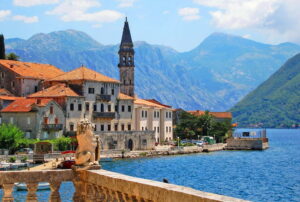
According to “Serbian Economist”, in the first half of 2026, Serbia became the largest source of foreign capital directed toward real estate purchases in Montenegro, according to data from the Central Bank of Montenegro (CBCG).
From January through June, foreign investors invested 237.77 million euros in Montenegrin real estate, which is 3.89% more than during the same period last year. Overall, gross foreign direct investment inflows into the country totaled 457.37 million euros, meaning real estate accounted for about 52% of all FDI inflows.
Serbia took the lead with 55.75 million euros, or 23.45% of all foreign investment in Montenegrin real estate.
Germany took second place with 22.9 million euros, and the United States came in third with 20.84 million euros. Switzerland contributed 18.5 million euros toward real estate purchases, and Turkey contributed 16.34 million euros.
Against this backdrop, the continuing decline in the role of Russian capital is particularly noticeable. In the first half of the year, only 5.37 million euros came from Russia for the purchase of Montenegrin real estate, placing it in tenth place. Poland and Belgium, among others, now rank higher than Russia in the list.
This trend began to take shape as early as last year. In the first quarter of 2025, Russia fell out of the top five largest markets for real estate buyers in Montenegro for the first time and ranked sixth. For 2025 as a whole, the volume of Russian investment across all sectors of Montenegro’s economy fell to 33.98 million euros, of which approximately 17.8 million euros went to real estate. By comparison, in the years 2020–2024, Russian capital was traditionally among the country’s largest sources of foreign investment.
However, it is not entirely accurate to refer directly to “Serbian citizens” or “Russians who purchased real estate” based on these figures. The CBCG methodology considers the country from which the payment originated, which may not correspond to the citizenship of the ultimate buyer or beneficiary. For example, a Russian citizen may pay for a property from an account in Serbia, the UAE, or another country. Therefore, the data primarily reflects a shift in the geography of financial flows in the real estate market.
According to The Serbian Economist, the Office of Foreign Assets Control (OFAC) of the U.S. Department of the Treasury has extended a special license to the Croatian company JANAF, allowing it to continue transporting crude oil for the Serbian company NIS until September 30, 2026.
The company reported that it received the license extension with the assistance of the Croatian government and U.S. legal advisors. The authorization allows it to continue fulfilling its existing contract with NIS within the framework of the U.S. sanctions regime.
Thus, crude oil deliveries via the Adriatic Pipeline can continue for at least another month. The oil arrives by sea at the JANAF terminal in Omišalj on the island of Krk, after which it is transported via the pipeline system toward Serbia and used by the NIS refinery in Pančevo.
This decision is of critical importance for Serbia. The refinery in Pančevo is the country’s only large oil refinery and meets about 80% of the Serbian market’s demand for petroleum products. The facility’s design capacity is up to 4.8 million metric tons of crude processed per year.
NIS itself received a separate special license on August 28. It is also valid until September 30 and allows the company to continue oil refining, crude oil imports, financial transactions, technical maintenance, and other operations necessary to ensure a stable supply to the market.
The extension of the license is particularly important given the problems with alternative supply channels. Due to low water levels in the Danube, the capacity to import fuel by barge has been significantly reduced this summer. In July, fuel imports via this route amounted to only about a quarter of the planned volume, which has increased Serbia’s dependence on the Pančevo refinery and supplies via JANAF.
NIS and JANAF are bound by a three-year contract for the transportation of up to 10 million metric tons of crude oil, which remains in effect until December 2026. Actual supply volumes depend on the amount of oil that NIS purchases and delivers to the Omišalj terminal.
The main issue now concerns the change in NIS’s ownership structure. Hungary’s MOL is in talks with Gazprom Neft regarding the purchase of a 56.15% stake in the company. A potential deal is seen as a long-term way to remove NIS from U.S. sanctions. OFAC has also issued separate temporary licenses to facilitate the negotiations.
U.S. sanctions against NIS took full effect in October 2025 due to Russian control over the company. Since then, OFAC has repeatedly issued temporary licenses, allowing Serbia to maintain the refinery’s operations and oil shipments through Croatia for the duration of negotiations regarding the sale of the Russian stake.
https://t.me/relocationrs/3564

According to The Serbian Economist, mass production of humanoid robots officially began on August 29 in Šabac, Serbia, as part of a joint project between the Chinese companies Minth Group and AGIBOT. The Serbian Development Agency (RAS) calls this facility Europe’s first mass-production base for humanoid robots. The first phase of the project is estimated at 20 million euros.
Production is underway at the existing Minth Metal Parts Majur facility in Šabac. The first robot assembled there was assigned a serial number during the opening ceremony, which was attended by Serbian President Aleksandar Vučić, Minth Group founder Qing Zhonghua, and representatives of AGIBOT, the Serbian government, the city of Šabac, and the Serbian Development Agency.
“Today, Serbia has taken a step into the future and demonstrated that it is capable of moving forward at a pace unmatched by many more developed European countries,” Vučić stated at the plant’s opening.
According to the president, in the first phase, the plant expects to assemble more than 5,000 robots per year, and initially, about 200 people will work directly in this new division. In the future, the project is set to transition from assembly to deeper localization of production. Vučić emphasized that he considers it fundamentally important for the robots to bear the “Made in Serbia” label.
The next phase of the project is significantly larger in scale. Minth intends to build the Robotics Industrial Park in Indija, with a total planned investment of approximately 200 million euros. The park is designed to integrate the production of robots, unmanned systems, batteries, and other high-tech components. Once the project is implemented, the stated production capacity could reach 20,000 humanoid robots and robot dogs per year, targeting both the European and global markets.
The project is particularly interesting because the technology is coming to Serbia not from a small experimental company. Minth’s technology partner is the Shanghai-based company AGIBOT Innovation, founded in 2023 and specializing in embodied AI—the combination of artificial intelligence with robots capable of perceiving their surroundings, making decisions, and performing physical tasks.
According to research firm Smart Analytics Global, global shipments of humanoid robots totaled approximately 19,100 units in the first half of 2026, an increase of 272% compared to the previous year. AGIBOT shipped approximately 8,400 robots and captured 44% of the global market, ahead of Unitree Robotics, which held a 31% share. Thus, the Serbian project’s technology partner is currently the world’s largest supplier of humanoid robots in terms of shipment volume.
AGIBOT already has its own production facility in Shanghai. The company produced its first 1,000 general-purpose robots in early 2025, and by mid-2026, total production had reached 15,000 units, according to RAS.
The second project participant—Minth Group—is significantly older and larger. The company was founded by Qin Junhua in the 1990s and is now one of the world’s leading manufacturers of automotive components. Minth is listed on the Hong Kong Stock Exchange under the ticker 0425.HK and specializes in body panels, exterior automotive components, aluminum parts, and battery casings.
According to the group’s own data, as of the end of 2025, it had 27,400 employees, approximately 80 factories and offices in 15 countries across four continents.
Another component of the emerging cluster is expected to be the battery industry. Vučić stated that the first agreements are planned to be signed with Reliance regarding a battery plant in Indija worth approximately 100.5 million euros. This project is expected to be linked to a future robotics and unmanned systems park.
https://t.me/relocationrs/3563
According to the “Serbian Economist,” Serbia’s economic ties with the European Union are now significantly more extensive than its trade with Russia, while Belgrade’s main dependence on Moscow remains primarily in the energy sector, said Andon Sapundži, Serbia’s ambassador to Ukraine.
According to him, about 70% of Serbia’s exports and imports go to European Union countries, with another approximately 15% going to countries in the region that are candidates or seeking to join the EU, including Bosnia and Herzegovina, Montenegro, North Macedonia, and Albania.
“The remaining countries account for the rest of Serbia’s foreign trade, including the United States, China, and Russia. Russia’s share is approximately 7–8%, and a significant portion of this trade consists of energy resources, primarily natural gas,” Sapundži said in an interview with “Apostrophe.”
According to him, dependence on Russian energy resources remains one of the most sensitive aspects of Serbian-Russian economic relations, which is why Belgrade is working to diversify its sources and supply routes.
Separately, the ambassador commented on the situation surrounding Serbia’s largest oil and gas company, NIS, which has come under U.S. sanctions due to Russian ownership stakes.
According to him, the process of changing NIS’s ownership structure is in full swing. Serbia is discussing the company’s future structure with Hungary’s MOL, while negotiations with Russia’s Gazprom Neft are ongoing. To finalize the deal, appropriate approvals under the U.S. sanctions regime are required, among other things.
Sapundži identified Serbia’s two main priorities as maintaining energy security and finding a long-term, sustainable ownership structure for NIS.
The company is of strategic importance to the country’s economy, as it operates Serbia’s only oil refinery in Pančevo.
At the same time, the diplomat emphasized that a change in trade structure does not mean Serbia is completely abandoning its economic relations with Russia.
Belgrade, meanwhile, continues to pursue EU accession. According to Sapundži, European integration remains a strategic priority for the country, although Serbia’s refusal to join sanctions against Russia is creating difficulties in negotiations with Brussels.

According to the “Serbian Economist,” Serbia is ready to provide its territory as a venue for negotiations between Ukraine and Russia if both sides consider Belgrade’s involvement to be useful, said Andon Sapundži, Serbia’s ambassador to Ukraine.
“If there is a need for a venue for dialogue or negotiations, Serbia is ready to offer it,” the diplomat said in an interview with the Ukrainian publication “Apostrophe,” published on August 27.
At the same time, the ambassador emphasized that Belgrade has no intention of imposing its own terms for a settlement on the parties and believes that decisions regarding the start of negotiations, their format, and conditions should be made directly by Ukraine and Russia.
Sapundži also rejected the interpretation of Belgrade’s position as a call for Ukraine to cede part of its territory in order to end the war.
According to him, Serbia consistently supports Ukraine’s territorial integrity within its internationally recognized borders.
At the same time, Belgrade does not consider itself a party to the war and hopes to maintain the ability to engage in political dialogue with both sides.
In early August, Ukrainian President Volodymyr Zelenskyy visited Belgrade. This was the Ukrainian president’s first visit to Serbia in eight years. According to Sapundži, during the visit, Zelenskyy and Serbian President Aleksandar Vučić held three separate meetings in less than a day, including a nearly four-hour informal conversation over dinner, official talks, and a one-on-one meeting.
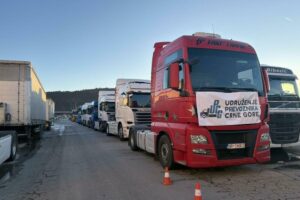
According to The Serbian Economist, Serbian truckers, together with their colleagues from Montenegro, Bosnia and Herzegovina, and North Macedonia have announced their intention to begin blocking freight border crossings into the European Union starting September 14, 2026, if a solution to the issue of professional drivers’ stay in the Schengen Area has not been found by that time.
This was reported by the Serbian association of international carriers, “Međunarodni transport.” According to the association, drivers from the Western Balkan countries continue to be detained, deported, and turned back at the borders for exceeding the permitted length of stay in the Schengen Area. The association claims that several dozen Serbian drivers are turned back at the borders every day, and there have been more than 50 such cases in the past week alone.
Before the blockade begins, the carriers intend to make one more attempt to reach an agreement with European authorities. On August 31, from 12:00 p.m. to 2:00 p.m., a peaceful protest will take place in Belgrade in front of the EU delegation at 40/V Vladimira Popovića Street. Similar protests are planned in front of the EU delegations in Montenegro, Bosnia and Herzegovina, and North Macedonia.
In addition, another meeting between representatives of the transport companies and the European Commission is scheduled for September 1. If it does not lead to a concrete decision, starting September 14, transport companies from the four countries intend to begin protests at border crossings.
The cause of the conflict is the 90/180 rule in effect in the Schengen Area, under which a third-country national may stay in the Schengen Area for no more than 90 days within any 180-day period. This is sufficient for the average tourist, but international carriers argue that professional drivers are physically unable to make regular trips to the EU under such a restriction.
The rule itself existed previously, but with the introduction of the Electronic Entry/Exit System (EES), enforcement has become significantly stricter. The system automatically records the entries and exits of third-country nationals and, as of April 10, 2026, is fully operational at the external borders of the Schengen Area, with the exception of Ireland and Cyprus. The possibility of “losing” some days between passport stamps has effectively disappeared.
At the same time, the European Commission officially acknowledges the existence of the problem. The EU Visa Policy Strategy, adopted on January 29, 2026, states that a number of mobile professions, particularly truck drivers serving European businesses, may need to stay in several Schengen countries for more than 90 days within a 180-day period.
The European Commission has stated that it will seek a solution, including the possibility of introducing special EU-wide rules regarding extended short-term stays. However, a specific mechanism has not yet been approved.
For Serbia, this issue is particularly acute due to the significant dependence of its exports on road transport to the EU. Carriers warn that some drivers are already refusing to make trips to EU countries.
This will be the second major regional protest by carriers in 2026. Starting on January 26, drivers from Serbia, Montenegro, Bosnia and Herzegovina, and North Macedonia simultaneously blocked freight terminals at the borders with the EU. In Serbia, the protest lasted five days and was called off on January 30 after the European Commission included the issue of professional drivers in its new visa strategy.
The economic impact of the previous blockade was significant. According to estimates by the Serbian Chamber of Commerce and Industry, the restrictions affected about 93% of exports from the four Western Balkan countries, and potential business losses were estimated at up to 92 million euros per day.
For Ukraine, a potential blockade is also significant, although its impact will be considerably less than for Serbia and other Western Balkan countries. The main truck traffic between Ukraine and the EU passes directly through Poland, Slovakia, Hungary, and Romania, so a blockade of the Serbian borders will not halt Ukrainian-European trade.
However, the issue could directly affect Ukrainian trucks traveling to Serbia, Bosnia and Herzegovina, Montenegro, North Macedonia, Albania, and Greece, as well as carriers that use Serbia as a transit country. If the protest follows the January scenario and the Batrovci freight terminal on the border with Croatia, the Horgos terminal on the border with Hungary, the border crossings with Romania, and the Gradina terminal on the border with Bulgaria are blocked, Ukrainian carriers will find themselves in the same lines as other international trucks.
The most vulnerable routes may be those from Ukraine through Hungary or Romania to Serbia and onward to Montenegro, Bosnia, and North Macedonia, as well as transit toward the Adriatic and the southern Balkans. Rerouting cargo through Romania and Bulgaria or other border crossings is not always possible and entails additional mileage, fuel costs, and longer delivery times.
This is a particularly sensitive issue for Ukrainian logistics due to the economy’s heavy reliance on land transport corridors. According to the European Commission, in July 2026, the “Solidarity Lanes”—established after the start of the full-scale war—accounted for approximately 90% of Ukraine’s imports and 95% of its non-agricultural exports, although only a portion of these shipments is related to the Balkan route. Therefore, a strike in the Western Balkans alone is not capable of paralyzing Ukrainian foreign trade, but for companies that work specifically with the Balkans, it could significantly increase logistics costs.
A separate issue concerns Ukrainian professional drivers themselves. Ukraine has a special agreement with the EU on road transport, which has been extended until March 31, 2027. It liberalizes bilateral and transit freight transport and allows Ukrainian carriers to operate within the EU without some of the former licensing restrictions.
However, this agreement primarily regulates carriers’ access to the market, not the length of stay of a specific driver in the Schengen Area. Therefore, a Ukrainian driver entering the Schengen Area as a third-country national on a short-term stay and who does not hold a long-term visa, residence permit, or other relevant status must generally also comply with the 90-day limit within a 180-day period. The European Commission notes that holders of long-term visas and residence permits are not subject to this restriction.
https://t.me/relocationrs/3545



