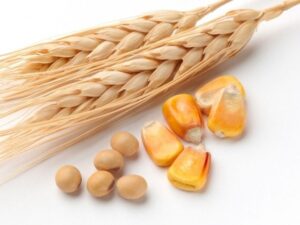
As of June 25, Ukraine exported 40.314 mln tonnes of grains and pulses since the beginning of 2024-2025 marketing year (July-June), of which 1.942 mln tonnes were shipped since the beginning of the month, the press service of the Ministry of Agrarian Policy and Food reported, citing the State Customs Service.
According to the report, as of June 28 last year, the total shipments were estimated at 50.553 million tons, including 3.621 million tons in June.
At the same time, since the beginning of the current season, Ukraine has exported 15.641 mln tonnes of wheat (18.3 mln tonnes in 2023/24 MY), 2.318 mln tonnes of barley (2.477 mln tonnes), 10.8 thsd tonnes of rye (1.6 thsd tonnes), and 21.759 mln tonnes of corn (29.233 mln tonnes).
The total export of Ukrainian flour since the beginning of the season as of June 25 is estimated at 69.7 thsd tonnes (in 2023/24 MY – 97.8 thsd tonnes), including 65.2 thsd tonnes of wheat (92.4 thsd tonnes).
The US Department of Agriculture (USDA) has improved its forecast for global wheat and corn production in the 2025-2026 marketing year, with no change to its harvest forecast for Ukraine.
According to the forecast on the US agency’s website, the wheat harvest in Ukraine is estimated at 23 million tons, exports at 16.5 million tons, and ending stocks at 1.49 million tons. The corn harvest is expected to reach 30.5 million tons, with exports at 24 million tons and final stocks at 0.6 million tons.
At the same time, global wheat production in 2025/2026 MY will amount to 808.5 million tons (+0.07 million tons compared to last season), exports – 214.33 million tons (+1.34 million tons), and final stocks – 262.76 million tons (-2.97 million tons).
USDA analysts forecast global corn production in 2025/2026 MY at 1,265.98 million tons (+1 million tons compared to the previous season), global exports at 195.81 million tons (+0.01 million tons), and ending stocks at 275.24 million tons (-2.6 million tons).
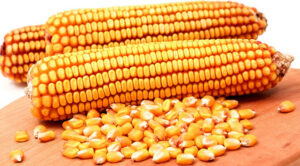
Corn exports from Ukraine in May 2025 reached over 2 million tons, becoming one of the highest figures in recent months, according to the analytical cooperative “Pusk,” created within the framework of the All-Ukrainian Agrarian Council.
According to analysts, at least 850,000 tons of corn have already been contracted for June, and this figure is not final. Total exports in June are expected to exceed 1 million tons.
“This indicates that traders have previously concluded contracts. Therefore, deliveries of the old crop are continuing quite actively,” experts noted.
At the same time, the situation on the export market is complicated by price pressure. Thus, the cost of American corn is currently held at $230 per ton, while prices for Ukrainian corn have risen to $256-260 per ton.
“In the current conditions, we cannot compete with American suppliers on the European market. Ukrainian corn is sold in small batches — 2-5 thousand tons — mainly to Greece and Cyprus. For comparison, the US exports only large volumes of 25 thousand tons,” analysts explained.
An additional factor is limited grain reserves: only 1-1.5 million tons of corn remain on the domestic market. This means that there are already very few volumes available for large-scale exports.
“We expect the market to become less liquid in June. Price benchmarks will gradually decline to around $215 per ton in ports. From the second half of the month, demand will decline significantly, and the market will begin to focus on the new harvest,” Pusk predicts.

Agroholding TAS Agro has completed its spring sowing campaign for 2025, during which it sowed about 40,000 hectares with spring crops, the company’s press service reported on Facebook.
According to the agricultural holding, 16,000 hectares of the production area are allocated to sunflowers, 15,000 hectares to soybeans, 7,000 hectares to corn, and 160 hectares to industrial hemp. The company noted that this year it reduced corn sowing, abandoned sugar beet cultivation, but began growing industrial hemp on a trial basis.
“The 2025 sowing season is significantly different from previous ones, primarily due to abnormal weather conditions and constant air raid alerts, which hampered the work of machinery. Snow cover in April and frosts in the first ten days of May slowed down the sowing campaign somewhat, but we adjusted the work of the production units and managed to complete it on time. This year’s sowing season has shown that we have chosen the right strategy of renewing our technical fleet and involving our own staff, who worked cohesively and responsibly despite all the above-mentioned difficulties. In particular, on some days we managed to sow 2.3 thousand hectares per productive day,” said Oleg Zapletnyuk, CEO of TAS Agro LLC.
He added that the agricultural holding has already received high-quality spring crops and is focused on protecting them from diseases and pests. Personnel not involved in current work are preparing for the harvest, which, according to preliminary forecasts, will start in a month.
TAS Agro was established in 2014. Its land bank includes 88,000 hectares in the Chernihiv, Sumy, Kyiv, Vinnytsia, Kirovohrad, and Mykolaiv regions. It specializes in crop production, with the agricultural holding’s elevator capacity amounting to about 250,000 tons. The livestock business is represented by a herd of 5,500 head of cattle, of which 2,500 are dairy cattle.
The agricultural holding is part of the TAS group, founded in 1998. Its business interests include the financial sector (banking and insurance segments) and pharmacies, as well as industry, real estate, and venture projects.
The founder of TAS and beneficiary of the TAS Agro agricultural holding is Serhiy Tihipko.

Agroholding Agraine has completed its 2025 spring sowing campaign, during which it sowed over 27,000 hectares with spring crops, the company’s press service reported on Facebook.
According to the report, corn took up most of the planned area, with 14,000 hectares, and sunflowers took up over 12,000 hectares.
Thanks to moisture retention and thorough soil preparation, the group of companies achieved optimal moisture at the sowing depth. In addition, this year, farmers chose drought-resistant corn and sunflower hybrids, focusing on stable yields despite the lack of rainfall.
“We reduced the density of corn sowing to better adapt to limited moisture. Thanks to the coordinated work of our teams, we were able to complete sowing ahead of schedule,” said Taras Kornienko, chief agronomist of the agricultural holding.
Agrain is engaged in the cultivation and storage of grain and oilseeds, as well as livestock farming. Before the full-scale Russian invasion, the agricultural holding company comprised 11 agricultural enterprises. It cultivated about 110,000 hectares in the Zhytomyr, Kharkiv, Chernihiv, Odesa, and Cherkasy regions.
The holding company is owned by SAS Investcompagnie (France).
The US Department of Agriculture (USDA) has published its first forecast for grain exports from Ukraine for the 2025/26 marketing year (MY): it expects wheat exports to grow to 16.5 million tons from 16 million tons in 2024/25 MY and corn exports to grow to 24 million tons from 22 million tons.
According to the forecast on the US agency’s website, this year’s wheat harvest in Ukraine will decrease slightly to 23 million tons from 23.4 million tons last year, while domestic consumption will decline to 6.6 million tons in this MY from 6.7 million tons in the previous MY, with carryover stocks remaining at 1.49 million tons.
As for corn, the USDA expects its harvest to increase to 30.5 million tons from 26.8 million tons last year, as well as an increase in domestic consumption to 6.23 million tons from 5.15 million tons and carryover stocks from 0.31 million tons to 0.6 million tons.
According to the US Department of Agriculture, the total harvest of feed crops this year will amount to 37.04 million tons, compared to 33.47 million tons last year, and their exports in 2025/26 MY will reach 27.58 million tons, up from 24.48 million tons in 2024/25 MY.
Overall, the USDA expects wheat harvests to increase this year to 808.5 million tons from 799.7 million tons last year, and corn harvests to increase to 1,265.0 million tons from 1,221.3 million tons.
As for wheat exports, according to the US Department of Agriculture, in 2025/26 MY, they will increase to 212.99 million tons from 206.12 million tons this MY, and corn exports will increase to 195.81 million tons from 189.35 million tons.