
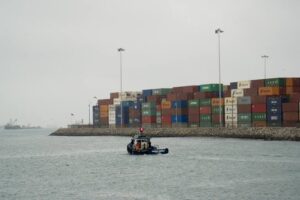
The Romanian port of Constanța on the Black Sea is among the European logistics hubs used for the illegal import of cocaine from Latin America. At the same time, international criminal groups are expanding their presence in Romania and other countries in Southeast Europe by establishing ties with local criminal networks, according to research by the European Drug Agency (EUDA) and an international investigative report by The Guardian.
According to The Guardian’s investigation, published on October 13, 2026, criminal organizations from Colombia, Brazil, Ecuador, Venezuela, Mexico, and other Latin American countries are already active in at least 12 European countries. At the same time, certain networks—in particular Brazil’s Primeiro Comando da Capital (PCC)—may be operating in 16 European countries, according to law enforcement estimates.
Over the course of four months, journalists analyzed data from law enforcement agencies, international investigations, and court cases, and spoke with experts from eight countries. The investigation revealed that Latin American cartels are increasingly collaborating with European criminal groups, leveraging their connections and logistical capabilities.
Traditionally, the main routes for cocaine entering the European market remain Belgium, the Netherlands, Spain, Portugal, and France. However, law enforcement agencies are noting an expansion of drug networks’ activities in Germany, Romania, Bulgaria, Croatia, and other countries in Central and Southeastern Europe.
The port of Constanța is of particular concern; the EUDA identifies it as one of the entry points for cocaine into Europe, alongside Antwerp, Rotterdam, Hamburg, Valencia, Algeciras, and Gioia Tauro in Italy.
According to analysts, tighter controls at major ports in Western Europe are prompting criminal organizations to make greater use of alternative maritime routes. This increases the risks to port infrastructure in the Black Sea and Adriatic regions.
The scale of the European cocaine market remains significant. According to EUDA data, between 2014 and 2024, the volume of cocaine seized in Europe increased by 471%.
In 2024, European Union member states reported 97,000 cocaine seizures totaling 330 metric tons. This is less than the record 419 metric tons seized in 2023; however, the number of seizures increased, which may indicate a shift in drug trafficking routes and methods.
The largest seizures in 2024 were recorded in Spain—124 metric tons, France—53.5 metric tons, and Belgium—44.6 metric tons. These three countries accounted for about 67% of the total amount of cocaine seized in the EU.
Significant quantities were also seized in the Netherlands (37.6 metric tons), Germany (23.8 metric tons), Portugal (23 metric tons), and Italy (11 metric tons).
At the same time, the countries of the Western Balkans play a special role in the international drug trade. According to a study by the Global Initiative Against Transnational Organized Crime, criminal networks from Montenegro, Serbia, Albania, Bosnia and Herzegovina, and other countries in the region have become active participants in global cocaine supply chains over the past two decades.
The Montenegrin port of Bar holds a special place among Balkan ports. According to data from the Montenegrin Ministry of Health and the EUDA, in August 2021, law enforcement agencies discovered more than 1.4 metric tons of cocaine in a container shipment of bananas that arrived from Ecuador via the port of Bar. In January 2022, another approximately 500 kg of cocaine was discovered in the country in a shipment of bananas that passed through this port.
Montenegrin authorities viewed these incidents as confirmation of the country’s role as a transit point in international drug smuggling. The small domestic market could not have been the final destination for such large quantities.
In general, the main established maritime routes for cocaine smuggling into Europe pass through the Atlantic ports of Antwerp in Belgium, Rotterdam in the Netherlands, Hamburg in Germany, Valencia and Algeciras in Spain, as well as through Portuguese and French ports.
In the Mediterranean region, Gioia Tauro in Italy and Piraeus in Greece remain key hubs. In the Adriatic, major seizures have been recorded in Bari (Montenegro), Durres (Albania), Ploče, and Rijeka (Croatia). In the Black Sea basin, ports attracting the attention of law enforcement agencies in the context of cocaine smuggling risks include Constanța in Romania and Varna in Bulgaria.
However, these routes carry different weight in international drug trafficking: ports in Belgium, the Netherlands, and Spain remain the primary points of entry in terms of seizure volumes, while Balkan and Black Sea ports primarily serve as secondary transit points.
EUDA analysts warn that route diversification, corruption risks, and the use of international transport chains complicate the work of customs and law enforcement agencies. Under these conditions, international information sharing, the inspection of high-risk cargo, and cooperation among European port authorities are becoming increasingly important.
Sources: The Guardian, investigation dated October 13, 2026; EUDA, study of European cocaine supply routes; EUDA, European Drug Report 2026; Montenegro Ministry of Health / EUDA, drug situation overview; Global Initiative Against Transnational Organized Crime, study from April 2025.

At least 16 court rulings mentioning drop accounts or so-called “money mules” have been identified in Ukraine over the past nearly eight years, with drop accounts used in schemes related to drug trafficking in 81% of cases.
This is according to a study by OpenDataBot, published on October 2, 2026, based on data from the “Babusia” court registry search engine as of mid-September.
“Drops” are people who, in exchange for compensation, provide third parties with their bank cards, accounts, or access to online banking. Such accounts can be used to transfer, receive, and subsequently launder funds in various criminal schemes.
According to the study, in 13 of the 16 convictions identified—or 81%—drop accounts were part of schemes related to drug trafficking. Another three convictions—or 19%—involved online fraud.
At the same time, OpenDataBot emphasizes that the mere mention of a “drop account” in a court ruling does not necessarily mean that the bank account holder was convicted specifically for granting access to it. In some cases, drop accounts were merely one element of a larger criminal scheme, while the convicted individuals performed other roles.
Three such convictions have already been identified in 2026. The highest number occurred in 2020—eight. Two rulings were found for both 2019 and 2021, and one more for 2023. No convictions involving such schemes were found in the search engine for 2024 and 2025.
In 12 of the 16 convictions, or 75%, the primary punishment was imprisonment. Sentences ranged from two to ten years. At the same time, in eight cases, the convicted individuals were granted probation.
In four additional verdicts, the primary punishment was a fine. The specific amounts of the fines were specified in six court decisions and ranged from 98,600 UAH to 850,000 UAH.
Kyiv accounted for the largest number of verdicts mentioning “drops”—10 rulings, or 63% of the total. Two more verdicts were handed down in the Odesa region, and one each in the Dnipropetrovsk, Zakarpattia, Kyiv, and Mykolaiv regions.
In some cases, significant amounts of compensation were awarded to the victims. In one ruling, the court ordered 8.65 million UAH in compensation, of which 6.65 million UAH was for material damages and 2 million UAH was for emotional distress.
In two other cases, the defendants voluntarily compensated the victims a total of 42,100 UAH. In two additional rulings, the courts ordered the defendants to pay a total of 29,800 UAH in litigation costs.
Amid the spread of schemes involving the use of other people’s bank accounts, Ukraine is preparing to establish a separate criminal offense for “dropping.” On September 15, 2026, the Verkhovna Rada adopted as a basis Bill No. 16013 on the protection of citizens and their funds from illegal actions involving payment instruments and bank accounts. The bill is being prepared for its second reading.
Source: OpenDataBot – study “In 81% of convictions, ‘dopers’ were part of schemes related to drug trafficking” dated October 2, 2026.
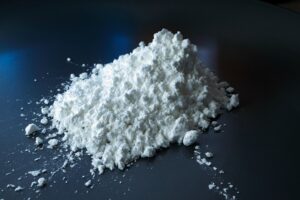
The Security Service of Ukraine dismantled an international drug smuggling ring operating out of Southern Europe and seized the largest shipment of cocaine since the start of the full-scale war, valued at approximately 70 million hryvnia. As part of a special operation in the Kyiv, Dnipropetrovsk, and Lviv regions, ten suspected members of an international drug syndicate were detained simultaneously, the SBU reported on August 12.
According to the security service, the group was involved in the distribution of wholesale shipments of cocaine, ecstasy, and other psychotropic substances imported from abroad. The SBU estimates the monthly revenue from these illegal activities at 15–20 million hryvnias.
Investigators believe a Kyiv resident was the organizer of the group’s activities in Ukraine. According to law enforcement, he recruited people to distribute drugs in various regions of the country.
During the first series of searches, SBU officers discovered approximately 2 kg of cocaine and other prohibited substances. Subsequently, more than 8 kg of cocaine and other potent substances were found in hiding places. The SBU estimated the total value of the seized substances at approximately 70 million hryvnias.
Thus, this amounts to approximately 10 kg of cocaine, not including the other seized substances. The SBU describes this shipment as the largest the agency has uncovered in Ukraine since the start of the full-scale war.
The ten detainees have been notified of charges under Part 3 of Article 307 of the Criminal Code of Ukraine—the illegal production, acquisition, storage, transportation, or sale of narcotic drugs and psychotropic substances committed by an organized group. They are currently in custody. The investigation has also established the possible involvement of three Ukrainian citizens currently in Spain in organizing the trafficking route. The issue of their extradition to Ukraine is currently being resolved.
The operation was carried out by SBU officers under the procedural supervision of the Dnipro District Prosecutor’s Office in Kyiv.
The SBU operation comes amid high cocaine supply in Europe. According to the 2026 European Drug Report, cocaine remains the second most prevalent illicit drug in Europe after cannabis. Approximately 4.3 million Europeans aged 15–64 have used it in the past year.
The EUDA notes that large shipments of cocaine continue to flow into Europe primarily from South America, with international criminal networks actively exploiting global commercial and maritime cargo flows. Large quantities of the drug are regularly seized at European ports.
Spain and the Western Balkans are a key component of the European system for combating international drug trafficking, primarily due to the activities of major organized crime groups in the region.
Europol notes that certain criminal networks linked to Montenegro are involved in organizing large-scale cocaine shipments from South America to European markets and have connections both within the EU and in Latin America.
In April 2026, Europol reported the arrest in Montenegro of one of the leading members of the so-called “Balkan Cartel.” Montenegrin law enforcement authorities charged a group of suspects in connection with the illicit trafficking of approximately 2,700 metric tons of cocaine between October 2024 and April 2026. The drugs had previously been seized during several operations in EU countries and South America.
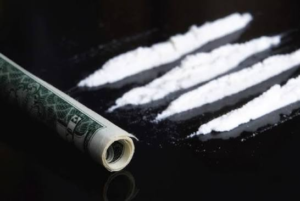
Global cocaine production has reached a historical maximum: in 2024, about 4.1 thousand tonnes of pure cocaine were produced in South America, according to the new World Drug Report 2026 of the United Nations Office on Drugs and Crime.
According to UNODC’s estimate, the figure is in the range of 3.8 thousand to 4.7 thousand tonnes and is more than four times higher than the 2014 level. This makes the cocaine market one of the fastest-growing segments of the global illegal drug economy.
The UN notes that the growth in production is accompanied by the expansion of supply routes, changes in logistics and a high level of violence in countries of origin and transit. South America remains the main production region, while the main countries associated with coca cultivation and cocaine production are Colombia, Peru and Bolivia.
Colombia remains a key link in the global market. According to UNODC, in 2024 it was in Colombia that 966 tonnes of cocaine were seized, which accounts for about 40% of global seizures. It follows from this that the total volume of cocaine seizures in the world in 2024 could have amounted to about 2.4 thousand tonnes. At the same time, seizures do not reflect the entire volume of the market, but only the part that law enforcement agencies were able to intercept.
Demand also remains high. According to UNODC, in 2024 about 25 million people worldwide used cocaine. This places it after cannabis, opioids and amphetamines among the most widespread groups of drugs.
North America remains the largest cocaine market. According to the UN estimate, in 2024 about 6.5 million people in North America used cocaine, or 2% of the population aged 15-64. Western and Central Europe is considered the second-largest market, where demand for cocaine has grown significantly over the past decade. South America and individual countries of Oceania also remain significant markets.
In Europe, according to the European Union Drugs Agency, in 2024 EU countries reported 97 thousand cocaine seizures with a total volume of 330 tonnes. Spain, France and Belgium accounted for 67% of this volume. Spain seized 124 tonnes, France — 53.5 tonnes, and Belgium — 44.6 tonnes. Significant volumes were also recorded in the Netherlands, Germany, Portugal and Italy.
European data show that the market is changing its routes. A decrease in the volume of seizures in Belgium, Germany and the Netherlands does not necessarily mean a reduction in supplies. EUDA indicates that this may reflect a change in methods and points of entry amid strengthened controls in major ports.
A separate trend is the emergence of processing and packaging facilities already inside Europe. In 2024, six EU countries reported the dismantling of at least 42 facilities linked to the production or processing of cocaine. This suggests that the market is becoming more complex: part of the operations is being moved closer to consumers in order to conceal supplies and increase profitability.
The price of cocaine in the world strongly depends on the region, the degree of risk, the distance from producing countries and the level of law enforcement pressure. In countries of origin, the cost is significantly lower, while in distant markets, especially in Europe, North America and Oceania, the final price may be many times higher. The UN and European agencies record not so much a single global price as a general trend: amid growth in production and supplies, the purity of the product at the retail level in Europe has increased, while the price index has declined over the past decade.
As a result, cocaine remains not only a public health problem, but also a factor of organized crime, corruption, violence and destabilization of legal economies.
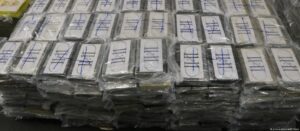
According to Serbian Economist, Hungarian law enforcement agencies seized a record 522 kg of cocaine, the Hungarian police reported following a press conference.
According to police, the shipment was discovered at the Csepel port in Budapest among a cargo of bananas. Investigators inspected approximately 7,000 boxes and found 438 blocks of cocaine weighing a total of 522 kg. The estimated black market value of the shipment is approximately 43 million euros. Hungarian authorities called this the largest cocaine seizure in the country’s history.
The operation involved the Hungarian National Bureau of Investigation, the Hungarian Tax and Customs Administration, German law enforcement agencies, as well as partners in the Czech Republic and Slovakia.
Police also reported the arrest of several suspects. Hungarian law enforcement officials believe the country is becoming one of the logistics hubs through which large shipments of drugs from South America are distributed further across the region.
International container shipments of cocaine have surged in recent years. While major flows previously passed through major ports in the Netherlands and Spain, shipments are now increasingly being routed to Southern and Central Europe as well, including ports in Montenegro. From there, shipments can be redirected to other countries in the region.
Hungary has no seaports, but it is actively used as a transit country thanks to its rail and road connections with Germany, Romania, Slovakia, the Czech Republic, and the Balkans. Montenegro, which has access to the Adriatic Sea, is also regularly cited in European investigations as one of the most frequent transit points for illicit shipments into the region.
https://t.me/relocationrs/2944

According to Serbian Economist, Europol has reported new progress in the investigation against the so-called “Balkan Cartel”: one of the alleged key members of the network, which investigators link to the supply of large shipments of cocaine from South America to the European market, has been detained in Montenegro. According to the agency, the case involves the smuggling of 2.7 tons of drugs.
As Europol clarifies, Montenegrin judicial authorities have filed charges against several suspects, and the investigation is focused on the international logistics of drug trafficking, financial flows, and the coordination of shipments within Europe. This involves a network that, according to investigators, operated across several countries and used the Balkans as part of a broader criminal network.
Earlier, in December 2025, the agency reported on a separate operation in Germany targeting key figures in this network; at that time, three individuals were detained and assets worth approximately 5 million euros were seized.
For Balkan countries, such cases have not only a criminal but also an economic dimension. Intensified international investigations, expanded data sharing between police and financial intelligence agencies, and pressure on illicit cross-border flows are becoming part of a broader agenda to reduce reputational and institutional risks in the region. For Montenegro, Serbia, and neighboring markets, this is also important from the perspective of investment image, as the fight against organized crime remains one of the EU’s key evaluation criteria.
https://t.me/relocationrs/2642



