
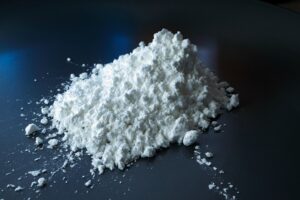
The Security Service of Ukraine dismantled an international drug smuggling ring operating out of Southern Europe and seized the largest shipment of cocaine since the start of the full-scale war, valued at approximately 70 million hryvnia. As part of a special operation in the Kyiv, Dnipropetrovsk, and Lviv regions, ten suspected members of an international drug syndicate were detained simultaneously, the SBU reported on August 12.
According to the security service, the group was involved in the distribution of wholesale shipments of cocaine, ecstasy, and other psychotropic substances imported from abroad. The SBU estimates the monthly revenue from these illegal activities at 15–20 million hryvnias.
Investigators believe a Kyiv resident was the organizer of the group’s activities in Ukraine. According to law enforcement, he recruited people to distribute drugs in various regions of the country.
During the first series of searches, SBU officers discovered approximately 2 kg of cocaine and other prohibited substances. Subsequently, more than 8 kg of cocaine and other potent substances were found in hiding places. The SBU estimated the total value of the seized substances at approximately 70 million hryvnias.
Thus, this amounts to approximately 10 kg of cocaine, not including the other seized substances. The SBU describes this shipment as the largest the agency has uncovered in Ukraine since the start of the full-scale war.
The ten detainees have been notified of charges under Part 3 of Article 307 of the Criminal Code of Ukraine—the illegal production, acquisition, storage, transportation, or sale of narcotic drugs and psychotropic substances committed by an organized group. They are currently in custody. The investigation has also established the possible involvement of three Ukrainian citizens currently in Spain in organizing the trafficking route. The issue of their extradition to Ukraine is currently being resolved.
The operation was carried out by SBU officers under the procedural supervision of the Dnipro District Prosecutor’s Office in Kyiv.
The SBU operation comes amid high cocaine supply in Europe. According to the 2026 European Drug Report, cocaine remains the second most prevalent illicit drug in Europe after cannabis. Approximately 4.3 million Europeans aged 15–64 have used it in the past year.
The EUDA notes that large shipments of cocaine continue to flow into Europe primarily from South America, with international criminal networks actively exploiting global commercial and maritime cargo flows. Large quantities of the drug are regularly seized at European ports.
Spain and the Western Balkans are a key component of the European system for combating international drug trafficking, primarily due to the activities of major organized crime groups in the region.
Europol notes that certain criminal networks linked to Montenegro are involved in organizing large-scale cocaine shipments from South America to European markets and have connections both within the EU and in Latin America.
In April 2026, Europol reported the arrest in Montenegro of one of the leading members of the so-called “Balkan Cartel.” Montenegrin law enforcement authorities charged a group of suspects in connection with the illicit trafficking of approximately 2,700 metric tons of cocaine between October 2024 and April 2026. The drugs had previously been seized during several operations in EU countries and South America.
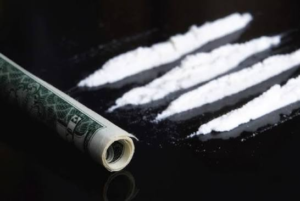
Global cocaine production has reached a historical maximum: in 2024, about 4.1 thousand tonnes of pure cocaine were produced in South America, according to the new World Drug Report 2026 of the United Nations Office on Drugs and Crime.
According to UNODC’s estimate, the figure is in the range of 3.8 thousand to 4.7 thousand tonnes and is more than four times higher than the 2014 level. This makes the cocaine market one of the fastest-growing segments of the global illegal drug economy.
The UN notes that the growth in production is accompanied by the expansion of supply routes, changes in logistics and a high level of violence in countries of origin and transit. South America remains the main production region, while the main countries associated with coca cultivation and cocaine production are Colombia, Peru and Bolivia.
Colombia remains a key link in the global market. According to UNODC, in 2024 it was in Colombia that 966 tonnes of cocaine were seized, which accounts for about 40% of global seizures. It follows from this that the total volume of cocaine seizures in the world in 2024 could have amounted to about 2.4 thousand tonnes. At the same time, seizures do not reflect the entire volume of the market, but only the part that law enforcement agencies were able to intercept.
Demand also remains high. According to UNODC, in 2024 about 25 million people worldwide used cocaine. This places it after cannabis, opioids and amphetamines among the most widespread groups of drugs.
North America remains the largest cocaine market. According to the UN estimate, in 2024 about 6.5 million people in North America used cocaine, or 2% of the population aged 15-64. Western and Central Europe is considered the second-largest market, where demand for cocaine has grown significantly over the past decade. South America and individual countries of Oceania also remain significant markets.
In Europe, according to the European Union Drugs Agency, in 2024 EU countries reported 97 thousand cocaine seizures with a total volume of 330 tonnes. Spain, France and Belgium accounted for 67% of this volume. Spain seized 124 tonnes, France — 53.5 tonnes, and Belgium — 44.6 tonnes. Significant volumes were also recorded in the Netherlands, Germany, Portugal and Italy.
European data show that the market is changing its routes. A decrease in the volume of seizures in Belgium, Germany and the Netherlands does not necessarily mean a reduction in supplies. EUDA indicates that this may reflect a change in methods and points of entry amid strengthened controls in major ports.
A separate trend is the emergence of processing and packaging facilities already inside Europe. In 2024, six EU countries reported the dismantling of at least 42 facilities linked to the production or processing of cocaine. This suggests that the market is becoming more complex: part of the operations is being moved closer to consumers in order to conceal supplies and increase profitability.
The price of cocaine in the world strongly depends on the region, the degree of risk, the distance from producing countries and the level of law enforcement pressure. In countries of origin, the cost is significantly lower, while in distant markets, especially in Europe, North America and Oceania, the final price may be many times higher. The UN and European agencies record not so much a single global price as a general trend: amid growth in production and supplies, the purity of the product at the retail level in Europe has increased, while the price index has declined over the past decade.
As a result, cocaine remains not only a public health problem, but also a factor of organized crime, corruption, violence and destabilization of legal economies.
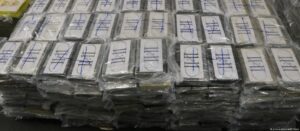
According to Serbian Economist, Hungarian law enforcement agencies seized a record 522 kg of cocaine, the Hungarian police reported following a press conference.
According to police, the shipment was discovered at the Csepel port in Budapest among a cargo of bananas. Investigators inspected approximately 7,000 boxes and found 438 blocks of cocaine weighing a total of 522 kg. The estimated black market value of the shipment is approximately 43 million euros. Hungarian authorities called this the largest cocaine seizure in the country’s history.
The operation involved the Hungarian National Bureau of Investigation, the Hungarian Tax and Customs Administration, German law enforcement agencies, as well as partners in the Czech Republic and Slovakia.
Police also reported the arrest of several suspects. Hungarian law enforcement officials believe the country is becoming one of the logistics hubs through which large shipments of drugs from South America are distributed further across the region.
International container shipments of cocaine have surged in recent years. While major flows previously passed through major ports in the Netherlands and Spain, shipments are now increasingly being routed to Southern and Central Europe as well, including ports in Montenegro. From there, shipments can be redirected to other countries in the region.
Hungary has no seaports, but it is actively used as a transit country thanks to its rail and road connections with Germany, Romania, Slovakia, the Czech Republic, and the Balkans. Montenegro, which has access to the Adriatic Sea, is also regularly cited in European investigations as one of the most frequent transit points for illicit shipments into the region.
https://t.me/relocationrs/2944

Law enforcement officers in Transcarpathia uncovered a cocaine distribution scheme, in which the criminals disguised the drugs as washing powder and sent them to “customers” by mail, according to the Office of the Prosecutor General.
“According to the investigation, a 27-year-old resident of Zakarpattia organized a channel for supplying drugs to Ukraine and recruited accomplices to help him,” the prosecutor’s office said in a statement on its Telegram channel on Thursday.
The agency notes that the accomplices helped store the goods in a warehouse, pack them into bags, and prepare them for sale.
“Cocaine disguised as washing powder was sent to their ‘customers’ by mail to various regions of Ukraine, in particular to Kyiv,” the prosecutor’s office said.
According to the Office of the Prosecutor General, the sale of six pressed briquettes of cocaine, weighing about 1 kg each, has been documented. The approximate value of this on the “black market” reaches hundreds of thousands of US dollars.
“During an attempt to sell another batch of narcotics, law enforcement officers exposed one of the members of the criminal group, and another in his own home in Uzhgorod,” the agency said.
As a result of searches in the apartments, warehouses, and vehicles of the aforementioned individuals, narcotic and psychotropic substances were seized: cocaine, methamphetamine, mephedrone, as well as computer equipment, mobile phones, packaging materials, postal receipts, cash, and draft documentation.
Under the procedural guidance of the Transcarpathian Specialized Prosecutor’s Office in the field of defense of the Western region, they were notified of suspicion of illegal storage, shipment, and sale of narcotic drugs, psychotropic substances, or their analogues on an especially large scale (Part 3 of Article 307 of the Criminal Code of Ukraine).
Pre-trial investigation – USBU in Zakarpattia region based on materials from USBU in Zakarpattia region and USR in Zakarpattia region DSR NPU.
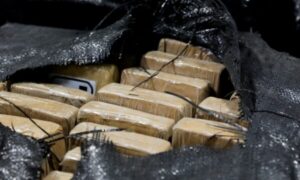
According to Serbian Economist, organized crime groups from the Western Balkans have ties in Venezuela and are involved in investigations related to cocaine smuggling, Radio Free Europe (RFE) reports.
According to RSE, networks from the Balkans are considered by international organizations, including Europol and Interpol, to be key players in the supply of cocaine from Latin America to Europe, with Venezuela seen as one of the links in this logistics chain.
Sasha Djordjevic, an expert at the Global Initiative against Transnational Organized Crime (GI-TOC), told RSE that Venezuela is important for cocaine flows as a “strategic outlet” to the Atlantic, although it is not the only and main point of support in the region for Balkan groups.
RSE notes that interest in Venezuela’s role in drug trafficking has intensified following the early January arrest of Venezuelan leader Nicolas Maduro, who has been charged in the US and pleaded not guilty in a New York court on January 5.
As one example, RSE cites the case of the detention of the Aressa off the coast of Aruba in February 2020, when, according to the publication, about five tons of cocaine were seized and 11 Montenegrin crew members were detained. In March 2021, an Aruban court sentenced them to prison terms ranging from nine to 15 years. In addition, according to RSE, Europol linked Serbian citizen Miroslav Starčević, who was detained in May 2023 along with other suspects, to this case, and the proceedings in Serbia are currently under judicial review, according to the publication.
RSE also notes that Europol reported no direct cooperation with Venezuela, so information about the possible involvement of Balkan groups is obtained indirectly – through the law enforcement agencies of the countries in the region, while the Interior Ministries of Serbia and Montenegro, according to RSE, did not respond to requests prior to the publication of the material.
The global cocaine market is experiencing a period of record supply, with prices falling and drug quality improving, according to an analysis by German magazine Der Spiegel, cited by European media outlets.
According to the European Drug Agency (EUDA), the average purity of street cocaine in Europe has risen to 80-96% in recent years, while retail prices have fallen. Frankfurt am Main is cited as an example, where, according to experts, a gram costs around €30-50, whereas a few years ago the price was around €100.
One of the key reasons cited is the situation in Colombia. Following the government’s peace agreement with the FARC rebel group in 2016, the area of coca plantations in the country increased by about 73% and is now comparable to the territory of two Berlins, according to Der Spiegel.
Increased competition between cartels and “logistics optimization” have led to larger volumes of purer product entering Europe, shifting the balance between supply and demand. Experts interviewed by Der Spiegel describe this as a “white tsunami,” pointing to the growth in the number of consumers in Europe and the Americas, which is also reported by the United Nations Office on Drugs and Crime (UNODC).
International organizations emphasize that the expansion of the cocaine market is accompanied by an increase in related risks, from organized crime to serious health consequences, and call on governments to strengthen prevention and addiction treatment programs.
According to estimates by narcologists, long-term cocaine use leads to severe addiction, increased anxiety, depression, and psychosis, raises blood pressure, and sharply increases the risk of heart attack and stroke. It causes chronic damage to the nasal septum and lungs (when snorted or smoked), reduces libido, and often leads to social consequences such as job loss, debt, and family conflicts, as well as an increased risk of HIV and hepatitis when injected.
According to the United Nations Office on Drugs and Crime, in 2023, at least 25 million people worldwide used cocaine, up from 17 million a decade ago, and the retail turnover of the global cocaine market, according to a study by Global Financial Integrity, was estimated at between $100 billion and $143 billion per year in 2017 and, according to experts, could have doubled since then.



