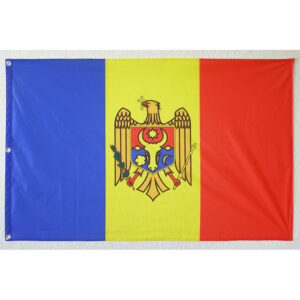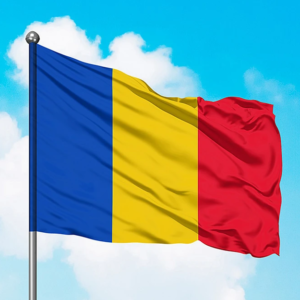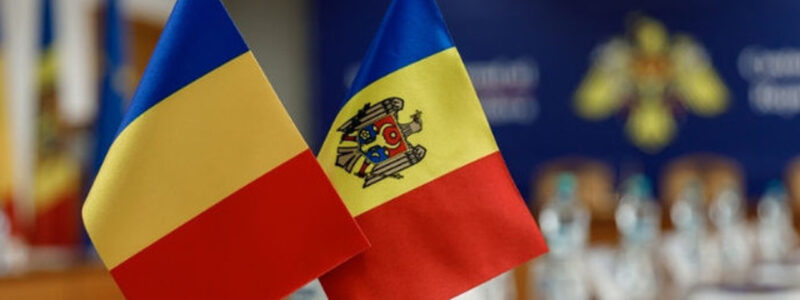
Moldova may consider unification with Romania as an alternative scenario if negotiations on the country’s accession to the European Union after 2028 are blocked or significantly delayed, reports Euractiv, citing Moldova’s Deputy Prime Minister and Minister of Economic Development and Digitalisation, Eugen Osmochescu.
According to Osmochescu, Chisinau’s main objective remains unchanged – to sign an EU accession treaty by the end of 2028. He emphasised that unification with Romania is not the current official scenario, but could be considered a ‘plan B’ if Moldova’s European integration faces insurmountable political obstacles.
This statement reflects growing concern in Chisinau over a possible delay in the EU enlargement process. Moldova was granted EU candidate status in 2022 alongside Ukraine, and the negotiation process depends not only on the implementation of reforms but also on the political decisions of EU member states.
A potential union with Romania remains a sensitive issue in Moldovan politics. Supporters of such a scenario point to the common language, history and culture, as well as the fact that a significant proportion of Moldova’s citizens hold Romanian citizenship. Opponents believe that the issue could exacerbate internal political divisions, complicate relations with part of the population and intensify the Transnistria problem.
For Romania, any discussion of such a scenario also carries complex political and legal implications. Romania is a member of the EU and NATO, so any proposals for border changes, state unification or the incorporation of new territory would require not only decisions by Bucharest and Chisinau, but also consideration of the positions of the European Union, NATO and international partners.
The Transnistrian factor is of particular significance. The left-bank region of the Dniester has not been under the de facto control of Moldova’s central authorities since the early 1990s; a Russian military contingent is present on its territory, and a political settlement of the conflict remains frozen. Any scenario involving Moldova’s accelerated integration into the EU or unification with Romania will inevitably be linked to the question of Transnistria’s status.
That said, Osmochescu’s statement should for now be viewed more as a political signal to Brussels regarding the need to maintain a clear prospect of membership for Moldova, rather than as the start of an official process of unification with Romania. Chisinau is thus signalling that delays in EU enlargement could prompt a search for alternative paths to European integration.
Moldova covers an area of approximately 33,800 square kilometres and has a population of around 2.4–3.0 million people, depending on the methodology used to count and account for citizens living abroad. Romania is a country in South-Eastern Europe, a member of the EU and NATO, with an area of around 238,400 square kilometres and a population of around 18.8–19.1 million people.
Transnistria is an unrecognised entity on the left bank of the Dniester, which declared independence from Moldova in the early 1990s and is not de facto controlled by Chisinau. No UN member state recognises Transnistria’s independence. It is recognised only by other unrecognised or partially recognised entities – Abkhazia and South Ossetia; it was previously also recognised by Nagorno-Karabakh/Artsakh, which ceased to exist following the events of 2023. The international community regards Transnistria as part of the sovereign territory of Moldova.