
The international forum “Rebuilding Ukraine: Security, Opportunities, Investment” will take place on October 22–23, 2026, in Bucharest, Romania, at the ROMEXPO exhibition center, Pavilion C2. The event will bring together representatives of government agencies from Ukraine, Romania, and other European countries, as well as international financial organizations, investors, the business community, and experts.
The forum is organized by the Romanian think tank New Strategy Center in partnership with the Romanian Chamber of Commerce and Industry. The academic partner of the event is the University of Agronomic Sciences and Veterinary Medicine in Bucharest (USAMV).
According to the updated program, 31 thematic panel discussions are scheduled over the course of two days, focusing on attracting international capital for Ukraine’s reconstruction, the development of transportation and energy infrastructure, industrial cooperation, defense technologies, food security, and cross-border cooperation.
One of the forum’s key focuses will be a discussion of Romania’s role as a regional logistics and investment hub for Ukraine’s reconstruction. In particular, participants will examine the prospects for developing transport corridors between Ukraine, Romania, and Moldova, expanding the capacity of Danube ports, and creating new rail and road routes between the Baltic and Black Seas.
Special attention will be given to investment opportunities in Ukrainian regions. The program includes special presentations on projects in the Kyiv, Zakarpattia, Ivano-Frankivsk, Vinnytsia, Chernivtsi, Odesa, and Kherson regions. Representatives of local authorities, regional development agencies, and the business community will discuss attracting foreign investors, implementing infrastructure projects, and developing cooperation with Romanian partners.
On October 22, the main focus will be on economic recovery, financing, and investments. Participants will examine mechanisms for attracting private capital, opportunities offered by international development banks, support programs for Ukrainian businesses, and prospects for the restoration of residential and industrial infrastructure.
Among the announced participants for the first day are Gennadiy Chizhikov, President of the Ukrainian Chamber of Commerce and Industry; Marina Khlistun, Executive Director of UkraineInvest; Kateryna Glazkova, Executive Director of the Union of Ukrainian Entrepreneurs; and representatives of the European Investment Bank, the German development bank KfW, Japan’s JBIC, Poland’s BGK, and other international financial institutions.
As part of the discussion on financing reconstruction, a remote address by a representative of the Ukrainian government is scheduled. Separate panels will be dedicated to the development of the agricultural sector, ensuring global food security, the modernization of the energy sector, and the development of renewable energy sources.
Also on October 22, there will be a presentation of the “Together for Ukraine” platform, initiated by the New Strategy Center to foster cooperation and support for Ukraine.
Human capital issues will be the subject of a separate discussion featuring Ella Libanova, director of the M.V. Ptukha Institute of Demography and Social Studies of the National Academy of Sciences of Ukraine. Participants will discuss challenges related to the return of Ukrainian citizens from abroad, staffing the economy, and training specialists for reconstruction.
On October 23, the forum’s program will focus on security challenges, the development of the defense industry, energy resilience, and cross-border cooperation.
In particular, panel discussions are planned on international security guarantees for Ukraine, the prospects for ending Russian aggression, the use of unmanned systems, and the development of joint production of defense products by Ukrainian and European companies.
Participants in the discussion on security guarantees will include Igor Zhovkva, Advisor to the President of Ukraine on Foreign Policy; Kiril Petkov, former Prime Minister of Bulgaria; and representatives from the United States, Japan, and European think tanks.
A separate session will be dedicated to the reintegration of veterans and the utilization of their professional potential in economic recovery. Among the participants listed is Ruslan Prykhodko, Ukraine’s Deputy Minister for Veterans’ Affairs.
The energy segment on the second day will include discussions on preparing the Ukrainian power grid for the winter season, protecting critical infrastructure, cooperation in the Black Sea region, and prospects for involving international companies in energy projects. Among the announced participants are representatives of Naftogaz of Ukraine, OMV Petrom, ROMGAZ, Japan’s JICA, and other energy companies and organizations.
Issues related to the participation of Romanian businesses in Ukraine’s reconstruction will play a significant role in the program. A special panel will be dedicated to financial instruments, institutional support, and opportunities for implementing joint investment projects.
The forum’s concluding discussions will address the prospects for post-war security in Europe, the development of defense-industrial cooperation, Russia’s international responsibility, and mechanisms for compensating Ukraine for damages caused by the war.
The organizers note that the forum’s goal is to create a practical platform for dialogue between Ukrainian and international companies, financial institutions, and representatives of government agencies and local authorities. Particular emphasis is placed on identifying specific investment opportunities and forming partnerships aimed at Ukraine’s long-term economic recovery.
The New Strategy Center is an independent Romanian think tank specializing in security, defense, foreign policy, energy, and regional cooperation. The organization hosts international conferences and expert events dedicated to strategic challenges in the Black Sea region and Central and Eastern Europe. This forum continues a series of events on Romania’s role in Ukraine’s recovery, organized by the New Strategy Center in 2023 and 2025.
The detailed forum program and information about the participants are available on the event’s official website.
Open4Business is a media partner of the event.
Bucharest, INVESTMENT, RECONSTRUCTION, ROMANIA, UKRAINE, ЧИЖИКОВ
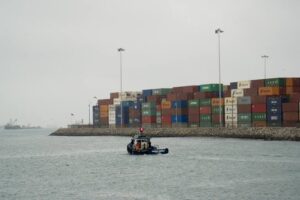
The Romanian port of Constanța on the Black Sea is among the European logistics hubs used for the illegal import of cocaine from Latin America. At the same time, international criminal groups are expanding their presence in Romania and other countries in Southeast Europe by establishing ties with local criminal networks, according to research by the European Drug Agency (EUDA) and an international investigative report by The Guardian.
According to The Guardian’s investigation, published on October 13, 2026, criminal organizations from Colombia, Brazil, Ecuador, Venezuela, Mexico, and other Latin American countries are already active in at least 12 European countries. At the same time, certain networks—in particular Brazil’s Primeiro Comando da Capital (PCC)—may be operating in 16 European countries, according to law enforcement estimates.
Over the course of four months, journalists analyzed data from law enforcement agencies, international investigations, and court cases, and spoke with experts from eight countries. The investigation revealed that Latin American cartels are increasingly collaborating with European criminal groups, leveraging their connections and logistical capabilities.
Traditionally, the main routes for cocaine entering the European market remain Belgium, the Netherlands, Spain, Portugal, and France. However, law enforcement agencies are noting an expansion of drug networks’ activities in Germany, Romania, Bulgaria, Croatia, and other countries in Central and Southeastern Europe.
The port of Constanța is of particular concern; the EUDA identifies it as one of the entry points for cocaine into Europe, alongside Antwerp, Rotterdam, Hamburg, Valencia, Algeciras, and Gioia Tauro in Italy.
According to analysts, tighter controls at major ports in Western Europe are prompting criminal organizations to make greater use of alternative maritime routes. This increases the risks to port infrastructure in the Black Sea and Adriatic regions.
The scale of the European cocaine market remains significant. According to EUDA data, between 2014 and 2024, the volume of cocaine seized in Europe increased by 471%.
In 2024, European Union member states reported 97,000 cocaine seizures totaling 330 metric tons. This is less than the record 419 metric tons seized in 2023; however, the number of seizures increased, which may indicate a shift in drug trafficking routes and methods.
The largest seizures in 2024 were recorded in Spain—124 metric tons, France—53.5 metric tons, and Belgium—44.6 metric tons. These three countries accounted for about 67% of the total amount of cocaine seized in the EU.
Significant quantities were also seized in the Netherlands (37.6 metric tons), Germany (23.8 metric tons), Portugal (23 metric tons), and Italy (11 metric tons).
At the same time, the countries of the Western Balkans play a special role in the international drug trade. According to a study by the Global Initiative Against Transnational Organized Crime, criminal networks from Montenegro, Serbia, Albania, Bosnia and Herzegovina, and other countries in the region have become active participants in global cocaine supply chains over the past two decades.
The Montenegrin port of Bar holds a special place among Balkan ports. According to data from the Montenegrin Ministry of Health and the EUDA, in August 2021, law enforcement agencies discovered more than 1.4 metric tons of cocaine in a container shipment of bananas that arrived from Ecuador via the port of Bar. In January 2022, another approximately 500 kg of cocaine was discovered in the country in a shipment of bananas that passed through this port.
Montenegrin authorities viewed these incidents as confirmation of the country’s role as a transit point in international drug smuggling. The small domestic market could not have been the final destination for such large quantities.
In general, the main established maritime routes for cocaine smuggling into Europe pass through the Atlantic ports of Antwerp in Belgium, Rotterdam in the Netherlands, Hamburg in Germany, Valencia and Algeciras in Spain, as well as through Portuguese and French ports.
In the Mediterranean region, Gioia Tauro in Italy and Piraeus in Greece remain key hubs. In the Adriatic, major seizures have been recorded in Bari (Montenegro), Durres (Albania), Ploče, and Rijeka (Croatia). In the Black Sea basin, ports attracting the attention of law enforcement agencies in the context of cocaine smuggling risks include Constanța in Romania and Varna in Bulgaria.
However, these routes carry different weight in international drug trafficking: ports in Belgium, the Netherlands, and Spain remain the primary points of entry in terms of seizure volumes, while Balkan and Black Sea ports primarily serve as secondary transit points.
EUDA analysts warn that route diversification, corruption risks, and the use of international transport chains complicate the work of customs and law enforcement agencies. Under these conditions, international information sharing, the inspection of high-risk cargo, and cooperation among European port authorities are becoming increasingly important.
Sources: The Guardian, investigation dated October 13, 2026; EUDA, study of European cocaine supply routes; EUDA, European Drug Report 2026; Montenegro Ministry of Health / EUDA, drug situation overview; Global Initiative Against Transnational Organized Crime, study from April 2025.
According to Experts Club, Ukrainians’ attitudes toward Romania remain predominantly positive or neutral; however, in August 2026, the share of positive assessments declined slightly compared to the previous survey wave. 45.2% of respondents view the country positively, 9.8% negatively, while 42.3% hold a neutral stance, reports the Experts Club Information and Analytical Center.
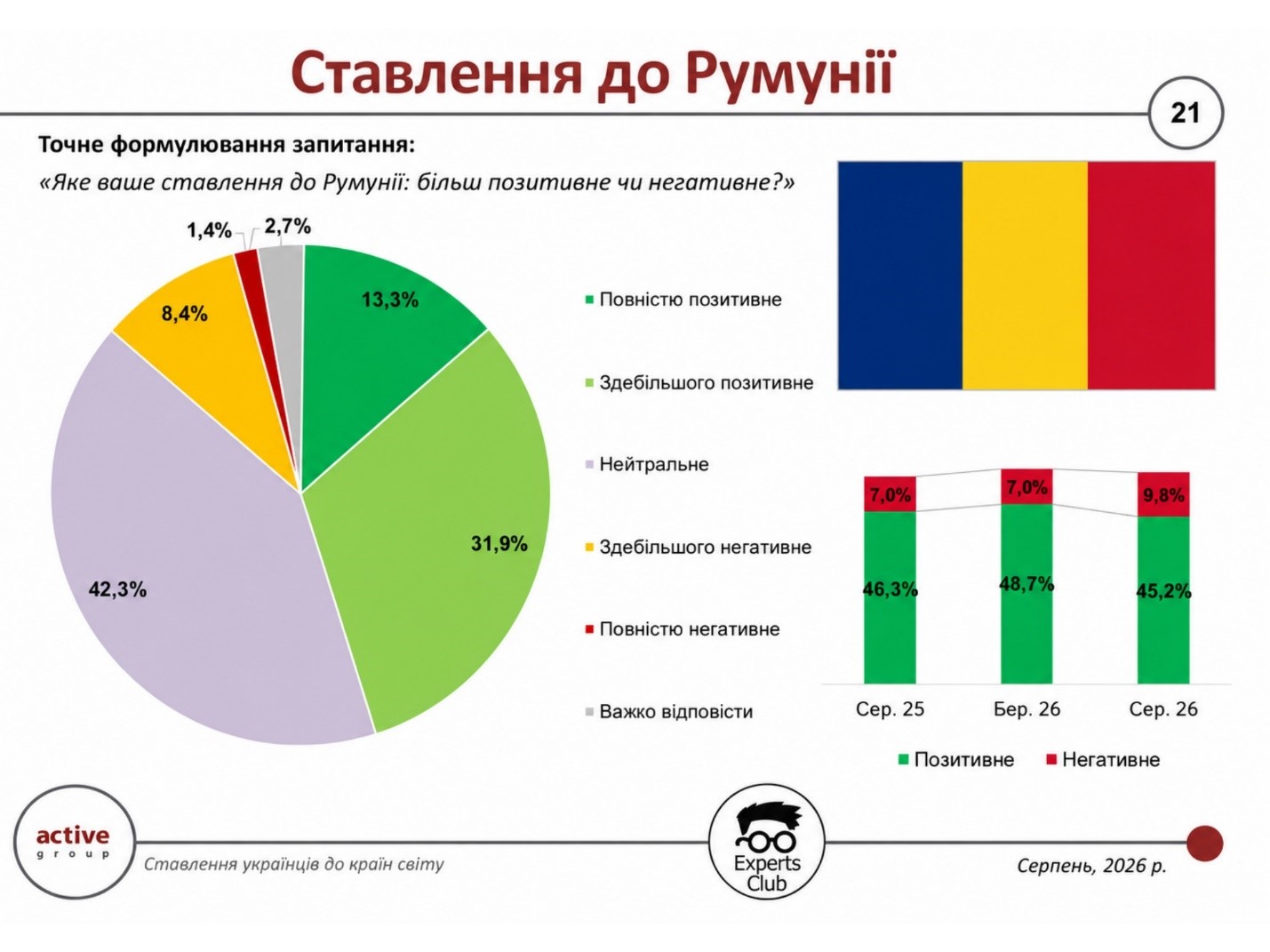
According to the results of the August survey, 13.3% of Ukrainians view Romania entirely positively, and 31.9% view it mostly positively. A neutral attitude was expressed by 42.3% of respondents. 8.4% view the country mostly negatively, 1.4% view it entirely negatively, and another 2.7% were undecided.
The balance of positive and negative assessments stands at plus 35.4 percentage points. Thus, positive responses outnumber negative ones by more than four to one, although respondents with a neutral attitude remain the largest single group.
Compared to March 2026, public perception of Romania has deteriorated slightly. In the previous survey wave, 14.9% of respondents rated the country entirely positively, and 33.8% rated it mostly positively—meaning the total share of positive responses was 48.7%. Seven percent of respondents had a negative view of Romania, and 42.2% were neutral.
Thus, over the course of five months, the positive attitude decreased by 3.5 percentage points—from 48.7% to 45.2%—while the negative attitude increased by 2.8 percentage points—to 9.8%. The share of neutral responses remained virtually unchanged: 42.2% in March and 42.3% in August. The balance between positive and negative assessments decreased from +41.7 to +35.4 percentage points, or by 6.3 percentage points.
These results indicate a moderate weakening of positive perceptions rather than a fundamental shift in attitude. The neutral group remains stable, and negative assessments, despite their increase, still lag significantly behind the positive ones.
Maksym Urakin, founder of the Experts Club information and analytical center and a candidate of economic sciences, commenting on the need to compare public assessments with the actual economic role of international partners, emphasized the deterioration of Ukraine’s overall foreign trade balance.
“For Ukraine, Romania is not an abstract foreign policy partner, but a neighboring country with which logistics, trade, the movement of people, the transit of Ukrainian goods, and humanitarian contacts are intertwined on a daily basis. Therefore, public perception here is shaped not only by political statements but also by concrete experiences of interaction. I would not yet interpret the current decline in positive assessments as a fundamental shift in attitude—the positive balance remains very significant,” Urakin noted.
In the case of Romania, the new wave of the survey shows that the country maintains a positive balance in public opinion, but this margin has narrowed compared to March. At the same time, the virtually unchanged proportion of neutral responses indicates that the main changes occurred specifically between the positive and negative segments.
The survey was conducted in August 2026 using an online self-administered questionnaire via the SunFlowerSociology panel among 800 Ukrainian citizens aged 18 and older. The previous wave also included 800 respondents, and the sample was representative by age, gender, and region.
ACTIVE GROUP, CENTRAL AND EASTERN EUROPE, EXPERTS CLUB, international relations, PUBLIC OPINION, ROMANIA, SOCIOLOGY, UKRAINE
The Czech Republic and Moldova have the highest net sentiment—the balance of positive and negative attitudes—among Ukrainians among the Central and Eastern European countries included in the study—56.2 and 48.2 percentage points, respectively. At the same time, the balance of attitudes toward Poland turned negative in August 2026, while assessments of Slovakia and Hungary improved significantly compared to previous waves. This is evidenced by the results of the third wave of the study “Ukrainians’ Attitudes Toward Countries Around the World,” conducted by Active Group in collaboration with Experts Club, according to the Experts Club Information and Analytical Center.
The Czech Republic received the highest share of positive assessments in this group—61.3%. 32.1% of respondents have a neutral attitude toward it, 5.1% have a negative attitude, and another 1.6% were undecided. The balance of positive and negative attitudes stands at 56.2 percentage points, compared to 64.4 percentage points in March 2026 and 58.7 percentage points in August 2025.
Regarding Moldova, 55.4% of respondents have a positive attitude, 35.6% are neutral, and 7.2% have a negative attitude. The balance stands at 48.2 percentage points, which is lower than the 54.7 percentage points recorded in March but higher than the 46.6 percentage points recorded in August of last year.
Regarding Romania, 45.2% of respondents expressed a positive attitude, 42.3% were neutral, and 9.8% were negative. The balance fell to 35.4 percentage points from 41.7 percentage points in March. In Bulgaria, positive assessments accounted for 42.7%, neutral ones for 47.6%, and negative ones for 7.4%, with the balance standing at 35.3 percentage points, compared to 51.5 percentage points in March.
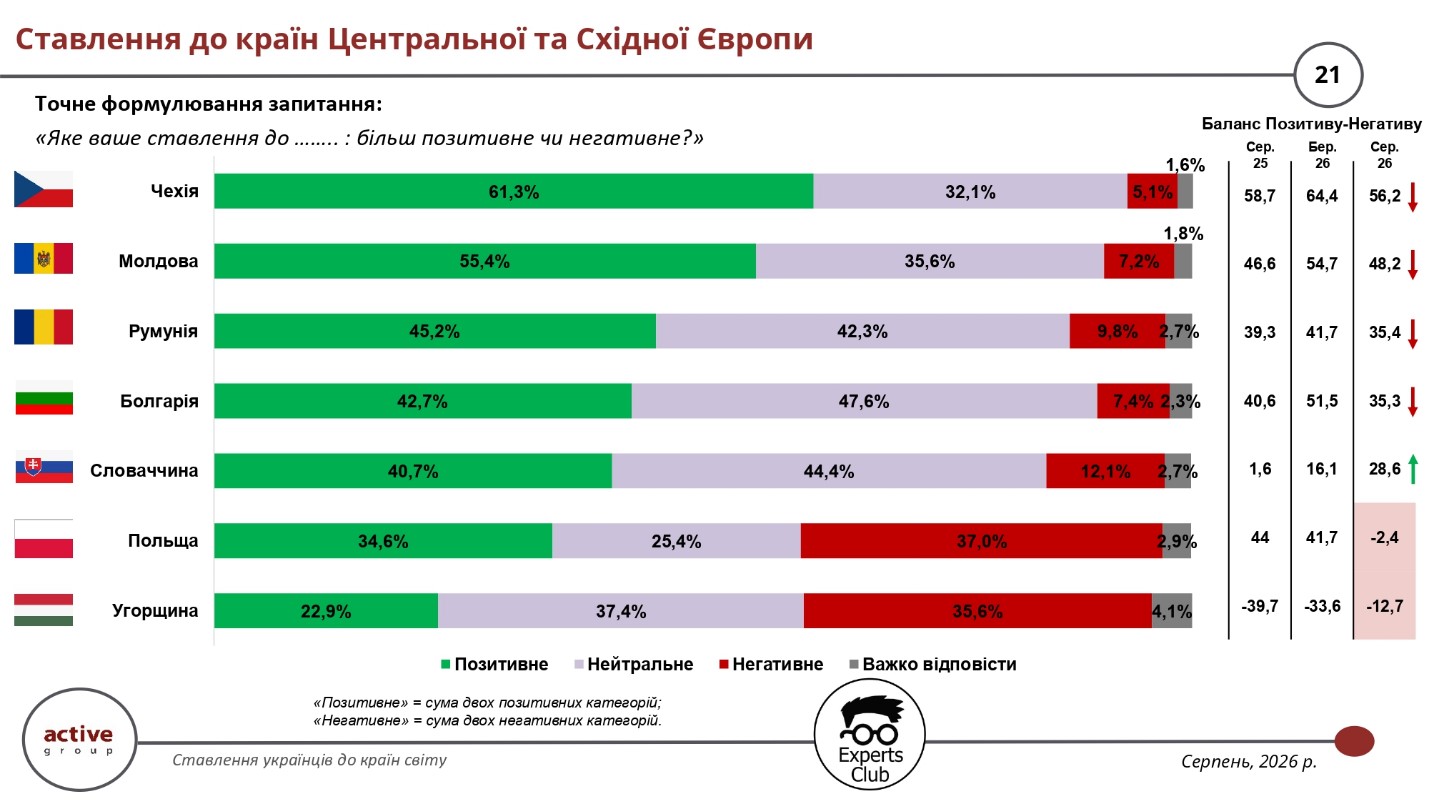
Unlike most countries in the group, attitudes toward Slovakia showed a noticeable improvement. It is viewed positively by 40.7% of respondents, negatively by 12.1%, and neutrally by 44.4%. The balance rose to 28.6 percentage points from 16.1 percentage points in March 2026 and just 1.6 percentage points in August 2025.
The sharpest negative trend was recorded regarding Poland. 34.6% of Ukrainians view it positively, 37% negatively, and 25.4% neutrally. As a result, the net balance stands at minus 2.4 percentage points, whereas in March 2026 it was plus 41.7 percentage points, and in August 2025—plus 44 percentage points. The deterioration in attitudes toward Poland was one of the most notable shifts in the third wave of the survey.
Hungary remains in the negative zone: 22.9% of respondents expressed a positive attitude, 35.6% a negative one, and 37.4% a neutral one. At the same time, its balance improved to minus 12.7 percentage points compared to minus 33.6 percentage points in March and minus 39.7 percentage points in August 2025.
Maksym Urakin, founder of the Experts Club Information and Analytical Center, deputy director of the Interfax-Ukraine news agency, and candidate of economic sciences, emphasized that public perception of countries must be analyzed in parallel with Ukraine’s actual economic ties.
“That is why it is very important for us to analyze our main partners. The first recommendation is to regularly showcase concrete projects, specific actions, and the presence here of foundations, embassies, teams, and diplomats in the humanitarian sphere and in science. We also need to use our sociological data to draw conclusions and strengthen our relations, particularly trade relations,” Urakin noted.
Oleksandr Pozniy, director of the research firm Active Group, highlighted the practical significance of the study’s findings for economic and diplomatic policy.
“We should focus on developing more than just general awareness. First and foremost, business associations, the Ministry of Economy, and the Ministry of Foreign Affairs need to work to develop bilateral relations and improve the balance of trade. We must expand cooperation with countries where we can achieve a positive trade balance,” Pozniy noted.
The survey was conducted in August 2026 using self-administered online questionnaires in the SunFlowerSociology panel among 800 Ukrainian citizens aged 18 and older. According to the organizers, the sample is representative by age, gender, and region, with a maximum theoretical margin of error of 3.5%. This is the third wave of the study, following surveys conducted in August 2025 and March 2026.
ACTIVE GROUP, BULGARIA, Central Europe, CZECH REPUBLIC, EASTERN EUROPE, EXPERTS CLUB, HUNGARY, MOLDOVA, POLAND, Pozniy, ROMANIA, SLOVAKIA, SOCIOLOGY, UKRAINE, URAKIN
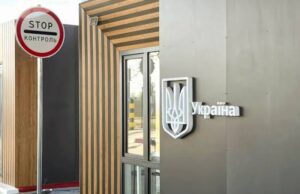
On Thursday, October 8, a new border crossing, “Bila Tserkva–Sighetu Marmatiei,” began operations on the border between Ukraine and Romania, according to Mykola Kalashnyk, Ukraine’s Minister of Recovery, Infrastructure, and Transport.
“This is the first new road crossing between our countries in Zakarpattia in nearly 20 years,” Kalashnik emphasized in a post on his Telegram channel.
He noted that this is the region’s third road border crossing with Romania. An additional route for people and businesses, an opportunity to redistribute traffic flows and reduce the burden on existing crossings.
“It is of particular importance for residents of the Solotvyno community, where Bila Tserkva is located. A large community of ethnic Romanians lives here, and many families have relatives on the other side of the border. The new crossing will make these trips—to parents, children, and loved ones—easier. It is precisely these daily needs of people that should determine how we develop our infrastructure,” the minister noted.
Currently, the border crossing can process up to 400 passenger cars per day. To launch it, an access road was built on the Ukrainian side, and modular infrastructure for border and customs control was installed. Romanian partners built the border crossing and a new bridge over the Tisa River.
“We’re opening traffic on the temporary infrastructure so that people can use the crossing right now. This is the first phase of the project. Next, we plan to build a full-scale complex for processing trucks and buses. Once the work is completed, it will be able to process up to 360 trucks and 50 buses per day,” Kalashnik concluded.
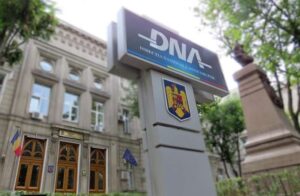
On October 5, Romania’s National Anti-Corruption Directorate (DNA) carried out a large-scale operation as part of an investigation into possible corruption among border police and customs officials on the Romanian-Ukrainian border.
According to “Golos Karpat”, law enforcement officials conducted 96 searches across six Romanian counties—Satu Mare, Bihor, Sălaj, Maramureș, Cluj, and Mureș.
The investigation focuses on border police and customs service officers who worked, in particular, at the Halmeu border crossing, which provides road access between Romania and Ukraine. On the Ukrainian side, it corresponds to the “Dyakovo” border crossing in Zakarpattia Oblast.
According to the DNA, the investigation concerns possible corruption offenses committed in 2025–2026. Investigators are looking into reports that certain border guards and customs officials may have received money in connection with the performance of their official duties.
Searches were conducted both in private homes and on the premises of two government agencies. The operation involved personnel from the Anti-Corruption Directorate, the police, and the gendarmerie. Investigative activities took place, in particular, directly on the territory of the Halmeu border crossing and at a border police unit.
Romanian media, citing sources familiar with the investigation, reported that the alleged corruption scheme may have involved receiving money in exchange for failing to properly inspect vehicles and cargo crossing the border. This could have involved both freight transport and the movement of people.
However, at the time the DNA’s official statement was released, these details had not been fully confirmed. The Anti-Corruption Directorate also did not specify the exact number of suspects or the possible amounts of illicit gains.
The investigation is of particular significance for the Zakarpattia Oblast, as investigative actions were also conducted in Maramureș County, which directly borders Ukraine.
The leadership of the Sighetu Marmației Territorial Border Police Inspectorate stated its readiness to cooperate with the investigation and emphasized that, should the violations be confirmed, measures provided for by law will be applied to the employees.
The Halmeu checkpoint is one of the road crossings on the Romanian-Ukrainian border and is used for passenger and freight traffic between the two countries.



