

According to the Serbian business publication Parametar, trucking companies in Serbia, Bosnia and Herzegovina, Montenegro, and North Macedonia are demanding that the European Union propose a concrete solution by September 1, 2026, to the problem of restrictions on professional drivers’ stays in the Schengen Area. Otherwise, the carriers are prepared to stage coordinated protests again and block freight terminals at the borders with the EU.
The decision was agreed upon by representatives of transport associations from the four countries at a regional meeting in Skopje. However, September 1 is not automatically the start date for the blockade. The carriers intend to wait for negotiations with the European Commission and discussions on the EU’s new visa strategy, after which they will decide on further actions.
The carriers’ main complaint concerns the 90/180 rule. Third-country nationals who benefit from the visa-free regime may stay in the Schengen Area for no more than 90 days within any 180-day period. This restriction also applies to professional drivers from the Western Balkans.
Carriers consider this approach unfair, since drivers do not enter the EU as tourists but regularly cross the border while delivering international cargo and return to their home countries after their trips.
“Our drivers leave every two, three, or five days, depending on the route, and then return. They don’t want to leave their home countries; they want to work for our companies. But 90 days isn’t enough for professional work,” said Nejo Mandić, president of the Serbian Association of International Carriers.
According to estimates by regional transport organizations, the problem affects about 100,000 professional drivers in four countries. Stricter enforcement of the limit has become particularly noticeable following the introduction of the European Entry/Exit System (EES), which automatically records the entry and exit of third-country nationals.
There is already a precedent for this threat to carriers. In late January 2026, drivers from Serbia, Bosnia and Herzegovina, Montenegro, and North Macedonia simultaneously blocked more than 20 freight crossings into the Schengen Area. The borders between Serbia and Bosnia and Herzegovina with Croatia, between North Macedonia and Greece and Bulgaria, as well as the port of Bar in Montenegro, were blocked.
The economic impact was significant. Marko Čadež, president of the Serbian Chamber of Commerce and Industry, estimated at the time that the blockade affected about 93% of the four countries’ exports, with total losses amounting to approximately 92 million euros per day.
According to his assessment, individual companies faced fines and losses of 10,000–50,000 euros per day per company due to their inability to fulfill contractual obligations. Moreover, the problems were not limited to Balkan manufacturers—European companies with factories, suppliers, and customers in the region also suffered from the delays.
If a new regional blockade were to occur on a similar scale, economic losses could again amount to tens of millions of euros daily.
For Serbia, the most vulnerable sector is the industry oriented toward European supply chains. Automotive components, electrical equipment, rubber products, metal products, food, and other goods are often transported by truck on a scheduled basis and must reach the customer at a strictly defined time.
Even a brief halt in traffic leads to a buildup of cargo in warehouses, disruptions to production cycles, and the risk of penalties from European buyers.
A prolonged blockade is particularly dangerous for manufacturers of perishable goods. During the January protests, carriers reported that Lidl alone had planned to deliver approximately 120 truckloads of meat, dairy products, fruits, and vegetables from Europe to Serbia within a single week. The traffic blockade directly threatened these deliveries.
The transport companies themselves are suffering double losses: while a truck is idle, it continues to incur costs for leasing, driver salaries, insurance, and other payments, but generates no revenue. Industry associations also warn that the inability to fully utilize drivers on EU routes could lead to the loss of contracts to carriers from EU countries.
The economic damage will not be limited to the Western Balkans. A significant portion of businesses in Serbia, North Macedonia, and Bosnia and Herzegovina are directly integrated into the production chains of EU companies.
Delays in the supply of components could affect factories in Germany, Italy, Austria, Slovenia, Hungary, and other countries. The reverse flow of European goods to the Balkans is also coming to a halt.
In addition, an important land transport corridor connecting Central Europe, Turkey, and onward to the Middle East runs through Serbia and North Macedonia. During the January protests, Reuters noted that the blockade was disrupting traffic along precisely this strategic route.
Following the January protests, the European Commission acknowledged that the established regime creates problems for highly mobile professions, particularly international drivers, artists, and athletes. The EU’s new visa strategy, adopted in January, provides for the possibility of finding a more flexible mechanism for these categories of workers.
However, an automatic exemption for professional drivers from the 90/180 rule has not yet been implemented.
Carriers are insisting on either special status for international drivers or a system of professional visas or other permits that would allow them to stay in the Schengen Area for more than 90 days without the risk of detention, deportation, or a travel ban.
Thus, September 1 becomes a key date for the Western Balkans’ transport market. If Brussels proposes a workable mechanism for professional drivers, a new blockade can be avoided. If an agreement cannot be reached, carriers from the four countries have already agreed on the possibility of joint action.
The issue of restrictions on professional drivers’ stays in the Schengen Area also affects Ukraine.
Ukrainian long-haul truck drivers employed by carriers registered in Ukraine, when entering the Schengen Area under the visa-free regime, are also generally subject to the 90-day rule within an 180-day period, unless they hold a separate long-term status or a residence permit. In its visa strategy dated January 29, 2026, the European Commission explicitly acknowledged that the current system creates problems for mobile professions, specifically mentioning truck drivers who serve EU businesses.
At the same time, the EU-Ukraine Road Transport Agreement, in effect until March 31, 2027, simplifies access for Ukrainian carriers to the EU market and eliminates the need for a number of permits for bilateral and transit transport, but does not in itself constitute an exception to Schengen migration rules.
Therefore, Ukraine has a genuine interest in the very same solution demanded by carriers in the Western Balkans: to distinguish between a professional driver’s working hours on an international route and a regular tourist stay, or to establish a special regime for such drivers.
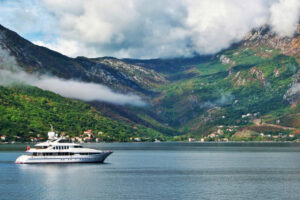
According to “Serbian Economist”, owners from Ukraine own 21 yachts registered under the Montenegrin flag, placing Ukraine fifth among all countries in terms of the number of vessels in the Montenegrin registry and fourth among foreign owners.
As of August 12, 2026, the Montenegrin Yacht Registry contained a total of 576 vessels, according to an updated list from the country’s Maritime Safety Authority. Only 79 yachts are registered to individuals or legal entities from Montenegro itself, while owners from other countries own 497 yachts, or 86.3% of the total fleet.
Serbia remains the clear leader. Individuals and legal entities from Serbia own 193 yachts, or 33.5% of the total registry. Russia ranks second with 112 yachts and a 19.4% share. Together, owners from these two countries own 305 vessels—nearly 53% of all yachts flying the Montenegrin flag.
The ranking of the largest owner countries is as follows:
Rank Owner Country Yachts Share of the Register
1 Serbia 193 33.5%
2 Russia 112 19.4%
3 Montenegro 79 13.7%
4 United States 27 4.7%
5 Ukraine 213.6%
6 Bosnia and Herzegovina 18 3.1%
7 Israel 11 1.9%
8 Germany 10 1.7%
9–10 Switzerland 9 1.6%
9–10 Estonia 9 1.6%
11 United Kingdom 8 1.4%
The number of Ukrainian-owned yachts in the Montenegrin registry has increased significantly in just the last three months.
As of May 12, 2026, the registry listed 536 yachts, 17 of which were owned by Ukrainians. At that time, Ukraine ranked behind Bosnia and Herzegovina, whose owners held 18 yachts.
By August 12, the number of yachts owned by Ukrainians had risen from 17 to 21, as a result of which Ukraine overtook Bosnia and climbed to fifth place in the overall ranking.
Overall, since the end of 2025, the Montenegrin registry has grown by 51 yachts, and by 40 since May alone. At the same time, the current composition of the registry indicates that this growth is driven primarily by foreign owners.
In May, the owners of registered yachts represented 49 countries. Among them, in addition to the largest groups from Serbia, Russia, the United States, Ukraine, and other European countries, were owners from Canada, Turkey, Norway, as well as jurisdictions such as the British Virgin Islands, the Seychelles, Vanuatu, the Marshall Islands, and Belize.
At the same time, owners from EU countries account for a relatively small portion of the registry. In May, they accounted for only about 7.8% of the yachts. The most prominent EU countries were Germany and Estonia.
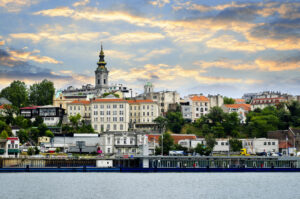
According to Serbian Economist, Belgrade continues to account for a significant portion of Serbia’s construction and investment activity, while the development of the real estate market in other regions of the country remains noticeably less uniform.
In the second quarter of 2026, the Belgrade region was the only region in Serbia where construction activity grew in real terms, with growth reaching 51% compared to the same period last year.
This is evidenced by data from the Republic Statistical Office of Serbia (RZS), published on August 10.
In all other regions of the country, construction activity declined in the second quarter. In Vojvodina, the value of completed construction work at constant prices fell by 2%; in Šumadija and Western Serbia, by 27.5%; and in Southern and Eastern Serbia, by 32.3%.
Thus, the latest quarterly statistics indicate a sharp widening of the gap between the capital and the rest of Serbia in terms of the volume of construction work.
Across Serbia as a whole, the value of construction work in the second quarter rose by 20.6% in current prices compared to April–June 2025.
Building construction grew particularly rapidly. In constant prices, the volume of work in this segment increased by 32.4% year-over-year, while for other construction projects, including infrastructure, the figure decreased by 7.1%.
Vera Yegorova-Tolsta, founder of the Belgrade real estate agency VIDOVSTAN, believes that the concentration of capital in the capital is a sustained trend and is linked not only to local demand but also to Belgrade’s investment appeal.
“Belgrade remains a distinct market within Serbia. It is home to jobs, foreign businesses, major infrastructure projects, and a significant portion of investment demand. Therefore, new projects in the capital’s prestigious neighborhoods typically find buyers faster than similar properties in smaller cities. At the same time, within Belgrade itself, the differences between neighborhoods and the quality of projects are becoming increasingly noticeable,” says Yegorova-Tolstaya.
In practice, this means that nationwide Serbian statistics do not always fully reflect the situation for an apartment buyer in the capital. The growth in supply across the country may be accompanied by persistently high prices in Belgrade’s most popular neighborhoods.
Yegorova-Tolstaya has also previously noted that the Serbian market remains stable, but demand is becoming more selective, and the quality and location of properties are becoming increasingly important.
It will be possible to definitively assess the extent to which construction activity in the second quarter affected apartment prices in Belgrade after the publication of the latest quarterly report from the RGZ Real Estate Price Register.
https://t.me/relocationrs/3427
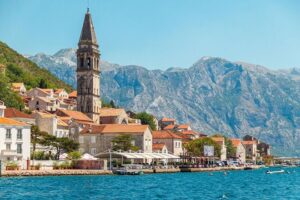
According to Serbian Economist, in the first six months of 2026, Budva welcomed approximately 245,000 tourists, who spent nearly 800,000 nights at the resort, according to preliminary MONSTAT data cited by the Budva Tourism Organization. The number of overnight stays was slightly higher than last year’s.
As of August 7, there were 44,534 registered tourists on the Budva Riviera, of whom 44,143 were foreigners and only 391 were residents of Montenegro. Thus, foreign guests currently account for over 99% of the registered tourist flow. The private sector accommodated 24,888 people, while hotels accommodated 18,525.
Based on the results of the first half of the year, Serbia remains Budva’s largest foreign market, accounting for about 13% of tourist arrivals. The tourism organization also notes growth in the Western European market.
A precise breakdown of current vacationers by nationality is not published, but official data from TO Budva reveals the leading markets.
In group accommodations—primarily hotels—the largest number of tourists currently come from Serbia, Russia, Israel, the United Kingdom, Germany, Bosnia, Poland, Ukraine, and Turkey.
In private apartments and vacation rentals, the breakdown is slightly different: Serbia, Russia, Bosnia, Ukraine, Poland, Germany, Turkey, the United Kingdom, North Macedonia, and Romania lead the way. Thus, Ukrainians currently rank fourth among Budva’s main markets for private accommodations and are among the top ten in the hotel segment.
Despite changes in the structure of international tourism since 2022, the number of Russian tourists also remains high. Russians currently rank second in both group and private accommodations, behind tourists from Serbia.
At the same time, the market structure is becoming more diversified. The role of Israel, the United Kingdom, Germany, and Poland has noticeably increased in the hotel sector, and representatives of Budvanska rivijera, the largest hotel group, also note the presence of guests from the Baltic states, Ukraine, Kazakhstan, Egypt, and China during the current season.
Thus, Budva’s main tourist flow today is driven by Serbia and neighboring countries, Russia and Ukraine, as well as the rapidly growing markets of Western Europe and Israel.
https://t.me/relocationrs/3425

According to Serbian Economist, Ukraine and Serbia have agreed to expand cooperation in the areas of animal health and food safety, which could help remove veterinary and sanitary barriers to bilateral trade in agricultural products.
The relevant Memorandum of Understanding was signed on August 8 in Belgrade during Ukrainian President Volodymyr Zelenskyy’s official visit to Serbia.
The practical significance of the agreement for businesses may lie in the further harmonization of veterinary certificates, sanitary requirements, and control procedures necessary for the supply of food products and products of animal and plant origin between the two countries.
Serbia is interested in increasing imports from Ukraine of soybeans, soybean meal, flaxseed, and other agricultural products. Serbian companies, in turn, are exploring opportunities to increase shipments to the Ukrainian market of seeds, fruit tree seedlings, baby food, and other products.
The signing of the document coincided with the resumption of negotiations between Ukraine and Serbia on the creation of a free trade area.
In May 2026, the parties officially resumed negotiations on the relevant agreement after a long hiatus. Ukraine currently remains the only European country with which Serbia does not have a free trade agreement.
In 2025, trade between the two countries totaled approximately $442 million. Serbia exported about $203 million worth of goods to Ukraine, while Ukraine exported $239 million worth to Serbia.
Already in the first quarter of 2026, bilateral trade reached $152.8 million, with Serbian exports to Ukraine accelerating significantly.
The combination of the future free trade agreement and the simplification of veterinary and sanitary procedures has the potential to significantly expand the range of goods traded between Ukraine and Serbia.
https://t.me/relocationrs/3412
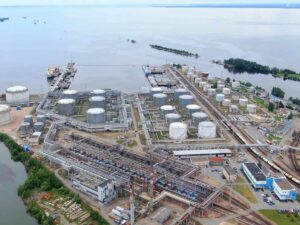
According to “Serbian Economist,” the Romanian company JT Grup Oil has received approval to build a new oil products terminal on the Danube near the port of Tisovica-Dubova, not far from Orșova in Mehedinți County, the company reported in a filing published on the Bucharest Stock Exchange.
The project involves the construction of four above-ground storage tanks for liquid fuel, as well as the engineering and logistics infrastructure necessary for the receipt, storage, and transshipment of petroleum products.
JT Grup Oil views the new facility as part of a larger regional logistics system. The Danube terminal is planned to be integrated with the company’s new terminal in the port of Constanța on the Black Sea.
According to the company, the platform being developed is intended to serve the markets of Romania, Hungary, Serbia, Austria, and Ukraine, leveraging both Black Sea logistics capabilities and the international transport corridor along the Danube.
Thus, fuel will be able to arrive via Constanta by sea and then be distributed throughout Central and Southeastern Europe using river, rail, and road transport.
For Serbia, the new facility is of particular interest due to its location on the Danube, relatively close to the Serbian border. Additional storage and transshipment capacity for petroleum products could expand fuel supply options to the Serbian market and enhance the Danube’s role in regional energy logistics.
For Ukraine, the project also creates an additional route for importing petroleum products via Romania. Since 2022, Romanian ports—primarily Constanța—have significantly increased their importance for Ukrainian trade and fuel supplies.
At the same time, JT Grup Oil is completing another major infrastructure project—the JT Terminal in the port of Constanța.
The terminal has already passed technical trials, and its commercial operation is scheduled to begin in October 2026, following the completion of all necessary procedures and the receipt of permits.
JT Grup Oil’s strategy effectively involves creating a Constanta–Danube–Central Europe logistics corridor.
The Black Sea terminal is intended to handle imported petroleum products arriving by sea, while the new facility near Orșova will bring fuel supplies closer to the markets of Serbia, Hungary, and Austria and utilize the Danube for further transportation.
“By developing the terminal in Constanta and the terminal in the Orsova area, the company aims to create an integrated logistics platform capable of effectively serving the markets of Central and Eastern Europe,” according to a statement from JT Grup Oil cited by Romanian media.
The project takes on added significance against the backdrop of the restructuring of European petroleum product supply routes and the region’s countries’ efforts to diversify their transportation infrastructure.
JT Grup Oil operates in the Romanian wholesale fuel trade and distribution market. The company’s shares are traded on the AeRO market of the Bucharest Stock Exchange under the ticker symbol JTG.



