
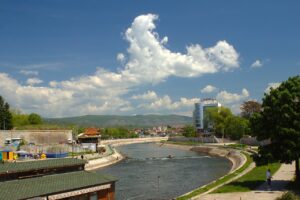
According to Serbian Economist, the authorities of the Serbian city of Niš have taken another step toward the construction of a new state-owned data center worth 50 million euros: the city council approved the transfer of a 37,400-square-meter plot of land near Niška Banja to the Republic of Serbia.
According to the city council’s decision, the undeveloped plot, covering 3.74 hectares, is to be transferred to the state free of charge. The final decision must be approved by the Niš City Assembly. The plot is located near the IMI industrial complex in the direction of Niška Bana.
The preliminary cost of the project is estimated at approximately 50 million euros. The exact technical specifications of the future data center have not yet been officially published, but earlier reports mentioned a capacity of several dozen megawatts and the facility’s use not only for storing government data but also as part of a broader digital infrastructure for southern Serbia.
One of the most interesting features of the project previously cited was the possibility of using the heat generated by the server equipment for Niš’s district heating system. Officials spoke of the potential to provide heat to up to 8,000 apartments.
The project is of strategic importance to Niš. The city is the main economic and transportation hub of southern Serbia, located on the routes to North Macedonia and Bulgaria, and already has a university, a Science and Technology Park, and a significant electronics and IT industry cluster.
Locating the national data center in Niš will also allow for the geographic distribution of the country’s critically important digital infrastructure. Currently, its main national hub is the data center in Kragujevac.
In April 2026, new 8 MW modules were commissioned at the Kragujevac National Data Center, bringing the complex’s total power capacity to 14 MW. A new supercomputer based on NVIDIA graphics processing units was also launched there.
https://t.me/relocationrs/3546

According to The Serbian Economist, Tamara Vučić, the wife of the President of Serbia, participated in the 6th Summit of First Ladies and Gentlemen, which took place on August 24 in Kyiv on Ukraine’s Independence Day. The theme of this year’s meeting was “Peace-2026: Finding Stability in Times of Uncertainty.”
The First Lady of Lithuania, Diana Nausėdenė; the wife of the President of Estonia, Sirje Karis; the wife of the President of Finland, Susanna Innes-Stubb; the First Lady of Romania, Mirabela Gredinaru; Tamara Vučić; and the First Gentleman of Slovenia, Ales Musar, all traveled to Kyiv in person. As is tradition, Olena Zelenska served as the host of the summit. Representatives from Germany, Turkey, Israel, the Czech Republic, Georgia, Belize, and Guatemala joined online. In total, the event brought together representatives from 14 countries.
An interesting part of the summit was the presentation of a unique “dictionary of resilience”—words and traditions from various nations that help society maintain unity in times of crisis.
Serbia presented “krsna slava”—a unique Serbian tradition of honoring the family’s patron saint.
Vucic called the slava “the living code of our identity” and explained that this tradition unites the family regardless of where its members are.
Speaking about the historical roots of Serbian resilience, she recalled the medieval rulers who, instead of palaces, left behind monasteries and charitable foundations. Vucic specifically mentioned the Serbian monasteries in Kosovo and Metohija, which are on UNESCO’s List of World Heritage Sites in Danger.
According to her, during difficult historical periods, Serbs effectively “brought the church under their own roof”: the home became a place for preserving faith, memory, and family unity, while glory became an intangible legacy passed down from generation to generation.
The First Ladies and Gentlemen Summit was launched at the initiative of Olena Zelenska in 2021 as an international platform for humanitarian and social projects. This year, the main focus was on what helps people, families, and nations maintain resilience during times of war and global uncertainty.
https://t.me/relocationrs/3532

According to The Serbian Economist, early parliamentary elections in Serbia are scheduled to take place on October 18 or 25, 2026, as per current plans, President Aleksandar Vucic said on August 20.
“Parliamentary elections in Serbia will, apparently, take place on either October 18 or 25, and we will know the exact date in a few days,” Vučić said on Radio and Television of Serbia (RTS).
Previously, Serbian authorities had been considering holding the election in late October or early November; however, according to the president, the likely date has now been practically determined. That said, the election has not yet been officially scheduled, so October 18 and 25 remain the two dates under consideration.
According to Serbia’s Law on the Election of Members of Parliament, parliamentary elections are scheduled by the President of the Republic, and no fewer than 45 and no more than 60 days must elapse between the date of the announcement and Election Day. Election Day must fall on a non-working day.
As early as August 16, Vučić stated that the elections would be scheduled “very soon”—within the next 15 to 25 days. Prior to that, on August 14, he had indicated a broader timeframe for the elections—October or November.
At the same time, the parliamentary and presidential elections will most likely take place at different times. In July, Vučić stated that the parliamentary elections should take place first, followed by the presidential elections. On August 6, he also announced that he intends to resign from the presidency before joining the election campaign.
Commenting on the upcoming campaign on August 20, Vučić also confirmed that the Serbian Progressive Party (SNS) will run in the elections with its own electoral list. Referring to the decision by the Socialist Party of Serbia (SPS) to run independently, he noted that citizens should have the opportunity to choose between different political options.
The previous early parliamentary elections in Serbia took place on December 17, 2023. According to the results, the “Aleksandar Vučić—Serbia Must Not Stop” list received the most votes.
https://t.me/relocationrs/3504
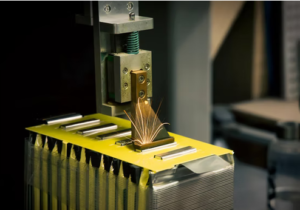
According to “Serbian Economist”, the Chinese company Reliance plans to invest 100.5 million euros in the construction of a high-tech battery manufacturing plant in the Serbian city of Indija; the project is expected to create about 250 jobs, Serbian President Aleksandar Vučić announced on August 20.
According to him, the plant will produce batteries for unmanned aerial vehicles, autonomous vehicles, robots, household appliances, and other devices.
“We are talking about a high-tech company, one of the world’s best in the production of batteries for drones, autonomous vehicles, robots, household appliances, and other devices,” the publication Danas quoted Vučić as saying, citing his interview with Radio and Television of Serbia (RTS).
A framework agreement with the investor is expected to be signed in late August 2026, and construction work could begin as early as late October.
Vucic clarified that Reliance was one of 14 companies with whose representatives the Serbian side held talks during his most recent trip to China.
Judging by the name and the product profile described by the president, this refers to Jiangsu Reliance New Energy Technology Co., Ltd., which operates under the Reliance Battery brand. However, the Serbian authorities have not yet publicly disclosed the full legal name of the investor in the Indija project.
According to Reliance itself, the company was founded in Changzhou, China, in November 2021 and specializes in the development and production of high-power cylindrical lithium-ion cells. It manufactures 21700 and 46-series cells based on NCA and LFP, and conducts research into semi-solid-state and solid-state batteries as well as dry-electrode technology.
The company explicitly lists drones, eVTOLs, humanoid and logistics robots, power tools, household cleaning equipment, electric motorcycles and bicycles, automobiles, backup power systems, and specialized equipment among the applications for its batteries.
Thus, if the project is implemented, India will gain another high-tech manufacturing facility related to the electrical engineering industry. The city has already established a large industrial cluster between Belgrade and Novi Sad. In particular, in April 2025, Europe’s first factory of the Japanese company JFE Shoji, worth over 50 million euros, began operations here; it manufactures motor cores for home appliances and the automotive industry.
The Toyo Tire Serbia plant also operates in Inji, and in 2026, the Japanese company began construction here on a new European research and development center worth 29 million euros.

The Ukrainian company Termojet, a manufacturer of equipment for boiler rooms and heating systems, is considering entering the Serbian market and is seeking a local representative or partner to develop sales and distribution, the Serbian Economist Telegram channel reports.
The company has been operating since 2002 and has its own full-cycle production facilities.
Its product range includes pump groups, distribution manifolds, hydraulic separators, separators, valves, circulation pumps, underfloor heating equipment and automation systems.
For large facilities, the company produces the Termojet Mega series with a capacity of up to 2,200 kW.
In Serbia, the company is primarily interested in cooperating with an established participant in the heating and HVAC equipment market.
The preferred partner:
In addition, entering the markets of neighboring countries — Bosnia, Montenegro, Albania and other countries in the region — is also a near-term prospect.
Termojet is ready to work with dealers, distributors, installation companies and design organizations and provides its partners with technical support and training.
For inquiries regarding partnership and the organization of cooperation in Serbia, please contact: 100events@ukr.net.
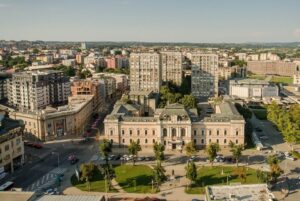
According to Serbian Economist, the Serbian city of Kragujevac organized a summer camp for 19 children from Zaporizhzhia, aged 13–16, who stayed at a children’s health resort in the city of Kopanik from August 1 to 10.
A sports, recreational, and cultural program was prepared for the Ukrainian children. They took part in walks and group activities, learned about Serbian traditions, and studied elements of Serbian folk dances alongside choreographers from the “Abrasevic” Center for Traditional Culture in Kragujevac.
The trip was part of a humanitarian initiative to organize recreational stays in Serbia for children from Ukrainian regions affected by the war.
Kragujevac is located in central Serbia and is one of the country’s largest industrial and university centers. Thanks to its location in central Serbia, the city has convenient connections to Belgrade, Kopaonik, and other tourist and business centers in the country.
https://t.me/relocationrs/3464



