

According to the “Serbian Economist,” a new plant for assembling Israeli-designed military drones has been built in Serbia. According to Aleksandar Vučić, the plant will employ about 100 people, and its products are intended for both the Serbian Armed Forces and the armed forces of other countries.
Journalists were not allowed inside the plant.
Vucic attributed this to the confidentiality of the production process. Some of the models being produced were shown only in a video he released.
At the same time, the current plant is intended to be only the first phase of cooperation with Israel. Vucic stated that he expects to open at least three more similar plants in Serbia. He named areas near the Lajevci and Niš airports as potential locations for the new production facilities.
Earlier, an investigation by BIRN and Haaretz reported that Serbia’s partner in the project is Elbit Systems, Israel’s largest defense company. According to the journalists, Elbit is set to hold a 51% stake in the joint venture, while the Serbian state-owned company Yugoimport-SDPR will hold 49%.
The plan is to produce both drones for close-range missions and more sophisticated aircraft for long-range flights. Elbit and SDPR have not publicly disclosed details of the project.
Serbia is gradually building its own drone manufacturing cluster by bringing together local defense companies with the technologies of foreign partners. Vučić stated that the project’s goal is to strengthen the capabilities of the Serbian army while also expanding exports of military products.

According to “Serbian Economist”, Serbia handed over to Ukraine a 48-year-old woman whom Ukrainian law enforcement officials suspect of organizing a network providing sexual services in Kyiv, the Life website reported. Following an international manhunt, her whereabouts were traced to Serbia, after which the extradition process was carried out.
According to investigators, back in 2022, the group created a channel on a messaging app where they posted photos and videos of women, along with a list of services and prices. After receiving an advance payment, clients were directed to hotels and rented apartments in Kyiv; according to the police, the meetings were organized, in particular, during curfew hours.
Two alleged participants in the scheme—a 47-year-old woman and a 36-year-old man—were charged back in 2022. A third suspect fled Ukraine after the scheme was uncovered and went into hiding abroad.
After her extradition from Serbia, she was notified of charges under Part 2 of Article 303 of the Criminal Code of Ukraine—pimping committed against several individuals, repeatedly, and by a group of persons acting in prior conspiracy. The maximum penalty under this article is up to seven years of imprisonment. The court ordered her to be held in custody with the option of posting bail in the amount of 1.47 million UAH.
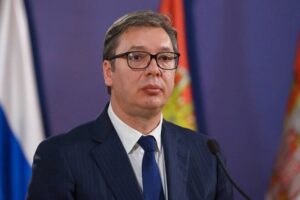
The Serbian business publication Parametar has prepared an interesting analysis of the parliamentary elections in Serbia. President Aleksandar Vučić has called for early parliamentary elections on October 25. Serbia has 250 parliamentary seats to fill, but in essence, the campaign is turning into a choice between preserving the current model of government and attempting a political reset.
The main favorite is the “Aleksandar Vučić—United Serbia” bloc centered around the SNS. Vucic himself is running as a candidate for prime minister. According to the Serbian media outlet Parametar, his campaign will focus on stability, infrastructure development, investment, economic growth, and the argument that the country must not return to a period of political instability.
For the first time, the main competitor is not a traditional party, but the Student List, which emerged from the protests following the tragedy in Novi Sad. Its main themes are corruption, government accountability, the independence of institutions, and bringing new people into politics. The movement’s slogans are as simple as possible: “Students Will Win” and “Either Serbia or the Mafia.”
Part of the opposition has already decided to support the students, but there will be no single anti-government list. Running separately are the pro-European “European Serbia,” the “People’s Serbia” bloc, Ivica Dačić’s Socialists, and several national-conservative and sovereigntist groups.
The campaigns of the two main power centers are also divided by fundamentally different emotional agendas. According to sociologist and co-founder of Active Group Aleksandar Pozniy, Vučić will build his campaign primarily around the theme of stability—reminding voters of economic growth, large-scale infrastructure projects, an influx of investment, and the overall progress Serbia has made in recent years. This strategy aims to convince voters that a change in government carries the risk of losing the country’s hard-won achievements. The Student List, on the other hand, will appeal to the long-standing demand for fighting corruption and reforming the political system, contrasting the current elite with new faces unaffiliated with traditional parties. Thus, the election may largely turn into a clash between two basic formulas—“stability and economic results” versus “a change in power and the cleansing of institutions.”
That is precisely why the key question will be what voters deem more important: preserving economic and political stability or the demand for profound systemic change.
Parties representing national minorities will traditionally form a separate segment. A special electoral system applies to minorities: they are not required to clear the general 3 percent threshold, and when seats are allocated, their results are adjusted using a special coefficient. At the start of the campaign, the Union of Vojvodina Hungarians (SVM), the Bosnian parties SPP and SDA, representatives of the Albanian and Romani populations, and a number of small regional groups are expected to participate. Their composition may still change before the registration deadline.
Polling data so far is conflicting. Faktor Plus gives the SNS about 47% and the Students’ Party about 32%. An earlier CRTA poll showed the opposite picture—about 45% for the Students’ Party versus 36% for the SNS.
On international betting platforms, Vučić currently appears to be the clear favorite, but there is still a month and a half until the election, and the final list of candidates is still taking shape.
Read more at Parametar.rs.
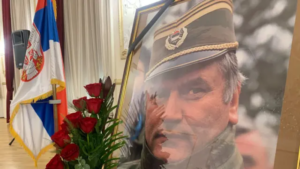
Bosnia and Herzegovina Foreign Minister Elmedin Konaković announced the withdrawal of most of the BiH embassy staff from Belgrade following the funeral of former Army of Republika Srpska commander Ratko Mladić, reports the Serbian Economist Telegram channel. He said he intends to reduce relations with Serbia to the “lowest possible level.”
The BiH ambassador and consul, however, remain in Belgrade: their appointment and recall fall under the authority of the collective Presidency of Bosnia and Herzegovina, not the Foreign Ministry. Under the Constitution, it is the Presidency that conducts the country’s foreign policy, so the minister cannot legally sever relations with Serbia on his own.
The reason was not only the funeral ceremony itself on September 7, but also the scale of participation by Serbian state institutions. As the coffin was returned, it was accompanied by representatives of the state and the military, while Defense Minister Bratislav Gašić and Justice Minister Nenad Vujić attended the funeral. President Aleksandar Vučić did not attend the ceremony, but his son Danilo was present. The funeral drew thousands of people.
Serbian Foreign Minister Marko Đurić responded extremely harshly, calling Konaković’s statements “hypocrisy.” He recalled that former BiH army commander Rasim Delić had also been convicted by the Hague Tribunal for crimes committed by the “El Mujahid” unit, and accused the Bosnian side of taking a selective approach to war crimes. Đurić also recalled the attack on Vučić in Potočari in 2015, when the then Serbian prime minister was pelted with stones after laying flowers at the Srebrenica memorial.
Why does the figure of Mladić still provoke such a harsh reaction in the Balkans?
Ratko Mladić commanded the Army of Republika Srpska from May 1992. The International Criminal Tribunal for the former Yugoslavia, and later the UN appeals chamber, ultimately found him guilty and sentenced him to life imprisonment for the Srebrenica genocide, crimes against humanity and war crimes during the war in Bosnia. In Srebrenica, after the enclave was captured in July 1995, around 8,000 Bosnian Muslims — men and boys — were killed.
Therefore, for a significant part of the Bosniaks in Bosnia, Mladić is above all a symbol of Srebrenica, the siege of Sarajevo and ethnic cleansing. His public honoring in Belgrade is perceived there not as a private funeral, but as a denial or justification of the crimes.
Croatia also views Mladić extremely negatively. Before the formation of the Army of Republika Srpska, he served in the Yugoslav People’s Army in the Knin area during the war in Croatia. After the final verdict in 2021, the Croatian government even officially expressed regret that the Hague proceedings had not covered crimes committed by him on Croatian territory.
In Serbia and Republika Srpska, attitudes are different. For many, Mladić remains the man who defended Bosnian Serbs during the breakup of Yugoslavia. That is why thousands of people attended the funeral, chants of “hero” were heard, and his portraits remain widespread. At the same time, Serbia itself has politicians, public organizations and media outlets that accept the findings of international courts and oppose the glorification of Mladić.
Belgrade also constantly emphasizes the issue of Serbian victims of the war and believes that crimes against Serbs receive less attention in regional and international discourse.
The scandal is already moving beyond Bosnian-Serbian relations. EU Commissioner for Enlargement Marta Kos canceled a planned visit to Serbia, explaining the decision by the unacceptability of glorifying convicted war criminals.
The story surrounding Mladić’s funeral is no longer merely a dispute over a single historical figure. It has once again exposed the central political contradiction of the Western Balkans: more than 30 years after the Bosnian war, Belgrade, Banja Luka, Sarajevo and Zagreb still differ substantially in their assessments of the war, responsibility, and of who should be regarded as a criminal and who as a hero.
BALKANS, Bosnia and Herzegovina, DIPLOMACY, RATKO MLADIĆ, SERBIA

According to “Serbian Economist”, early parliamentary elections in Serbia are scheduled for October 25, 2026, according to local media reports.
Previously, President Aleksandar Vučić had mentioned two possible dates—October 18 or 25. Now, Serbian publications such as Blic, Danas, and others are reporting that October 25 has been chosen. The National Assembly is expected to be dissolved in the coming days, after which the campaign is set to officially begin.
The main question is whether the ruling Serbian Progressive Party (SNS) will be able to retain its majority amid protracted protests and growing support for the student movement.
Recent polls paint a very mixed picture. According to Faktor Plus, in the spring the SNS had about 46% support, while a potential student-led slate had about 29%. More recent surveys have shown that the gap may be even smaller: in July, CRTA estimated support for the student list at 44.9% and for the SNS at 35.7%. At the same time, other polls, as before, put the SNS at 45–47%.
At this point, a brief analysis is as follows:
SNS / the bloc centered on Vučić—the favorite, with a projected range of 36–47%
The Student List—the main competitor, with potential support of approximately 29–45%, but highly dependent on polls
Ivica Dačić’s SPS—5–7%, a likely coalition partner
The pro-European opposition—may achieve a notable result overall but remains fragmented
Mi—Snaga Naroda, NPS, SSP, ZLF, Nova DSS—are fighting to clear the electoral threshold and influence the future coalition
The baseline scenario for now is as follows: the SNS will most likely remain the leading force, but the election could be the most competitive in recent years.
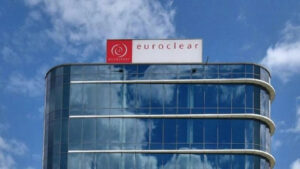
According to the “Serbian Economist,” as of September 1, 2026, Serbia’s long-term government bonds denominated in dinars have become available to international investors through the Euroclear Bank system, which is expected to simplify global funds’ access to the Serbian debt securities market and increase its liquidity.
The Serbian Ministry of Finance announced this on August 31. At the same time, the National Bank of Serbia announced that Euroclear Bank has become a participant in its RTGS payment system and in the securities settlement system of the Central Registry, Depository, and Clearing House of Serbia.
In the first phase, transactions involving five long-term issues of Serbian government bonds denominated in dinars, which are already in circulation, can be conducted through Euroclear. In the future, the system will also be available for certain new issues of government securities.
International investors can now hold and settle Serbian dinar-denominated bonds through their existing Euroclear accounts, without having to set up a separate infrastructure directly in the Serbian market.
For large investment funds, this significantly reduces operational barriers. Banks, pension and investment funds, insurance companies, and asset management firms that already operate through Euroclear will find it easier to include Serbian dinar-denominated securities in their portfolios.
Serbian Finance Minister Sinisa Mali called the connection to Euroclear an important step toward transitioning from a domestic to an internationally integrated government securities market.
The project to integrate the Serbian market with the international settlement infrastructure has been underway since 2019, with the participation of the Ministry of Finance, the National Bank of Serbia, the Central Securities Register, and international partners.
The country’s credit rating has served as an additional factor in attracting international capital. Back in October 2024, S&P Global Ratings upgraded Serbia’s sovereign rating to investment grade BBB- with a stable outlook for the first time. In July 2026, Fitch maintained Serbia’s rating at BB+ with a positive outlook.
The issuance of dinar-denominated infrastructure bonds through Euroclear also has longer-term significance for Serbia. Expanding the pool of foreign buyers could increase trading volume in the secondary market and help establish a more liquid yield curve in dinars.
Euroclear Bank is one of the largest international clearing and depository institutions, enabling institutional investors to hold and settle securities from various countries through a single infrastructure.



