Ukraine and Serbia have agreed to resume work on a free trade agreement, which could become one of the most important economic steps in relations between the two countries in recent years.
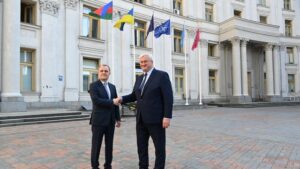
In Belgrade, Ukraine’s Deputy Prime Minister for European and Euro-Atlantic Integration and Trade Representative of Ukraine Taras Kachka, and Serbian Minister of Internal and Foreign Trade Jagoda Lazarević signed a joint statement on the resumption of negotiations on a free trade agreement.
For Serbia, this document is of particular importance, since Ukraine remains the only European country with which Belgrade still has not signed a free trade agreement.
According to Kachka, work on the agreement is an important stage in the development of Ukrainian-Serbian relations and should contribute to deepening trade, industrial cooperation and the creation of new regional production chains.

The possibility of applying diagonal cumulation of origin will have separate importance. This will allow producers in Ukraine and Serbia to use raw materials and components from countries with which free trade agreements have been concluded and which are participants in the Pan-Euro-Mediterranean Convention, without losing the preferential origin of goods. For Serbian industry, this is especially important, since Ukrainian raw materials and semi-finished products have already played a significant role in a number of sectors.
The economic part of the Ukrainian delegation’s visit to Belgrade was accompanied by the Serbian-Ukrainian Business Forum, organized by the chambers of commerce and industry of the two countries. According to the Ukrainian Chamber of Commerce and Industry, representatives of 30 companies took part in the event, and the forum took place against the backdrop of the intensification of political and economic dialogue between Kyiv and Belgrade.
The Ukrainian delegation included President of the Ukrainian Chamber of Commerce and Industry Gennadiy Chyzhykov. The forum was opened by Deputy Prime Minister of Ukraine Taras Kachka, Serbian Minister of Internal and Foreign Trade Jagoda Lazarević, Serbian Ambassador to Ukraine Andon Sapundži, Ukrainian Ambassador to Serbia Oleksandr Lytvynenko, President of the Serbian Chamber of Commerce and Industry Marko Čadež, and President of the Ukrainian Chamber of Commerce and Industry Gennadiy Chyzhykov.
“For us, this forum is a practical working platform. It brings together representatives of the government, diplomatic missions, chambers and companies in one hall. It is precisely this format that helps business move from general interests to specific contacts, contracts and projects,” Chyzhykov said.

He thanked the Serbian Chamber of Commerce and Industry and personally Marko Čadež for preparing the meeting, as well as the ambassadors of the two countries for supporting bilateral economic dialogue.
“Your work is important because economic cooperation requires political trust, regular communication and institutional support,” the president of the Ukrainian Chamber of Commerce and Industry noted, addressing the diplomats.
According to Chyzhykov, the business community highly appreciates the fact that bilateral work is advancing at the government level.
“For business, predictability, clear rules and better access to the market are important. When state institutions and business organizations move in the same direction, companies receive a much stronger signal to invest time, resources and trust in bilateral cooperation. Serbia is a strategic partner for us in the Balkans,” he emphasized.
Chyzhykov also noted that Ukraine is interested in pragmatic cooperation with Serbia based on mutual respect, economic logic, reliable partnership and practical results.
“There is a range of groups of goods that is underestimated in the context of cooperation. This visit of our delegation and the forum became an excellent platform for bringing the Ukrainian and Serbian sides closer to a new stage of our relations. We are keeping the agricultural sector, the food sector and the energy sector in focus,” the president of the Ukrainian Chamber of Commerce and Industry added.
According to BGNES, in the first quarter of 2026, trade between Serbia and Ukraine amounted to $152.8 million, while Serbia recorded a positive balance of $36.8 million, and export coverage of imports reached 163.4%.
At the end of 2025, trade turnover between the two countries amounted to $442.2 million. Serbian exports to Ukraine reached $202.9 million, while imports from Ukraine amounted to $239.3 million. The main goods of Serbian exports are electricity, mineral and chemical fertilizers, tires and other industrial products, while semi-finished rolled products, iron ore and frozen raspberries are named among the goods imported from Ukraine.
President of the Serbian Chamber of Commerce and Industry Marko Čadež earlier noted in an interview with the Interfax-Ukraine agency that the chambers of the two countries have “excellent bilateral relations,” secured by a memorandum of cooperation signed three years ago within the framework of a business forum in Belgrade. According to him, the Serbian Chamber of Commerce and Industry and the Ukrainian Chamber of Commerce and Industry already have experience in organizing business forums, B2B negotiations, online business missions during the pandemic and joint statements on complex topics.
Čadež also emphasized that he and Chyzhykov are connected by years of joint work in Eurochambres and the World Chambers Federation, mutual understanding, common views on problems and solutions, as well as on the European future of the economies of the two countries.
“I consider him not only a colleague, but also a great friend, with sincere respect for everything that the Ukrainian Chamber and he personally are doing in order, even under impossible conditions, to help Ukrainian entrepreneurs in the country and connect them with international partners,” the president of the Serbian Chamber of Commerce and Industry said in an interview with the agency.
According to Čadež, the parties will also work on creating a Serbian-Ukrainian Business Council. He expressed confidence that in the future a business forum could also be organized in Ukraine with the support of the foreign ministers of the two countries, Marko Đurić and Andrii Sybiha.
The parties name IT, construction, agriculture and the food industry, energy, logistics and transport as practical areas of cooperation between Ukrainian and Serbian business. Earlier, the Ukrainian Chamber of Commerce and Industry reported that the program of the business mission to Serbia included B2B meetings with Serbian companies, the establishment of new business contacts, visits to enterprises and discussion of potential joint projects.
The Serbian side also sees opportunities for cooperation in Ukraine’s reconstruction projects. This concerns construction materials, energy equipment, agricultural machinery, irrigation systems, seed material, technologies for increasing yields, as well as supplies of products for the energy sector.
For Ukraine, Serbia is important not only as a trading partner, but also as a potential logistics and production hub for access to the markets of the Western Balkans, the EU, Asia and Africa. Čadež noted that Serbia, being located in the center of Southeastern Europe, can use its logistical links with the EU, the East and the South for the development of joint production and the export of Ukrainian and Serbian companies to third markets.
Danube logistics has separate importance. Using the route from the Ukrainian ports of Izmail and Reni toward Serbian ports and intermodal terminals, goods from Ukraine can more efficiently reach Corridor X, the markets of Central Europe and the Adriatic region.
Thus, the visit of the Ukrainian delegation to Belgrade, the signing of the statement on the resumption of negotiations on a free trade agreement, and the holding of the Serbian-Ukrainian Business Forum move the bilateral economic agenda from the level of intentions into the practical plane. Against the backdrop of recovering trade, the active role of the chambers of commerce and industry, and the discussion of the Serbian-Ukrainian Business Council, the parties are forming a new infrastructure of cooperation that can strengthen the industrial, logistical and investment link between Ukraine and Serbia.
Interfax-Ukraine is the official media partner for the organisation of the Serbian-Ukrainian Business Forum in Belgrade.
According to Serbian Economist, trade turnover between Serbia and Ukraine in 2025 returned to the level of the last pre-war year, 2021, and amounted to $442.2 million, said Marko Čadež, president of the Serbian Chamber of Commerce and Industry, in an interview with the Interfax-Ukraine agency.
According to him, despite the initial shock following the outbreak of the war, mutual trade did not cease. In the first year of the war, it fell by 25%—to $339 million—but then began to gradually recover and can now be considered stable.
Serbian exports to Ukraine in 2025 amounted to $202.9 million, while imports from Ukraine totaled $239.3 million. About 900 Serbian companies continue to do business with Ukraine, 670 of which import Ukrainian goods.
“In the first quarter of this year, the growth trend continued—Serbian exports to Ukraine doubled compared to the same period last year, while Ukrainian exports to Serbia grew by 4.5%,” said Čadež.
The president of the Serbian Chamber of Commerce and Industry noted that the pandemic, followed by the war, demonstrated the high interdependence of the two economies. This is particularly true for supplies of Ukrainian raw materials and intermediate products for Serbian industry. According to Čadež, prior to the war, such supplies accounted for about 70% of Serbian imports from Ukraine.
Among the key Ukrainian goods for Serbia, he cited iron ore, coal, aluminum wire, and cellulose. Supply disruptions after February 2022 created problems for a number of Serbian industries, particularly metallurgy.
Serbian-Ukrainian trade continues to be dominated by raw materials, industrial products, and goods for the processing industry. Ukraine purchases mineral and chemical fertilizers, PVC flooring, paper and cardboard, automobile tires, as well as detergents and cleaning products from Serbia.
U.S. President Donald Trump and Chinese President Xi Jinping agreed during talks in Beijing to expand cooperation in trade and agriculture, and also discussed the situation in the Middle East, Ukraine, and on the Korean Peninsula, according to CCTV.
The meeting took place on May 14 at the Great Hall of the People in Beijing during Trump’s state visit to China. According to the Chinese Foreign Ministry and Xinhua News Agency, the leaders of the two countries discussed the bilateral agenda and exchanged views on key international and regional issues, including the situation in the Middle East, the crisis in Ukraine, and the Korean Peninsula.
Xi Jinping stated that China and the U.S. should build “constructive and strategically stable relations,” and also emphasized the importance of a cautious approach to the Taiwan issue, calling it the most critical aspect of Sino-American relations. According to Xi, mishandling this issue could lead to a sharp deterioration in bilateral relations.
According to the official Chinese account of the talks, Trump expressed his readiness to work with Xi to strengthen communication and cooperation, resolve differences, and develop U.S.-China relations. He also introduced the Chinese leader to representatives of American business who had traveled to China with him.
The talks took place against the backdrop of efforts to maintain the trade truce between the U.S. and China, reached in October 2025. Topics discussed included U.S. companies’ access to the Chinese market, Chinese investment in the U.S., trade, energy, and agricultural supplies.
For Ukraine, the very fact that the Ukrainian issue was discussed at the level of U.S. and Chinese leaders is significant. Beijing retains influence over Moscow and remains one of the key external players whose stance shapes the diplomatic context surrounding the war. However, the published reports do not indicate that the parties reached any specific agreements specifically regarding Ukraine.
The situation in the Middle East was a separate topic of discussion. Against the backdrop of tensions surrounding Iran and risks to energy supplies, the U.S. is interested in China playing a more active role in mitigating risks to global trade and energy routes. Washington is also seeking economic outcomes from the meeting, including trade and investment agreements.
EU member states and the European Parliament have so far failed to agree on the internal mechanism for implementing the trade agreement with the United States, despite pressure from Washington and the threat of new tariffs on European automobiles.
Negotiations between representatives of the European Parliament and EU countries took place on the evening of May 6 and lasted more than six hours, but no final decision was reached. According to Bloomberg, Cyprus, which currently holds the presidency of the Council of the European Union, confirmed that the parties discussed possible amendments to the transatlantic agreement concluded in the summer of 2025, but failed to reach a final compromise.
The issue concerns EU-US trade arrangements announced in July 2025. Under the agreement, Brussels is expected to abolish tariffs on a range of American industrial goods, while Washington maintains a baseline tariff rate of 15% on a significant share of European exports. Stricter conditions remain in place for steel, aluminum, and copper, including 50% tariffs.
The main dispute within the EU is related not so much to the principle of the agreement itself as to guarantees in case the United States fails to fulfill its obligations. The European Parliament insists on additional safeguard mechanisms, including the possibility of suspending concessions if Washington violates the arrangements. Some EU countries, by contrast, support a faster approval of the deal in order to avoid further escalation of the tariff conflict.
The situation escalated after threats by US President Donald Trump to raise tariffs on cars and trucks from the EU from 15% to 25%. Brussels fears that this would hit Germany and other countries with major automotive exports particularly hard. According to Reuters, most EU countries are interested in completing the procedure as quickly as possible, while the European Parliament demands stronger safeguards be built into the agreement.
Chairman of the European Parliament’s Committee on International Trade Bernd Lange stated that the negotiations had moved forward, but that “there is still a way to go” before a final decision is reached. The next round of consultations between the European Parliament and EU member states is scheduled for May 19 in Strasbourg.
For the European Union, this dispute is a test of its ability to conduct a unified trade policy under pressure from the United States. Some countries emphasize the need to quickly remove the risk of new tariffs for industry, while others fear that an overly soft EU position would create a precedent in which Washington could secure concessions through threats of additional duties.
For European businesses, the main uncertainty is currently linked to the automotive sector, industrial supplies, and transatlantic production chains. If the EU fails to coordinate its internal position in time, the risk of higher US tariffs will remain, and trade relations between the world’s two largest economic blocs could once again enter a phase of acute confrontation.
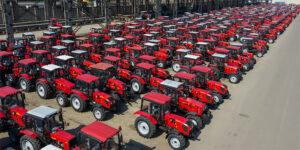
According to Serbian Economist, Ukraine has resumed negotiations with Serbia on establishing a free trade area, as the current level of trade between the two countries remains relatively low. Ukrainian Ambassador to Serbia Oleksandr Litvinenko stated this in an interview with Interfax-Ukraine. According to him, a free trade zone could revitalize bilateral economic ties and, at the same time, fit naturally into the European integration of both countries. Among the promising sectors, the diplomat cited mechanical engineering, particularly agricultural machinery.
For the Serbian Economist, what matters in this story is not only the political signal but also the plain arithmetic. According to official data from the Statistical Office of Serbia, in 2025, Serbian exports to Ukraine amounted to €179.6 million, imports from Ukraine to €212.2 million, and total trade turnover reached approximately €391.8 million. At the same time, Ukraine’s share of Serbian exports and imports remains at only about 0.5%, which indeed confirms the thesis that the scale of trade is still limited.
The current range of trade between the countries still appears rather narrow and largely consists of raw materials. According to data from the Ukrainian Embassy in Serbia, the main items of Ukrainian exports to Serbia are iron ore and ferrous metals, wood and wood products, as well as plastics and polymer materials. More detailed product statistics show that among the largest Ukrainian shipments to Serbia were iron ore worth $61.6 million, hot-rolled iron products worth $11.9 million, and semi-finished iron products worth $8.92 million.
From the Serbian side, exports to Ukraine currently consist mainly of fertilizers, plastics and polymer materials, electrical machinery, ferrous metals, soap, and rubber.
If we look at the potential impact of the FTA in practical terms, the most logical outcome appears to be an expansion of trade in those niches where one side can offer the other either cheaper or scarcer goods. For Ukraine, in addition to the metallurgical and raw material products already being exported to Serbia, these could include agricultural machinery, certain types of metal products, wood processing, value-added food products, and niche consumer goods.
For Serbia, the most potentially attractive goods on the Ukrainian market in the event of an FTA could be fertilizers, polymers, electrical equipment, pharmaceuticals, rubber products, tires, and auto parts. In other words, an FTA could theoretically shift trade from a narrow exchange of raw materials toward a greater number of processed goods on both sides.
A separate sensitive issue is Serbia’s status in the WTO. Serbia is still not a member of the World Trade Organization. The latest European Commission report on Serbia explicitly states that the process has stalled primarily due to the lack of a WTO-compliant law on GMOs and due to unfinished market access negotiations with a small number of WTO members. Belgrade has not concluded some of the bilateral negotiations required for WTO accession, and older Serbian documents listed Ukraine, Brazil, Russia, and the United States among the problematic partners.
https://t.me/relocationrs/2646
Trade in Ukrainian goods in 2025 remained highly concentrated and with a pronounced import bias, according to a study by the Experts Club analytical center on the top 50 trading partners as of December 31, 2025.
As noted in the study, the top ten countries account for about two-thirds of total trade, with China alone accounting for almost a fifth of turnover. Experts Club founder Maxim Urakin emphasizes: “The overall picture is consistent with the aggregated statistics for 2025: Ukraine’s imports are estimated at about $84.8 billion, exports at about $40.3 billion, and trade turnover at about $125.1 billion.”

China has become Ukraine’s largest partner in terms of trade turnover in the TOP-50 sample – $21.04 billion, with imports of $19.23 billion and exports of $1.82 billion, resulting in a negative balance of $17.41 billion. Urakin believes that “there will be no quick solutions to balance the trade deficit with China without strengthening Ukraine’s industrial export positions” and suggests focusing on localizing part of the supply chains for Ukrainian needs, contract manufacturing, and expanding agricultural and food exports with deeper processing.
Poland ranked second in terms of trade turnover with $13.02 billion, followed by Germany with $9.06 billion, Turkey with $8.95 billion, and the US with $5.69 billion. Commenting on the European direction, Urakin draws attention to the risks of regulation: “The risk factor here is not so much economic as regulatory and political… the issue of quotas and restrictions periodically returns to the agenda.” In his opinion, the key to expanding presence in the EU market is “quality of entry” — standards, traceability, certification, and integration into value chains.
The study also notes the role of markets where Ukraine has a positive trade balance, as well as the importance of trade hubs and logistics. In particular, among the areas that could potentially provide rapid growth with reduced logistics costs and stable maritime routes, the countries where exports already exceed imports stand out, as well as European logistics hubs through which part of Ukraine’s flows pass.
Speaking about the prospects for 2026, Experts Club highlights as key factors the conditions of access to EU markets, institutional agreements with regional partners, and logistics, including the security of sea routes. “The most applicable growth points for Ukraine are a combination of markets with an already positive balance and instruments that reduce barriers: agreements, standardization, and logistics,” Urakin concluded.