

Ukraine and Uzbekistan are introducing a “transport visa-free regime,” which provides for the abolition of permits and related quotas for direct and transit international freight truck transportation between the two countries.
A corresponding protocol between the governments of Ukraine and the Republic of Uzbekistan amending the bilateral Agreement on International Road Transport was signed on September 30, 2026, according to the Ukrainian Embassy in Uzbekistan.
According to the diplomatic mission, the preparation of the document took nearly a year.
The main change will be the simplification of direct and transit freight transport by eliminating the need to obtain permits, as well as quantitative quotas for such transport. This regime, by analogy with other agreements in the field of international road transport, is referred to as “transport visa-free travel.”
For Ukrainian and Uzbek carriers, this will mean the removal of one of the administrative barriers to organizing freight transport between the two countries and transit through their territories.
The embassy expects that the liberalization of road transport will contribute to the restoration of Ukraine’s trade and economic ties with Uzbekistan, which were partially disrupted due to logistical problems following the start of full-scale Russian aggression.
The agreement takes on particular significance amid the restructuring of Ukraine’s foreign trade and the search for alternative transport corridors to Central Asia.
“The removal of bureaucratic barriers should soon facilitate the restoration of full-fledged trade and economic ties between Ukraine and the Republic of Uzbekistan,” the embassy noted.
The diplomatic mission also described the new agreement as one of the steps toward Ukraine’s return to Central Asian markets via new logistics routes.
The protocol, signed on September 30, amends the existing intergovernmental Agreement between Ukraine and Uzbekistan on international road transport. Specifically, it concerns the liberalization of direct and transit freight transport by road. The embassy’s statement does not provide for the abolition of other customs, border, or transportation procedures required for the international transport of goods.
Original source – Embassy of Ukraine in the Republic of Uzbekistan.
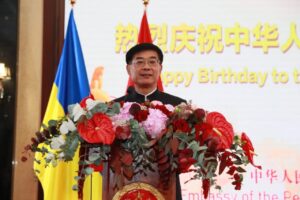
China is ready to remain a reliable partner of Ukraine and to expand mutually beneficial cooperation between the two countries, said Ma Shenkun, Ambassador of the People’s Republic of China to Ukraine.
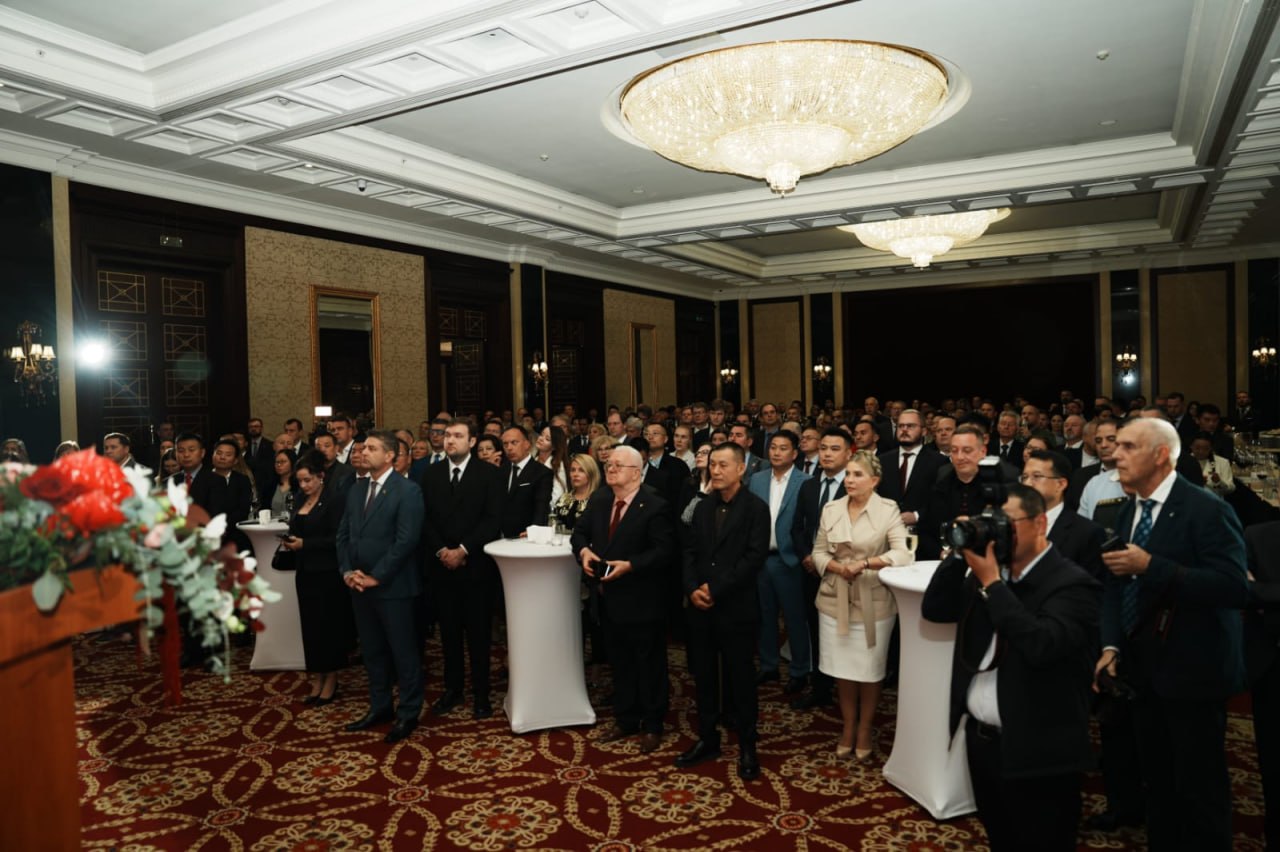
“The economies of China and Ukraine are highly complementary, so cooperation between the two countries has broad prospects. China is ready to be a reliable partner of Ukraine. We are committed to further expanding mutually beneficial cooperation, bringing greater benefits to the peoples of both countries, and jointly opening up new prospects for the development of China-Ukraine relations,” the ambassador said during a reception in Kyiv marking the 77th anniversary of the founding of the People’s Republic of China.
The event was attended by Ukraine’s Deputy Minister of Foreign Affairs Yevhen Perebyinis, as well as representatives of the diplomatic corps, Ukrainian government and civil society organizations, the business community, and the Chinese community.
Ma Shengkun noted that 2026 will mark the 15th anniversary of the establishment of the China-Ukraine strategic partnership, and in 2027, the two countries will celebrate the 35th anniversary of the establishment of diplomatic relations.
According to him, China has remained Ukraine’s largest trading partner for many years and is one of the main sources of Ukrainian imports.
The ambassador highlighted the development of bilateral trade in agricultural products. Specifically, in 2025, Ukraine and China signed protocols opening opportunities for the export of Ukrainian peas and wild-caught aquatic biological resources, and in 2026, they signed a protocol regarding the export of Ukrainian wheat flour to China.
“This creates a solid foundation for the further expansion of Ukrainian agricultural exports,” noted Ma Shenkun.
Speaking about the state of the Chinese economy, the diplomat reported that China’s GDP in the first half of 2026 reached 69.6 trillion yuan, an increase of 4.7% compared to the same period last year.
According to him, China intends to continue developing high-tech manufacturing, new energy, artificial intelligence, robotics, and innovative pharmaceuticals, while simultaneously opening its economy further to the outside world.
Ma Shengkun also addressed Beijing’s position on the war in Ukraine. He stated that China advocates for a political settlement and the continuation of diplomatic efforts.
“China will continue to stand firmly on the side of peace and support all efforts that promote peace. In turn, China will continue to play a constructive role in facilitating the swiftest possible ceasefire and cessation of hostilities and, ultimately, the achievement of a peace agreement,” the ambassador stated.
He noted that nearly two years of work in Ukraine have convinced him that the Ukrainian economy has significant potential for further development and cooperation with China.
A significant portion of the ambassador’s speech was devoted to the achievements of the PRC’s 77-year development. Ma Shengkun noted that China has become the world’s second-largest economy, a global leader in the volume of merchandise trade, and one of the main trading partners of more than 160 countries and regions.
The diplomat also stated Beijing’s intention to continue international cooperation within the framework of the “Belt and Road” initiative, which, he said, has been joined by over 150 countries and more than 30 international organizations, with the number of infrastructure and industrial projects currently underway exceeding 4,000.
According to a study by the Experts Club think tank, China ranked first among Ukraine’s largest trading partners in the first half of 2026. Trade between the countries totaled approximately $14.68 billion, including imports of Chinese goods to Ukraine of about $13.9 billion and Ukrainian exports to China of about $778 million. China accounted for about 21.9% of Ukraine’s total trade with its 50 largest trading partners and 29.4% of imports from this group of countries. At the same time, Ukraine’s trade deficit with China amounted to approximately $13.12 billion. Experts Club study on Ukraine’s largest trading partners in the first half of 2026
According to data from the State Customs Service, this trend continued in January–August 2026: China remained the largest supplier of goods to Ukraine, with imports totaling over $19.6 billion.
The People’s Republic of China recognized Ukraine’s independence on December 27, 1991, and diplomatic relations between the two countries were established on January 4, 1992. The Embassy of the People’s Republic of China in Kyiv began operations in 1992. That same year, the Embassy of Ukraine in Beijing began operations. In 2011, Ukraine and China established a strategic partnership.

The Novus supermarket chain opened its first store in Ivano-Frankivsk, which became the chain’s 100th location in Ukraine, the company’s press office reported.
“We are gradually expanding into new cities and plan to continue this trend. Ivano-Frankivsk has become an important milestone in our growth, but it certainly won’t be the last. We strive to be closer to our customers in various regions of Ukraine,” reads the Novus press release.
According to the report, the new 1,900-square-meter supermarket opened in the “Arsen” shopping center. The product range includes over 17,000 items. The store also features products from its own “Master of Taste” brand. The store has eight regular checkout lanes and eight self-checkout lanes.
As previously reported, in August, Novus opened two supermarkets in Lviv at once.
In June 2026, the Antimonopoly Committee of Ukraine authorized Novus-Ukraine LLC to lease a number of assets from the Eurotek Group, which had closed its “Fresh,” “Arsen,” “Soyuz,” and “Kvartal” supermarket chains.
Novus is a supermarket chain with 100% Lithuanian capital that has been operating since 2008 and is developed by BT Invest (Lithuania). As of mid-2026, the company has 173 locations and is represented in Kyiv, the Kyiv region, and a number of other regions of Ukraine. The founder and beneficial owner of the group is Lithuanian entrepreneur Raimondas Tūmenas. The company operates a supermarket chain as well as “Mi Market” convenience stores.
According to the YouControl analytics system, Novus’s revenue in 2025 totaled 34.69 billion UAH, which is 19.55% more than in 2024.
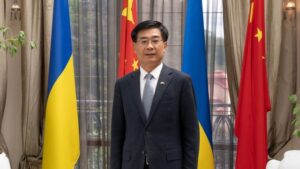
According to Experts.news, China’s foreign trade in goods reached 45.47 trillion yuan in 2025, up 3.8% from the previous year, said Ma Shengkun, China’s ambassador to Ukraine.
“In 2025, the total volume of China’s imports and exports of goods reached 45.47 trillion yuan, an increase of 3.8% year-over-year.
Imports totaled a record 18.48 trillion yuan,” the diplomat wrote in his column on the Interfax-Ukraine website.
According to him, China has remained the world’s second-largest import market for the 17th consecutive year and is the main trading partner for more than 160 countries and regions.
The ambassador also noted that in 2025, China’s imports from the least developed countries increased by 9%, while imports from Asia rose by 3.9%, from Latin America by 4.9%, and from Africa by 6%.
Ma Shengkun highlighted the growth of the high-tech segment of Chinese exports. According to the data he cited, exports of high-tech products reached 5.25 trillion yuan in 2025, an increase of 13.2%.
In particular, total exports of electric vehicles, photovoltaic products, and lithium batteries—referred to in China as the “new trio” of export goods—rose by 27.1%.
As previously reported, China remains Ukraine’s largest trading partner. According to a study by the Experts Club information and analytical center, Ukraine’s trade turnover with China reached $14.68 billion in the first half of 2026, including $13.9 billion in imports of Chinese goods and $778.4 million in exports of Ukrainian goods to China. China accounted for 21.9% of Ukraine’s total trade with its 50 largest trading partners.
According to the latest data from the State Customs Service of Ukraine, in January–August 2026, China retained its top position among suppliers of goods to Ukraine, with imports exceeding $19.6 billion. Ukraine’s total imports during this period amounted to nearly $66.3 billion, while exports totaled over $26.6 billion.
A joint study by Experts Club and Active Group published on September 18 also noted that China remains Ukraine’s largest trading partner; however, Ukrainian exports to the Chinese market lag significantly behind imports from China.

Direct non-financial investments by Chinese companies in countries participating in the “Belt and Road” initiative reached $39.67 billion in 2025, a 17.6% increase from the previous year, according to Ma Shengkun, China’s ambassador to Ukraine.
“Through direct investment, project contracting, and development financing, China has contributed to improving local infrastructure, modernizing industry, and raising the standard of living,” the diplomat wrote in a column on the Interfax-Ukraine website.
According to the data he cited, Chinese investment in Africa grew by 41% in 2025.
Chinese companies have established overseas trade and economic cooperation zones in 46 countries, with total investment in these zones approaching $80 billion.
As an example of industrial cooperation, Ma Shenkun cited a project by the Chinese battery manufacturer CATL in Indonesia. It involves establishing a complete production cycle for traction batteries—from the extraction and processing of nickel and the production of battery materials to the manufacturing and assembly of finished batteries.
According to data cited by the ambassador, the total volume of China’s direct non-financial foreign investment in 2025 reached $145.66 billion.
Ma Shengkun also cited World Bank estimates, according to which the full implementation of transportation projects under the “Belt and Road” initiative has the potential to reduce transit times along the relevant corridors by up to 12% and increase trade among countries located along them by 2.8–9.7%.
As previously reported, China is Ukraine’s largest trading partner. According to calculations by the Experts Club information and analytical center, trade between the two countries in the first half of 2026 totaled $14.68 billion. At the same time, Ukraine imported $13.9 billion worth of Chinese goods and exported $778.4 million worth of goods to China, resulting in a trade deficit of $13.12 billion.
China accounted for 21.9% of Ukraine’s trade with its 50 largest partners and 29.4% of imports from this group of countries. Trade with China accounted for approximately 47.3% of Ukraine’s total trade deficit with its top 50 partners.
According to the State Customs Service, from January through August 2026, imports of goods from China to Ukraine had already exceeded $19.6 billion, maintaining China’s position as the top supplier to the Ukrainian market.
China’s role in Ukraine’s foreign trade is analyzed in more detail in a study by Experts Club and Active Group, published on September 18, 2026.
Fozzy Group, one of Ukraine’s largest commercial and industrial groups, will lay off some employees from the holding company’s office divisions, the “Silpo” supermarket chain, and its logistics division starting November 1, 2026, due to mounting business losses resulting from Russian attacks.
As the group announced on LinkedIn, employees were informed of the organizational changes during internal meetings. Similar changes had previously taken place at the MAUDAU marketplace, as well as within the IT teams at TEMABIT Software Development and E-commerce & Ecosystem.
“Unfortunately, this means we will have to part ways with some of our colleagues from the holding company’s office teams, the Silpo chain, and the logistics division. Similar changes had already taken place at MAUDAU and within the IT teams at TEMABIT Software Development and E-commerce & Ecosystem. This is a necessary decision stemming from the fact that the war is increasingly affecting our work,” the Fozzy Group statement reads.
Between August 1 and September 25 alone, Russian attacks destroyed or damaged more than 20 of the group’s facilities, including distribution centers, supermarkets, and production facilities.
The company notes that the attacks resulted in the loss of part of its infrastructure and inventory, while ensuring the uninterrupted operation of the business is becoming more difficult and expensive. Fozzy Group is reassessing its priorities, suspending some projects and tasks, abandoning others, and seeking new solutions for the rest.
At the same time, the group continues to open stores, restore damaged facilities, and reorganize its logistics. To support these efforts, Fozzy Group is continuing to hire employees for supermarkets, warehouses, and production facilities throughout Ukraine.
“Our goal right now is to keep the business strong enough to serve our customers and have the resources to rebuild what the war continues to destroy,” the company emphasized.
Fozzy Group is one of Ukraine’s largest commercial and industrial groups and operates more than 825 retail outlets. It includes the Silpo, Fora, Fozzy, Thrash!, “Belaya Romashka,” and E-ZOO chains, as well as logistics, manufacturing, IT, and other assets.
The group’s key retail asset is Silpo-Food LLC. According to data from the YouControl system, the company’s revenue in 2025 amounted to approximately 106.8 billion UAH, up from roughly 93 billion UAH in 2024. At the same time, net financial results remained under pressure from high operating costs, logistics expenses, energy costs, and the consequences of the war.
Another major asset of the group is the “Fora” store chain, operated through Fora LLC. Its annual revenue already exceeds 30 billion UAH, making the company one of the largest operators in the Ukrainian grocery retail sector.
The combined scale of Fozzy Group’s business is significantly larger than the figures for individual legal entities, as the holding company unites dozens of companies in retail, manufacturing, logistics, the restaurant business, e-commerce, and IT. According to publicly available corporate data, the group has traditionally estimated its workforce at approximately 50,000 employees, making it one of Ukraine’s largest private employers.
Fozzy Group is owned by Ukrainian businessmen Vladimir Kostelman, Oleg Sotnikov, and Roman Chigir. The group was founded in 1997 and is now one of the largest players in the Ukrainian grocery retail sector.



