
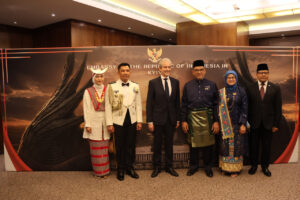
Indonesia is ready to expand practical cooperation with Ukraine, particularly in trade, investment, critical minerals, science, and the country’s future recovery, said Arif Muhammad Basalamah, Ambassador of the Republic of Indonesia to Ukraine.
“Indonesia is ready to explore practical areas of cooperation that can contribute to recovery and reconstruction, while opening up new opportunities for our bilateral partnership,” he said during a diplomatic reception in Kyiv marking the 81st anniversary of Indonesia’s independence.
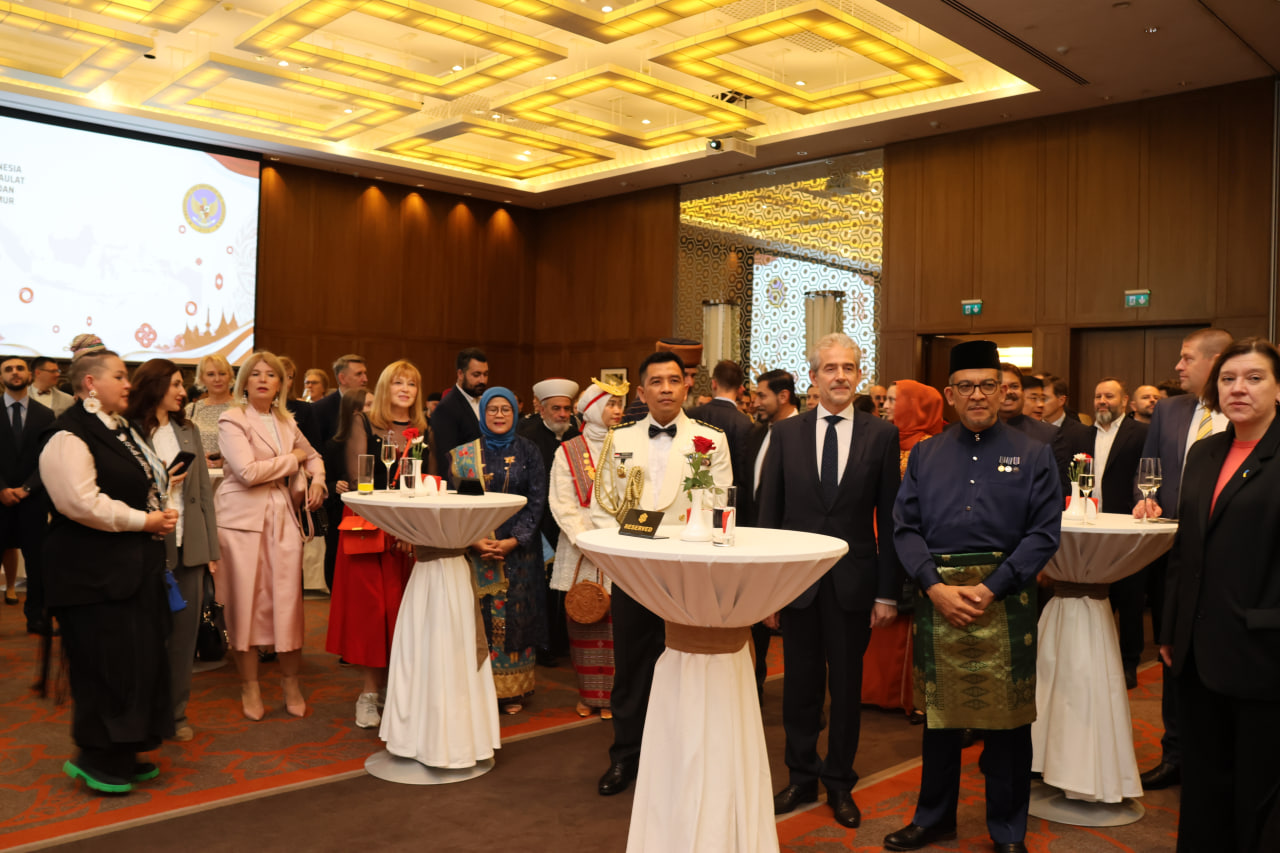
The reception took place on September 22 and was attended by representatives of the Ukrainian government, the diplomatic corps, international organizations, the business community, and the Indonesian community. In his speech, the ambassador specifically congratulated Andriy Dronyuk, Ukraine’s Deputy Minister of
Foreign Affairs for Digital Development, Digital Transformation, and Digitalization, and Artem Kunaev, chair of the Ukraine-Indonesia Interparliamentary Friendship Group.
Basalamah noted that, despite the war, political dialogue between the countries remains active, and cooperation continues to expand. At the same time, bilateral trade in 2025 fell to $492.6 million compared to a peak of $1.45 billion in 2021.
“We see opportunities to develop new areas of cooperation and to more fully realize the potential of a mutually beneficial economic partnership,” the ambassador emphasized.
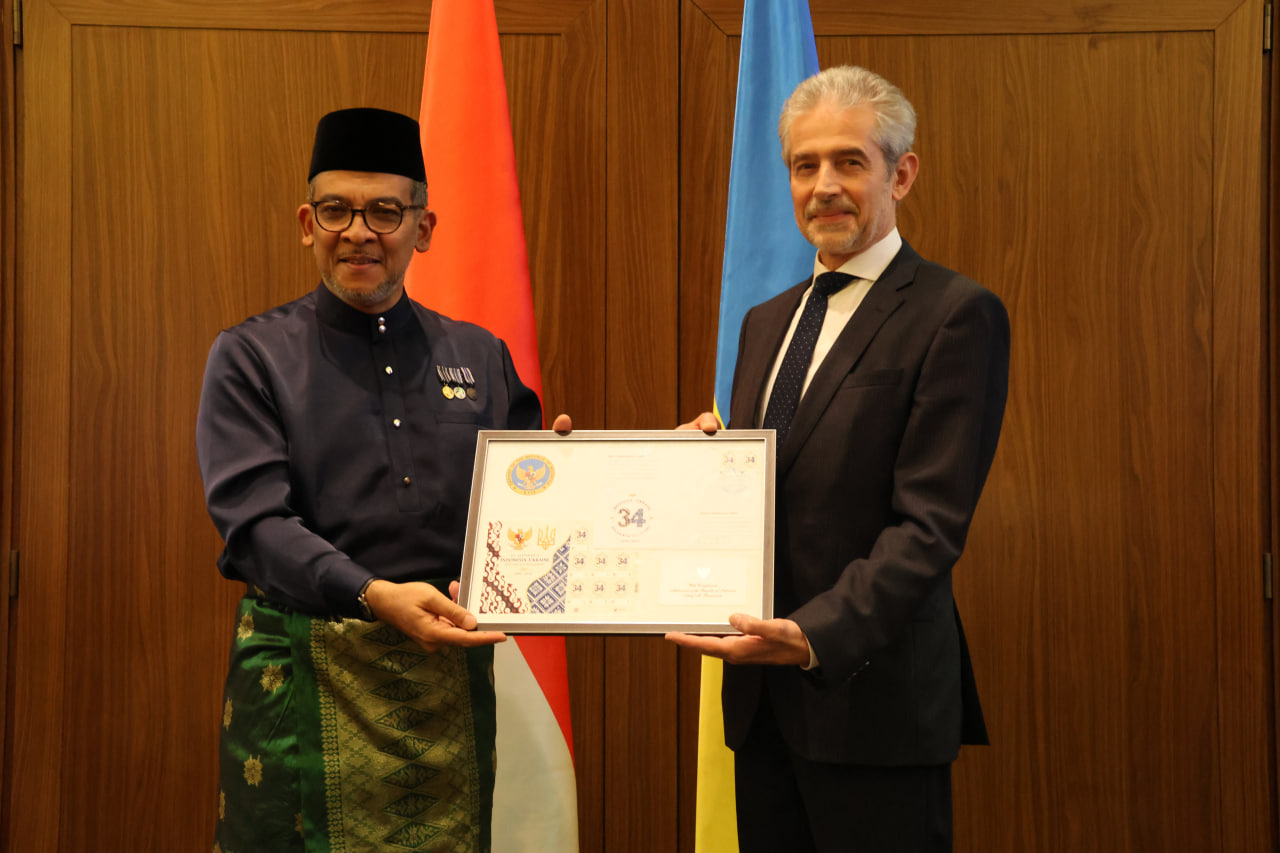
According to him, one such new area could be critical minerals and rare earth elements, where the parties see opportunities for research, technological cooperation, and future business projects. The Indonesian side is also interested in more active interaction between businesses from both countries in trade, investment, and joint production.
The ambassador invited Ukrainian companies to participate in Trade Expo Indonesia 2026, which will take place October 14–18 and is expected to serve as a platform for establishing contacts with Indonesian exporters and potential investment partners.
Basalamah identified tourism as another area for expanding ties. According to him, more than 18,000 Ukrainian citizens had already visited Indonesia by 2026.
“We hope that as transportation links improve and when circumstances permit, more Ukrainians will have the opportunity to discover Indonesia—its natural beauty, cultural heritage, and diverse culinary traditions,” the diplomat said.
The ambassador also highlighted the intensification of educational and scientific ties. He noted that in 2026 alone, the Indonesian Embassy in Kyiv facilitated the signing of four agreements between universities in Ukraine and Indonesia. Ukrainian students can also study in Indonesia through the Darmasiswa and KNB Scholarship programs.
In addition, Indonesia’s National Agency for Research and Innovation and Ukraine’s National Antarctic Scientific Center recently signed an agreement on cooperation in the field of Antarctic and tropical research. The document opens up opportunities for joint research projects and scientific exchange.
Speaking about the war, Basalamah noted that Indonesia continues to advocate for the use of dialogue and diplomacy to achieve lasting peace, as well as adherence to the principles of the UN Charter.
“Peace means that people can live in safety, rebuild their communities, provide education for their children, and look to the future with hope,” he said.
Diplomatic relations between Ukraine and Indonesia were established on June 11, 1992, several months after Indonesia recognized Ukraine’s independence on December 28, 1991.
The Embassy of the Republic of Indonesia in Kyiv began operations in January 1994. Currently, Arif Muhammad Basalamah serves as Indonesia’s Ambassador Extraordinary and Plenipotentiary to Ukraine.
The Embassy of Ukraine in Jakarta was opened in the second half of the 1990s; the official opening of the diplomatic mission took place on May 16, 1997. Currently, the position of Ambassador Extraordinary and Plenipotentiary of Ukraine to Indonesia is vacant. Following the conclusion of Vasyl Hamyanin’s mission, the
Ukrainian Embassy in Jakarta has been headed by Yevheniia Shynkarenko, Chargé d’Affaires ad interim of Ukraine. As of September 2026, she continued to serve as the head of the Ukrainian diplomatic mission in Indonesia.

Imports of trucks to Ukraine from January through August 2026 declined by 1.1% in monetary terms compared to the same period in 2025—to $627.5 million, according to statistics from the State Customs Service.
According to the published data, imports of these vehicles rose by 13.5% in August compared to August 2025, reaching $80.1 million.
As in the previous year, the largest number of trucks in January–August were imported from Poland, but imports from that country fell by 24%—to $98.8 million—and its share of total truck imports decreased to 15.74% from 20.5%.
Germany became the second-largest supplier of trucks to Ukraine, with exports totaling $88.4 million; in January–August 2025, it had not been among the top three suppliers.
Imports from Italy, which also was not among the top three truck suppliers a year ago, totaled $68.9 million (nearly 11%).
In January–August of last year, the top three truck suppliers were Poland, France, and the United States.
Imports of trucks from all other countries during this period increased by 20.5%—to $371.4 million.
At the same time, according to statistics, Ukraine exported only $2.17 million worth of trucks over the eight-month period, mostly to Turkey, while a year ago, exports totaled nearly $4 million—also primarily to Turkey.
As previously reported, in 2025, imports of trucks into Ukraine increased by 5.5% compared to 2024—to $999.5 million, with the largest volumes coming from France—$169.2 million (42.8% more than the year before last), Poland—$162.7 million (-14.7%), and the United States—$109 million (+2%).
Canada ranked first in terms of the balance of positive and negative attitudes among Ukrainians among Ukraine’s 50 largest trading partners, while China, which leads in trade turnover, received the lowest indicator, and attitudes toward Poland deteriorated significantly, according to the results of a study by Active Group and the Experts Club information and analytical center.
According to the published ranking, the balance of positive and negative assessments of Canada amounted to plus 73.8 percentage points. It was followed by Sweden – plus 70.6 p.p., the Netherlands – 69.7 p.p., Finland and Norway – 69.3 p.p. each, France – 69.1 p.p., Italy – 67.1 p.p., Lithuania – 65.9 p.p., Switzerland and the United Kingdom – 65.6 p.p. each.
This indicator is the difference between the shares of positive and negative responses. In particular, 76.3% of respondents have a positive attitude toward Canada, 2.5% have a negative attitude, and 19.2% have a neutral attitude.
The worst balance was recorded for China – minus 25.4 p.p.: 18.2% of respondents assess it positively, 43.6% negatively, and 33.9% neutrally. India also has a negative indicator – minus 14.3 p.p., Hungary – minus 12.7 p.p., and Lebanon – minus 9.2 p.p.
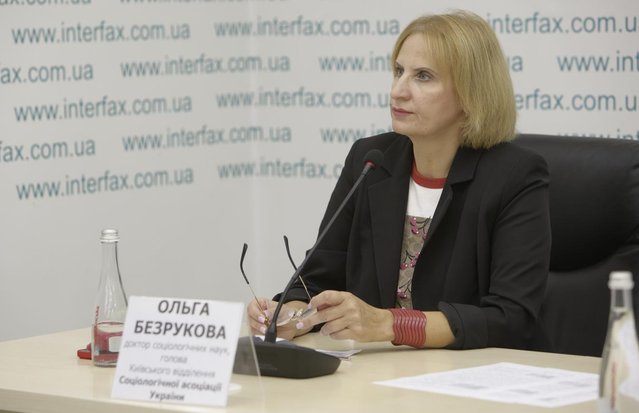
Doctor of Sociological Sciences and head of the Kyiv branch of the Sociological Association of Ukraine Olga Bezrukova called China an illustrative example of the gap between the scale of economic interaction and the country’s public image.
“We saw that China is Ukraine’s largest economic partner in terms of total trade turnover, but this is in no way converted into a positive public image. This shows that Ukrainian citizens clearly distinguish between the pragmatism of economic interaction and the overall assessment of a state. Economic dependence and interaction do not equal public sympathy for this country,” she emphasized at a press conference at the Interfax-Ukraine agency on Tuesday.
One of the most noticeable changes was the deterioration in attitudes toward Poland. While in March 2026 the balance of assessments stood at plus 41.7 p.p., in August positive and negative responses were practically equal, with a slight predominance of negative ones. A positive attitude was expressed by 34.6% of respondents, a negative one by 37%, and a neutral one by 25.4%.
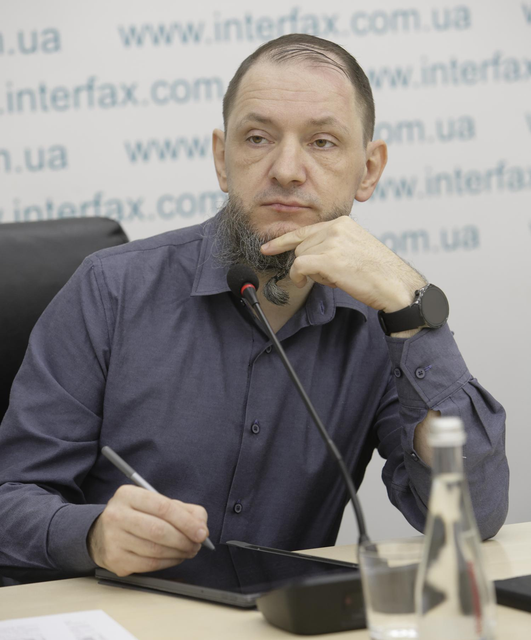
“At the beginning of the invasion, Poland was perceived almost as the main partner. We asked about the rapprochement between Ukraine and Poland, political and economic, even about uniting into some kind of common union, and we saw enormous positive results. But here we see: Poland seemingly still remains a key partner, but the idea of unification has already been forgotten, and we see stable negativity,” said Active Group founder Andriy Yeremenko.
He linked the deterioration in assessments to the position of part of the Polish authorities, which he considers anti-Ukrainian.
At the same time, the balance of attitudes toward Hungary improved from minus 33.6 p.p. in March to minus 12.7 p.p. in August, although negative assessments still prevail. For the United States, the indicator rose from plus 19.4 to plus 38.4 p.p. Some 55% of respondents have a positive attitude toward the United States, 16.6% a negative attitude, and 25.6% a neutral attitude.
When asked who contributes most to achieving peace in Ukraine, 44.6% of respondents named European Union countries, 25.2% the United States, 23.3% the United Kingdom, 4.1% China, 1.8% India, and 1% Brazil. Regarding priority development of trade and economic relations, 69.9% chose EU countries and the United Kingdom, 11.9% the United States, and 8.4% China.

According to Bezrukova, assessments of the U.S. role in achieving peace remained relatively stable throughout the three waves of the study.
“General sympathy toward a country and an assessment of its functionality at the international level are related but not identical things. Images of countries are multidimensional. A person may change their emotional attitude toward a state but continue to recognize its international weight,” the sociologist explained.
Another model, she said, is demonstrated by India: 48.3% of respondents express a neutral attitude toward it, but among formed assessments negative ones prevail – 31.5% versus 17.2% positive.
The economic indicators were presented by Experts Club founder, deputy director of the Interfax-Ukraine agency and PhD in Economics Maksym Urakin. According to State Customs Service data cited by him, in the first half of 2026 Ukraine’s trade turnover amounted to $70.3 billion, exports to $21 billion, and imports to $49.3 billion. The negative balance of trade in goods reached $28.3 billion.
“If we compare this with the first half of 2025, there was also an imbalance then, but now exports have increased by approximately 5%, while imports have risen by almost 30%. That is, the deficit increased by more than $10 billion over the year. Therefore, it is very important for us to analyze our main partners,” he emphasized.
According to the materials presented, trade turnover with China in January-June amounted to about $14.68 billion. Ukraine exported $778 million worth of goods to China and imported $13.90 billion, forming a deficit of approximately $13.12 billion. Poland remained the largest buyer of Ukrainian goods, with a volume of $2.38 billion. Türkiye ranked second among export markets with $1.78 billion, and Italy third with $1.28 billion.
In terms of total trade volume, China is followed by Poland – $7.05 billion, Türkiye – $4.90 billion, Germany – $4.48 billion, and the United States – $3.07 billion. Yeremenko highlighted Türkiye as an example of a combination of significant trade turnover and predominantly positive perception: 52.3% of respondents have a favorable attitude toward it, while 7.4% have a negative attitude.
Urakin separately drew attention to partners with which trade provides Ukraine with a positive balance. In the first half of the year, the largest was with Spain – $578.1 million, Egypt – $527.1 million, and Moldova – $467.2 million. They were followed by Algeria – $309.2 million, the Netherlands – $221.5 million, and Lebanon – $220.5 million. Libya, Tunisia, Iraq, and Yemen also entered the top ten.
At the same time, neutral attitudes prevail toward a number of these partners. Egypt is assessed neutrally by 61.3% of respondents, Algeria by 65.8%, and Tunisia by 67.3%. Participants in the press conference linked this to insufficient awareness among Ukrainians about these countries and emphasized the need for more active economic and public diplomacy.

“It is necessary to develop not only general awareness better. First of all, business associations, the Ministry of Economy and the Ministry of Foreign Affairs need to work to develop bilateral relations and improve the balance. In conditions where Ukraine already lacks financing and we live, essentially, at the expense of external borrowing, cooperation should be expanded with countries where we can have a positive balance,” said Active Group director Oleksandr Pozniy.
Urakin recommended that embassies accredited in Ukraine ensure full communication in the Ukrainian language, openness to the media, and regular reporting on the results of cooperation.
“The first recommendation is to regularly show concrete deeds, concrete actions, the presence here of foundations, embassies, teams, diplomats in the humanitarian sphere and in science. Second, to be open to questions and requests from the media and the public. We also need to use our sociology to draw conclusions and cement our relations, primarily trade relations,” he added.
This is the third wave of the study; the previous ones were conducted in August 2025 and March 2026. The survey was conducted in August 2026 using self-completed online questionnaires in the SunFlowerSociology panel. A total of 800 Ukrainian citizens aged 18 and over were surveyed. According to the organizers, the sample is representative by age, gender and region, and the stated maximum theoretical statistical margin of error at a 95% confidence level is 3.5%.
ACTIVE GROUP, CANADA, CHINA, EXPERTS CLUB, POLAND, PUBLIC OPINION, TRADE, UKRAINE, UNITED STATES
Imports of goods into Ukraine from January through August 2026 increased by 26% in monetary terms compared to the same period in 2025—from $52.6 billion to $66.3 billion, according to data from the Telegram channel of the State Customs Service (SCS) of Ukraine.
Exports, however, despite a 4% increase in January–July, slowed in January–August and remained nearly at last year’s level—$26.6 billion compared to $26.6 billion last year.
Meanwhile, taxable imports totaled $46.8 billion, accounting for 71% of the total volume of imported goods.
“The tax burden per kilogram of taxable imports in January–August 2025 was $0.6/kg,” the agency added.
The largest volumes of goods were imported into Ukraine from China ($19.6 billion), Poland ($6.3 billion), and Germany ($4.4 billion).
The largest exports from Ukraine went to Poland ($3.2 billion), Turkey ($2.1 billion), and Germany ($1.7 billion).
Of the total volume of goods imported in January–August 2026, 73% consisted of machinery, equipment, and transportation vehicles—$29.9 billion (customs clearance of these goods generated 168.1 billion UAH in budget revenue, accounting for 29% of customs revenue), chemical industry products—$9 billion (74.9 billion
UAH was paid to the budget, or 13% of customs revenue), and fuel and energy products—$9.5 billion (197 billion UAH was paid, accounting for 34% of customs revenue).
The top three most exported goods from Ukraine were: food products—$15.4 billion; metals and metal products—$2.7 billion; and machinery, equipment, and transportation vehicles—$2.4 billion.
In the first 8 months of 2026, customs clearance of exports subject to export duties generated 1.1 billion UAH in revenue for the budget, compared to 174.2 million UAH during the same period last year.
As previously reported, since July of this year, operations at the ports of “Greater Odesa” and their terminals have become significantly more difficult due to intensified attacks on ships and port infrastructure.

According to Experts.news, the structure of Ukraine’s dairy exports has changed significantly over the past year: the share of butter and other milk fats in foreign exchange earnings has more than halved, while dry and condensed milk have become the largest export category, according to an analysis by the Union of Dairy Enterprises of Ukraine (UDEU).
In August 2025, butter and other milk fats under commodity code 0405 accounted for 36% of the value of Ukraine’s dairy exports, whereas in August 2026, their share fell to 15%. At the same time, the share of dry and condensed milk increased from 24% to 37%, and that of whey from 5% to 11%.
The change in structure occurred gradually. Butter accounted for 36% in August 2025, falling to 25% in October, to 22% in March 2026, and to 15% in August. At the same time, the share of dry and condensed milk rose from 24% to 24%, then to 35% and 37%, respectively. Thus, the shift in the structure of Ukrainian dairy exports occurred primarily between the fall of 2025 and the spring of 2026.
According to the SMPU’s assessment, one of the factors was the situation on the global market for milk fats. Butter prices were under pressure, and the Global Dairy Trade index fell for nine consecutive auctions at the end of 2025. Since the export structure is calculated in value terms, the decline in butter’s share is linked not only to physical shipment volumes but also to changes in global prices.
At the same time, experts cite the growing role of whey as the most notable structural change. Its share of export revenue more than doubled over the year. By August 2026, dry milk, condensed milk, and whey together accounted for 48% of the value of Ukraine’s dairy exports.
The share of cheeses—which are considered higher-value-added products with potentially higher profit margins—remained virtually unchanged, at about 24% in August 2025 and 25% a year later. Thus, the structure of Ukraine’s dairy exports is shifting increasingly toward commodities and raw materials.
This trend is unfolding against the backdrop of a general deterioration in the dairy industry’s trade balance. According to data published by the Ukrainian Dairy Producers Association (SMPU) on September 2, Ukraine exported $176.9 million worth of dairy products in January–August 2026, which is 20.5% less than during the same period last year. At the same time, imports increased by 24.7% to $247.2 million.
In volume terms, butter exports fell by roughly half over the eight-month period, while shipments of dry milk and condensed milk decreased by 7%. At the same time, exports of fermented milk products rose by 28%, milk whey by 1.1%, and cheese by 0.9%.
As a result, Ukraine shifted from a trade surplus in dairy products to a trade deficit. For January–August 2026, the deficit totaled $70.3 million, whereas a year earlier the surplus had reached $24.1 million. The export-to-import ratio fell from 1.12 to 0.72.
On the import side, cheese remains the largest category, although its share in August fell year-over-year from 82.3% to 76.9%. At the same time, the share of imported milk and cream, whey, and butter increased, intensifying competition for Ukrainian processors in the domestic market.
The Union of Dairy Enterprises of Ukraine (SMPU) brings together Ukrainian milk producers and processors and represents the interests of companies in the industry. The organization was founded in 2001.
Original source: analysis by the Union of Dairy Enterprises of Ukraine on Ua Dairy
China was the only G20 country that did not support a number of provisions in the final document of the meeting of finance ministers and central bank governors of the “Group of Twenty,” held August 31–September 1, 2026, in Asheville, North Carolina.
As a result, instead of a joint communiqué agreed upon by all participants, the United States, as G20 chair, issued a chair’s statement. The official document from the U.S. Department of the Treasury states that it was endorsed by all G20 members present, except for China, which opposed four sections.
One of the main points of contention was the issue of global trade imbalances. The text, supported by the other countries, calls on nations to abandon non-market policies and practices that exacerbate imbalances. Countries with excessive and persistent external trade surpluses are urged to eliminate factors that constrain domestic consumption and create excessive dependence of economic growth on exports.
U.S. Treasury Secretary Scott Bessent stated after the meeting that China was the only dissenting participant. He called China’s current account surplus the largest and “unsustainable” and stated that a non-market economic model that constantly increases the supply of cheap export goods cannot be sustainable.
China also did not support provisions to expand the International Monetary Fund’s role in monitoring global economic imbalances. The other G20 members advocated for strengthening the IMF’s analysis, including an assessment of non-market policies, the factors driving external trade imbalances, and their impact on other economies.
Another point of contention was the Strait of Hormuz. The G20 statement expressed concern over ongoing disruptions to energy trade and emphasized the need for free, safe, and predictable shipping through the Strait of Hormuz and other key maritime routes. China opposed the entire relevant section of the document.
In addition, Beijing disagreed with the section concerning sovereign debt restructuring and the continued application of the G20’s Comprehensive Framework for Addressing the Debt Problems of Developing Countries. An official document from the U.S. Treasury Department explicitly states that China objected to paragraphs 4, 10, 11, and 13 of the statement.
Despite the lack of full consensus, the remaining 19 G20 members supported the approach to reducing global imbalances. Reuters notes that the issue has effectively turned into a debate over China’s export model, industrial subsidies, and the growing supply of Chinese products to global markets.
These disagreements come amid growing concerns from the U.S., the EU, and several other major economies regarding China’s manufacturing capacity and its expanding trade surplus. Western nations fear that a glut of Chinese industrial goods could intensify pressure on local manufacturers and increase dependence on specific supply chains.
The meeting in Asheville marked the second gathering of G20 finance ministers and central bank governors under the U.S. presidency in 2026. Key topics included economic growth, global imbalances, public debt, digital assets, financial literacy, and the state of the global financial system.
The G20 currently comprises 19 countries: Argentina, Australia, Brazil, the United Kingdom, Germany, India, Indonesia, Italy, Canada, China, Mexico, Russia, Saudi Arabia, the United States, Turkey, France, South Africa, South Korea, and Japan.
In addition, the European Union and the African Union are full members of the G20. Thus, following the African Union’s accession in 2023, the G20 effectively comprises 21 members—19 countries and two regional organizations.



