

Ukrainians’ attitudes toward Taiwan in August 2026 became noticeably more positive compared to March, while China remains the country with the worst balance of positive and negative assessments among the 50 countries surveyed. 42.5% of respondents view Taiwan positively, while 18.2% view China positively, according to the Experts Club information and analytical center, based on the results of a joint study with Active Group, presented in September 2026.
Thus, positive attitudes toward Taiwan among Ukrainians are 2.3 times more prevalent than those toward the People’s Republic of China, despite the fact that Ukraine officially adheres to the “One China” policy and has no diplomatic relations with Taiwan.
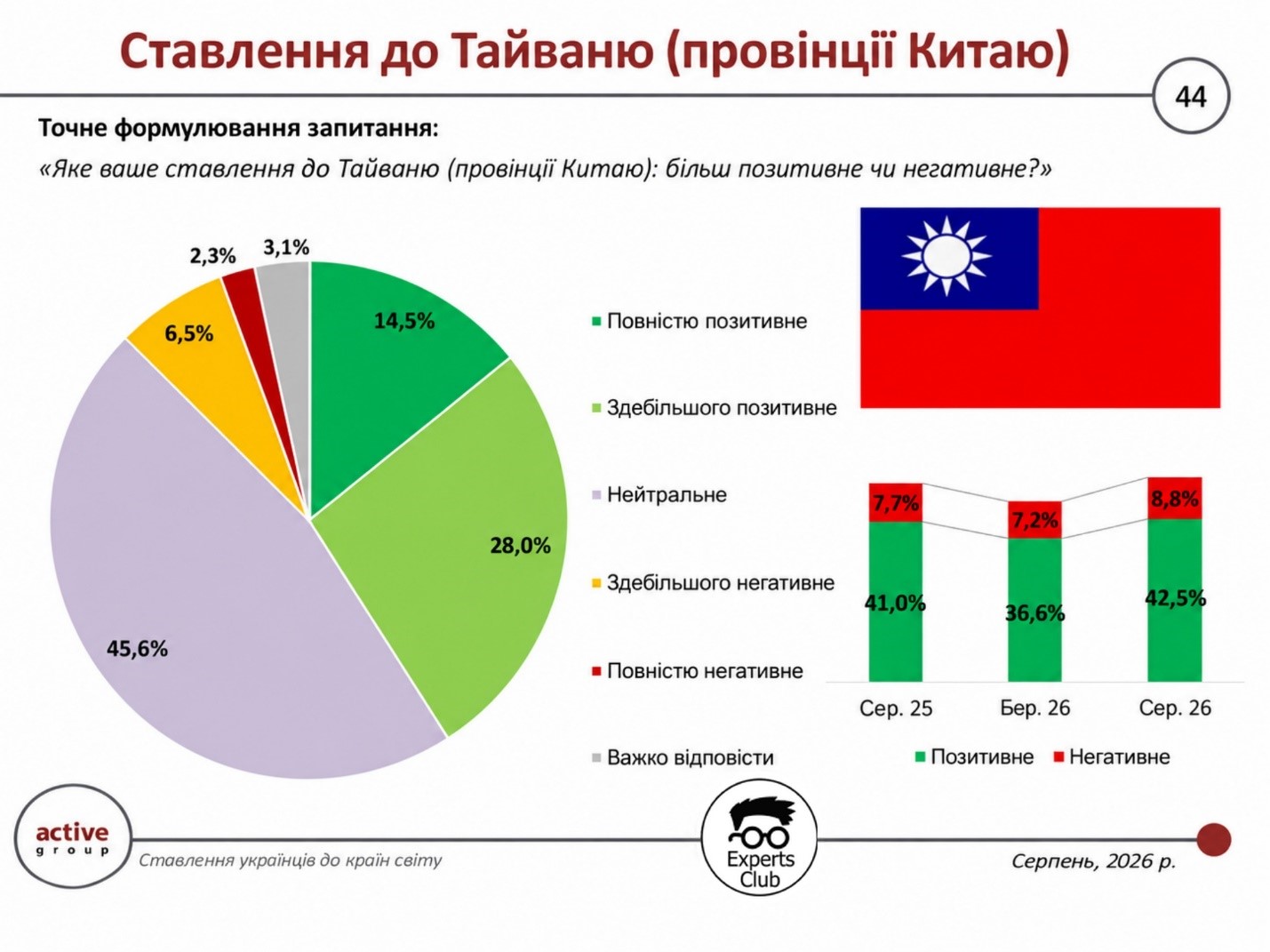
According to the results of the August survey, 14.5% of Ukrainians have a completely positive attitude toward Taiwan, while 28% have a mostly positive attitude. 45.6% of respondents hold a neutral position, 6.5% have a mostly negative attitude, and 2.3% have a completely negative attitude. Another 3.1% of respondents were undecided.
The overall share of positive assessments is 42.5%, negative assessments—8.8%, and the net balance of positive and negative attitudes is +33.7 percentage points. Positive responses outnumber negative ones by nearly five to one.
By comparison, Ukrainians’ attitudes toward China are characterized by a predominance of negative assessments. 18.2% of respondents view China positively, 33.9% neutrally, and 43.6% negatively. Another 4.3% were undecided.
The balance of positive and negative attitudes toward China stands at minus 25.4 percentage points. This is the lowest result among all 50 countries and territories included in the study. The difference between the balances of attitudes toward Taiwan and China reaches 59.1 percentage points. At the same time, the share of negative assessments of China is nearly five times higher than the corresponding figure for Taiwan.
It is particularly telling that China remains Ukraine’s largest trading partner, while Taiwan plays a significantly smaller role in Ukraine’s foreign trade. Thus, the intensity of economic relations is not always accompanied by a corresponding level of public favor.
According to an analysis by Experts Club, Ukraine’s trade volume with China totaled approximately $14.68 billion in the first half of 2026. Of this amount, nearly $13.9 billion came from Chinese imports to Ukraine, while Ukrainian exports amounted to approximately $778 million.
China supplies Ukraine with electronics, batteries, transformers, electrical equipment, machinery, and other industrial products. Ukrainian exports to China consist mainly of iron ore, vegetable oils, oilseed processing products, soybeans, and other agricultural goods. However, China’s significant economic presence does not ensure a positive perception of the country among the Ukrainian public.
The trend in attitudes toward Taiwan over the past five months shows the opposite pattern.
In March 2026, 36.6% of Ukrainians viewed Taiwan positively, including 11.4% who viewed it entirely positively and 25.2% who viewed it mostly positively. 51.3% of respondents held a neutral position, 7.3% held a negative one, and another 4.9% were undecided.
In August, the share of positive assessments rose by 5.9 percentage points, to 42.5%. Meanwhile, the neutral segment shrank by 5.7 percentage points, to 45.6%.
The share of negative responses also increased slightly—from 7.3% to 8.8%—but the growth in the positive segment was significantly more pronounced.
Changes occurred in both categories of positive attitudes. The share of fully positive assessments increased from 11.4% to 14.5%, while the share of mostly positive assessments rose from 25.2% to 28%.
As a result, the balance of positive and negative attitudes toward Taiwan improved from approximately plus 29.4 percentage points in March to plus 33.7 in August 2026. This also slightly exceeds the figure for August 2025, when the balance stood at plus 33.3 points.
At the same time, the balance of attitudes toward China has worsened over the past five months: in March 2026, it stood at minus 21.7 percentage points, and in August, it was minus 25.4. However, compared to August 2025, when this figure stood at minus 28.7 points, the negative balance has narrowed slightly.
Oleksandr Pozniy, director of the research company Active Group, commenting on the previous wave of the study, drew attention to the importance of public awareness in shaping attitudes toward countries and territories with which Ukrainians have limited direct experience.
Maksym Urakin, founder of the Experts Club information and analytical center and a candidate of economic sciences, commenting on the survey results, emphasized the need to distinguish between public perception of individual countries and Ukraine’s long-term economic interests.
In his view, the negative attitude of a significant portion of Ukrainians toward China should not lead to a curtailment of economic ties with the world’s second-largest economy. On the contrary, the scale of trade between the two countries requires systematic efforts to maintain mutual trust, resume dialogue, and expand cooperation.
“It is extremely important for Ukraine and China to maintain good, trusting relations. We must remember that our countries have a long history of cooperation, and back in 2011–2013, the foundation for a strategic partnership was laid at the highest state level. These agreements should not be forgotten, as they were designed to last for decades and envisaged the development of trade, investment, infrastructure projects, and industrial and scientific-technical cooperation,” Urakin noted.
He recalled that on June 20, 2011, Ukrainian President Viktor Yanukovych and Chinese President Hu Jintao signed a Joint Declaration in Kyiv on the establishment and development of strategic partnership relations between the two countries.
The next important step was Yanukovych’s state visit to China in December 2013. During talks with Chinese President Xi Jinping on December 5, the Treaty on Friendship and Cooperation between Ukraine and China, a Joint Declaration on Further Deepening Strategic Partnership Relations, and the Program for the Development of Strategic Partnership Relations for 2014–2018 were signed.
The Verkhovna Rada of Ukraine ratified the Treaty on Friendship and Cooperation on May 15, 2014. The relevant documents provided for the development of cooperation in the trade and economic, agricultural, energy, infrastructure, aerospace, and humanitarian spheres.
According to Urakin, this legal framework remains an important historical legacy of Ukrainian-Chinese relations, although specific areas of cooperation need to be revised in light of current conditions, the war, and Ukraine’s economic interests.
The founder of Experts Club drew particular attention to the sensitivity of the Taiwan issue for official Beijing.
“Ukrainians should not try to exploit the contradictions between China and Taiwan. We must understand that this is an extremely sensitive issue for the Chinese state and society. Ukraine has its own official position on the ‘One China’ policy, and it is important that discussions surrounding Taiwan do not become an additional factor in the deterioration of Ukrainian-Chinese relations. Instead, we need to actively develop a constructive dialogue with the PRC, seek common economic interests, and rebuild trust,” Urakin believes.
In his view, one of the key practical areas of focus should be changing the structure of Ukrainian exports to China.
Currently, bilateral trade is characterized by a significant imbalance: Ukraine imports mainly industrial products and equipment, while the structure of Ukrainian exports depends largely on the supply of raw materials and agricultural goods.
“Our task is not simply to sell grain, ore, or other raw materials to China. We need to be much more proactive in opening up the Chinese market to Ukrainian finished products with high added value. These could include highly processed food products, equipment, machinery, pharmaceuticals, technological solutions, and other competitive Ukrainian goods. The Chinese market is extremely large, but it requires systematic work, an understanding of local consumers, product certification, and long-term relationships with partners,” Urakin emphasized.
He believes that Ukrainian government agencies, trade representatives, industry associations, and companies need to work more actively to remove barriers to the entry of finished products into the Chinese market.
Specifically, this involves harmonizing veterinary and phytosanitary requirements, certifying food products, developing logistics routes, promoting Ukrainian brands, and finding local distributors.
An important avenue could be the participation of Ukrainian manufacturers in specialized trade shows in China, the holding of industry-specific business forums, and the organization of direct negotiations between companies.
According to Urakin, improving the informational presence of China in Ukraine and of Ukraine in China is of particular importance.
“Diplomacy and economics must work together. If there are extensive trade ties between the two countries but public perception remains negative, this indicates a need for better communication. It is important for Chinese partners to tell Ukrainians more about the concrete results of cooperation, and for Ukrainian businesses to more actively showcase their own technologies, products, and investment opportunities in China. “In the long run, this could contribute to more balanced economic relations,” noted the founder of Experts Club.
At the same time, he emphasized that the expansion of economic cooperation must be based on the principles of mutual respect, international law, and the sovereignty and territorial integrity of states.
In the case of Taiwan, the survey results paint a different picture: despite the absence of official diplomatic relations with Ukraine, the perception of Taiwan among respondents is predominantly positive or neutral.
At the same time, these sociological indicators should not be interpreted as support by Ukrainians for a specific option for a political resolution of the Taiwan issue. The study measured respondents’ general attitudes, not their position on Taiwan’s status under international law.
Ukraine established diplomatic relations with the People’s Republic of China on January 4, 1992, and adheres to the “One China” policy. In a joint Ukrainian-Chinese communiqué dated October 31, 1992, Ukraine recognized the government of the PRC as the sole legitimate government of China and confirmed that it would not establish official relations with Taiwan. This position remains the foundation of Ukraine’s official diplomatic stance on the Taiwan issue.
At the same time, Taiwan has its own elected governing bodies, administrative system, and economic policies, and exercises de facto self-government. The People’s Republic of China considers Taiwan to be part of its territory.
Thus, the findings of Experts Club and Active Group demonstrate a significant discrepancy between a state’s diplomatic position, the economic structure of its foreign relations, and public perceptions of specific countries and territories.
Ukrainians’ positive attitude toward Taiwan continues to grow, but respondents with a neutral stance remain the largest single group. At the same time, China, despite its leading role in Ukraine’s foreign trade, continues to have the lowest public sentiment rating among the countries surveyed.
According to Maksym Urakin, these results should serve as a basis not for reducing international economic contacts, but for more systematic and pragmatic cooperation with partners. This is particularly true for China, where Ukraine has significant potential to expand exports of finished goods and develop industrial cooperation.
The study “Ukrainians’ Attitudes Toward Countries Around the World” was conducted in August 2026 by Active Group in collaboration with the Experts Club Information and Analytical Center using a self-administered online questionnaire on the SunFlowerSociology panel. The survey included 800 Ukrainian citizens aged 18 and older. The sample was representative in terms of age, gender, and region. The maximum stated theoretical statistical margin of error for indicators at the 50% level is ±3.5 percentage points at a 95% confidence level.
This is the third wave of the study, following surveys conducted in August 2025 and March 2026.
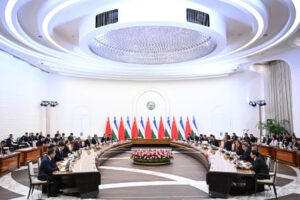
October 17–18 of this year Li Qiang, Premier of the State Council of the People’s Republic of China, paid an official visit to the Republic of Uzbekistan with the aim of further strengthening the comprehensive strategic partnership between the two countries, expanding trade, economic, and investment cooperation, and implementing the agreements reached at the highest level.
On October 17, President of the Republic of Uzbekistan Shavkat Mirziyoyev received the Chinese delegation. The parties discussed the practical implementation of the agreements reached during the meeting of the two countries’ leaders in Bishkek in August 2026 and noted the intensification of contacts between parliaments, governments, regions, and business circles. Uzbekistan reaffirmed its commitment to the “One China” policy.
On the same day, talks between Uzbekistan’s Prime Minister Abdulla Aripov and Li Qiang took place at the “Uzbekistan” International Forum Palace. The main focus was on developing cooperation in industry, energy, agriculture, transportation, digital technologies, and other promising sectors.
Over the past five years, the volume of bilateral trade has tripled, reaching nearly 18 billion U.S. dollars by the end of 2025. The volume of Chinese direct investment in Uzbekistan’s economy in 2025 amounted to 17 billion U.S. dollars. There are more than 6,500 enterprises with Chinese capital operating in the country, and the portfolio of promising joint projects is estimated at approximately 60 billion U.S. dollars.
The parties emphasized the importance of constructing the China–Kyrgyzstan–Uzbekistan railway, which is expected to expand the region’s transport connectivity and create additional opportunities for trade. Other priorities include the development of renewable energy, the chemical industry, automotive manufacturing, metallurgy, geology, infrastructure, peaceful nuclear energy, artificial intelligence, robotics, and machine tool manufacturing.
Special attention was given to the development of tourism, cultural, and educational exchanges, particularly increasing the frequency of flights between cities in the two countries. Uzbekistan Culture Days in China and the reciprocal opening of cultural centers are planned for the near future. Cooperation within the framework of the Shanghai Cooperation Organization and the “Central Asia–China” format was also discussed.
Following the talks, bilateral memorandums of cooperation were signed in the fields of industry, energy, customs administration, healthcare, e-commerce, and mass media. A symbol of the strengthening of friendly ties was the decision to name one of Tashkent’s streets “Beijing.”

The ”Cheese Kingdom” chain of stores, which specializes in selling cheeses from around the world, has announced its closure.
‘For 13 years, we have served you and shared the finest flavors. Unfortunately, we are forced to close our stores,’ the chain’s website stated on Friday.
In June 2025, the chain’s office in Kyiv was completely destroyed by fire following a Russian ‘suicide attack.’
The chain’s stores comprise 48 teams and 250 employees across the country.
Source: https://cheesekingdom.com.ua/ua

Retail Expo 2026—the 10th annual Ukrainian retail congress—will take place on October 29–30. The event will bring together over 500 participants: owners and executives of retail chains, manufacturers, suppliers, technology companies, and industry experts. The program features over 50 speakers, practical case studies, panel discussions, and an exhibition area showcasing retail solutions.
How is consumer behavior changing?
What helps maintain sales, teams, and customer loyalty today?
Where can you find opportunities for efficiency when resources are limited and challenges are mounting?
These and other questions will form the basis of the Retail Expo 2026 program. The focus will be on market analytics and consumer trends, automation and technological transformation, sales, customer experience and service, labor shortages, team management, and partnerships. There will be a special emphasis on real-world case studies from Ukrainian companies that are finding solutions and continuing to grow despite all the challenges.
Retail Expo is not just about presentations on stage. It’s two days of lively conversation, new connections, professional discussions, and meetings with those who work every day to advance the Ukrainian retail sector.
Today, as businesses operate amid war, constant uncertainty, and new challenges, such gatherings are especially valuable. It’s important not to become isolated by our own problems, but to come together, speak openly, share experiences, and support one another—so we can find solutions, grow stronger, and move forward.
Retail Expo 2026 will take place on October 29–30. The event will be held in a shelter, which will allow the congress to continue even during air raid alerts.
The program, speakers, and registration are available on the Retail Expo 2026 website https://retailexpo.com.ua
Open4Business is an information partner.
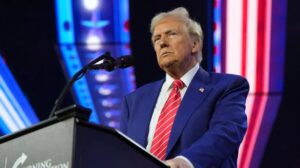
U.S. President Donald Trump again stated that Canada could eventually become the 51st U.S. state, linking this to trade relations between the two countries.
He made this statement on October 14 during a campaign rally in Bullhead City, Arizona.
“Eventually, they’ll become the 51st state, because that’s the only way it works. We don’t need them, but they need us. And why should we lose $80 billion, $90 billion, $100 billion a year to support a country that isn’t part of us?” Trump said.
Prior to this, the U.S. president accused Canada of pursuing a harsh tariff policy and stated that Canadian automakers are moving production to the U.S. to avoid American tariffs. After mentioning the possibility of making Canada the 51st state, Trump also drew a parallel with Greenland.
However, the $80–100 billion figure he cited does not correspond to official data on the trade balance between the two countries. According to the Office of the U.S. Trade Representative, in 2025, the U.S. trade deficit in goods with Canada stood at $48.3 billion. At the same time, the U.S. had a trade surplus in services with Canada of $27.7 billion. Total trade in goods and services between the two countries was estimated at $872.3 billion.
Trump repeatedly returned to the idea of making Canada a U.S. state after his return to the White House. In May 2025, during a meeting in Washington, Canadian Prime Minister Mark Carney stated outright that the country was “not for sale” and would never be sold. In response, Trump said at the time, “Never say never.”
The U.S. remains Canada’s main trading partner. According to the USTR, more than three-quarters of Canadian merchandise exports go to the U.S. market, while nearly half of Canada’s imports come from the U.S. The economies of the two countries are particularly closely linked in the automotive industry, the energy sector, and cross-border supply chains.
Imports of goods into Ukraine from January through September 2026 increased by 25% in monetary terms compared to the same period in 2025—from $60.1 billion to $75.1 billion, while for all of 2025 they totaled $84.8 billion, according to data from the Telegram channel of the State Customs Service (SCS) of Ukraine.
At the same time, exports remain at the level of the same period in 2025—$29.6 billion for the first nine months of 2026, compared to $29.5 billion last year ($40.3 billion for all of 2025).
“The tax burden per 1 kg of taxable imports in January–September 2026 amounted to $0.62/kg,” the agency added.
As in 2025, the largest sources of imports to Ukraine were China—$22.6 billion, Poland—over $7.1 billion, and Germany—over $4.9 billion.
Exports from Ukraine, also unchanged compared to 2025, were highest to Poland—$3.7 billion, Turkey—over $2.2 billion, and Germany—$2.1 billion.
Of the total volume of goods imported in January–September 2026, more than 73% fell into the categories of machinery, equipment, and transportation—nearly $34.4 billion (customs clearance of these goods generated nearly 191.5 billion UAH in revenue for the budget, or 29% of customs revenue), fuel and energy products—over $10.8 billion (with over 224.9 billion UAH paid, or 34% of customs revenue), as well as chemical industry products—over $10 billion (with 83 billion UAH paid upon clearance, or 13% of customs revenue).
As for the top three most exported goods from Ukraine, the categories remain unchanged compared to 2025: food products—$17 billion; metals and metal products—$2.9 billion; and machinery, equipment, and transportation—$2.7 billion.
The State Tax Service added that during customs clearance of exports subject to export duties, nearly 1.5 billion UAH was paid to the budget from January through September 2026.



