

Dmytro Lashin, director of Lavina Mall in Kyiv, is leaving Mandarin Plaza Group after eight years in the position.
“Today marks exactly eight years since I started working at Mandarin Plaza Group. And I want to let you know that my contract has ended,” Lashin announced on LinkedIn.
The Lavina Mall, with a total leasable area of 127,000 square meters, opened in early December 2016.
According to the YouControl analytics system, the authorized capital of Lavina Shopping Center LLC (Kyiv), established in 2013 and owner of the Lavina Mall in the capital, amounts to 279 million UAH. As of August 2026, the owners of Lavina Shopping Center LLC are the Cypriot company Ixoria Business Limited (90%) and JSC ZNVKIF “Asborn” (10%), with Marina Dorokhina listed as the ultimate beneficial owner.
According to its 2025 financial results, the company generated 1.5 billion UAH in revenue, a 14.68% increase compared to 2024, with net profit totaling 43,857,000 UAH—238 times higher than the previous year.
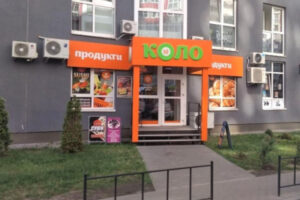
The Antimonopoly Committee of Ukraine (AMCU) has approved the acquisition by Omega LLC—which operates the Varus supermarket chain—of Ariteil LLC, the “KOLO” grocery store chain owned by Gennadiy Butkevych, a co-owner of the ATB Corporation.
The approval was granted on Thursday, July 16, according to the agency’s website.
“This deal will be one of the largest in the Ukrainian retail market in 2026. The merger will significantly strengthen the company’s position in the convenience retail segment. The combination of Varus’s extensive expertise and KOLO’s many years of experience in the ‘neighborhood store’ format will create a solid foundation for further business expansion,” reads a statement from Varus on Facebook.
According to information on the KOLO website, the chain currently operates more than 250 stores in Kyiv, the Kyiv region, and Odesa. The first “KOLO” store opened in Kyiv in 2017.
According to the YouControl analytical system, the owner of Ariteil LLC is JSC “ZNVKIF ‘Magnitar’,” with Hennadiy Butkevych listed as the ultimate beneficiary.
In 2025, Ariteil LLC’s revenue grew by 23% compared to the previous year, reaching 3.2 billion UAH. The net loss increased to 124.9 million UAH. At the end of the year, the company’s total assets amounted to 1.1 billion UAH.
Varus is a national supermarket chain represented in Ukraine’s grocery retail market by the company “Omega.” The first store opened in 2003 in Dnipro. Currently, there are 119 supermarkets in various cities across Ukraine.
The chain operates in several formats: traditional supermarkets, To Go stores, and the Varus.ua online store.
Omega LLC is owned by the Cypriot company “Vegant Enterprises Limited,” with Valery Kiptik and Ruslan Shostak as the ultimate beneficiaries.
As of the end of 2025, Omega LLC increased its revenue by 20% compared to the previous year, to 24 billion UAH, while net profit rose by 37.8%, to 41.4 million UAH.
Swedish retailer H&M Hennes & Mauritz AB maintained its operating profit in the second quarter of fiscal year 2026 at nearly the same level as last year, despite a decline in sales in Swedish kronor, an improvement in gross margin, and a reduction in inventory.
According to the company’s report, H&M’s net sales for March–May totaled SEK54.828 billion, compared to SEK56.714 billion for the same period last year. In local currencies, sales were nearly at last year’s level, while in Swedish kronor, the figure was negatively impacted by the krona’s appreciation.
Gross profit in the second quarter was SEK31.045 billion, compared to SEK31.425 billion a year earlier, and the gross margin rose to 56.6% from 55.4%. The company attributed the margin improvement primarily to efforts to improve supply chain efficiency.
Operating profit, excluding one-time expenses, rose by 11% to SEK6.592 billion, and the corresponding operating margin increased to 12% from 10.4%. At the same time, operating profit including expenses amounted to SEK5.913 billion compared to SEK5.914 billion a year earlier, with an operating margin of 10.8% compared to 10.4%.
One-time restructuring costs for the quarter totaled SEK679 million and were related to organizational changes in the company’s sales markets and central commercial structures.
H&M’s net profit in the second quarter was SEK3.963 billion, compared to SEK3.962 billion a year earlier, with earnings per share of SEK2.49, compared to SEK2.48.
For the first half of fiscal year 2026, the group’s net sales declined to SEK104.435 billion from SEK112.047 billion; in local currencies, the decline was 1%. Operating profit for the first half of the year rose to SEK7.425 billion from SEK7.117 billion, while the operating margin increased to 7.1% from 6.4%. Net profit rose to SEK4.667 billion from SEK4.541 billion.
Cash flow from operating activities rose 24% in the second quarter to SEK10.591 billion and 15% for the first half of the year to SEK14.616 billion.
Inventory as of the end of May decreased by 10% to SEK34.942 billion from SEK38.817 billion a year earlier. In currency-adjusted terms, inventory decreased by 2%. The inventory-to-sales ratio for the past 12 months fell to 15.8% from 16.6%.
“Our long-term efforts have strengthened profitability and give us good opportunities to create even more value for our customers,” said H&M CEO Daniel Erver.
According to him, sales for the quarter were slightly below target, but profitability and the inventory situation developed positively. The company continues to streamline its organization, bring decision-making closer to the customer, and will begin upgrading its digital infrastructure in the second half of the year.
As of May 31, 2026, the H&M Group had 4,038 stores, compared to 4,166 a year earlier. In the first half of the year, the company opened 41 stores and closed 104. Online sales account for more than 30%.
In 2026, H&M plans to open about 90 new stores and close about 170. The company continues its expansion in Latin America: its first store in Rio de Janeiro opened in April; in the second half of 2026, H&M plans to enter the Paraguayan market, and in 2027, the Argentine market through a franchise.
H&M Group’s sales in local currencies in June 2026 are expected to be on par with the same month last year.
H&M Group is one of the world’s largest fashion retailers. The group includes the brands H&M, COS, Weekday, & Other Stories, ARKET, H&M HOME, and Sellpy.
The full version of the report is available at this link.
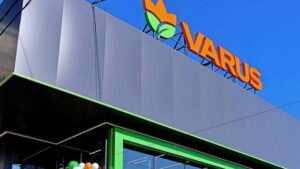
The Varus supermarket chain will open its first store in Vinnytsia on July 3, according to the company’s press office.
The new store is located in the PetroCenter shopping mall (70 Kotsyubynskoho Ave.). It offers everything needed for daily and family shopping: fresh meat and fish, fruits and vegetables, dairy products, baked goods, ready-to-eat meals, and delicacies. The store will feature a VARUS CAFE serving coffee and pizza, a bakery section, a WOK station, self-checkout lanes, and Scan&Go for quick purchases. Customers can also order items on VARUS.UA for pickup at this store at a convenient time.
According to the Ukrainian Council of Shopping Centers, this store is opening on the site of the former “EKO Market” supermarket, which was the chain’s last location in the city.
Varus is a national supermarket chain represented in Ukraine’s grocery retail market by the company “Omega.” The first store opened in 2003 in Dnipro. In 2025, seven new stores were opened. Currently, the total number stands at 119 supermarkets in various cities across Ukraine.
The chain operates in several formats: traditional supermarkets, To Go stores, and the Varus.ua online store.
According to the company, its network’s turnover in 2025 increased by 19.5% to 28.8 billion UAH. Tax payments to budgets at all levels totaled 1.99 billion UAH, which is 13.45% more than in 2024.
According to Opendatabot data, the owner of Omega LLC is the Cypriot company “Viant Enterprises Limited.” Valeria Kiptika and Ruslan Shostak are listed as the ultimate beneficiaries.
Ukrainian local and craft wineries can expand their presence in national retail chains, but to do so, producers must meet retailers’ requirements regarding quality, safety, documentation, and supply stability.
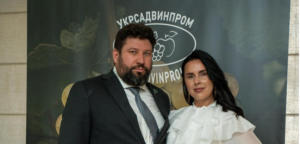
This was discussed during the National Roundtable “Local Grape Varieties: Heritage, Sustainability, and Rural Development,” organized by the Public Association “UKRSADVINPROM” to mark the 10th anniversary of the Association’s activities.
Olena Gordon, a representative of the “Ukraine Food Retail Alliance” (UFRA)—which includes leading Ukrainian food retail chains such as ATB-Market, Silpo, VARUS, NOVUS, and KOLO—noted that local producers can enter retail chains provided they meet standards and are ready to scale up production.
For Ukrainian winemakers, this means that having a high-quality product is no longer the only requirement for increasing sales through retail channels. Retail chains expect suppliers to provide stable shipments, a clear quality control system, production traceability, the necessary certifications, regulatory approvals, and a willingness to work within a long-term partnership framework.
Roundtable participants noted that retailers’ interest in craft wineries and local producers is growing amid rising demand for Ukrainian products. In the context of the war, supporting domestic producers is viewed not only as a consumer choice but also as a key element of the country’s economic resilience.
For the producers themselves, collaboration with retail chains can be a crucial step in scaling their businesses. A presence on the shelves of national retailers boosts brand recognition, expands access to consumers, and helps foster a culture of Ukrainian wine consumption.
At the same time, participants in the discussion emphasized that craft winemaking requires a distinct approach. Small producers cannot always operate according to the logic of mass industrial production; therefore, flexible collaboration models, professional support, assistance with certification, and clear rules for market entry are essential for the segment’s development.
The HoReCa sector and wine tourism could serve as additional channels for promoting Ukrainian wine. Restaurants, tasting events, festivals, and wine tours provide opportunities to introduce consumers to local grape varieties, create an emotional connection with producers, and gradually build demand that can subsequently support retail sales.
The roundtable also noted that the development of local grape varieties could become part of a broader strategy for promoting Ukrainian wine. Volodymyr Pechko, Chairman of the “UKRSADVINPROM” Public Association, emphasized that Ukraine needs to more actively showcase its own varieties and build a wine identity around them. In particular, “Odesa Black” and “Sukholimansky” were cited as flagship varieties of Ukrainian breeding.
For retailers, local varieties could become a distinct competitive niche, as they allow retailers to offer customers not just Ukrainian wine, but a product with provenance, history, and regional identity. This approach could boost interest in Ukrainian wines both in the domestic market and, in the long term, in export markets.
Participants in the event also emphasized the need to create a Vineyard Register and conduct a comprehensive inventory of vineyards in accordance with EU approaches. This is important for the sector’s transparency, the development of geographical indications, Ukraine’s integration into the European system of support for viticulture, and the future use of EU financial instruments.
The “UKRSADVINPROM” General Association is an industry association operating in the fields of horticulture, viticulture, and winemaking. The organization brings together market participants, takes part in industry discussions, promotes the interests of Ukrainian producers, and supports the development of high-value-added products. In 2026, the Association celebrated its 10th anniversary.
craft wine, local producer, RETAIL, UKRSADVINPROM, WINEMAKING, ПЕЧКО
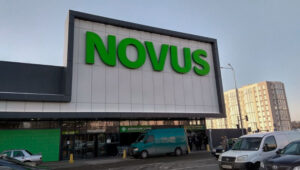
The Novus supermarket chain has received permission from the Antimonopoly Committee of Ukraine (AMCU) to lease assets from the Eurotek Group, which recently announced the closure of its supermarket chains, and plans to open its first stores in Lviv and Ivano-Frankivsk in their place, the grocery retailer’s press service told the “Interfax-Ukraine” news agency.
It is specified that at a meeting on Thursday, the AMCU granted Novus Ukraine LLC permission to lease three assets from JSC “ZNVKIF Eurotek Invest,” which has closed its grocery chains.
For Novus, this marks its first entry into the Lviv and Ivano-Frankivsk markets, as well as a new stage in the chain’s expansion across Ukraine’s western regions. In Lviv, Novus plans to open stores in August (147 Zelena St. and 60 Chervonoyi Kaliny Ave.), and in Ivano-Frankivsk in September (2 Mykolaychuk St.).
“The western region, particularly Lviv and Ivano-Frankivsk, is a strategically important area for us. Today, Lviv is one of the country’s key consumer hubs and most competitive markets, while Ivano-Frankivsk is experiencing rapid growth and high demand for quality retail. We want residents of both cities to get to know Novus not just as a new supermarket, but as a place for a comfortable shopping experience that combines European-style service, a wide product range, and a modern customer experience,” the company notes.
To maximize convenience and speed of service, the checkout areas in the new stores have been optimized to match the scale of the facilities. For example, the supermarket at 147 Zelena St. (total area: over 3,000 sq. m; retail area: 1,761 sq. m) will feature six linear checkout lanes, eight self-checkout stations (SCS), and one information desk with two workstations. At the store at 60 Chervonoyi Kaliny Ave. (total area: 2,376 square meters; sales area: 1,500 square meters), five regular checkout lanes, eight self-checkout stations, and one information counter—which also combines two checkout stations—will ensure quick checkout.
In Ivano-Frankivsk, at 2 Mykolaychuk St. (total area: 3,106 sq. m, retail area – 1,971 sq. m), service speed will be ensured by eight linear checkout lanes, one information counter (with two workstations), and eight self-service checkout stations, which have been divided by payment type for convenience: two for cash payments and six for non-cash payments.
As previously reported, the Eurotek Group of Companies closed its grocery chains “Fresh,” “Arsen,” “Soyuz,” and “Kvartal.” Specifically, the “Arsen” chain operated in Lviv, Ivano-Frankivsk, and Rivne regions, with a total of eight supermarkets. In May, the Antimonopoly Committee of Ukraine (AMCU) authorized Silpo-Food LLC—which operates the Silpo chain and is part of the Fozzy Group—to acquire five of these stores; opening dates have not yet been announced.
Novus is a supermarket chain with 100% Lithuanian capital that has been operating since 2008 and is developed by BT Invest (Lithuania). As of the end of June 2026, the company has 173 locations and is represented in Kyiv, the Kyiv region, and a number of other regions of Ukraine. The founder and beneficial owner of the group is Lithuanian entrepreneur Raimondas Tumenas. The company operates a supermarket chain as well as “neighborhood” stores under the Mi Market brand.
As of the end of 2025, the chain ranks among Ukraine’s largest food retailers. Its annual revenue totaled 34.69 billion UAH, an increase of 19.55% compared to 2024.



