

U.S. Treasury Secretary Scott Bessent cited Ukraine’s attacks on Russian oil infrastructure as one of the causes of the global energy crisis and rising energy prices, according to The New York Times.
“We are currently experiencing an energy shock due to the war in Ukraine, as Ukraine has decided to target Russian energy assets and oil refineries, which is driving up prices globally,” Bessent said.
According to The New York Times, Bessent made this statement after two days of meetings in North Carolina with finance ministers from around the world. He cited Ukraine’s strikes on Russian oil infrastructure as one of the causes of the global energy crisis, which he said was primarily caused by the U.S. war with Iran.
The publication notes that Bessent’s remarks came after the U.S. invited Russian Finance Minister Anton Siluanov to the G20 meeting, a move that drew criticism from some of Ukraine’s allies.
Bessent also defended his bilateral meeting with Siluanov, citing the need for cooperation to resolve Russia’s war against Ukraine.
At the same time, as the American publication notes, Bessent’s criticism of Ukraine’s military tactics sparked a negative reaction among Ukrainians.
Source: https://www.nytimes.com/2026/09/03/business/bessent-energy-prices-ukraine.html

According to Fixygen, the U.S. Securities and Exchange Commission has proposed a new framework called “Regulation Crypto Assets,” specifically designed to facilitate capital raising by cryptocurrency projects.
The proposal provides for two frameworks.
Small projects will be able to raise up to $5 million over four years, while larger ones can raise up to $75 million every 12 months without going through the full standard securities offering registration process.
At the same time, issuers must disclose information to investors and will continue to be subject to laws regarding fraud and market manipulation.
The SEC is also proposing a safe harbor mechanism that, provided certain requirements are met, allows the crypto asset itself to be separated from the initial investment contract.
Comments on the draft are being accepted through October 20, 2026.
If the rules are adopted, the U.S. will, for the first time, have a separate, full-fledged capital-raising procedure specifically for crypto startups.
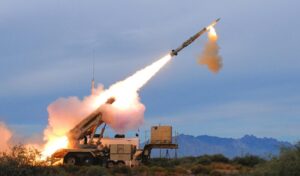
Stocks of Patriot interceptor missiles held by U.S. forces in Europe have plummeted following large-scale deliveries to Ukraine and particularly heavy ammunition consumption during the war with Iran, raising concerns about NATO’s ability to repel sustained ballistic missile attacks.
The Associated Press reported this on August 27, citing a U.S. military official in Europe and a NATO spokesperson, both of whom spoke on condition of anonymity.
According to the U.S. official, the most serious problem concerns the Patriot missiles specifically designed to intercept high-speed ballistic missiles.
He described inventory levels as “below critical” and stated that U.S. forces in Europe currently “definitely” do not have enough interceptors to repel a sustained series of ballistic missile strikes.
The official described the ability to defend against even a single ballistic strike or an errant Russian missile that has veered off course and is heading toward NATO territory as “very limited.”
A NATO spokesperson who spoke with the AP also confirmed the low level of Patriot stockpiles among U.S. and NATO forces in Europe.
However, both the Pentagon and NATO officially reject assessments of a critical shortage.
NATO’s senior military representative, U.S. Army Colonel Martin O’Donnell, told the AP that the claim that the number of Patriot missiles in Europe is “below critical levels” is not true. According to him, NATO has sufficient air defense capabilities both for its own protection and to continue assisting Ukraine.
Pentagon spokesperson Sean Parnell also dismissed reports of a shortage of U.S. ammunition as false and stated that the U.S. military has the necessary stockpiles to conduct operations.
Nevertheless, independent assessments show a significant reduction in U.S. reserves.
According to Mark Kansian, a senior advisor at the Center for Strategic and International Studies (CSIS), Ukraine has received more than 600 Patriot missiles from U.S. and allied stocks since the start of the full-scale war.
However, the main factor behind the sharp decline in reserves was the U.S. war with Iran.
According to CSIS estimates, approximately 65% of U.S. Patriot stockpiles—roughly 1,500 out of 2,330 interceptors—were expended during the campaign against Iran. By the end of July, CSIS analysts estimated that the remaining U.S. Patriot stockpiles stood at fewer than 1,000 missiles.
Ed Arnold, an expert at the British Royal United Services Institute, noted that deliveries to Ukraine had been planned in advance and were relatively manageable, whereas the need for massive deployment of interceptors in the Middle East arose much sooner than expected, exposing the limitations of the production chain.
The shortage is particularly acute for Europe, as there are currently few alternatives to the Patriot system for intercepting modern ballistic missiles.
France and Italy are developing a new version of the SAMP/T NG system, which is expected to have broader capabilities against ballistic targets; however, this new variant has not yet been tested in actual combat conditions. The current version of the SAMP/T has a shorter range than the Patriot.
A sharp increase in production capacity should partially resolve the problem.
In 2026, approximately 600–650 modern PAC-3 MSE missiles are expected to be produced, and the U.S. defense industry plans to increase production capacity to 2,000 interceptors per year by 2030. Lockheed Martin and the Pentagon have already signed agreements designed to significantly expand production.
Additional production capacity is being established directly in Europe.
In September 2026, the first European production center for Patriot missiles is scheduled to launch in Schrobenhausen, Germany. The facility is being established by COMLOG, a joint venture between MBDA Deutschland and the American company Raytheon.
The new facility will carry out final assembly and testing of PAC-2 GEM-T missiles. The first deliveries are expected in 2027. Among the countries that have already placed orders, AP lists Germany, the Netherlands, Romania, and Spain.
Raytheon received a separate $3.7 billion contract in April 2026 to produce GEM-T missiles for Ukraine. The company explicitly stated that the new plant in Germany is also expected to play a key role in replenishing Ukraine’s stockpile of interceptors.
For Ukraine, this situation means increased competition for the limited supply of missiles being produced. Kyiv needs the Patriot system primarily to intercept Russian ballistic missiles, which remain one of the most challenging targets for Ukraine’s air defense.
At the same time, U.S. manufacturers must replenish their own stockpiles, meet the needs of European NATO members, fulfill orders from Middle Eastern countries, and continue to support Ukraine.
CSIS warns that even with a significant ramp-up in production, it will take several years to fully replenish U.S. stockpiles. Until new production lines reach full capacity, the U.S. and its allies will have to prioritize the allocation of a limited number of interceptors among Europe, Ukraine, the Middle East, and the Indo-Pacific region.
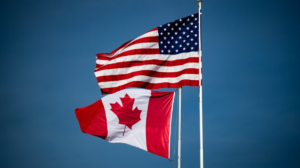
On August 27, U.S. President Donald Trump signed an executive order renaming Lake Ontario “Lake America.”
However, it is important to note that this does not constitute an international renaming of the lake. Lake Ontario is located on the border between the U.S. and Canada, and Trump’s executive order applies only to federal agencies and official U.S. geographic names. Canada is under no obligation to recognize the new name and continues to use “Lake Ontario.”
According to Executive Order No. 14420, the U.S. Secretary of the Interior, together with the U.S. Board on Geographic Names, must add the name “Lake America” to the federal Geographic Names Information System within 30 days. After that, the new name must be used in documents, maps, and communications by U.S. federal agencies.
Trump explained this decision by citing the lake’s economic and historical significance to the United States. The text of the executive order highlights the lake’s role in American trade, shipping, and military history, as well as Washington’s investments in protecting the Great Lakes ecosystem.
The decision was made against the backdrop of a new escalation in trade relations between the U.S. and Canada. Negotiations between the two countries on a trade agreement were suspended on August 21 after Canadian Prime Minister Mark Carney stated that the terms proposed by Washington did not serve the country’s interests. Canada subsequently announced that it was preparing corresponding trade measures.
The Canadian side did not recognize the renaming. Carney stated that in Canada, the body of water would continue to be called Lake Ontario. The name “Ontario” itself comes from the language of Indigenous peoples and was in use long before the modern United States and Canada came into existence.
While signing the executive order, Trump also floated the idea of further geographical renaming.
“We have a bay, and now we have a lake. We need an ocean,” the U.S. president said, adding that Washington could theoretically consider a new name for the Atlantic or Pacific Ocean—or both. So far, there are no executive orders or official procedures regarding the renaming of oceans.
This decision continues the trend of geographical renaming during Trump’s second presidential term. In January 2025, he ordered U.S. federal agencies to use the name “Gulf of America” instead of “Gulf of Mexico” and restored the name “Mount McKinley” to Denali in Alaska.

The Ukrainian chain Lviv Croissants has opened its first restaurant in the state of California—in Fair Oaks, near Sacramento. The new location is the brand’s fourth in the U.S., the company announced.
The restaurant is located at 5343 Sunrise Blvd in the Quail Pointe shopping center. It spans over 206 square meters, and the dining area seats 54 guests. The restaurant operates under the chain’s new design concept, and its operational processes are integrated into a single technology platform that Lviv Croissants uses in the U.S. market.
The franchisee of the new restaurant is Ukrainian entrepreneur Oksana Melnychuk, who has been living in the U.S. for many years. After learning about the brand through Lviv Croissants’ partners in Atlanta, she chose this franchise for her first restaurant project in California.
According to the company, more than ten franchise agreements have already been signed in the U.S. market. By the end of 2026, the chain plans to open one or two more restaurants in the U.S. and continue more active franchise expansion in 2027.
“For us, it’s important not just to enter new markets, but to create the conditions for their long-term development. That’s why we’re investing in local infrastructure, a partnership model, and standards that allow us to scale the brand without compromising on quality,” said Andriy Halytskyi, co-founder and CEO of Lviv Croissants.
According to him, California is the logical next step in the chain’s expansion in the U.S., and the company is seeing strong interest in franchising from entrepreneurs across various states.
One of the key elements of Lviv Croissants’ U.S. strategy has been the creation of its own production infrastructure. Before opening its first restaurant, the company launched croissant production in Atlanta, Georgia. From there, products are shipped to the chain’s U.S. locations, allowing for centralized quality control.
The core menu at U.S. restaurants is standardized, though individual items are adapted to local demand. It includes large and small croissant sandwiches with savory and sweet fillings, breakfast items, salads, soups, specialty coffee, and cold beverages. The Lviv Croissants U.S. website features, among other items, pastrami sandwiches, teriyaki chicken sandwiches, and the classic Lviv Croissant.
The first Lviv Croissants restaurant in the U.S. opened in August 2024 in Roswell, Georgia. In 2025, the chain expanded to the West Coast, opening locations in Kent and Takwila, Washington. The Fair Oaks location became the fourth U.S. restaurant and the first in California.
Lviv Croissants was founded in Lviv in 2015. The first franchise location opened in Sumy that same year, after which the company began rapid expansion. Currently, the chain has over 190 locations in Ukraine and also operates in Poland, the U.S., Slovakia, France, Norway, and South Korea. In 2025, the chain’s locations sold over 11.5 million croissants.
California, FRANCHISE, Lviv Croissants, RESTAURANT, U.S., UKRAINE
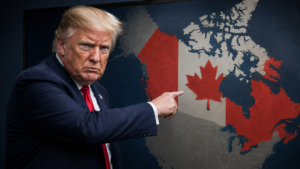
U.S. President Donald Trump has sharply stepped up pressure on Canada amid an escalating trade conflict between the two countries, calling Canadian leaders “clowns” and warning of significantly harsher economic consequences if Ottawa does not change its position.
Trump published the statement on Truth Social on August 24, 2026, following a new exchange of accusations with Canadian Prime Minister Mark Carney and Ontario Premier Doug Ford.
“America has carried Canada on its back for decades, but that will no longer happen,” the U.S. president wrote. At the end of his message, he called for the Canadian leadership to be made to “fall in line,” otherwise the consequences for the country would be “much worse.”
Trump spoke particularly harshly about Doug Ford, who had previously threatened to use electricity and critical mineral supplies to the United States as a retaliatory measure against U.S. tariffs.
The U.S. president also said that Canada was economically dependent on the United States and noted that a significant share of the electricity, oil and gas received by the country was transported through U.S. territory.
Official statistics, however, show a more complex picture. The two countries’ energy systems are indeed extremely closely interconnected, but Canada remains a major net exporter of energy resources to the United States.
According to the Canada Energy Regulator, in 2025 Canada exported CAD157.5 billion worth of oil, petroleum products, natural gas and gas condensate to the United States, while importing only CAD34.4 billion worth of similar products from the United States.
About 90.8% of Canadian hydrocarbon exports were sent specifically to the United States. In particular, Canada exported 4.3 million barrels of oil per day, of which about 3.9 million barrels went to the U.S. market.
In the opposite direction, Canada imported about 0.5 million barrels of oil per day, with approximately 76% of these supplies coming from the United States. Canada is also a major net exporter of natural gas: in 2025, it supplied about 8.6 billion cubic feet of gas per day, almost entirely to the United States, while simultaneously importing 2.5 billion cubic feet per day, predominantly from the United States.
The two countries’ electricity systems are also integrated. In 2025, Canada exported 32.7 TWh of electricity to the United States and imported 22.1 TWh. At the same time, all of Canada’s international electricity trade is conducted with the United States.
Thus, Trump’s statements have some basis in terms of the Canadian economy’s high dependence on U.S. transportation and energy infrastructure. At the same time, however, Canada is one of the most important suppliers of energy resources to the United States itself. In 2025, it accounted for 63.4% of U.S. crude oil imports, almost 100% of natural gas imports and 81.3% of electricity imported by the United States.
Trump’s statements followed the collapse of U.S.-Canadian trade negotiations.
The United States has already imposed 50% tariffs on approximately $20 billion worth of Canadian goods, while on August 24 Trump additionally threatened to raise tariffs on all cars, trucks and automotive components imported from Canada to 50% beginning January 1, 2027.
Washington had previously proposed reducing duties on Canadian passenger cars and light trucks from 25% to 15% and on steel and aluminum from 50% to 25% as part of an agreement. The negotiations collapsed, however, because of several disagreements.
Canada is preparing retaliatory measures. Ottawa announced that it would impose retaliatory tariffs on U.S. goods beginning September 8, while provincial authorities have not ruled out using energy and critical minerals as additional instruments of pressure.
Ontario Premier Doug Ford said that, in the event of further escalation, “everything is on the table,” including restrictions on supplies of electricity and strategic raw materials. According to him, electricity from Ontario supplies about 1.5 million homes and businesses in the United States.
Canadian Prime Minister Mark Carney, in turn, said that Ottawa was prepared to return to negotiations only if Canada was treated as a sovereign partner rather than as a territory dependent on the United States.
Trade relations between the two countries remain among the largest in the world. In 2025, trade in goods and services between the United States and Canada amounted to approximately $872.3 billion, with about three-quarters of Canadian merchandise exports going to the U.S. market.
Another claim made in Trump’s message is not supported by official statistics. The U.S. president said that unemployment in Canada had reached 10%, while the latest data from Statistics Canada showed that it stood at 6.4% in July 2026 — its lowest level in two years.



