

NovaSklo, a subsidiary of the Ukrainian investment group EFI Group, has moved on to the next practical phase of implementing the project for Ukraine’s first modern float glass plant, valued at approximately 250 million euros—the company has begun the selection process for a general contractor for the construction of the facility.
The tender was announced on September 18, 2026. NovaSklo is seeking a contractor capable of performing the full scope of construction work for a large industrial facility.
The project is being implemented in Velyka Dymerka, Kyiv Oblast, approximately 25 km from Kyiv. According to materials from the International Finance Corporation (IFC), the future plant is designed to produce approximately 800 metric tons of glass per day. The facility will manufacture clear, ultra-clear, and energy-efficient coated glass, as well as tempered glass.
The IFC is providing advisory support for the project in collaboration with Japan. The corporation estimates the project’s total cost at €250 million, with construction scheduled to begin in late 2026 and the plant set to begin operations in 2028.
The international component of the project extends beyond IFC’s financing and advisory services. NovaSklo’s technology partner is Pilkington Technology Management, a subsidiary of Japan’s NSG Group, one of the world’s largest manufacturers of architectural and automotive glass.
NSG specialists will support the project during the design, construction, and production line launch phases, including technology optimization, energy efficiency, and industrial safety systems.
Once it reaches its designed capacity, the plant is expected to create more than 300 jobs and become Ukraine’s first large-scale float glass production facility.
The economic impact of the project could extend far beyond the plant itself. Ukraine remains dependent on imported flat glass, while the reconstruction of housing, commercial real estate, and infrastructure in the coming years is expected to generate significant domestic demand.
The establishment of domestic production will make it possible to replace a portion of imports and create a local raw materials and processing supply chain for manufacturers of windows, facade systems, insulated glass units, and other building materials.
At the same time, NovaSklo is establishing an international supply chain even before the plant’s launch. In June 2026, NovaSklo Trade signed an exclusive agreement to distribute Pilkington architectural glass in Ukraine.
Thus, the project brings together Ukrainian industrial capital, the technology of Japan’s NSG Group, the expertise of the IFC, and support from Japan, and is one of the largest new industrial projects currently being prepared for construction in Ukraine.

On Friday, September 25, Vinnytsia, Vyshneve, Sheptytskyi, Lebedyn, and Zaporizhzhia signed memorandums with the Ministry of Infrastructure regarding the construction of five more central kitchens, according to Minister of Education and Science Andriy Butenko.
“These projects were selected by the Ministry of Infrastructure with the support of the European Investment Bank on a competitive basis. According to preliminary estimates, the new central kitchens will be able to provide meals to approximately 181 educational institutions—schools and kindergartens, particularly in rural areas,” Butenko wrote on his Telegram channel on Friday.
He emphasized that the school meal reform primarily concerns children’s health and the development of their eating habits.
“It is important that every child, regardless of where they live, has access to a nutritious hot meal. For small and rural schools, where it is difficult to set up their own kitchen, central kitchens can also be an effective solution. At the same time, this model allows communities to ensure consistent meal quality across the entire network of educational institutions,” the minister emphasized.
He also visited the first central kitchen in Bucha. This model enables the centralized preparation of high-quality, balanced lunches, ensures uniform meal standards, and makes more efficient use of community resources.
“We are working with communities to ensure schools are ready to work with such facilities. After all, it is important not only to prepare a high-quality lunch but also to deliver it on time, store it properly, and serve it to the children. That is why the Ministry of Education and Science is primarily directing the subsidy toward modernizing school cafeterias that receive ready-made, chilled meals in schools that are part of the network of central kitchens. “I am glad that more and more communities are choosing this model,” the minister concluded.
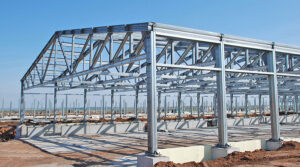
Life Cycle Assessment (LCA) of buildings is gradually evolving in Europe from a voluntary tool to a mandatory regulatory requirement, changing the approach to design, material selection, and calculating the true cost of a building over its entire service life.
This is discussed in an analytical report by the Ukrainian engineering and construction company Rauta, published on September 20, 2026.
According to data cited by the company from the United Nations Environment Programme’s Global Status Report for Buildings and Construction 2025–2026, the construction and operation of buildings account for nearly 50% of global material extraction and about 37% of global carbon dioxide emissions. This is drawing increased attention from investors and designers not only to the initial construction costs but also to a building’s environmental impact over decades of operation.
LCA assesses the environmental impact of a building or a specific material from the extraction of raw materials through production, transportation, construction, operation, repair, demolition, and final recycling or disposal.
The methodology involves analyzing global warming potential, energy and water consumption, emissions to air, water, and soil, as well as waste generation. In Ukraine, this approach is based, in particular, on the international standards ISO 14040 and ISO 14044 and the European standard EN 15978.
According to Rauta, applying LCA as early as the design stage allows architects and engineers to compare alternative solutions not only in terms of price or thermal insulation performance, but also in terms of their total carbon footprint.
This makes it possible to change materials or structural solutions even before construction begins, when making adjustments to the project is significantly less expensive. LCA can also improve a building’s rating during certification under international systems such as LEED, BREEAM, and DGNB.
Environmental Product Declarations (EPDs), which contain verified data on a specific material’s environmental impact, are a key component of such analysis. Integrating this information into a BIM model allows for the automatic recalculation of the environmental performance metrics for the entire project following design changes.
According to Rauta, LCA calculations utilize both universal software solutions such as SimaPro, Sphera LCA, and openLCA, as well as specialized construction systems like Athena Impact Estimator and Preoptima, along with Revit add-ins such as One Click LCA, Tally, and Beacon.
The application of this methodology also changes the criteria for selecting building materials. Preference is given to solutions with lower embodied carbon, a long service life, the ability to be repaired or replaced without interrupting the building’s operation, as well as the potential for reuse or recycling.
Rauta notes that, based on these criteria, steel load-bearing and enclosure structures can offer a number of advantages due to their lower weight, reduced costs for foundations and transportation, and the ability to recycle steel and reuse metal structures, profiled sheeting, sandwich panels, and facade elements.
Changes in European regulations are becoming a particularly important factor for the Ukrainian construction market.
The EU Directive on the Energy Performance of Buildings (EPBD) (EU) 2024/1275 provides for the gradual introduction of accounting for the total carbon footprint of new buildings throughout their entire life cycle. Starting in 2028, the Global Warming Potential (GWP) must be included in the energy performance certificates for large new buildings with an area exceeding 1,000 square meters, and starting in 2030—for all new buildings.
In Ukraine, there is currently no mandatory requirement to conduct LCA calculations, so the methodology is primarily used in projects involving international clients or funding.
At the same time, Order No. 168 of the Ministry of Community and Territorial Development, dated February 6, 2025, which establishes requirements for nearly zero-energy buildings, lays the groundwork for a gradual transition from assessing energy efficiency alone to a broader life-cycle assessment.
At Rauta, they believe that European integration and post-war reconstruction could serve as additional incentives for the widespread adoption of LCA in Ukraine, as international financial organizations and donors are increasingly focusing on projects that meet European standards for energy efficiency and sustainable construction.
Companies that begin using LCA even before mandatory regulatory requirements are introduced can gain advantages in the form of lower operating costs, better preparedness to attract international financing, and faster adaptation to future European regulations.
A separate tool is Life Cycle Costing (LCC), which assesses not the environmental impact but the total cost of owning a building over its life cycle. Combining LCA and LCC allows investors to simultaneously evaluate the environmental consequences and long-term financial costs of various design solutions.
Thus, the approach to building assessment is gradually shifting from minimizing initial construction costs to analyzing the total cost and environmental impact over decades of operation.
Original source: Rauta article “How Building Life Cycle Assessment Is Changing the Approach to Design and Material Selection,” published on September 20, 2026. Rauta – Building Life Cycle Assessment

At the “Carpathian Eight” summit in Bukovel, JSC “Ukrzaliznytsia” proposed a project for the construction of a new 47-km section of European-gauge track from Chernivtsi to Vadul-Sireta on the border with Romania.
According to the project description published on the summit’s website, the investment needed for this project is estimated at $186 million, with grant funding being the preferred option.
“Ukrzaliznytsia” notes that the section is intended to be integrated into the new TEN-T transport corridor “Baltic Sea—Black Sea—Aegean Sea,” which will provide a direct connection between the Ukrainian network and EU infrastructure.
The project is in the final stages of its feasibility study, and implementation is planned to take four years.
In addition, Ukrzaliznytsia proposed at the summit a project to integrate Lviv Central Station with the future European-gauge line from Poland to Sknyliv Station. This involves the construction of a 5-kilometer European-gauge bypass section around Lviv, combined with the construction of a multifunctional passenger terminal at Sknyliv Station.
The funding requirement for this project—in which Poland has been invited to participate—is $100 million; grant funding is also desirable.
A preliminary feasibility study is currently being developed with support from JASPERS, and the project is expected to take five years to complete.
As previously reported, Ukrzaliznytsia has also proposed establishing, in partnership with investors, a low-cost passenger carrier operating on routes between Ukraine and the EU on European-standard tracks, with investments in share capital totaling approximately $441 million. According to the plan, the carrier’s routes will run from western Ukrainian railway hubs—including Uzhhorod, Lviv, and Kovel—to markets in Central and Eastern Europe, specifically Budapest, Bratislava, Warsaw, Vienna, and Berlin.
The first founding summit of the “Carpathian 8” (Carpathian 8 Summit) is taking place at the Bukovel ski resort in the Ivano-Frankivsk region from September 18 to 20.

Kyiv region became the largest among the regional new housing construction markets specified by the State Statistics Service in January-June 2026, with 599.3 thousand sq. m, while 437.9 thousand sq. m were declared in Kyiv.
According to the Experts Club information and analytical center, around 9.1 thousand apartments were declared at the construction commencement stage in Kyiv region. In annual terms, the area of new construction remained virtually unchanged, decreasing by only 0.3%.
In Kyiv, the area of declared new housing decreased by 10.7% — to 437.9 thousand sq. m.
At the same time, the statistics on the number of apartments in the capital look unusual: the State Statistics Service indicates around 1.4 thousand declared apartments despite the significant total area. This may be related to the structure of specific projects and the specifics of the published data.
Lviv region became the third major market, where 501.5 thousand sq. m of housing and around 7.2 thousand apartments were declared in the first half of the year.
In Ivano-Frankivsk region, the area of new construction amounted to 248.4 thousand sq. m, decreasing by 20.5% year on year. At the same time, around 5.8 thousand apartments were declared.
In Odesa region, the figure reached 328.7 thousand sq. m and around 1.1 thousand apartments, but the State Statistics Service does not disclose comparable figures for the previous year.
Thus, in terms of the volume of declared new construction, the largest markets continue to be concentrated around Kyiv and the western regions of the country.

The Kyiv region became the largest among the regional markets for new residential construction listed by the State Statistics Service in January–June 2026, with a figure of 599,300 square meters, while 437,900 square meters were reported in Kyiv, according to Experts.news.
In the Kyiv region, approximately 9,100 apartments were registered at the start of construction. On an annual basis, the area of new construction remained virtually unchanged, decreasing by only 0.3%.
In Kyiv, the area of registered new housing decreased by 10.7%—to 437,900 square meters.
At the same time, the statistics on the number of apartments in the capital appear unusual: the State Statistics Service reports approximately 1,400 registered apartments despite a significant total area. This may be related to the structure of specific projects and the characteristics of the published data.
The Lviv region became the third-largest market, where 501,500 square meters of housing and approximately 7,200 apartments were announced in the first half of the year.
In the Ivano-Frankivsk region, the area of new construction totaled 248,400 square meters, down 20.5% year-over-year. At the same time, approximately 5,800 apartments were registered.
In the Odesa region, the figure reached 328.7 thousand square meters and approximately 1,100 apartments; however, the State Statistics Service has not disclosed comparable figures for the previous year.
Thus, in terms of the volume of announced new construction, the largest markets continue to be concentrated around Kyiv and the western regions of the country.



