
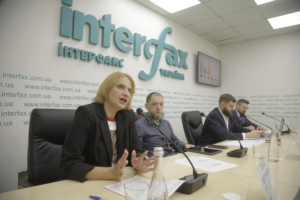
Canada ranked first in terms of the balance of positive and negative attitudes among Ukrainians among Ukraine’s 50 largest trading partners, while China, which leads in trade turnover, received the lowest indicator, and attitudes toward Poland deteriorated significantly, according to the results of a study by Active Group and the Experts Club information and analytical center.
According to the published ranking, the balance of positive and negative assessments of Canada amounted to plus 73.8 percentage points. It was followed by Sweden – plus 70.6 p.p., the Netherlands – 69.7 p.p., Finland and Norway – 69.3 p.p. each, France – 69.1 p.p., Italy – 67.1 p.p., Lithuania – 65.9 p.p., Switzerland and the United Kingdom – 65.6 p.p. each.
This indicator is the difference between the shares of positive and negative responses. In particular, 76.3% of respondents have a positive attitude toward Canada, 2.5% have a negative attitude, and 19.2% have a neutral attitude.
The worst balance was recorded for China – minus 25.4 p.p.: 18.2% of respondents assess it positively, 43.6% negatively, and 33.9% neutrally. India also has a negative indicator – minus 14.3 p.p., Hungary – minus 12.7 p.p., and Lebanon – minus 9.2 p.p.
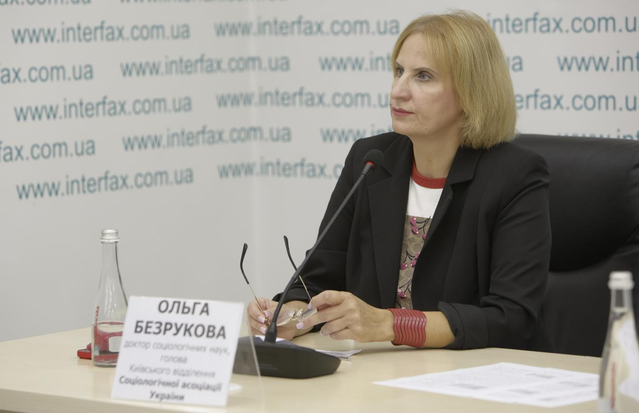
Doctor of Sociological Sciences and head of the Kyiv branch of the Sociological Association of Ukraine Olga Bezrukova called China an illustrative example of the gap between the scale of economic interaction and the country’s public image.
“We saw that China is Ukraine’s largest economic partner in terms of total trade turnover, but this is in no way converted into a positive public image. This shows that Ukrainian citizens clearly distinguish between the pragmatism of economic interaction and the overall assessment of a state. Economic dependence and interaction do not equal public sympathy for this country,” she emphasized at a press conference at the Interfax-Ukraine agency on Tuesday.
One of the most noticeable changes was the deterioration in attitudes toward Poland. While in March 2026 the balance of assessments stood at plus 41.7 p.p., in August positive and negative responses were practically equal, with a slight predominance of negative ones. A positive attitude was expressed by 34.6% of respondents, a negative one by 37%, and a neutral one by 25.4%.
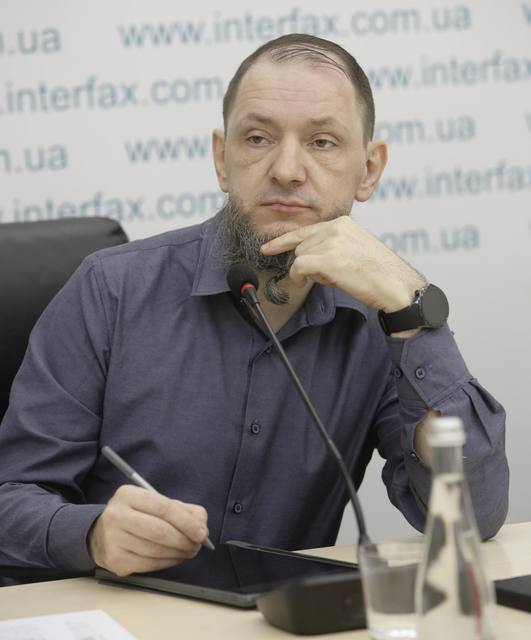
“At the beginning of the invasion, Poland was perceived almost as the main partner. We asked about the rapprochement between Ukraine and Poland, political and economic, even about uniting into some kind of common union, and we saw enormous positive results. But here we see: Poland seemingly still remains a key partner, but the idea of unification has already been forgotten, and we see stable negativity,” said Active Group founder Andriy Yeremenko.
He linked the deterioration in assessments to the position of part of the Polish authorities, which he considers anti-Ukrainian.
At the same time, the balance of attitudes toward Hungary improved from minus 33.6 p.p. in March to minus 12.7 p.p. in August, although negative assessments still prevail. For the United States, the indicator rose from plus 19.4 to plus 38.4 p.p. Some 55% of respondents have a positive attitude toward the United States, 16.6% a negative attitude, and 25.6% a neutral attitude.
When asked who contributes most to achieving peace in Ukraine, 44.6% of respondents named European Union countries, 25.2% the United States, 23.3% the United Kingdom, 4.1% China, 1.8% India, and 1% Brazil. Regarding priority development of trade and economic relations, 69.9% chose EU countries and the United Kingdom, 11.9% the United States, and 8.4% China.

According to Bezrukova, assessments of the U.S. role in achieving peace remained relatively stable throughout the three waves of the study.
“General sympathy toward a country and an assessment of its functionality at the international level are related but not identical things. Images of countries are multidimensional. A person may change their emotional attitude toward a state but continue to recognize its international weight,” the sociologist explained.
Another model, she said, is demonstrated by India: 48.3% of respondents express a neutral attitude toward it, but among formed assessments negative ones prevail – 31.5% versus 17.2% positive.
The economic indicators were presented by Experts Club founder, deputy director of the Interfax-Ukraine agency and PhD in Economics Maksym Urakin. According to State Customs Service data cited by him, in the first half of 2026 Ukraine’s trade turnover amounted to $70.3 billion, exports to $21 billion, and imports to $49.3 billion. The negative balance of trade in goods reached $28.3 billion.
“If we compare this with the first half of 2025, there was also an imbalance then, but now exports have increased by approximately 5%, while imports have risen by almost 30%. That is, the deficit increased by more than $10 billion over the year. Therefore, it is very important for us to analyze our main partners,” he emphasized.
According to the materials presented, trade turnover with China in January-June amounted to about $14.68 billion. Ukraine exported $778 million worth of goods to China and imported $13.90 billion, forming a deficit of approximately $13.12 billion. Poland remained the largest buyer of Ukrainian goods, with a volume of $2.38 billion. Türkiye ranked second among export markets with $1.78 billion, and Italy third with $1.28 billion.
In terms of total trade volume, China is followed by Poland – $7.05 billion, Türkiye – $4.90 billion, Germany – $4.48 billion, and the United States – $3.07 billion. Yeremenko highlighted Türkiye as an example of a combination of significant trade turnover and predominantly positive perception: 52.3% of respondents have a favorable attitude toward it, while 7.4% have a negative attitude.
Urakin separately drew attention to partners with which trade provides Ukraine with a positive balance. In the first half of the year, the largest was with Spain – $578.1 million, Egypt – $527.1 million, and Moldova – $467.2 million. They were followed by Algeria – $309.2 million, the Netherlands – $221.5 million, and Lebanon – $220.5 million. Libya, Tunisia, Iraq, and Yemen also entered the top ten.
At the same time, neutral attitudes prevail toward a number of these partners. Egypt is assessed neutrally by 61.3% of respondents, Algeria by 65.8%, and Tunisia by 67.3%. Participants in the press conference linked this to insufficient awareness among Ukrainians about these countries and emphasized the need for more active economic and public diplomacy.

“It is necessary to develop not only general awareness better. First of all, business associations, the Ministry of Economy and the Ministry of Foreign Affairs need to work to develop bilateral relations and improve the balance. In conditions where Ukraine already lacks financing and we live, essentially, at the expense of external borrowing, cooperation should be expanded with countries where we can have a positive balance,” said Active Group director Oleksandr Pozniy.
Urakin recommended that embassies accredited in Ukraine ensure full communication in the Ukrainian language, openness to the media, and regular reporting on the results of cooperation.
“The first recommendation is to regularly show concrete deeds, concrete actions, the presence here of foundations, embassies, teams, diplomats in the humanitarian sphere and in science. Second, to be open to questions and requests from the media and the public. We also need to use our sociology to draw conclusions and cement our relations, primarily trade relations,” he added.
This is the third wave of the study; the previous ones were conducted in August 2025 and March 2026. The survey was conducted in August 2026 using self-completed online questionnaires in the SunFlowerSociology panel. A total of 800 Ukrainian citizens aged 18 and over were surveyed. According to the organizers, the sample is representative by age, gender and region, and the stated maximum theoretical statistical margin of error at a 95% confidence level is 3.5%.
ACTIVE GROUP, CANADA, CHINA, EXPERTS CLUB, POLAND, PUBLIC OPINION, TRADE, UKRAINE, UNITED STATES
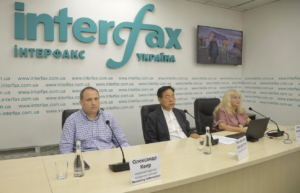
American missionary and philanthropist Kim Kio Yok, who has been working in Ukraine for more than 30 years, said that probable fraud occurred during the purchase of a house in Kyiv for the activities of the charitable foundation and Grace church, as a result of which the organization lost the ability to fully provide assistance to internally displaced persons, pensioners and other vulnerable categories of the population.
As Oleksandr Keer, managing partner of the law firm Revealing Information, said during a press conference at the Interfax-Ukraine agency, in 2022 Kim Kio Yok agreed to purchase a building in Kyiv’s Darnytskyi district, but instead of the main sale and purchase agreement, an agreement on the intention to conclude such an agreement was signed. According to the lawyer, at the time the agreement was concluded, the real estate was pledged due to debts of the previous owner’s family, and the initial payment amounted to $30,000.
“In 2022, $30,000 was transferred as a deposit and confirmation of the genuine intention to purchase this property. From 2022 until today, the amount of funds received increased from $30,000 to $400,000; in fact, 21 agreements were concluded to postpone the deadlines for concluding the main sale and purchase agreement. The last two additional agreements were concluded when the party no longer even had the ability to sell the property because it did not own it,” Keer said at a press conference at the Interfax-Ukraine agency on Wednesday.
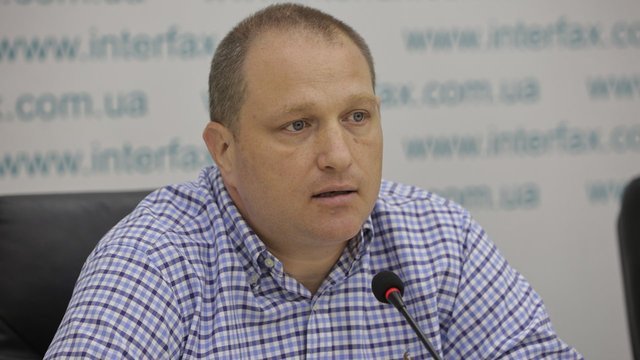
According to him, because of the outstanding previous obligations of the person who was supposed to sell the house, ownership of the real estate passed to creditors, making it impossible to fulfill the original agreements. At the same time, the lawyer claims that Kim Kio Yok effectively transferred almost the entire agreed value of the property but did not receive ownership of it.
Keer said that after the philanthropist approached them, the lawyers initially tried to resolve the situation through negotiations and mediation, but they were unable to reach an agreement with the other party. After that, submissions to the police and prosecutor’s office were prepared, as well as civil lawsuits concerning the disputed agreements and the return of the funds.
“When Mr. Kim approached us, the first thing we proposed was to hold negotiations and mediation in order to clarify the circumstances and try to reach an agreement. In response to repeated attempts to hold such a meeting, we were told that there were no grounds or purpose for it. After that, we prepared statements to the police and prosecutor’s office, as well as civil lawsuits regarding the return of the funds,” he added.
Keer noted that, according to the assessment of the injured party, the case has prospects in court because the transfer of funds and changes to the agreements were documented by signed agreements. He also said that for some time the philanthropist actually used the building, invested funds in improving it and purchased equipment, but now, according to his representatives, does not have access to this property.
He noted that the prosecutor’s office of the Darnytskyi district had opened criminal proceedings and that a pre-trial investigation was ongoing. The lawyer also positively assessed the court’s prompt response to the appeal by representatives of the injured party, but noted that since May the case has not yet resulted in a notice of suspicion or the submission of an indictment to the court.
For his part, Kim Kio Yok said that he came to Ukraine from California 33 years ago and during that time was engaged in religious, educational and charitable projects. After the start of the full-scale war, together with like-minded people, he helped people whose homes had been damaged, distributed food packages and firewood, and also organized free meals for internally displaced persons in Kyiv.
“We helped Ukrainians who suffered greatly during the full-scale war: we found damaged houses, helped rebuild them, provided people with food packages and firewood so that they could survive the winter. In the building in the Darnytskyi district, we served hot lunches to between 150 and 200 internally displaced persons. Because of this situation, in recent months people have been unable to receive the assistance that we provided before,” Kim Kio Yok said.
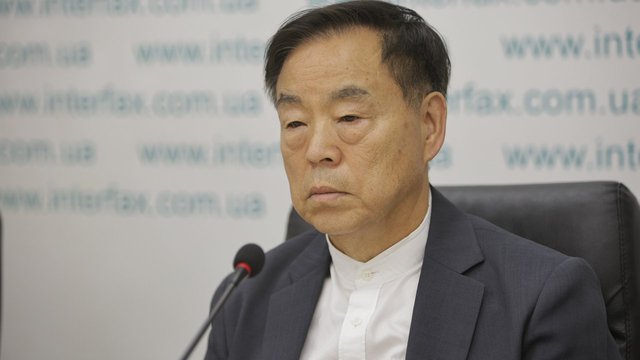
Kim Kio Yok, American missionary and philanthropist, injured party in the criminal proceedings
The missionary said that, as a U.S. citizen, he sent an official letter to the U.S. Embassy in Ukraine and contacted the U.S. consul.
“We sent an official letter to the U.S. Embassy. They responded and are showing interest in this case because I am a U.S. citizen. I also contacted the U.S. consul with a request to help me in this situation,” Kim Kio Yok said.
According to him, people who previously regularly received assistance continue to call representatives of the organization and ask when the free lunches and other programs will be resumed. The missionary stressed that he intends to remain in Ukraine and continue his charitable activities.
Kim Kio Yok noted that the organization operates not only in Kyiv. Over 33 years of its activities, centers have been established in various cities of Ukraine, including rehabilitation programs for people with drug and alcohol addiction. The Grace gymnasium, which includes a kindergarten and education through the 11th grade, also operates, while the building purchased in Kyiv was planned to be used, among other things, for educational projects.
“I am now 75 years old, and even during the war I want to help Ukrainians and serve them with love. We appeal to law enforcement agencies, the police and the prosecutor’s office: help us so that we can work again on the territory of Ukraine. We have dedicated our lives to serving Ukraine and the Ukrainian people,” he said.
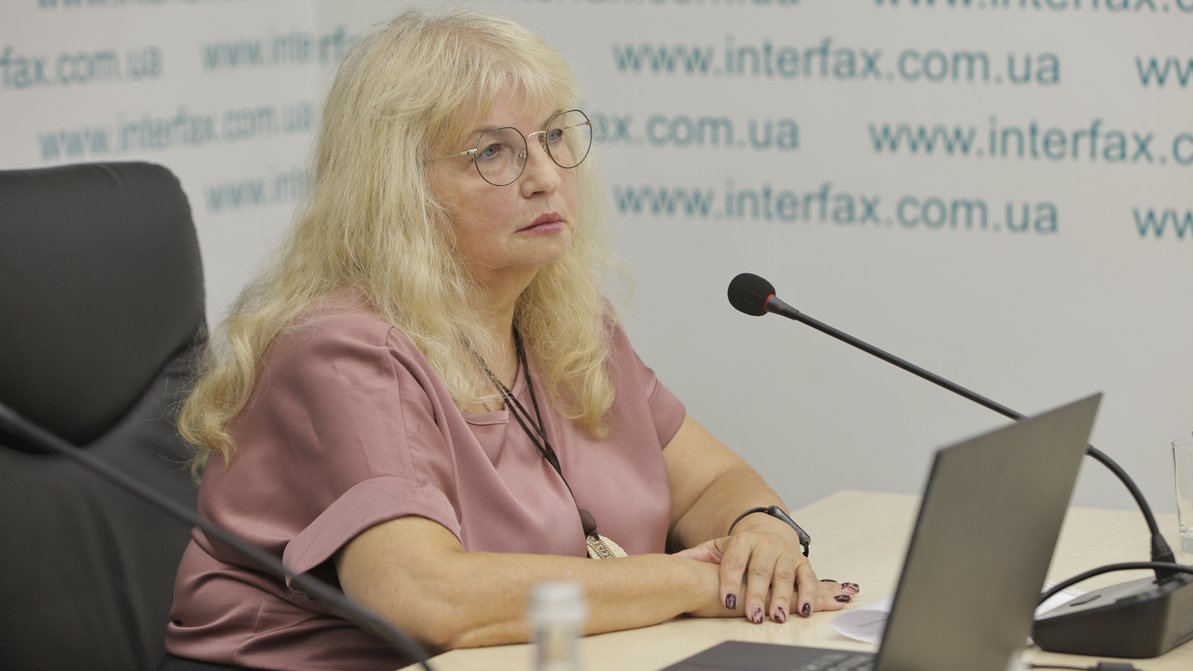
For her part, Viktoriia Khliebnikova, a volunteer with the charitable foundation, noted that the consequences of the conflict surrounding the building concern not only the foundation itself, since professional kitchen equipment purchased specifically to provide free meals to people remained inside the premises.
“For us, this story is very painful because this is not a question of the house, the equipment or the money. The most painful thing is that we cannot help people to the full extent, as we did before. The professional equipment was purchased not for business and not to make a profit – it was purchased for charitable activities, to feed people,” Khliebnikova said.
She noted that during widespread electricity outages, such meals were of particular importance to people who were unable to cook food at home. At present, according to her, the team is seeking to regain access to its property and resume its work.
“People are waiting, they meet me on the street and every time ask when we will start helping again. We want to return to normal work, prepare lunches, help elderly people, children and families who have lost their defenders at the front,” the volunteer added.
For his part, Pastor Kim Shine, vice president of the international Grace mission, who joined the press conference from the United States, said that the American organization financially supported the activities of Kim Kio Yok and his family in Ukraine and helped with the purchase of the premises. According to him, after the start of the full-scale war, the mission offered the missionaries the opportunity to return to the United States for security reasons, but they decided to stay.
“When they said that they had found a building where they could support elderly people and prepare food for displaced persons, we decided to provide financial assistance for its purchase. Now we are appealing to the Ukrainian authorities so that this case is resolved in accordance with the law and the activities can continue,” Kim Shine emphasized.
CHARITY, fraud, INTERFAX-UKRAINE, KYIV, MISSIONARY, UNITED STATES
The administration of U.S. President Donald Trump is preparing to revoke up to 200,000 business and tourist visas held by foreign nationals who applied for asylum after entering the country. If the decision is carried out on the stated scale, it will be the largest single mass revocation of visas in U.S. history.
The Associated Press reported this on August 24, citing documents from the U.S. State Department and two U.S. officials.
The measure applies to nonimmigrant visas in the B1 and B2 categories, which are intended primarily for business and tourist travel, visiting relatives, and receiving medical treatment, respectively.
Visas issued between 2016 and 2026 may be subject to this new measure if their holders applied for asylum after arriving in the United States or are continuing the asylum process.
State Department spokesperson Tommy Pigott confirmed that the procedure is being prepared but did not specify its final scope.
“We are coordinating with the Department of Homeland Security to identify and revoke nonimmigrant visas held by foreign nationals who entered the United States as short-term visitors and subsequently applied for asylum in order to remain here permanently,” the State Department spokesperson said.
According to him, the process will be carried out gradually, so the number of revoked visas remains uncertain for now.
Thus, the figure of up to 200,000 visas is currently an AP estimate based on internal documents and information from U.S. officials, rather than an officially announced quota by the State Department.
The revocation of visas will not result in the immediate deportation of all affected foreign nationals from the U.S.
According to the AP, most people whose asylum applications are pending will be transferred to the appropriate immigration category; however, they will no longer be considered to be in the country as business or tourist visitors.
The administration’s main argument is that B1/B2 visas are issued to people who state that their trip is temporary and that they intend to leave the U.S. The authorities view the filing of an asylum application after entry as possible evidence that the original purpose of the trip may not have matched the stated one.
The large-scale revocation of visas is expected to face legal challenges. The AP notes that the decision could still be reviewed or challenged before it is fully implemented.
The new measure will be a continuation of the significant tightening of U.S. visa and immigration policies.
The State Department reported on August 10, 2026, that more than 175,000 visas for foreign nationals have already been revoked since Donald Trump’s return to the White House.
According to the department, the grounds for revocation included visa violations, criminal offenses, fraud, threats to national security, and other violations. Among the most common reasons cited by the State Department were assaults, driving under the influence, theft, and drug-related crimes.
However, the planned revocation of up to 200,000 visas is unique in that it targets a single specific category of visa holders and is part of a unified administrative campaign. This is precisely why the AP describes it as potentially the largest one-time mass revocation of visas in U.S. history.
In 2025–2026, the Trump administration also expanded social media screening of applicants, tightened requirements for several categories of foreign nationals, introduced or expanded visa restrictions for citizens of dozens of countries, and intensified scrutiny of visas that had already been issued.
The new measure applies to foreign nationals regardless of their specific nationality, provided they meet the specified criteria. Therefore, in theory, it could also affect Ukrainian citizens who entered the U.S. on valid B1/B2 visas and subsequently applied for asylum. At the same time, other mechanisms governing Ukrainians’ stay in
the U.S. are not, in and of themselves, the subject of the announced campaign.
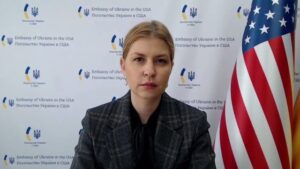
Ukrainian President Volodymyr Zelenskyy has signed a decree relieving Olga Stefanishyna of her duties as Ukraine’s Ambassador Extraordinary and Plenipotentiary to the United States.
The corresponding decree, No. 696/2026, has been published on the president’s website.
In a Facebook post, Stefanishyna announced that she had decided to step down as Ukraine’s ambassador to the United States due to personal circumstances.
“This is my own decision, dictated by personal circumstances that I have mentioned previously,” she noted.
According to Stefanyishyna, representing Ukraine in Washington during a full-scale war was the greatest honor of her life.
At the same time, the diplomat emphasized that the main tasks she came to Washington to accomplish have been fulfilled. In particular, she said, she succeeded in increasing U.S. arms supplies and maintaining support for Ukraine amid changes in the U.S. political landscape, enshrining that support in law, and shifting Ukraine’s role “from a country that receives aid to a country in which investments are made and whose technologies are purchased.”
Stefanyishyna also stated that she would comment separately and publicly on issues that have recently been raised in the media, and assured that she would continue to work for the benefit of Ukraine “wherever she can be of use.”
Olga Stefanyishyna was born on October 29, 1985, in Odesa. In 2008, she graduated from Taras Shevchenko National University of Kyiv with a degree in international law and as an English translator; in 2016, she received a specialist degree in finance and credit from Odesa National Economic University.
From 2006 to 2007, she worked in private legal practice. Since 2007, she has worked at the Ministry of Justice of Ukraine, where she held positions in departments responsible for European integration and international law. From 2017 to 2019, she headed the Office for European and Euro-Atlantic Integration at the Secretariat of the Cabinet of Ministers of Ukraine.
In June 2020, the Verkhovna Rada appointed Stefanyishyna as Deputy Prime Minister for European and Euro-Atlantic Integration of Ukraine and included her in the National Security and Defense Council.
In 2021, Stefanyishyna was appointed to the Political Council of the “Servant of the People” party.
In 2024, the Verkhovna Rada appointed Stefanyishyna as Minister of Justice of Ukraine following the dismissal of Denys Malyuska. She retained her position as Deputy Prime Minister for European and Euro-Atlantic Integration.
In July 2025, Stefanyishyna lost her positions as Minister of Justice and Deputy Prime Minister following the resignation of Denys Shmyhal’s government. Subsequently, President Volodymyr Zelenskyy appointed her as the President of Ukraine’s Representative for the Development of Cooperation with the United States, and in August 2025, as Ambassador Extraordinary and
Ambassador Extraordinary and Plenipotentiary of Ukraine to the United States.
On July 23, 2026, Zelenskyy announced that he had offered Yulia Svyrydenko the position of U.S. Ambassador to Ukraine.
AMBASSADOR, DIPLOMACY, Stefanyishyna, UKRAINE, UNITED STATES
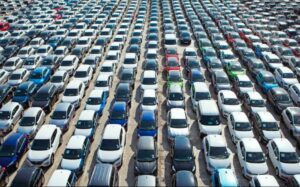
According to Open4business, the United States retained its status as the largest supplier of imported passenger cars to Ukraine in the first half of 2026, accounting for 43% of the total number of imported cars. According to data from the State Customs Service published on July 28, 73,200 passenger cars were imported from the U.S. to Ukraine between January and June.
Germany ranked second among supplier countries, accounting for 17,300 cars, or 10% of total imports. Poland ranked third with 14,600 cars, or 9%.
Collectively, the United States, Germany, and Poland supplied 105,100 passenger cars to Ukraine. These three countries accounted for about 62% of total imports.
Overall, in the first half of the year, cars were imported from more than 50 countries. The total volume of imports exceeded 169,000 vehicles, and their declared value amounted to nearly 96.6 billion UAH.
Customs revenues from passenger car imports reached 32.1 billion UAH.
According to estimates by the Experts Club analytical center, gasoline-powered cars led in terms of customs revenue. They contributed 14.6 billion UAH to the budget, or 45.5% of the total.
Diesel cars generated 8.4 billion UAH, hybrids—7.1 billion UAH, and electric cars—about 2 billion UAH.
Used cars accounted for over 70% of the total number of imported vehicles and generated 17.7 billion UAH in customs duties. New cars accounted for less than 30% of imports and 14.4 billion UAH in revenue.
In 2024, nearly 31.6 million jobs in European Union countries were supported by final demand for European goods and services from non-EU countries, Eurostat reported on July 20, 2026.
This figure represents 14.4% of total employment in the European Union. In 2010, external demand supported 22.6 million jobs, or 11.5% of employment. Thus, over the course of 14 years, the number of jobs linked to foreign consumers increased by approximately 9 million.
Gross value added generated in the EU as a result of final consumption and investment outside its borders rose from EUR1.3 trillion in 2010 to EUR2.788 trillion in 2024. Its share of the EU economy’s total value added rose from 13.3% to 17.2%.
The United States remains the largest external market for the European economy. U.S. demand supported approximately 6 million jobs in the EU, or 19.1% of all employment linked to final demand outside the bloc. The United States also accounted for EUR585.8 billion in value added—21% of the total.
The United Kingdom generated demand that supported 3.4 million jobs in the European Union, or 10.6% of the corresponding employment. China ranked third with 3.1 million jobs and a 9.8% share. However, in terms of value added generated, China, at EUR289.8 billion, outpaced the United Kingdom, which stood at EUR276 billion.
Swiss demand supported approximately 1.5 million jobs in the EU and generated EUR126.6 billion in value added.
Eurostat’s calculations are based on the FIGARO cross-country tables and take into account not only employees of companies that directly export products but also employment across the entire production chain—including suppliers of raw materials, components, and services. External final demand refers to goods and services purchased outside the EU for consumption or investment.
Eurostat also provides a broader measure of the impact of exports, which includes intermediate goods and services: in 2024, exports to countries outside the EU supported 32.9 million jobs, or 15% of total employment, and generated EUR2.905 trillion in value added.
The growing dependence of European employment on external markets highlights the importance of the EU’s trade relations with the United States, the United Kingdom, and China. Potential tariffs, trade restrictions, or a decline in demand in these countries could affect not only European exporters but also companies operating within their associated supply chains.
EMPLOYMENT, EUROPEAN UNION, Eurostat, EXPORTS, UNITED STATES



