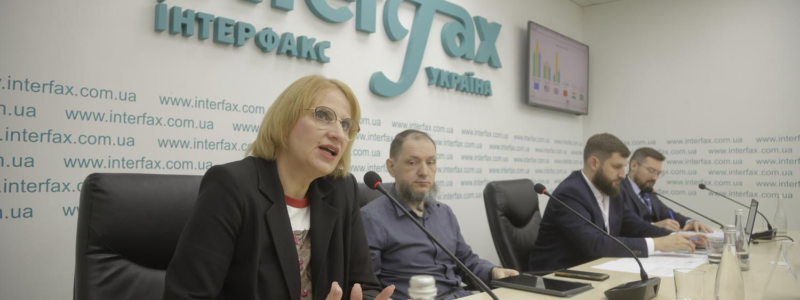
Canada ranked first in terms of the balance of positive and negative attitudes among Ukrainians among Ukraine’s 50 largest trading partners, while China, which leads in trade turnover, received the lowest indicator, and attitudes toward Poland deteriorated significantly, according to the results of a study by Active Group and the Experts Club information and analytical center.
According to the published ranking, the balance of positive and negative assessments of Canada amounted to plus 73.8 percentage points. It was followed by Sweden – plus 70.6 p.p., the Netherlands – 69.7 p.p., Finland and Norway – 69.3 p.p. each, France – 69.1 p.p., Italy – 67.1 p.p., Lithuania – 65.9 p.p., Switzerland and the United Kingdom – 65.6 p.p. each.
This indicator is the difference between the shares of positive and negative responses. In particular, 76.3% of respondents have a positive attitude toward Canada, 2.5% have a negative attitude, and 19.2% have a neutral attitude.
The worst balance was recorded for China – minus 25.4 p.p.: 18.2% of respondents assess it positively, 43.6% negatively, and 33.9% neutrally. India also has a negative indicator – minus 14.3 p.p., Hungary – minus 12.7 p.p., and Lebanon – minus 9.2 p.p.
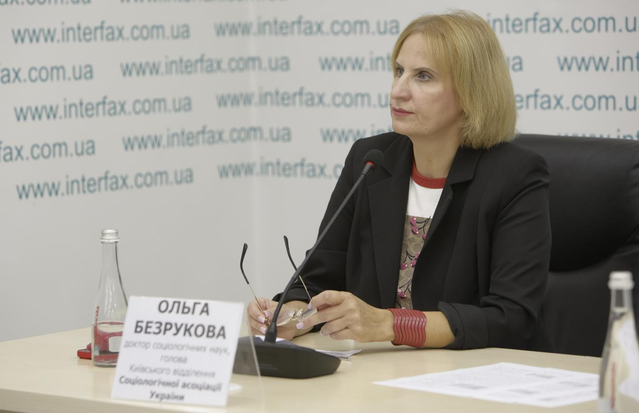
Doctor of Sociological Sciences and head of the Kyiv branch of the Sociological Association of Ukraine Olga Bezrukova called China an illustrative example of the gap between the scale of economic interaction and the country’s public image.
“We saw that China is Ukraine’s largest economic partner in terms of total trade turnover, but this is in no way converted into a positive public image. This shows that Ukrainian citizens clearly distinguish between the pragmatism of economic interaction and the overall assessment of a state. Economic dependence and interaction do not equal public sympathy for this country,” she emphasized at a press conference at the Interfax-Ukraine agency on Tuesday.
One of the most noticeable changes was the deterioration in attitudes toward Poland. While in March 2026 the balance of assessments stood at plus 41.7 p.p., in August positive and negative responses were practically equal, with a slight predominance of negative ones. A positive attitude was expressed by 34.6% of respondents, a negative one by 37%, and a neutral one by 25.4%.
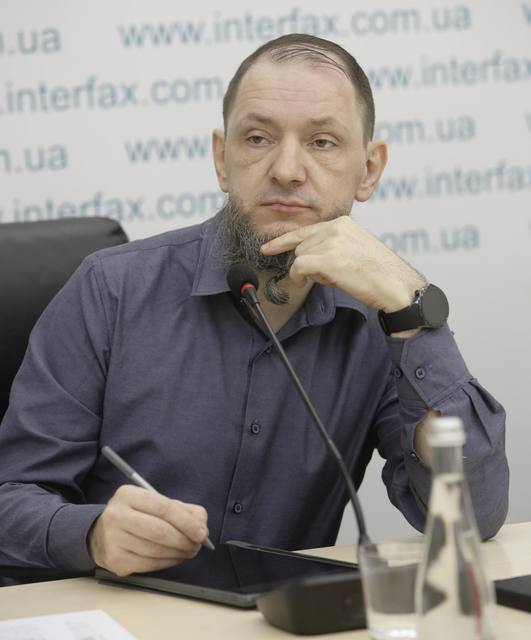
“At the beginning of the invasion, Poland was perceived almost as the main partner. We asked about the rapprochement between Ukraine and Poland, political and economic, even about uniting into some kind of common union, and we saw enormous positive results. But here we see: Poland seemingly still remains a key partner, but the idea of unification has already been forgotten, and we see stable negativity,” said Active Group founder Andriy Yeremenko.
He linked the deterioration in assessments to the position of part of the Polish authorities, which he considers anti-Ukrainian.
At the same time, the balance of attitudes toward Hungary improved from minus 33.6 p.p. in March to minus 12.7 p.p. in August, although negative assessments still prevail. For the United States, the indicator rose from plus 19.4 to plus 38.4 p.p. Some 55% of respondents have a positive attitude toward the United States, 16.6% a negative attitude, and 25.6% a neutral attitude.
When asked who contributes most to achieving peace in Ukraine, 44.6% of respondents named European Union countries, 25.2% the United States, 23.3% the United Kingdom, 4.1% China, 1.8% India, and 1% Brazil. Regarding priority development of trade and economic relations, 69.9% chose EU countries and the United Kingdom, 11.9% the United States, and 8.4% China.

According to Bezrukova, assessments of the U.S. role in achieving peace remained relatively stable throughout the three waves of the study.
“General sympathy toward a country and an assessment of its functionality at the international level are related but not identical things. Images of countries are multidimensional. A person may change their emotional attitude toward a state but continue to recognize its international weight,” the sociologist explained.
Another model, she said, is demonstrated by India: 48.3% of respondents express a neutral attitude toward it, but among formed assessments negative ones prevail – 31.5% versus 17.2% positive.
The economic indicators were presented by Experts Club founder, deputy director of the Interfax-Ukraine agency and PhD in Economics Maksym Urakin. According to State Customs Service data cited by him, in the first half of 2026 Ukraine’s trade turnover amounted to $70.3 billion, exports to $21 billion, and imports to $49.3 billion. The negative balance of trade in goods reached $28.3 billion.
“If we compare this with the first half of 2025, there was also an imbalance then, but now exports have increased by approximately 5%, while imports have risen by almost 30%. That is, the deficit increased by more than $10 billion over the year. Therefore, it is very important for us to analyze our main partners,” he emphasized.
According to the materials presented, trade turnover with China in January-June amounted to about $14.68 billion. Ukraine exported $778 million worth of goods to China and imported $13.90 billion, forming a deficit of approximately $13.12 billion. Poland remained the largest buyer of Ukrainian goods, with a volume of $2.38 billion. Türkiye ranked second among export markets with $1.78 billion, and Italy third with $1.28 billion.
In terms of total trade volume, China is followed by Poland – $7.05 billion, Türkiye – $4.90 billion, Germany – $4.48 billion, and the United States – $3.07 billion. Yeremenko highlighted Türkiye as an example of a combination of significant trade turnover and predominantly positive perception: 52.3% of respondents have a favorable attitude toward it, while 7.4% have a negative attitude.
Urakin separately drew attention to partners with which trade provides Ukraine with a positive balance. In the first half of the year, the largest was with Spain – $578.1 million, Egypt – $527.1 million, and Moldova – $467.2 million. They were followed by Algeria – $309.2 million, the Netherlands – $221.5 million, and Lebanon – $220.5 million. Libya, Tunisia, Iraq, and Yemen also entered the top ten.
At the same time, neutral attitudes prevail toward a number of these partners. Egypt is assessed neutrally by 61.3% of respondents, Algeria by 65.8%, and Tunisia by 67.3%. Participants in the press conference linked this to insufficient awareness among Ukrainians about these countries and emphasized the need for more active economic and public diplomacy.

“It is necessary to develop not only general awareness better. First of all, business associations, the Ministry of Economy and the Ministry of Foreign Affairs need to work to develop bilateral relations and improve the balance. In conditions where Ukraine already lacks financing and we live, essentially, at the expense of external borrowing, cooperation should be expanded with countries where we can have a positive balance,” said Active Group director Oleksandr Pozniy.
Urakin recommended that embassies accredited in Ukraine ensure full communication in the Ukrainian language, openness to the media, and regular reporting on the results of cooperation.
“The first recommendation is to regularly show concrete deeds, concrete actions, the presence here of foundations, embassies, teams, diplomats in the humanitarian sphere and in science. Second, to be open to questions and requests from the media and the public. We also need to use our sociology to draw conclusions and cement our relations, primarily trade relations,” he added.
This is the third wave of the study; the previous ones were conducted in August 2025 and March 2026. The survey was conducted in August 2026 using self-completed online questionnaires in the SunFlowerSociology panel. A total of 800 Ukrainian citizens aged 18 and over were surveyed. According to the organizers, the sample is representative by age, gender and region, and the stated maximum theoretical statistical margin of error at a 95% confidence level is 3.5%.
Source: https://www.youtube.com/watch?v=PyhaE-opCes
ACTIVE GROUP, CANADA, CHINA, EXPERTS CLUB, POLAND, PUBLIC OPINION, TRADE, UKRAINE, UNITED STATES