
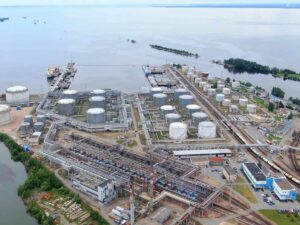
According to “Serbian Economist,” the Romanian company JT Grup Oil has received approval to build a new oil products terminal on the Danube near the port of Tisovica-Dubova, not far from Orșova in Mehedinți County, the company reported in a filing published on the Bucharest Stock Exchange.
The project involves the construction of four above-ground storage tanks for liquid fuel, as well as the engineering and logistics infrastructure necessary for the receipt, storage, and transshipment of petroleum products.
JT Grup Oil views the new facility as part of a larger regional logistics system. The Danube terminal is planned to be integrated with the company’s new terminal in the port of Constanța on the Black Sea.
According to the company, the platform being developed is intended to serve the markets of Romania, Hungary, Serbia, Austria, and Ukraine, leveraging both Black Sea logistics capabilities and the international transport corridor along the Danube.
Thus, fuel will be able to arrive via Constanta by sea and then be distributed throughout Central and Southeastern Europe using river, rail, and road transport.
For Serbia, the new facility is of particular interest due to its location on the Danube, relatively close to the Serbian border. Additional storage and transshipment capacity for petroleum products could expand fuel supply options to the Serbian market and enhance the Danube’s role in regional energy logistics.
For Ukraine, the project also creates an additional route for importing petroleum products via Romania. Since 2022, Romanian ports—primarily Constanța—have significantly increased their importance for Ukrainian trade and fuel supplies.
At the same time, JT Grup Oil is completing another major infrastructure project—the JT Terminal in the port of Constanța.
The terminal has already passed technical trials, and its commercial operation is scheduled to begin in October 2026, following the completion of all necessary procedures and the receipt of permits.
JT Grup Oil’s strategy effectively involves creating a Constanta–Danube–Central Europe logistics corridor.
The Black Sea terminal is intended to handle imported petroleum products arriving by sea, while the new facility near Orșova will bring fuel supplies closer to the markets of Serbia, Hungary, and Austria and utilize the Danube for further transportation.
“By developing the terminal in Constanta and the terminal in the Orsova area, the company aims to create an integrated logistics platform capable of effectively serving the markets of Central and Eastern Europe,” according to a statement from JT Grup Oil cited by Romanian media.
The project takes on added significance against the backdrop of the restructuring of European petroleum product supply routes and the region’s countries’ efforts to diversify their transportation infrastructure.
JT Grup Oil operates in the Romanian wholesale fuel trade and distribution market. The company’s shares are traded on the AeRO market of the Bucharest Stock Exchange under the ticker symbol JTG.

According to The Serbian Economist, Serbia has provided Ukraine with humanitarian aid totaling approximately 63 million euros since the start of the full-scale war, said Andon Sapundži, Serbia’s ambassador to Ukraine.
About 10 million euros of this amount was allocated to support Ukraine’s energy sector and restore damaged infrastructure.
Serbia also announced an additional contribution of 2 million euros as part of the UNDP’s “Green Energy for Ukraine” program.
The funds are planned to be used to install transformer equipment with a total capacity of 63 MW to meet the needs of Kryvyi Rih. The equipment is expected to be commissioned in early 2027.
According to the ambassador, Serbian companies are already exploring opportunities to participate in Ukrainian reconstruction projects. Areas of particular interest include energy, construction, the production of building materials, transportation infrastructure, and industrial cooperation.
He emphasized that Ukraine’s reconstruction should not be postponed until the end of the war, as some energy and infrastructure needs must be addressed immediately.
Serbian business participation in major projects is currently in the stage of assessing opportunities and seeking specific partnerships.
https://t.me/relocationrs/3406
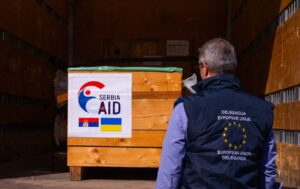
According to “Serbian Economist”, Serbia has provided Ukraine with humanitarian aid totaling approximately 63 million euros since the start of the full-scale war, said Andon Sapundži, Serbia’s ambassador to Ukraine.
About 10 million euros of this amount was allocated to support Ukraine’s energy sector and restore damaged infrastructure.
Serbia also announced an additional contribution of 2 million euros as part of the UNDP’s “Green Energy for Ukraine” program.
The funds are planned to be used to install transformer equipment with a total capacity of 63 MW to meet the needs of Kryvyi Rih. The equipment is expected to be commissioned in early 2027.
According to the ambassador, Serbian companies are already exploring opportunities to participate in Ukrainian reconstruction projects. Areas of particular interest include the energy sector, construction, the production of building materials, transportation infrastructure, and industrial cooperation.
He emphasized that Ukraine’s reconstruction should not be postponed until the end of the war, as some energy and infrastructure needs must be addressed immediately.
Serbian business participation in large-scale projects is currently in the stage of assessing opportunities and identifying specific partnerships.

According to The Serbian Economist, based on the latest available official data, the ranking of the average cost of arable land is as follows:
1. Slovenia — 28,348 thousand euros per hectare, data for 2024.
2. Greece — approximately 14,312 thousand euros, 2024.
3. Serbia — 9,583 thousand euros, 2025.
4. Romania — 8.7 thousand euros, 2024.
5. Bulgaria — 8,679 thousand euros, 2024.
6. Croatia — 6,723 thousand euros, 2025.
The data reflects the cost of vacant arable land without buildings or perennial plantings. The periods of statistical observation vary, so the ranking shows the general price level rather than a fully synchronized comparison.
The most expensive land in the region is in Slovenia, where supply is limited and plots are often small and fragmented. In Greece, prices depend heavily on access to water, proximity to the coast, and the possibility of construction. Serbia has already surpassed Romania, Bulgaria, and Croatia in terms of average price, although its figures remain approximately 37% below the EU average.
For foreigners, price is not the only criterion. In Serbia, the direct purchase of agricultural land is almost entirely prohibited. In EU countries, citizens of other EU member states typically have more opportunities, while buyers from third countries may face restrictions, reciprocity rules, or the requirement to purchase through a local company.
Albania, Montenegro, North Macedonia, and Bosnia and Herzegovina are not included in the ranking due to the lack of recent comparable national statistics. Listing prices there may differ significantly from the actual transaction values.
https://t.me/relocationrs/3397
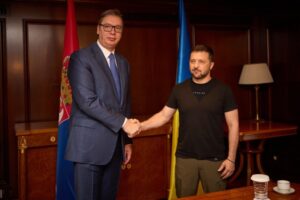
According to “Serbian Economist”, Ukrainian President Volodymyr Zelenskyy will pay an official visit to Serbia on August 8 and meet with Serbian President Aleksandar Vučić in Belgrade. The Serbian president’s press service has officially confirmed the visit. This will be Zelenskyy’s first visit to Serbia during his presidency.
A detailed agenda for the talks has not yet been published. However, judging by the contacts between Belgrade and Kyiv in recent months, the central topics are likely to include bilateral relations, the European integration of both countries, the expansion of economic cooperation, a possible free trade agreement, regional security, and Serbia’s participation in Ukraine’s reconstruction.
In May, Zelenskyy and Vučić had already discussed the development of bilateral relations over the phone. At that time, the Ukrainian president placed particular emphasis on resuming negotiations on a free trade zone with Serbia. Vučić, for his part, cited economic cooperation as one of the key areas for further rapprochement between the two countries.
Following this, talks between representatives of the two countries’ governments took place in Belgrade. On May 21, Serbian Minister of Domestic and Foreign Trade Jagoda Lazarević and Ukrainian Deputy Prime Minister and Trade Representative Taras Kachka signed a joint statement on the continuation of negotiations on a free trade agreement. At the same time, a Serbian-Ukrainian business forum was held with the participation of representatives from about 30 companies.
The upcoming visit continues a noticeable revival of political contacts between Belgrade and Kyiv.
In June 2025, Vučić visited Ukraine for the first time since the start of the full-scale Russian-Ukrainian war, taking part in the “Ukraine–Southeast Europe” summit in Odesa. At that time, he reaffirmed Serbia’s support for Ukraine’s territorial integrity and offered Serbia’s participation in the reconstruction of one or more Ukrainian cities or regions.
On July 15, 2026, Vučić was in Ukraine again—for the 5th “Ukraine–Southeast Europe” summit in Kyiv.
At the same time, Serbia’s position on the war remains unique. Belgrade supports Ukraine’s territorial integrity and has voted in favor of a number of relevant international documents, provides humanitarian aid, but has not joined the EU sanctions against Russia. Vucic has also repeatedly avoided signing certain regional declarations insofar as they called for increased pressure on Moscow.
Therefore, the very fact of the Ukrainian president’s visit to Belgrade carries political significance: Serbia is attempting to simultaneously maintain traditional relations with Russia, develop relations with Kyiv, and continue its path toward EU membership.
Another topic of discussion could be the new regional Carpathian Initiative proposed by Ukraine. Zelenskyy has previously stated that Serbia, in particular, is planned to be involved in the initiative, and cooperation could cover the economy, logistics, security, tourism, and Ukraine’s reconstruction.
The economic aspect of the visit is particularly relevant against the backdrop of the resumption of bilateral trade.
According to official data from the Serbian Ministry of Foreign Affairs and the country’s Statistical Office, trade between Serbia and Ukraine totaled 391.8 million euros in 2025. Serbia exported goods worth 179.6 million euros to Ukraine and imported Ukrainian products worth 212.2 million euros. Thus, the trade balance remained in Ukraine’s favor by approximately 32.6 million euros.
In dollar terms, according to Marko Čadež, president of the Serbian Chamber of Commerce and Industry, bilateral trade reached $442.2 million, practically returning to the level of the last pre-war year, 2021. Serbian exports totaled $202.9 million, while Ukrainian exports to Serbia amounted to $239.3 million. About 900 Serbian companies conduct trade with Ukraine, including approximately 670 that import Ukrainian goods.
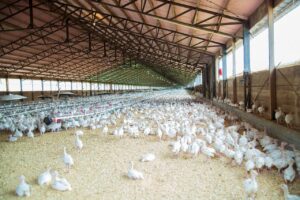
According to “Serbian Economist”, the Ukrainian agricultural holding MHP has invested over 100 million euros in the modernization and development of production facilities in Serbia, Serbian Ambassador to Ukraine Andon Sapundži said in an interview with Mind.
MHP operates in the Serbian market through Perutnina Ptuj Topiko, a company specializing in the production and processing of poultry meat.
The company’s products are sold on the domestic market in Serbia and exported to Bosnia and Herzegovina, Montenegro, Albania, and North Macedonia.
MHP acquired over 90% of the shares in the Slovenian company Perutnina Ptuj in 2019. The total investment in the acquisition of the group amounted to approximately 221 million euros. The deal to purchase a controlling stake was officially completed in February 2019.
Since the deal was structured through a Slovenian company, these funds were not included in the statistics on Ukrainian direct investment in Serbia. Officially, their total volume from 2010 to the first quarter of 2026 was estimated at only approximately 9 million euros.
MHP remains the most prominent example of a major Ukrainian business operating in Serbia. Other Ukrainian companies operating in the country are predominantly small and medium-sized enterprises.
Following the acquisition of Perutnina Ptuj, the Ukrainian group began expanding its production base in Serbia. In particular, the company built seven modern broiler farming facilities in Bačka Topola. MHP refers to Serbia as Perutnina Ptuj’s largest market in the Balkans.
MHP was founded in 1998 and is an international company in the food and agrotechnology sector. The group’s headquarters are located in Kyiv, and its production assets are situated in Ukraine, Spain, and countries in Southeast Europe. The company employs over 39,000 people, and its products are exported to more than 70 countries. Yuriy Kosyuk is the founder and CEO of MHP.
In 2025, MHP’s revenue totaled $3.766 billion, EBITDA was $569 million, and net income was $187 million. The group’s shares have been listed on the London Stock Exchange since 2008.



