
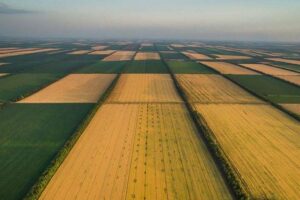
According to The Serbian Economist, based on the latest available official data, the ranking of the average cost of arable land is as follows:
1. Slovenia — 28,348 thousand euros per hectare, data for 2024.
2. Greece — approximately 14,312 thousand euros, 2024.
3. Serbia — 9,583 thousand euros, 2025.
4. Romania — 8.7 thousand euros, 2024.
5. Bulgaria — 8,679 thousand euros, 2024.
6. Croatia — 6,723 thousand euros, 2025.
The data reflects the cost of vacant arable land without buildings or perennial plantings. The periods of statistical observation vary, so the ranking shows the general price level rather than a fully synchronized comparison.
The most expensive land in the region is in Slovenia, where supply is limited and plots are often small and fragmented. In Greece, prices depend heavily on access to water, proximity to the coast, and the possibility of construction. Serbia has already surpassed Romania, Bulgaria, and Croatia in terms of average price, although its figures remain approximately 37% below the EU average.
For foreigners, price is not the only criterion. In Serbia, the direct purchase of agricultural land is almost entirely prohibited. In EU countries, citizens of other EU member states typically have more opportunities, while buyers from third countries may face restrictions, reciprocity rules, or the requirement to purchase through a local company.
Albania, Montenegro, North Macedonia, and Bosnia and Herzegovina are not included in the ranking due to the lack of recent comparable national statistics. Listing prices there may differ significantly from the actual transaction values.
https://t.me/relocationrs/3397
Agricultural output in Ukraine from January through June 2026 decreased by 1.6% compared to the same period in 2025, while growth for the first five months stood at 1.4%, according to the State Statistics Service (Derzhstat).
According to the published data, the negative trend was driven by the crop production sector at agricultural enterprises, where a decline of 14.8% was recorded.
In contrast, the livestock sector at agricultural enterprises showed growth of 10.7%.
The best performance in crop production across all categories of farms was recorded in the following regions: Volyn (80.1%), Kherson (54.5%), Dnipropetrovsk (23.8%), Ternopil (20.7%), and Cherkasy (16.3%).
The most significant decline in crop production across all categories of farms was recorded in Donetsk Oblast (52.6%), Zaporizhzhia Oblast (35.6%), and Odesa Oblast (34.3%).
The best performance among farms of all categories in the livestock sector was recorded in Kyiv (9.1%), Cherkasy (8.2%), Dnipropetrovsk (6.6%), Chernihiv (7%), and Kirovohrad (5.9%) regions.
The most significant decline in production among farms of all categories in the livestock sector was recorded in the Donetsk (53.9%), Zakarpattia (32.9%), and Kherson (16.3%) regions.
As previously reported, agricultural production in Ukraine decreased by 6.8% in 2025 compared to 2024.
AGRICULTURE, crop production, livestock farming, PRODUCTION, State Statistics Service

Agricultural production in Ukraine increased by 1.7% in January–April 2026 compared to the same period last year, while growth for the first three months stood at 1.2%, according to the State Statistics Service (SSS).
According to the published data, the positive trend was driven exclusively by the livestock sector, as crop production data is not traditionally compiled until June.
The main driver of growth was agricultural enterprises, which increased production volumes by 10.5%. The best performance in this sector over the four-month period was demonstrated by Chernivtsi (+32.2%), Donetsk (30.8%), Zakarpattia (30.0%), and Lviv (29.4%) regions, while a decline in performance was recorded in four regions: Kherson (by 35.4%), Sumy (by 7.6%), Vinnytsia (by 3.6%), and Mykolaiv (by 3%).
In private households, the decline in production remained at the first-quarter level—15.7%. The largest declines in the private sector were observed in Donetsk (67%), Zakarpattia (48.4%), and Ternopil (35.9%) regions.
A slight increase in private households was recorded in only two regions—Kyiv (1.0%) and Odesa (0.1%).
As reported, by the end of 2025, agricultural production in Ukraine had decreased by 6.8% compared to 2024. In January 2026, growth of 3.2% was recorded, but for the period January–February, it slowed to 1.7%.
AGRICULTURAL PRODUCTION, AGRICULTURE, livestock farming, State Statistics Service
Agrotrade Group has launched its 2026 spring sowing campaign in four regions of Ukraine, namely Chernihiv, Sumy, Kharkiv and Poltava regions, Ivan Kriuchkov, director of the group’s agro-industrial department, said on the agricultural holding’s Facebook page.
According to the statement, the agricultural holding revised its crop rotation structure for the 2026 season: the areas under sunflower and corn were increased at the expense of soybean plantings. About 16.5 thousand hectares were allocated for corn (24.9% of the total structure), 16 thousand hectares for sunflower (28.6%), while soybeans will occupy 3 thousand hectares.
“We have good expectations for this season. Timely implementation of agricultural operations and proper crop care are important conditions for success. The team is focused on delivering everything planned,” Kriuchkov said.
As of April 21, the agricultural holding had completed sowing on about 12% of the planned production area, using 18 seeders. The campaign is expected to be completed within three weeks. In 2026, Agrotrade plans to improve efficiency through the introduction of Strip-Till and no-till technologies.
As reported, corn became the most productive crop for Agrotrade in 2025 and showed an average yield of 9.89 tonnes per hectare, which was 17% above plan. In particular, the borderland clusters in Sumy and Chernihiv regions recorded yields of 10.3-10.4 tonnes per hectare.
Agrotrade Group is a vertically integrated holding cultivating more than 70 thousand hectares of land. It owns a network of elevators with a total capacity of 570 thousand tonnes and a seed plant based at the Kolos farm in Kharkiv region. Its founder and CEO is Vsevolod Kozhemiako.
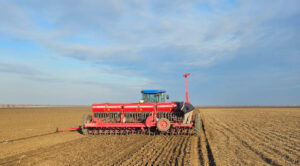
As of April 20, farmers had sown 1,251.9 thousand hectares with spring grain and leguminous crops, which amounts to 21% of the forecast for 2026, the press service of the Ministry of Economy, Environment and Agriculture reported on Tuesday.
According to оперативе statistics, over the past week farmers sowed 254.9 thousand hectares compared with 168.7 thousand hectares the previous week. The pace of field work increased by 1.5 times, but the overall figures are 15.3% behind last year’s pace, when as of April 25, 2025, 1,478.7 thousand hectares had been sown.
The Ministry of Economy clarified that so far 623.8 thousand hectares of barley have been sown (83% of the plan), peas – 238.3 thousand hectares (87%), wheat – 158.8 thousand hectares (85%) and oats – 117.5 thousand hectares (85%). Corn sowing has intensified and reached 75.7 thousand hectares (2% of the forecast), the area under millet amounts to 1.2 thousand hectares (3%), and buckwheat sowing has started (0.01 thousand hectares). Other spring grain and leguminous crops have been sown on 36.5 thousand hectares (27% of the forecast).
The highest sowing rates for grain and leguminous crops have currently been recorded in Odesa region (168.2 thousand hectares), Ternopil region (96.3 thousand hectares), Mykolaiv region (89.4 thousand hectares) and Poltava region (86.5 thousand hectares).
At the same time, sowing of industrial crops is continuing, with 440.8 thousand hectares already sown. In particular, 293.6 thousand hectares have been allocated for sunflower (6% of the forecast), and 21.8 thousand hectares for soybeans (1%). Sugar beet has been sown on 125.4 thousand hectares, which is 64% of the planned area.
As reported, as of April 25, 2025, 2,000 thousand hectares in Ukraine had been sown with spring grain and leguminous crops. In particular, corn accounted for 705 thousand hectares, barley – 702.1 thousand hectares, wheat – 199.8 thousand hectares, peas – 201.8 thousand hectares, and oats – 154.2 thousand hectares. On the same date last year, 1,236.8 thousand hectares had been sown with sunflower, 187.6 thousand hectares with soybeans, and 228.5 thousand hectares with sugar beet.
According to the forecast of the Ministry of Economy, the total area of spring grain and leguminous crops in 2026 will amount to 6.002 mln hectares, of which corn will account for 4.418 mln hectares. Among industrial crops, 5 mln hectares are planned for sunflower, 2.04 mln hectares for soybeans, and 197.2 thousand hectares for sugar beet.
AGRICULTURE, FARMERS, GRAINS, SOWING CAMPAIGN, SPRING SOWING

According to The Serbian Economist, Serbia’s Elixir Group and Germany’s K+S have launched production of a new water-soluble fertilizer for agriculture at the Prahovo ChemPark site in Serbia. The product will be marketed in Europe under the brand name soluMAP®.
Simply put, production has begun in Prahovo of a fertilizer that dissolves quickly in water and is used in modern plant nutrition systems—primarily in drip irrigation and other precision application methods. This is important for the European market, as such supplies will be geographically closer and delivery times shorter. K+S explicitly states that the project is intended to strengthen the reliability of supply for European customers.
The site is located in Prahovo on the Danube, near the borders with Romania and Bulgaria. K+S notes that this simplifies logistics across Europe and to Turkey, while the proximity to Elixir’s phosphoric acid production facilities provides the project with a local raw material supply.
The Elixir and K+S project was announced back in 2023. At that time, it was reported that the investment would amount to €35 million, and the capacity of the new plant in Prahovo would be 50,000 tons per year. Production was planned to begin in 2026.
For Elixir, this launch also reinforces the role of Prahovo ChemPark as a major industrial and chemical hub. The group describes itself as the leading producer of phosphoric acid in the region and the largest producer of compound mineral fertilizers in Southeast Europe, with over 70% of its output exported to more than 85 countries.
The tMAP 12-61 product is a fertilizer with a high phosphorus and nitrogen content. The numbers 12-61 indicate the proportion of the main nutrients: 12% nitrogen and 61% phosphorus.
It is used in drip irrigation, fertigation, and foliar feeding, especially during the early stages of plant growth when crops need phosphorus for root system development.
https://t.me/relocationrs/2448



