

Foreign investors poured approximately 1.02 billion euros into Greek real estate in the first half of 2026, a 6.7% increase compared to the same period last year, according to data from the Bank of Greece.
At the same time, the growth in foreign investment is occurring against the backdrop of a sharp decline in the number of new applications under the Golden Visa program. This indicates that foreign buyers’ interest in Greek real estate is becoming less dependent on the possibility of obtaining a residence permit.
In the second quarter of 2026, the volume of foreign capital directed toward real estate purchases in Greece amounted to approximately 515.8 million euros. This is 11.2% less than in the second quarter of 2025; however, thanks to a strong first quarter, the result for the entire half-year remained higher than last year’s.
The primary source of these statistics is the Bank of Greece, which separately publishes quarterly and annual data on non-residents’ direct investments in Greek real estate. The statistics include real estate purchases by foreign investors as part of foreign direct investment. Bank of Greece
At the same time, the Greek Ministry of Migration and Asylum has recorded a decline in activity under the Golden Visa program. From January through June 2026, 2,551 new applications were submitted, compared to 4,553 during the same period a year earlier. Thus, the figure fell by approximately 44%. Ekathimerini
The decline in the number of applications is linked, in particular, to stricter program requirements. In the most popular regions—including Attica, Thessaloniki, Mykonos, and Santorini—the minimum threshold for a standard real estate purchase to qualify for a Golden Visa has been raised to 800,000 euros. In most other regions, it stands at 400,000 euros. A separate threshold of 250,000 euros has been retained for certain properties that are being converted from commercial to residential use or are subject to restoration.
However, statistics show that foreign capital continues to flow into the market even without a direct link to the immigration program.
Throughout 2025, foreign investors invested approximately €2.05 billion in Greek real estate. This was less than the record €2.75 billion in 2024, but remained one of the highest figures in recorded history. Between 2019 and 2025, the total inflow of foreign capital into Greek real estate reached approximately €12.4 billion. Ekathimerini
By comparison, the Bank of Greece reported that in 2024 alone, net inflows from real estate purchases by non-residents reached €2.75 billion, up from €2.13 billion a year earlier—an increase of 28.9%. Bank of Greece
The shift in demand means that foreign buyers are increasingly viewing Greek real estate not only as a means of obtaining a residence permit but also as an investment asset in its own right. Demand is driven by the tourism market, long-term rentals, rising housing prices in the most attractive regions, and international investors’ interest in hotel and commercial properties.
Foreign capital continues to be particularly active in Athens and Attica, Thessaloniki, Crete, Rhodes, and other tourist islands.
At the same time, Greek authorities continue to discuss further changes to the Golden Visa program amid a shortage of affordable housing. The growth in foreign demand and short-term rentals has become one of the arguments for raising investment thresholds and introducing additional restrictions on the use of purchased real estate.
Thus, preliminary data for 2026 indicate noticeable changes in the Greek market: the number of investors directly seeking to obtain a Golden Visa is declining, yet the total volume of foreign capital in real estate continues to grow for now.
foreign investor, golden visa, GREECE, INVESTMENTS, REAL ESTATE

According to Fixygen, Greece plans to introduce a 10% tax on capital gains from cryptocurrency transactions, Reuters reports.
The corresponding bill was submitted for public comment on October 8. The bill is expected to be submitted to parliament for consideration in November.
Earlier, in June, the possibility of setting the tax rate at 15% was discussed. The new version of the bill provides for a tax exemption on income from cryptocurrency transactions amounting to less than 500 euros per year.
Currently, Greece lacks a comprehensive legal framework for taxing cryptocurrency transactions. At the same time, there is no unified system for taxing income from crypto assets within the European Union.
According to Reuters, capital gains tax rates on cryptocurrency transactions in European countries range from approximately 8% to 30%.
Greek authorities have previously noted that they cannot accurately assess the size of the domestic cryptocurrency market, as a significant portion of investors use foreign platforms.
Consequently, the government does not yet have precise estimates of potential additional budget revenues following the introduction of the new tax.

Tbilisi is preparing to host the international conference AgriFuture Georgia 2026, which will bring together representatives of the agribusiness sector, technology companies, investors, producers, and experts to discuss new opportunities for agricultural development, the implementation of innovations, and the attraction of investment.
The event will serve as a platform for direct dialogue between agricultural producers, suppliers of modern technologies, financial institutions, and companies interested in developing agricultural projects in Georgia and the region.
One of the central themes of AgriFuture Georgia 2026 will be the transformation of agriculture driven by modern technologies. Participants will discuss the automation of production processes, the digitalization of agribusiness, and the application of innovative solutions in crop production, horticulture, and other areas of agricultural production.
Special attention will be given to investments in agriculture and the search for new financing models for agricultural projects. Representatives from the business and investment communities will have the opportunity to discuss promising investment areas, opportunities for scaling up existing operations, and launching new projects.
Another key focus of the conference will be the development of exports. For Georgian and regional producers, entering new markets remains one of the key drivers of further growth; therefore, participants will examine the requirements of international buyers, changes in demand patterns, and opportunities to enhance the competitiveness of agricultural products.
The organizers expect the conference to serve not only as a forum for discussion but also as a venue for establishing new business contacts. As part of AgriFuture Georgia 2026, agribusiness representatives will be able to interact directly with potential partners, technology providers, investors, and experts.
The practical application of technologies will play a special role in the program. Participants will be presented with solutions that enable agricultural enterprises to increase productivity, use land, water, and energy resources more efficiently, reduce production costs, and improve product quality.
The holding of AgriFuture Georgia 2026 reflects the growing interest of the business community in the modernization of Georgia’s agricultural sector. The country has favorable conditions for producing fruits, vegetables, nuts, grapes, and other agricultural products; however, the sector’s further development increasingly depends on technological modernization, access to financing, and producers’ ability to operate in international markets.
The conference is aimed at owners and managers of agricultural enterprises, farmers, producers and exporters of agricultural products, investors, representatives of the banking sector, suppliers of equipment and technology, trading companies, international organizations, and industry experts.
AgriFuture Georgia 2026 is set to become a platform where representatives from various segments of the agricultural sector can discuss specific projects and form new partnerships to develop agribusiness in Georgia and the region.
Open4Business – Information Partner of the AgriFuture Georgia 2026 International Conference

According to the Relocation project, Greece has proposed discontinuing the granting of residence permits to foreign investors for the purchase of real estate and refocusing the “Golden Visa” program on direct investments in the country’s economy.
This initiative was put forward by Nikos Androulakis, leader of the main opposition party PASOK, amid the ongoing housing crisis. Androulakis believes that the current model effectively encourages the sale of Greek real estate to foreign investors and further impacts housing affordability for the local population.
However, PASOK’s proposal does not call for Greece to completely stop granting residence permits in exchange for investment. The party proposes removing real estate from the list of assets eligible for a “Golden Visa” and redirecting foreign capital toward investment instruments that promote economic growth.
For now, this is solely a political initiative by the opposition. PASOK holds 34 seats in Greece’s 300-seat parliament, so the proposal does not automatically mean a change to the current program.
Currently, the minimum real estate investment required to obtain a Greek Golden Visa depends on the region and the type of property.
In Attica, Thessaloniki, Mykonos, and Santorini, as well as on islands with a population of over 3,100, the minimum threshold is 800,000 euros. In most other regions of the country, it is set at 400,000 euros.
A reduced threshold of 250,000 euros applies to certain categories of properties, including real estate being converted from commercial to residential use and certain buildings requiring restoration. For standard investments of 400,000 euros and 800,000 euros, there is a requirement to purchase a single property with an area of at least 120 square meters.
Greek authorities have tightened the conditions of the Golden Visa program several times in recent years amid rising housing costs. In addition to raising the minimum investment thresholds, real estate purchased under the program can no longer be used for short-term rentals.
The stricter rules have already affected demand. According to the Greek Ministry of Migration and Asylum, in the first half of 2026, foreign investors submitted 2,551 new applications for the Golden Visa—44% fewer than the 4,553 applications filed during the same period in 2025.
At the end of the first half of the year, there were 32,702 active investor residence permits in Greece, issued under the program since its launch. Another 7,368 applications from previous periods remained pending.
The decline in interest in the Golden Visa has not yet led to an overall drop in foreign investment in Greek real estate. In the first quarter of 2026, the inflow of foreign capital into the real estate market reached 511.6 million euros, an increase of 43.4% compared to 356.8 million euros a year earlier. This indicates that demand for Greek properties among foreigners remains strong even without the incentive of obtaining a residence permit.
Between 2019 and 2025, foreign investors poured approximately €12.4 billion into Greek real estate. In 2025, the volume of foreign investment totaled €2.05 billion, compared to €2.75 billion in 2024.
The Golden Visa program has been in effect in Greece since 2014 and allows citizens of non-EU countries to obtain a five-year renewable residence permit provided they meet the investment requirements. The question of the future role of real estate in this program takes on particular significance against the backdrop of rising housing costs and the government’s efforts to increase the supply of properties available for long-term rent.
https://relocation.com.ua/greece-proposes-to-exclude-real-estate-from-the-golden-visa-program/
golden visa, GREECE, INVESTMENTS, REAL ESTATE, RESIDENCE PERMIT

The Ukrainian Kobzarenko Group, a manufacturer of trailed agricultural equipment, has launched a new production facility in Kovel, Volyn Oblast, and plans to increase its capacity to approximately 350 machines per year by 2028.
The facility will produce equipment for handling liquid fertilizers and other liquids, including precision fertilizer applicators, mixing and filling stations, and tanks for transporting water and liquid fertilizers. The first units of equipment at the new facility have already been manufactured.
The company intends to invest approximately 40 million UAH annually in production development. As the facility reaches its planned capacity, it is expected to create about 100 new jobs.
The launch of the plant is also significant from the perspective of the geographical expansion of the Ukrainian machine-building industry. The group’s main production facilities have historically been located in the Sumy region. The company also has sites in Lipova Dolyna and Romny, and outside Ukraine, its Polish plant, Kobzarenko Sp. z o.o., manufactures equipment and simultaneously serves as a service center for the European market.
At the same time, the company continues to expand its presence in the EU. In 2026, Kobzarenko participated in industry trade shows in Romania, the Czech Republic, Slovenia, and Poland. Following the AGRA 2026 exhibition in Slovenia, the manufacturer announced negotiations to expand its dealer network in Austria and the search for a new partner in Slovenia.
Thus, the company is simultaneously developing its European sales network and increasing its production capacity in Ukraine.
The Kobzarenko Group has been operating since 1993 and specializes in the manufacture of agricultural machinery, specifically tractor trailers, grain transfer devices, tankers, fertilizer application equipment, and other machinery.
Source: Kobzarenko’s official website.
AGRICULTURAL MACHINERY, INVESTMENTS, MANUFACTURING, mechanical engineering, Кобзаренко
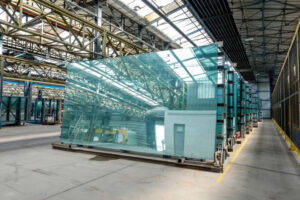
NovaSklo, a subsidiary of the Ukrainian investment group EFI Group, has moved on to the next practical phase of implementing the project for Ukraine’s first modern float glass plant, valued at approximately 250 million euros—the company has begun the selection process for a general contractor for the construction of the facility.
The tender was announced on September 18, 2026. NovaSklo is seeking a contractor capable of performing the full scope of construction work for a large industrial facility.
The project is being implemented in Velyka Dymerka, Kyiv Oblast, approximately 25 km from Kyiv. According to materials from the International Finance Corporation (IFC), the future plant is designed to produce approximately 800 metric tons of glass per day. The facility will manufacture clear, ultra-clear, and energy-efficient coated glass, as well as tempered glass.
The IFC is providing advisory support for the project in collaboration with Japan. The corporation estimates the project’s total cost at €250 million, with construction scheduled to begin in late 2026 and the plant set to begin operations in 2028.
The international component of the project extends beyond IFC’s financing and advisory services. NovaSklo’s technology partner is Pilkington Technology Management, a subsidiary of Japan’s NSG Group, one of the world’s largest manufacturers of architectural and automotive glass.
NSG specialists will support the project during the design, construction, and production line launch phases, including technology optimization, energy efficiency, and industrial safety systems.
Once it reaches its designed capacity, the plant is expected to create more than 300 jobs and become Ukraine’s first large-scale float glass production facility.
The economic impact of the project could extend far beyond the plant itself. Ukraine remains dependent on imported flat glass, while the reconstruction of housing, commercial real estate, and infrastructure in the coming years is expected to generate significant domestic demand.
The establishment of domestic production will make it possible to replace a portion of imports and create a local raw materials and processing supply chain for manufacturers of windows, facade systems, insulated glass units, and other building materials.
At the same time, NovaSklo is establishing an international supply chain even before the plant’s launch. In June 2026, NovaSklo Trade signed an exclusive agreement to distribute Pilkington architectural glass in Ukraine.
Thus, the project brings together Ukrainian industrial capital, the technology of Japan’s NSG Group, the expertise of the IFC, and support from Japan, and is one of the largest new industrial projects currently being prepared for construction in Ukraine.



