
According to Serbian Economist, Serbia has extended tariff quotas on imports of cement and certain types of steel products through the end of 2026. Once the established import volumes are exhausted, additional duties of 50% will be imposed.
The restrictions were originally introduced from January 1 through June 30, 2026, based on a government decree aimed at protecting industries of strategic importance to Serbia’s economy. However, the measure’s validity has been extended through December 31, with a simultaneous revision of some quotas and the list of commodity codes.
The quotas apply to Portland cement, hot-rolled and cold-rolled steel, rebar, hot-rolled wire rod, and certain other iron and steel products.
Quotas have also been established for certain categories of nails and wire, welded pipes, reinforcing mesh, and lattice structures. Goods that are not produced in Serbia have, in certain cases, been exempted from the restrictions.
The additional duty is added to the standard customs rate. For example, if the standard duty is 10%, once the quota is exhausted, the total burden on the importer can reach 60%.
In the first phase, the total quota volume was 421,1 thousand metric tons. Of this, 250,35 thousand metric tons were allocated to cement, 44,7 thousand metric tons to hot-rolled steel, and approximately 7,2 thousand metric tons to cold-rolled products.
Another 67,85 thousand metric tons consisted of quotas for rebar and wire rod in coils, and 51 thousand metric tons—for rebar in bars.
The quotas are allocated among countries based on their share of shipments to the Serbian market in 2020–2024. The largest volumes are allocated to the European Union, Turkey, Bosnia and Herzegovina, North Macedonia, and Albania.
Ukraine also received a separate country quota; in previous years, it supplied Serbia with rolled steel, rebar, wire, and other iron and steel products.
For hot-rolled steel, the total quarterly quota is approximately 22,000 metric tons. Products of Ukrainian origin account for just over 1,000 metric tons per quarter.
An additional 600 metric tons per quarter is allocated for shipments of rebar and hot-rolled wire rod in coils from Ukraine. Once these volumes are exhausted, the relevant products may be subject to an additional 50% duty.
In 2024, Serbia imported $23.15 million worth of iron and steel from Ukraine, as well as an additional $9.55 million worth of finished iron and steel products.
However, not all Ukrainian exports are subject to the new restrictions. The application of quotas depends on the specific customs code of the product.
For Ukrainian metallurgical and metalworking enterprises, Serbia’s decision means that small, regular shipments will be eligible for preferential terms only within the established quotas.
Larger shipments or goods cleared after the quota has been exhausted may become uncompetitive due to a sharp increase in customs costs.
The Serbian government explains the restrictions as necessary to preserve domestic cement and steel production, support traditional trade flows, and ensure the stability of the domestic market.
Additional factors include the tightening of European protective measures against steel imports and the rising costs Serbian companies face for energy and compliance with environmental requirements.
For Serbian manufacturers, the decision may provide additional protection against foreign competition. At the same time, the quotas pose a risk of rising raw material costs for construction companies, manufacturers of metal structures, pipes, wire mesh, and other businesses that rely on imported rolled steel and wire.
https://t.me/relocationrs/3280
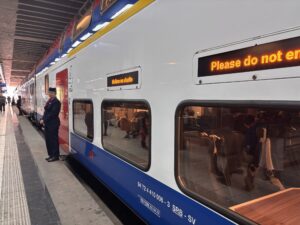
According to Serbian Economist, passenger service on the high-speed rail line between Belgrade and Budapest is scheduled to begin within the next one to two months, Hungarian Prime Minister Péter Magyar announced at a press conference on July 16. Thus, provided the new deadlines are met, the first trains could begin running in August or September. However, Hungarian authorities have not yet specified an exact launch date.
In the coming days, Hungarian Minister of Transport and Investment David Vitézi is scheduled to visit Serbia. During talks with representatives of the Serbian government, the parties plan to coordinate the operation of signaling systems and equipment that ensure traffic safety on the cross-border section.
The launch of passenger trains has already been postponed several times. The main issue has been the certification of the European Train Control System (ETCS) installed on the Hungarian section of the line. Inspections conducted in the spring revealed malfunctions that could have compromised train safety at speeds of up to 160 km/h.
The reconstruction of the railway line has already been completed, and on February 27, 2026, freight traffic began on the Hungarian section. The first cross-border freight train traveled from Budapest through Kelebia and Subotica toward Novi Sad. Passenger service has been postponed until the testing and certification of the signaling systems are completed.
The Belgrade–Budapest high-speed rail line is one of the largest joint infrastructure projects between Serbia, Hungary, and China. Once fully operational, it is expected to significantly reduce travel time between the two capitals and strengthen Serbia’s transport links with Central Europe.
https://t.me/relocationrs/3252
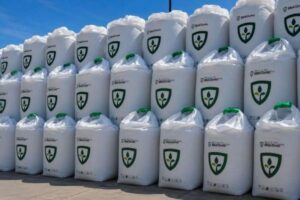
According to Serbian Economist, the Ukrainian company “Kaspit Trade” has tripled its shipments of mineral fertilizers from the Serbian chemical holding company Elixir Group to the Ukrainian market over the course of two years of cooperation. In 2026, the importer plans to ship approximately 90,000 metric tons of products to Ukrainian farmers, the company reported.
The information was released following the fourth partnership visit by Ukrainian agricultural producers to Elixir Group’s facilities in Serbia. Representatives of agricultural companies visited the Elixir Zorka plant in Šabac and the Elixir Prahovo production complex, where they familiarized themselves with fertilizer production, quality control, and logistics infrastructure.
According to the importer, compound NPK and NP fertilizers with added sulfur and micronutrients are in the highest demand in Ukraine. They are used for primary and starter fertilization of grain, oilseed, and industrial crops.
The Elixir Zorka product line includes over 30 compound fertilizer formulations.
The importer cites river logistics as one of the advantages of Serbian products. Fertilizers are loaded onto barges in Serbia and transported down the Danube to the port of Izmail. According to the company’s estimates, the shipment takes about six days. Elixir Group’s production sites have access to port, rail, and road infrastructure.
The growth in shipments of Serbian fertilizers is occurring against the backdrop of the Ukrainian market’s overall increasing dependence on imports. In the first half of 2025, Ukraine imported 1.563 million metric tons of mineral fertilizers, which was 25% higher than the figure for the same period in 2024. Imports of compound NPK fertilizers totaled approximately 379 thousand metric tons.
Elixir Group describes itself as the largest producer of compound mineral fertilizers in Southeast Europe. The company’s production facilities are located in Šabac and Prahovo. The total production capacity for mineral fertilizers is approximately 1 million metric tons per year, with over 70% of the output exported to more than 85 countries.
https://t.me/relocationrs/3238
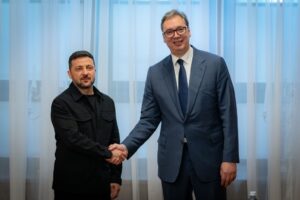
According to “Serbian Economist”, Serbian President Aleksandar Vucic stated that he intends to travel to Kyiv to participate in the “Southeast Europe–Ukraine” summit, scheduled for Wednesday, July 15.
“I am going to Kyiv for the ‘Southeast Europe–Ukraine’ summit,” Vučić told reporters in Paris after attending a military parade marking France’s national holiday.
His statement was reported by the Serbian state news agency Tanjug.
Vucic noted that he had previously participated in four such meetings—in Odesa, Dubrovnik, Athens, and Tirana. At the same time, he warned that the upcoming summit in Kyiv “will not be easy,” given the content of the proposed final declaration.
The Serbian president also announced that he is scheduled to meet with Ukrainian President Volodymyr Zelenskyy during his trip.
In June 2025, Vučić had already visited Ukraine to participate in the previous “Ukraine–Southeast Europe” summit, which took place in Odesa.
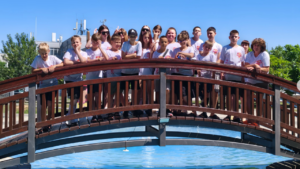
A group of 50 young athletes from the Sumy and Kherson regions of Ukraine has arrived in Serbia. The delegation comprises pupils from the ‘Barsa’ Regional Sports Lyceum and the Novovorontsov Children’s and Youth Sports School, according to the Telegram channel ‘Serbian Economist’.
During their stay in Serbia, the children will take part in training sessions, sports competitions and joint activities with their Serbian peers.
The organisation of the camp was made possible thanks to the support of the Government of Serbia, the Ministry of Sports and the Football Association of Serbia. Similar programmes have been held for several years and are aimed at the rehabilitation and recreation of Ukrainian children affected by the consequences of the war.
In recent months, humanitarian and public cooperation between Serbia and Ukraine has also noticeably intensified, facilitated by the work of the new Ukrainian ambassador in Belgrade.
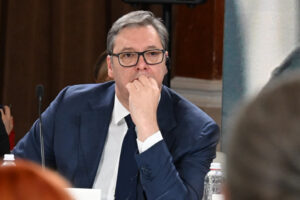
According to The Serbian Economist, Serbian President Aleksandar Vucic stated that the country’s upcoming parliamentary and presidential elections will be held separately.
According to Vučić, parliamentary elections will most likely take place first, followed by presidential elections. He noted that the decision to schedule the elections could be made in August or September, and the actual voting could take place in October or November.
The president explained that he supports holding the elections separately because, as he put it, opposition parties and other participants in the political process had previously pushed for this. He added that this format would give voters more opportunities to make separate decisions regarding the parliamentary and presidential campaigns.
During his address, Vučić also announced that a package of aid measures for citizens is likely to take effect in mid-September. He had previously noted that these measures could include one-time assistance for pensioners and reduced costs for medications. According to him, the government is also considering additional support for adult citizens, though details have not yet been disclosed.
In addition, Vučić announced the launch of the “Ko si bre ti” portal, through which citizens will be able to anonymously report unscrupulous officials and suspected corruption. He stated that he would personally read a portion of the reports every day, and that reports concerning corruption would be forwarded to the prosecutor’s office.
Separately, the president commented on Serbia’s European integration, noting that the country has made no significant progress toward EU membership for nearly five years, despite its economic development. He also said that, in his assessment, neither Serbia nor Ukraine will become members of the European Union in the near future.
Vucic’s statements came amid Serbia’s preparations for a new election cycle and ongoing political tensions in the country. Holding parliamentary and presidential elections separately could change the dynamics of the campaign, as parties and candidates will be forced to conduct two separate political mobilizations.
https://t.me/relocationrs/3191



