
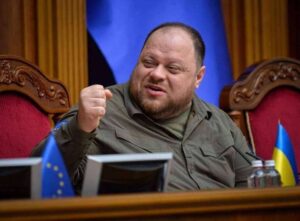
According to Serbian Economist, Ruslan Stefanchuk, Speaker of the Verkhovna Rada of Ukraine, has arrived in Belgrade, where he will participate in the Conference of Speakers of Parliaments of European Union Candidate Countries on July 7.
He was met at Nikola Tesla Airport by Ana Brnabić, Speaker of the National Assembly of Serbia. “Welcome to Serbia, dear friend,” Brnabić wrote, greeting the Ukrainian speaker.
On July 7–8, Belgrade is hosting a conference of speakers of the parliaments of EU candidate countries.
Stefanchuk’s visit is significant for Ukrainian-Serbian relations for several reasons. First, it represents a high-level parliamentary engagement against the backdrop of both countries’ European integration. Ukraine and Serbia are formally moving toward EU membership.
Second, Belgrade has been striving in recent months to adopt a more proactive parliamentary approach in its relations with Kyiv. In November 2025, Ana Brnabić visited Ukraine and met with Stefanchuk in Kyiv. At that time, the parties discussed interparliamentary cooperation, European integration, energy and humanitarian aid, and Brnabić stated that Serbia supports Ukraine’s European path.
For Serbia, the Ukrainian speaker’s visit is an opportunity to show Brussels that Belgrade is engaged in the pan-European parliamentary agenda and maintains channels of dialogue with Kyiv. For Ukraine, it is a chance to strengthen engagement with the Serbian political class not only through the government but also through parliament, expert circles, and the European integration agenda.
The practical substance of the meeting may extend beyond protocol: Ukraine and Serbia may discuss joint projects, the alignment of legislation with the EU, Ukraine’s recovery, humanitarian projects, energy, education, business contacts, and the role of parliaments in supporting bilateral dialogue.
The revival of economic dialogue between the two countries provided an additional backdrop to the visit. In May, a Serbian-Ukrainian business forum was held in Belgrade with the participation of the Ukrainian Chamber of Commerce and Industry and the Serbian Chamber of Commerce and Industry.
https://t.me/relocationrs/3172
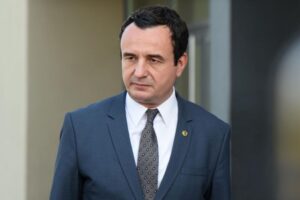
According to “Serbian Economist”, the Vetëvendosje movement led by incumbent Prime Minister Albin Kurti came in first in Kosovo’s early parliamentary elections, but failed to secure an outright majority in the 120-seat parliament.
According to Kosovo’s Central Election Commission, Vetëvendosje received 47.13% of the vote and won 53 seats. At least 61 seats are needed to form a government.
The Democratic Party of Kosovo (PDK) came in second with 19.44% and 22 seats. The Democratic League of Kosovo (LDK) received 16.69% and 18 seats, while the Alliance for the Future of Kosovo (AAK) received 6.74% and 7 seats.
Of the 20 seats reserved for national minorities, the Serbian List won 9 seats. The Democratic Turkish Party of Kosovo won 2 seats, with the remaining minority seats distributed among other political forces.
For Kurti, the result looks like a victory, but not a way out of the political impasse. His party remains the largest political force, but to form a stable government, it will need the support of minority parties or broader agreements. The issue of electing a president remains particularly complex, as the first rounds require the presence of at least 80 deputies.
It was precisely the presidential issue that triggered the current crisis. After the previous elections, the parties were unable to agree on a presidential candidate, parliament was dissolved, and Kosovo held yet another early election. This is already the third parliamentary election in less than a year and a half.
This sends an important signal to the region’s economy. Prolonged political instability in Pristina hinders the work of institutions, complicates access to international funds, and impedes progress toward EU and NATO membership. For Serbia, the key issue remains not only the composition of the new government but also whether Pristina will be ready for substantive dialogue on northern Kosovo, Serbian municipalities, trade, and security.
For Belgrade, Kurti’s victory means the continuation of a hardline political stance in Pristina. It was under his government that relations with Serbia remained tense, and the Kosovar authorities’ actions in the north provoked a sharp reaction from the Serbian side and criticism from some Western partners.
From an economic standpoint, the continuation of the crisis in Kosovo is detrimental to the entire region. Instability reduces predictability for investors, complicates transport and trade links, hinders infrastructure projects, and creates political risk for companies operating between Serbia, North Macedonia, Albania, Montenegro, and the EU.
Kosovo declared independence from Serbia in 2008, but Belgrade does not recognize this status and considers Kosovo and Metohija to be part of its territory. Kosovo has been recognized by the United States and most EU countries, but it is not a member of the UN due to the position of Serbia and its allies, notably Russia and China.
Kosovo’s independence is also not recognized by a number of major countries and EU member states, including Russia, China, India, Brazil, Indonesia, Ukraine, Spain, Greece, Romania, Slovakia, Cyprus, Bosnia and Herzegovina, and South Africa. Of the 27 EU countries, five do not recognize Kosovo: Spain, Greece, Romania, Slovakia, and Cyprus.
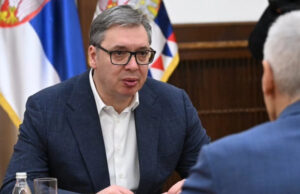
According to “Serbian Economist”, Serbian President Aleksandar Vučić has effectively announced the start of a new election campaign, stating at a rally of the ruling Serbian Progressive Party in Belgrade that he will resign as head of state in a few weeks. Formally, this appears to be a resignation nearly a year before the end of his term, but politically, it is less about the end of the Vučić era and more about an attempt to relaunch it in a new configuration.
Speaking to supporters at the “Serbia—One Family” rally, Vučić stated that this was likely his last address to such a large gathering of citizens in his capacity as president of the republic. He emphasized that for 14 years he had “served Serbia” in various government positions—as deputy prime minister, prime minister, and president—and thanked his supporters for their backing during periods of political crisis.
The key moment of his speech was the announcement of his upcoming resignation. “These are my last days and last weeks as President of the Republic,” Vučić said, rejecting his opponents’ accusations that he intends to cling to power at any cost. At the same time, he immediately noted that he is not leaving politics: according to him, if the leadership of the Serbian Progressive Party deems it necessary, he will assist the ruling party in the upcoming elections.
It is precisely this combination—resignation plus participation in the campaign—that constitutes the main political message of the statement. Vučić is not simply cutting short his presidential term, but is shifting the crisis of legitimacy into the electoral arena. For him, this is a way to regain the initiative after a year and a half of protests that began following the tragedy at the train station in Novi Sad, where the collapse of a canopy became a symbol of the public’s grievances regarding corruption, the quality of public administration, and oversight of infrastructure projects.
The name Vucic has proposed for the list—“United Serbia”—is also no coincidence. It is intended to pit the ruling party not against individual opposition parties, but against the entire protest movement, primarily the student movement. This name incorporates a tactic typical of Vučić: to present the elections not as a competition of platforms, but as a referendum on stability, national unity, and the government’s ability to protect the country from chaos.
At the same time, Vučić clearly seeks to prevent the protest agenda from becoming the sole framework of the campaign. That is why, in his speech, socioeconomic promises took on almost as much importance as political statements. He promised that in two years, the average salary in Serbia would reach 1,400 euros and the average pension would reach 650 euros; he also announced additional support measures for low-income pensioners.
The economic portion of the speech serves several purposes at once. First, it is intended to steer the campaign back onto a track favorable to the government—growth in incomes, investments, infrastructure, and industrial development. Second, it is aimed at the most loyal segments of the electorate, primarily pensioners and workers in public-sector-dependent industries. Third, it allows Vučić to shift from a defensive stance on the issues of corruption and protests to an offensive agenda focused on “future development.”
Separately, Vučić emphasized technological modernization, energy, and defense. He spoke about robot manufacturing, data centers, gas-fired power plants, hydropower, and even future small- and large-scale nuclear power facilities. This segment is aimed at a different audience—those who see Serbia as a regional industrial and technological hub.
However, the president’s early resignation also carries risks for Vučić. If he does indeed resign in the coming weeks, Serbia will enter a period of accelerated institutional procedures. Presidential elections must be held within a limited timeframe, and holding early parliamentary elections will require a separate decision to dissolve parliament. This means that the government is taking on the responsibility of drastically compressing the political calendar and conducting a campaign amid high levels of polarization.
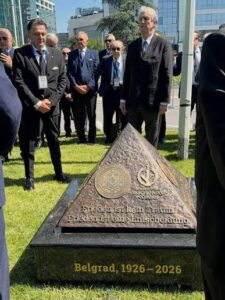
According to Serbian Economist, an international Masonic convention organized by the Regular Grand Lodge of Serbia took place in Belgrade. Representatives of Masonic organizations from five continents arrived in the Serbian capital, and the meeting itself was timed to mark the centennial of the 1926 Belgrade Masonic Peace Congress.
The organizers presented the event as a symbolic gathering dedicated to peace, dialogue, and the memory of an event that was viewed in interwar Europe as an attempt at reconciliation following World War I. Details of this year’s convention program were disclosed only sparingly in public announcements; however, the Regular Grand Lodge of Serbia noted that an international congress, an academy, commemorative events, and the annual assembly were planned in Belgrade.
The history of this issue dates back to the 1920s. After World War I, Europe sought to establish a new system of relations among former adversaries. At the political level, the 1925 Locarno Agreements became a symbol of this process, while in Masonic circles, the 1926 Belgrade Peace Congress played a similar role.
At that time, representatives of 20 national Masonic lodges from 15 European countries, as well as two overseas lodges, gathered in Belgrade. In historical publications, this event is sometimes referred to as the “Masonic Locarno,” as it was linked to the idea of reconciliation and the restoration of ties between European societies after the war.
One of the symbolic moments of the 1926 congress was the public reconciliation of French and German Freemasons following World War I.
Freemasonry, or Free Masonry, is an international fraternal movement that emerged in its modern form in Europe during the Early Modern period. Its origins are linked to the professional guilds of medieval stonemasons and builders, while its modern organizational form is associated with the establishment of the first Grand Lodge in London in 1717. Over time, Freemasonry evolved not into a professional craft guild but into a network of societies based on rituals, symbolism, and the ideals of personal improvement, brotherhood, charity, and moral education.
According to estimates by major Masonic organizations, there are approximately 6 million Masons worldwide. One of the oldest and most influential organizations—the United Grand Lodge of England—unites about 170,000 members and more than 7,000 lodges in England, Wales, and overseas districts.
However, there is no single global “central authority” in Freemasonry: various Grand Lodges may or may not recognize one another, depending on their own rules and traditions.
There are several Masonic organizations operating in Serbia, but the Regular Grand Lodge of Serbia positions itself as the sole sovereign, regular, and internationally recognized Grand Lodge within the country.
https://t.me/relocationrs/3105

According to “Serbian Economist,” the Financial Action Task Force (FATF) has added Bosnia and Herzegovina to the list of jurisdictions under enhanced monitoring—the so-called “gray list.”
At the same time, Iraq was also added to the “gray list.”
According to the FATF, countries on the “gray list” have strategic deficiencies in their systems for combating money laundering, terrorist financing, and the financing of the proliferation of weapons of mass destruction, but are committed to addressing these issues within agreed-upon timeframes.
FATF President Elisu de Anda Madrazo stated that Bosnia and Herzegovina must strengthen the protection of its financial system against exploitation by criminals and terrorists, as well as ensure more effective oversight of the banking sector.
This is a significant signal for the region. Bosnia and Herzegovina remains part of the Western Balkan economic space, closely linked to Serbia, Croatia, Montenegro, and EU countries through banking, trade, remittances from the diaspora, transportation, construction, and small businesses.
Being placed on the “gray list” does not imply sanctions or a ban on transactions, but it typically leads to stricter compliance requirements on the part of banks and financial institutions. International payments, opening accounts, servicing companies, transfers, and transactions with counterparties from such a jurisdiction may be subject to additional checks.
This is important for Serbia for two reasons. First, Bosnia and Herzegovina is a neighboring market and a key destination for regional trade. Second, Serbian banks, companies, and exporters working with partners in Bosnia and Herzegovina may face more detailed inquiries regarding the origin of funds, ownership structure, beneficial owners, and the purpose of payments.
From a practical standpoint, businesses working with Bosnia and Herzegovina should prepare transaction documents in advance, verify the authenticity of goods and services, and properly draft contracts and payment justifications. This applies particularly to financial services, trade, real estate, logistics, import-export, and companies with complex ownership structures.
For reference: as of June 19, 2026, the current FATF “gray list” includes Angola, Bolivia, Bosnia and Herzegovina, Bulgaria, Cameroon, Côte d’Ivoire, the Democratic Republic of the Congo, Haiti, Iraq, Kenya, Kuwait, Laos, Lebanon, Monaco, Nepal, Papua New Guinea, South Sudan, Syria, Venezuela, Vietnam, the British Virgin Islands, and Yemen.
The FATF blacklist—that is, the list of high-risk jurisdictions for which the FATF calls for enhanced measures or countermeasures—includes North Korea, Iran, and Myanmar.
Bosnia and Herzegovina, COMPLIANCE, FATF, financial monitoring, SERBIA
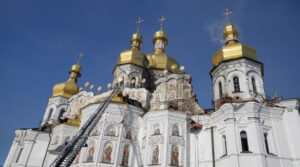
According to Serbian Economist, the Ukrainian Embassy in Serbia has announced an open-ended fundraiser for the restoration of the Kyiv-Pechersk Lavra, which was damaged during the war.
The embassy has called on the Ukrainian community, residents of Serbia, businesses, and all those willing to help to support the restoration of one of Christianity’s most important holy sites.
The Kyiv-Pechersk Lavra is one of Ukraine’s most important religious and historical symbols. It is listed as a UNESCO World Heritage Site and is significant not only for Ukraine but also for the entire Orthodox and European cultural tradition.
Therefore, this fundraising effort can serve as a gesture of solidarity not only from the Ukrainian diaspora but also from Serbian society.
Donations are being collected in the account of the “Helping Is Simple” Charitable Foundation.
Bank details published by the embassy:
Recipient: Charitable Foundation “Helping Is Simple!”
Recipient code: 37806835
Account number: UA493052990000026003050007570
Bank: JSC CB “PrivatBank”
Links to the embassy’s announcements:
https://serbia.mfa.gov.ua/news/bezstrokovij-zbir-na-vidnovlennya-kiyevo-pecherskoyi-lavri
https://t.me/relocationrs/3046



