

According to Serbian Economist, Denmark’s Penning has acquired the wealth management business from the Lithuanian crypto investment platform Veli, which was founded by a Serbian team. The deal specifically concerns the wealth management division, not the entire Veli company.
Veli’s European clients are scheduled to be migrated to the new Penning Wealth platform by the end of June 2026. Penning positions the deal as a step toward creating a MiCA-compliant platform for long-term investors in digital assets.
Veli is a crypto investment platform for long-term investors and financial advisors. The company was founded by a Serbian team with experience in institutional business, crypto investments, and portfolio management.
Penning is a Danish crypto service provider and one of the first players in Denmark to obtain a license under MiCA regulations. Following the deal, Veli will operate as a separate wealth management division of Penning.
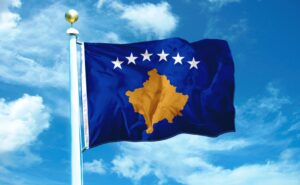
According to The Serbian Economist, Kosovo will not introduce compulsory military service and instead intends to develop a total defense model, Acting Prime Minister Albin Kurti stated.
According to him, this approach better suits current security conditions than traditional compulsory service. Kurti cited the example of Finland, where defense is viewed not only as the army’s responsibility but as a system of participation by the entire society, including government institutions, business, civil protection, infrastructure, and reserve mechanisms.
The idea of compulsory service in Kosovo has been discussed for several years. Kurti had previously advocated for its introduction, but now the government is effectively changing its approach: instead of conscription for young people, the focus is on a broader concept. This model involves preparing society and the state for crises, rather than merely increasing the size of the army.
The comprehensive defense plan was approved by the Kosovo government back in September 2024. It is intended to integrate military readiness, civil defense, critical infrastructure resilience, information security, mobilization capabilities, and interagency coordination. Kurti did not specify a timeline for launching the new model.
The decision comes amid Kosovo’s ongoing increase in defense spending. Under Kurti, Pristina has increased funding for security forces, purchased Turkish Bayraktar drones, and received U.S. approval to acquire Javelin anti-tank systems. Authorities have also announced plans to establish their own ammunition production facility and a drone development laboratory. Reuters previously reported that Kosovo plans to allocate approximately EUR1 billion to defense over four years and increase spending by 60%.
However, this model has its limitations. The Finnish example cited by Kurtis was built up over decades and combines universal defense with mandatory service for men and a well-developed reserve system. Therefore, simply copying this model is not enough for Kosovo: the country will have to create its own system of training, financing, civil defense, and interagency coordination.
For the region, this decision will be viewed through the prism of relations with Serbia. Belgrade does not recognize Kosovo’s independence, declared in 2008, and considers Kosovo part of its territory. Pristina, in turn, views the strengthening of security forces as a response to threats from Serbia and instability in northern Kosovo, where a significant Serbian community resides.
The situation is further stabilized by the presence of KFOR forces under NATO command. There are more than 4,000 peacekeepers in Kosovo; they play a particularly important role in the north, where tensions and clashes regularly arise between local Serbs, the Kosovo authorities, and security forces.
Kosovo has been recognized by more than 100 countries, including the United States and most EU member states, however, its independence is not recognized by Serbia, Russia, China, Ukraine, and several EU member states, including Spain, Greece, Romania, Slovakia, and Cyprus. Because of this, Kosovo is not a member of the UN or NATO, although it is striving for Euro-Atlantic integration.
https://t.me/relocationrs/2908
According to Serbian Economist, the U.S. State Department presented a report to Congress on Washington’s policy toward the Western Balkans, in which it effectively announced a shift from the former model of international intervention and “nation-building” to a more pragmatic policy of partnership, stability, energy, security, and economic cooperation.
The document is titled “United States Policy to Promote Regional Stability and Prosperity in the Western Balkans”.
It states that the era of U.S.-led “nation-building” is over, and Washington’s new policy in the region will be built not around “rescue or reconstruction,” but around stability and mutually beneficial partnerships.
For Serbia, this is an important signal: Washington views the Western Balkans as a region of direct importance to U.S. security and economic interests. The report notes that the U.S. intends to cooperate with Serbia in a way that advances American interests, and plans to launch an official strategic dialogue with Belgrade in 2026.
Stability is cited as one of the top priorities. The State Department notes that unresolved disputes and ongoing political disagreements continue to undermine regional stability. In the case of Serbia and Kosovo, Washington states that it will continue to support the normalization of relations with the aim of reaching a negotiated and sustainable agreement acceptable to both sides.
Regarding Bosnia and Herzegovina, the U.S. reaffirms its commitment to the Dayton Peace Agreement, the country’s sovereignty, and its territorial integrity. At the same time, Washington states that in 2025, American diplomacy helped resolve the most serious crisis in BiH since the 1992–1995 war, preserving the constitutional order and legal integrity of the state.
Special emphasis is placed on the energy sector. The State Department describes the region’s dependence on Russian energy resources as a strategic vulnerability and proposes diversification through U.S. LNG, nuclear technologies—including small modular reactors—and renewable energy. For Serbia, this is directly linked to issues regarding the NIS, gas infrastructure, the future nuclear program, and the modernization of the electricity sector.
The report also addresses competition with Russia and China. Washington believes that Moscow and Beijing are exploiting instability, corruption, and weak governance in the region to expand their influence. According to the U.S. assessment, Russia relies on energy leverage and ethno-political tensions, while China strengthens its position through loans, trade, infrastructure projects, and ties with elites.
The economic component of the new strategy is particularly important for Serbia.
The region is described as an area with a favorable geographic location, transport corridors, natural resources, a growing technology sector, and a skilled workforce. The U.S. intends to reduce regulatory barriers, improve contract enforcement, develop procurement procedures, and promote projects that benefit American companies and the region’s economies.
For Serbia, this strategy opens up opportunities but also creates pressure. The opportunities relate to potential strategic dialogue with the U.S., investments in energy, infrastructure, technology, and defense cooperation. The pressure stems from the expectation that Belgrade will reduce its dependence on Russian energy resources, take a more cautious approach to Chinese capital, and play a more active role in ensuring regional stability.
Thus, the new State Department report reflects a shift in U.S. policy: the Western Balkans remain important to the U.S., but now primarily as a region of strategic corridors, energy, markets, security, and great power competition. For Serbia, this could be an opportunity to strengthen its dialogue with Washington, but only on the condition that economic cooperation is not constantly blocked by unresolved political issues.
https://t.me/relocationrs/2898
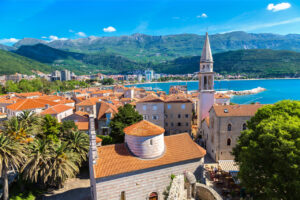
According to Serbian Economist, foreign demand for real estate in Montenegro is becoming more diversified: citizens of Serbia and the U.S. are stepping up their activity, while the share of Russian buyers is gradually decreasing, as evidenced by market data and surveys of local experts.
Just a few years ago, Russian buyers were one of the key groups of foreign investors in Montenegrin real estate, especially along the coast—in Budva, Tivat, Kotor, Herceg Novi, and Bar. However, after 2022, their activity began to decline due to sanctions, issues with bank transfers, capital movement restrictions, uncertainty regarding residency status, and changes in the geopolitical landscape.
Against this backdrop, the importance of buyers from Serbia is growing. For Serbian citizens, Montenegro remains a familiar and accessible market: there is no language barrier, strong family and business ties, and the coast is traditionally viewed as a destination for vacationing, purchasing a second home, and renting. Serbian buyers are particularly active in the segment of apartments for seasonal living and properties that can be rented out to tourists.
American demand has also become more noticeable. Buyers from the U.S. are attracted by relatively lower prices compared to EU and Mediterranean markets, the possibility of obtaining a residence permit through real estate, the development of tourism infrastructure, and the growing recognition of Montenegro as a European destination for relocation, remote work, and investment.
According to market surveys, the most active foreign real estate buyers in Montenegro currently include citizens of Serbia, Turkey, the U.S., Russia, and Germany. However, activity among Russian and German buyers has declined significantly.
Ukrainian buyers also maintain a presence in the Montenegrin market, although their role is not dominant. For Ukrainian citizens, Montenegro remains a logical destination for relocation, purchasing a home for residence, seasonal vacations, and investments. According to market participants, Ukrainians are more likely to consider real estate in coastal cities and in Podgorica, focusing on both personal residence and the possibility of renting out the property. Market estimates indicate that in 2024–25, Ukrainian citizens accounted for approximately 10% of foreign real estate purchases in Montenegro.
Real estate prices in Montenegro continue to depend heavily on location. On average across the market, new residential real estate in 2026 is estimated at approximately 2,200 euros per square meter, but prices are significantly higher along the coast. In popular coastal cities, standard apartments typically sell in the range of €1,700–3,500 per square meter, while in more liquid and tourist-oriented locations, prices range from €3,000 to €5,000 per square meter.
In Tivat, especially near Porto Montenegro, apartment prices often range from €3,500 to €5,500 per square meter, and premium properties can cost even more. In Budva, new-build properties are typically priced at around 3,000–4,200 euros per square meter, while completed properties are priced at around 2,800–3,800 euros per square meter. In Kotor, prices for high-quality properties can approach €3,500–4,000 per square meter, and may be higher in certain coastal and historic locations.
Inland areas and parts of Podgorica remain more affordable than the coast. In the capital, the average price in recent years has approached 2,000 euros per square meter, while in less touristy cities and northern regions, properties can be found at significantly lower prices.
For local residents, the growth in foreign demand has a double-edged effect. On the one hand, it supports construction, employment, services, rentals, and tax revenues. On the other hand, it drives up housing prices, especially in coastal cities, where the purchasing power of the local population is significantly lower than that of foreign investors.
https://t.me/relocationrs/2905
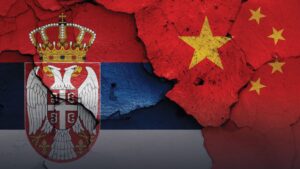
According to Serbian Economist, Serbia and a number of leading Chinese companies have signed new investment agreements that are expected to bring the country over €940 million in investments and 1,650 new jobs, Chinese media reported.
The documents were signed in the Chinese city of Jiaxing in the presence of Serbian President Aleksandar Vučić. The agreements cover auto parts, high-tech manufacturing, components for electric vehicles, tires, lighting systems, and precision plastic parts.
The largest block of agreements involves the Mint Group. The company, a global player in the production of exterior automotive parts, structural components, and aluminum battery cases for electric vehicles, is implementing two projects in Serbia. The first involves an investment of €135 million and the creation of 600 jobs in Loznica, while the second involves an investment of €91 million and 220 jobs in Šabac.
An agreement has been signed with the Chinese company SHAK for a €33.5 million project in Novi Sad, which is expected to create 50 new jobs. The company specializes in the production of high-quality automotive chassis and structural components.
An investment agreement will also be signed with BMTS Technology, a manufacturer of turbochargers and electrical auxiliary systems for passenger and commercial vehicles. The project focuses on automation and is estimated to cost €13.3 million.
Another project involves Xingyu Automotive, one of China’s leading manufacturers of automotive lighting systems, including LED headlights, taillights, and lighting modules. The company plans to invest €77 million in Niš and create 100 jobs.
Separately, a new €566 million investment by Linglong Tire in Zrenjanin was announced, which is expected to create 400 new jobs. Linglong has been operating in Serbia since 2019; it is China’s largest tire manufacturer and ranks among the world’s top ten manufacturers of passenger, truck, and specialty tires.
A planned investment by Yusei in Niš was also announced, amounting to €27 million and creating 280 jobs. Yusei is a Chinese manufacturer of high-precision plastic automotive parts, injection molds, and chrome-plated components.
A memorandum of understanding was also signed at the ceremony between Mint Holding Group and China Construction Fourth Engineering Division Corp. Ltd. Southeast Branch. The document is intended to support the implementation of Mint’s investments in Serbia.
For Serbia, these agreements are important not only for creating new jobs but also for deepening China’s presence in the country’s automotive and technology industries. The new projects involve electric vehicles, battery casings, lighting, tires, turbo systems, and plastic components—that is, the segments where Serbia is seeking to integrate into European and global automotive supply chains.
https://t.me/relocationrs/2899

The 19th International Documentary Film Festival Beldocs is taking place in the Serbian capital Belgrade — one of the largest documentary film festivals in Europe and the Balkans. This year’s program features more than 100 documentary films, short films, VR projects and interactive formats in 15 program sections.
This year, Beldocs opened with the film Yugo Goes To America — a nostalgic road documentary about friendship and the iconic Yugoslav car Yugo.
A special place in the program is occupied by films from Ukraine and films related to war, emigration, identity and historical memory. Among them is The Last Prometheus of Donbas by Ukrainian director Anton Shtuka. The film tells about the city of Kurakhove and the workers of the power plant who are trying to keep it operating after the start of the war and under the constant threat of shelling. The Serbian premiere of the film is scheduled for May 23 at the Cultural Center of Belgrade, with a meeting with the director planned after the screening.
According to the Telegram channel “Serbian Economist,” the international competition program features the film Imago by director Déni Oumar Pitsaev. The film was shot in France and tells the story of the protagonist’s return to the Pankisi Gorge near the Chechen border, where a personal story is combined with the themes of memory, family, emigration and the search for one’s own place.
Another film in the international competition is Song Without a Home by director Rati Tsiteladze, a co-production of Georgia and the United States. The film tells the story of Adelina, a young trans woman from a Georgian village who, after a long period of isolation, leaves for Vienna in search of freedom and her own identity.
The program also includes Hell’s Army by director Richard Rowley, created with the participation of Ukraine, Syria, Lithuania, the United States and the Central African Republic. It is a documentary film about the activities of the Wagner PMC, Yevgeny Prigozhin and the international network of structures connected with mercenary operations.
The Ukrainian theme is also represented by the film Militantropos by directors Yelizaveta Smith, Alina Gorlova and Simon Mozgovyi. According to the Beldocs description, the film captures the state of a person in the reality of war and shows how war changes people’s everyday lives. The Serbian premiere of the film will take place on May 25 at Art Cinema Kolarac.
A separate place in the program is occupied by Barbara Forever by director Brydie O’Connor — a documentary portrait of American filmmaker Barbara Hammer, one of the pioneers of experimental and independent cinema. The film is based on archival materials, audio interviews and the legacy of the author, who made more than 80 films.
For Belgrade, Beldocs is important not only as a cultural event, but also as part of the city’s creative economy. The festival attracts international directors, producers, film critics, distributors and viewers, strengthening the role of the Serbian capital as a regional center of documentary cinema.
Beldocs has been held in Belgrade since 2008 and over this time has become one of the key platforms for documentary cinema in Serbia and the Western Balkans.
The Beldocs program traditionally includes Serbian, international, short film and youth competition sections, as well as special screenings, retrospectives and thematic selections.
In 2026, the 19th edition of the festival is being held. According to the organizers and specialized film publications, the program includes more than 100 documentary films, short films, VR projects and interactive formats, among which 17 world, 4 European, 41 regional and 43 Serbian premieres have been announced. Documentary works from more than 20 countries are participating in the festival.



