
Ukraine and Serbia have agreed to resume work on a free trade agreement, which could become one of the most important economic steps in relations between the two countries in recent years.
In Belgrade, Ukraine’s Deputy Prime Minister for European and Euro-Atlantic Integration and Trade Representative of Ukraine Taras Kachka, and Serbian Minister of Internal and Foreign Trade Jagoda Lazarević signed a joint statement on the resumption of negotiations on a free trade agreement.
For Serbia, this document is of particular importance, since Ukraine remains the only European country with which Belgrade still has not signed a free trade agreement.
According to Kachka, work on the agreement is an important stage in the development of Ukrainian-Serbian relations and should contribute to deepening trade, industrial cooperation and the creation of new regional production chains.
The possibility of applying diagonal cumulation of origin will have separate importance. This will allow producers in Ukraine and Serbia to use raw materials and components from countries with which free trade agreements have been concluded and which are participants in the Pan-Euro-Mediterranean Convention, without losing the preferential origin of goods. For Serbian industry, this is especially important, since Ukrainian raw materials and semi-finished products have already played a significant role in a number of sectors.
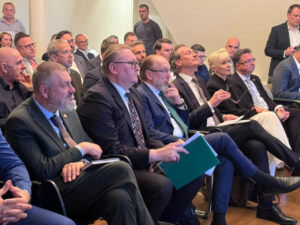
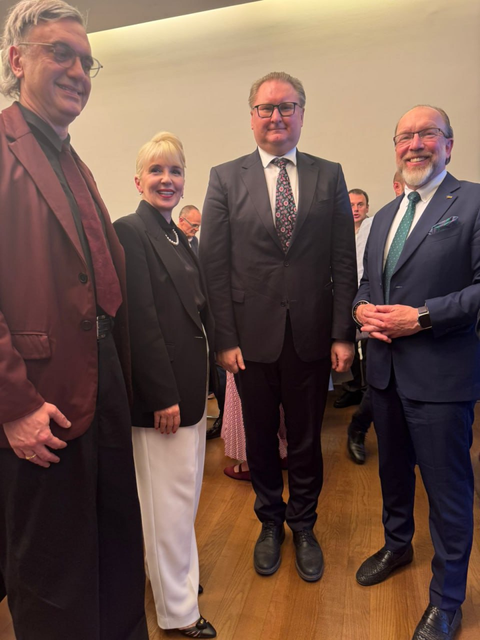
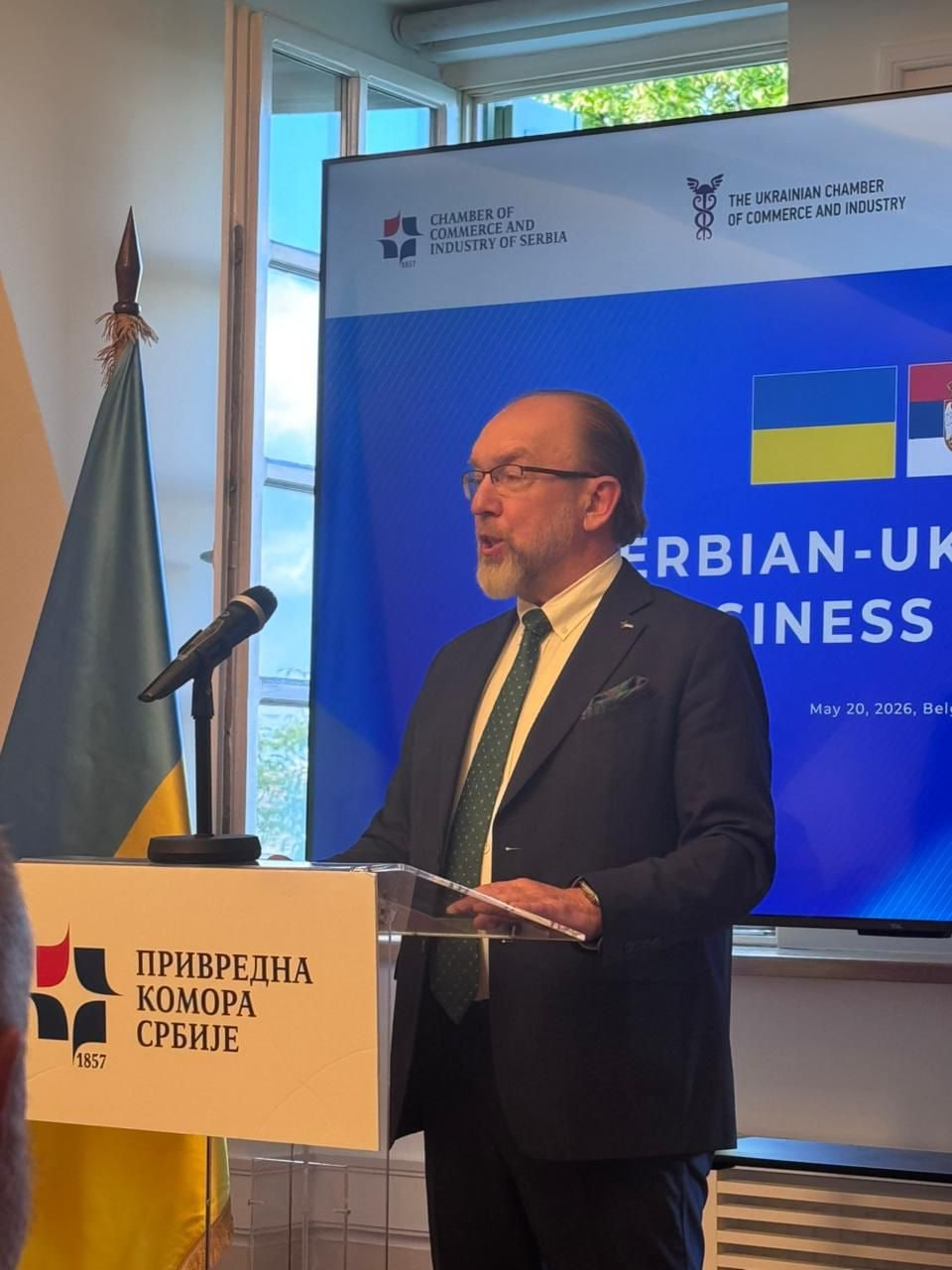
The economic part of the Ukrainian delegation’s visit to Belgrade was accompanied by the Serbian-Ukrainian Business Forum, organized by the chambers of commerce and industry of the two countries. According to the Ukrainian Chamber of Commerce and Industry, representatives of 30 companies took part in the event, and the forum took place against the backdrop of the intensification of political and economic dialogue between Kyiv and Belgrade.
The Ukrainian delegation included President of the Ukrainian Chamber of Commerce and Industry Gennadiy Chyzhykov. The forum was opened by Deputy Prime Minister of Ukraine Taras Kachka, Serbian Minister of Internal and Foreign Trade Jagoda Lazarević, Serbian Ambassador to Ukraine Andon Sapundži, Ukrainian Ambassador to Serbia Oleksandr Lytvynenko, President of the Serbian Chamber of Commerce and Industry Marko Čadež, and President of the Ukrainian Chamber of Commerce and Industry Gennadiy Chyzhykov.
“For us, this forum is a practical working platform. It brings together representatives of the government, diplomatic missions, chambers and companies in one hall. It is precisely this format that helps business move from general interests to specific contacts, contracts and projects,” Chyzhykov said.
He thanked the Serbian Chamber of Commerce and Industry and personally Marko Čadež for preparing the meeting, as well as the ambassadors of the two countries for supporting bilateral economic dialogue.
“Your work is important because economic cooperation requires political trust, regular communication and institutional support,” the president of the Ukrainian Chamber of Commerce and Industry noted, addressing the diplomats.
According to Chyzhykov, the business community highly appreciates the fact that bilateral work is advancing at the government level.
“For business, predictability, clear rules and better access to the market are important. When state institutions and business organizations move in the same direction, companies receive a much stronger signal to invest time, resources and trust in bilateral cooperation. Serbia is a strategic partner for us in the Balkans,” he emphasized.
Chyzhykov also noted that Ukraine is interested in pragmatic cooperation with Serbia based on mutual respect, economic logic, reliable partnership and practical results.
“There is a range of groups of goods that is underestimated in the context of cooperation. This visit of our delegation and the forum became an excellent platform for bringing the Ukrainian and Serbian sides closer to a new stage of our relations. We are keeping the agricultural sector, the food sector and the energy sector in focus,” the president of the Ukrainian Chamber of Commerce and Industry added.
According to BGNES, in the first quarter of 2026, trade between Serbia and Ukraine amounted to $152.8 million, while Serbia recorded a positive balance of $36.8 million, and export coverage of imports reached 163.4%.
At the end of 2025, trade turnover between the two countries amounted to $442.2 million. Serbian exports to Ukraine reached $202.9 million, while imports from Ukraine amounted to $239.3 million. The main goods of Serbian exports are electricity, mineral and chemical fertilizers, tires and other industrial products, while semi-finished rolled products, iron ore and frozen raspberries are named among the goods imported from Ukraine.
President of the Serbian Chamber of Commerce and Industry Marko Čadež earlier noted in an interview with the Interfax-Ukraine agency that the chambers of the two countries have “excellent bilateral relations,” secured by a memorandum of cooperation signed three years ago within the framework of a business forum in Belgrade. According to him, the Serbian Chamber of Commerce and Industry and the Ukrainian Chamber of Commerce and Industry already have experience in organizing business forums, B2B negotiations, online business missions during the pandemic and joint statements on complex topics.
Čadež also emphasized that he and Chyzhykov are connected by years of joint work in Eurochambres and the World Chambers Federation, mutual understanding, common views on problems and solutions, as well as on the European future of the economies of the two countries.
“I consider him not only a colleague, but also a great friend, with sincere respect for everything that the Ukrainian Chamber and he personally are doing in order, even under impossible conditions, to help Ukrainian entrepreneurs in the country and connect them with international partners,” the president of the Serbian Chamber of Commerce and Industry said in an interview with the agency.
According to Čadež, the parties will also work on creating a Serbian-Ukrainian Business Council. He expressed confidence that in the future a business forum could also be organized in Ukraine with the support of the foreign ministers of the two countries, Marko Đurić and Andrii Sybiha.
The parties name IT, construction, agriculture and the food industry, energy, logistics and transport as practical areas of cooperation between Ukrainian and Serbian business. Earlier, the Ukrainian Chamber of Commerce and Industry reported that the program of the business mission to Serbia included B2B meetings with Serbian companies, the establishment of new business contacts, visits to enterprises and discussion of potential joint projects.
The Serbian side also sees opportunities for cooperation in Ukraine’s reconstruction projects. This concerns construction materials, energy equipment, agricultural machinery, irrigation systems, seed material, technologies for increasing yields, as well as supplies of products for the energy sector.
For Ukraine, Serbia is important not only as a trading partner, but also as a potential logistics and production hub for access to the markets of the Western Balkans, the EU, Asia and Africa. Čadež noted that Serbia, being located in the center of Southeastern Europe, can use its logistical links with the EU, the East and the South for the development of joint production and the export of Ukrainian and Serbian companies to third markets.
Danube logistics has separate importance. Using the route from the Ukrainian ports of Izmail and Reni toward Serbian ports and intermodal terminals, goods from Ukraine can more efficiently reach Corridor X, the markets of Central Europe and the Adriatic region.
Thus, the visit of the Ukrainian delegation to Belgrade, the signing of the statement on the resumption of negotiations on a free trade agreement, and the holding of the Serbian-Ukrainian Business Forum move the bilateral economic agenda from the level of intentions into the practical plane. Against the backdrop of recovering trade, the active role of the chambers of commerce and industry, and the discussion of the Serbian-Ukrainian Business Council, the parties are forming a new infrastructure of cooperation that can strengthen the industrial, logistical and investment link between Ukraine and Serbia.
Interfax-Ukraine is the official media partner for the organisation of the Serbian-Ukrainian Business Forum in Belgrade.
According to Serbian Economist, North Macedonia plans to build a high-speed railway from the border with Serbia to the border with Greece by 2031, which should integrate the country into the new Athens–Thessaloniki–Skopje–Belgrade–Budapest–Vienna transport corridor. The project is of direct importance to Serbia, as its effectiveness depends on the modernization of the Serbian sections between Belgrade and Niš and the future Niš–Skopje route.
North Macedonia’s Deputy Prime Minister and Minister of Transport, Aleksandar Nikolovski, stated in an interview with MIA that Skopje plans to build a line “from border to border,” that is, from the border with Serbia to the border with Greece.
This involves the development of Railway Corridor 10, which is intended to connect Greek ports and North Macedonia with Serbia, Hungary, Austria, and onward to Central Europe. Nikoloski stated that the goal of the project is to build a high-speed railway from Athens through Thessaloniki and Skopje northward to Belgrade, Budapest, and Vienna, which will “completely transform the structure of the economy and business” in the region.
According to the North Macedonian Ministry of Transport, the project is set to become one of the largest infrastructure projects in Southeast Europe. Nikoloski previously stated that passenger trains on the future line should travel at speeds of up to 250 km/h, and freight trains at up to 140 km/h, with 750-meter-long freight trains compliant with European standards being a key feature.
The cost of the Macedonian section is estimated at approximately EUR2 billion.
The project is currently in the preparatory stage. According to Nikoloski, the most suitable route has been selected from several options, and planning, geotechnical studies, and an environmental impact assessment are currently underway. The new route is expected to be approximately 35 km shorter than the existing one, which is particularly important for freight transit between Greek ports and Central Europe.
The Serbian component is key to the entire scheme. If North Macedonia connects its borders with Greece and Serbia but the Serbian section is not modernized, the project’s impact will be limited.
Therefore, Belgrade–Niš–Skopje is becoming the central missing link in the vertical transport corridor from the Aegean Sea to Central Europe.
Serbia is already modernizing the Belgrade–Niš railway. The EUR 2.2 billion financial package from the EU, EIB, and EBRD provides for the upgrade of the line to allow trains to travel at speeds of up to 200 km/h. The package includes an EU grant of up to EUR 598 million, an EIB loan of EUR 1.1 billion, and an EBRD loan of EUR 550 million.
In the northern part of the route, the Belgrade–Budapest section is already under development. The Serbian section of the Belgrade–Novi Sad line was opened earlier, and the further connection to Hungary is set to become part of the broader Budapest–Belgrade–Skopje–Athens corridor. However, the launch of service along the entire line to Budapest depends on the readiness of the Hungarian section and technical certification.
For Serbia, the new Macedonian project opens up an important economic prospect. If the entire Athens/Piraeus–Thessaloniki–Skopje–Niš–Belgrade–Budapest–Vienna corridor is modernized, Serbia could strengthen its role as a transit and logistics hub between Europe’s southern ports and Central European markets.
https://t.me/relocationrs/2858
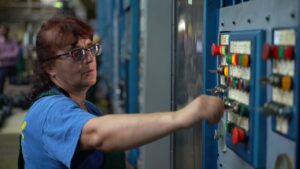
According to Serbian Economist, the Serbian company Trayal from Krusevac plans to open a production facility in the municipality of Rudo in the Republic of Srpska (Bosnia and Herzegovina), where rocket fuel production will be located, the Rudo municipal administration reported following an informational meeting between company representatives and local residents.
According to the Rudo municipality, Trayal representatives held a meeting on May 19, during which they presented the terms of future operations and plans to launch the company’s division in this municipality. Rudo authorities had previously invited interested citizens to attend a meeting dedicated to the launch of production and new jobs.
According to the local administration, prospective employees will first have to undergo a detailed medical examination, after which they will receive paid training in Kruševac or Belgrade.
Company representatives emphasized that the work will require a high level of responsibility and concentration, as the facility will handle flammable and sensitive materials.
Production is to be located on the site of the former Yugoslav People’s Army barracks in Rudo. According to BiznisInfo, Trayal has been collaborating with the Rudo community for several years and uses part of the former barracks, where eight people are currently employed.
For Rudo, the project is significant primarily as a source of new jobs and industrial activity in a small community in eastern Bosnia and Herzegovina. For Trayal, this means expanding its manufacturing presence beyond Serbia and strengthening the company’s regional role in the specialty chemical and defense industries.
Trayal korporacija a.d. is a company based in Krusevac that manufactures rubber, chemical, and protective products. In official documents from the State Audit Institution of Serbia, the company is listed as a manufacturer of rubber and chemical products.
https://t.me/relocationrs/2855
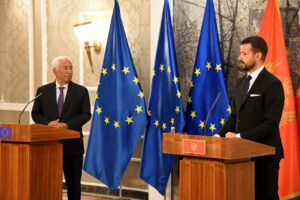
According to Serbian Economist, the event will take place at Porto Montenegro, and city authorities are already preparing temporary traffic restrictions, changes to access procedures, and enhanced security measures.
Montenegrin President Jakov Milatović and European Council President António Costa have sent joint invitations to the leaders of EU countries and Western Balkan states. The summit is set to bring together European leaders at a time when enlargement policy is once again high on the EU’s agenda.
The summit is expected to be attended by European Union member states and six Western Balkan countries: Albania, Bosnia and Herzegovina, Kosovo, Montenegro, North Macedonia, and Serbia. These six economies are traditionally part of the EU-Western Balkans format, which is used to discuss the region’s European integration, reforms, security, infrastructure, energy, and economic convergence with the EU.
Earlier, local authorities reported the arrival of over 30 European delegations, though the final number may be higher when accounting for representatives of EU institutions, EU member states, countries in the region, and accompanying teams.
For Montenegro, hosting the summit is of particular significance. Milatović called it a historic moment, as the country is hosting such a major meeting between the European Union and the Western Balkans for the first time.
Tivat will operate under special arrangements in connection with the forum. On June 4–5, the city expects temporary traffic restrictions, heightened security measures, and changes to access in the Porto Montenegro area, where the summit will take place. Short-term road closures are possible, primarily on the route from Tivat Airport to the city center, as well as special traffic arrangements on Arsenalska and Istarska Streets.
Some parking lots will be temporarily closed, and Tivat Airport will adjust its operations to accommodate the international forum. Authorities are also considering changes to school schedules on June 4–5 and are preparing a cultural program for residents and visitors on the city waterfront on June 4.
The main political theme of the summit is the European perspective for the Western Balkans. Against the backdrop of the war in Ukraine, intensifying geopolitical competition, and the EU’s desire to accelerate expansion, the region has once again found itself in the spotlight in Brussels. Montenegro and Albania are considered the most advanced candidates for EU accession, while Serbia, Bosnia and Herzegovina, Kosovo, and North Macedonia face more complex political and institutional dynamics.
For the region’s economy, the summit is important not only as a political meeting. The focus is expected to be on infrastructure connectivity, access to European funds, energy security, a common regional market, transport corridors, and investments.
https://t.me/relocationrs/2850

Serbia hopes that Ukraine will confirm its participation in the specialized exhibition Expo 2027 Belgrade following the visit of a Ukrainian government-business delegation to Serbia, said Marko Čadež, President of the Serbian Chamber of Commerce and Industry.
“The invitation is open, and we respect the motives of each individual country, but we sincerely hope that following the visit of the Ukrainian government-business delegation to Serbia, Ukraine will become the next, 138th country to confirm its participation in Expo 2027 Belgrade,” he said in an interview with Interfax-Ukraine.
According to Chadezh, participation in the exhibition would be beneficial for the Ukrainian economy, as it opens opportunities to showcase the potential of Ukrainian companies and technological capabilities, strengthen bilateral government and business relations, and foster contacts with international partners.
“EXPO 2027 will be not only an exhibition but also a global platform for bringing together countries, companies, investors, and new ideas for development. Therefore, I believe that Ukraine’s presence would be important, especially in the context of the country’s recovery, attracting investment, and establishing new partnerships with the international business community,” emphasized the president of the Serbian Chamber of Commerce and Industry.
Serbia has the potential to become a key logistics and industrial hub between Ukraine, the markets of the Western Balkans, and the European Union, said Marko Čadež, President of the Serbian Chamber of Commerce and Industry.
“By using the Danube route from the ports of Izmail and Reni toward Serbian ports and intermodal terminals, goods from Ukraine can be efficiently redirected to Corridor X and the markets of Central Europe and the Adriatic region,” he said in an interview with the agency “Interfax-Ukraine.”
According to Čadež, the development of intermodal logistics and free zones gives Serbia the opportunity to be not only a transit point but also a place where new value can be added to Ukrainian raw materials and semi-finished products before they enter regional and European markets.
“Serbia positions itself as an important geo-economic center of the region, at the intersection of Eastern European resources and European transport corridors,” emphasized the president of the Serbian Chamber of Commerce and Industry.
He also noted that Serbia could serve as a production and technology base for Ukrainian companies seeking to enter the markets of the Western Balkans, the EU, Asia, and Africa.
BALKANS, Čadež, EU, HUB, SERBIA, Serbian Chamber of Commerce and Industry



