
According to Serbian Economist, trade turnover between Serbia and Ukraine in 2025 returned to the level of the last pre-war year, 2021, and amounted to $442.2 million, said Marko Čadež, president of the Serbian Chamber of Commerce and Industry, in an interview with the Interfax-Ukraine agency.
According to him, despite the initial shock following the outbreak of the war, mutual trade did not cease. In the first year of the war, it fell by 25%—to $339 million—but then began to gradually recover and can now be considered stable.
Serbian exports to Ukraine in 2025 amounted to $202.9 million, while imports from Ukraine totaled $239.3 million. About 900 Serbian companies continue to do business with Ukraine, 670 of which import Ukrainian goods.
“In the first quarter of this year, the growth trend continued—Serbian exports to Ukraine doubled compared to the same period last year, while Ukrainian exports to Serbia grew by 4.5%,” said Čadež.
The president of the Serbian Chamber of Commerce and Industry noted that the pandemic, followed by the war, demonstrated the high interdependence of the two economies. This is particularly true for supplies of Ukrainian raw materials and intermediate products for Serbian industry. According to Čadež, prior to the war, such supplies accounted for about 70% of Serbian imports from Ukraine.
Among the key Ukrainian goods for Serbia, he cited iron ore, coal, aluminum wire, and cellulose. Supply disruptions after February 2022 created problems for a number of Serbian industries, particularly metallurgy.
Serbian-Ukrainian trade continues to be dominated by raw materials, industrial products, and goods for the processing industry. Ukraine purchases mineral and chemical fertilizers, PVC flooring, paper and cardboard, automobile tires, as well as detergents and cleaning products from Serbia.

The governments of Serbia and Ukraine have issued a joint statement on the continuation of negotiations on a free trade agreement, said Marko Čadež, president of the Serbian Chamber of Commerce and Industry, in an interview with the Interfax-Ukraine news agency.
“Ukraine is the only European country with which Serbia does not have a signed free trade agreement. After direct contacts between the relevant institutions on this issue were reestablished last year, this week, during the visit of a Ukrainian government-business delegation to Belgrade, we must take this long-awaited step forward,” he said.
According to Chadezh, the document is expected to be signed in the coming days by Taras Kachka, Ukraine’s Deputy Prime Minister for European and Euro-Atlantic Integration, and Jagoda Lazarević, Serbia’s Minister of Domestic and Foreign Trade.
The President of the Serbian Chamber of Commerce and Industry noted that there is interest in such an agreement among both the Serbian and Ukrainian business communities, especially in sectors where lower tariffs, simplified procedures, and more predictable business conditions could increase companies’ exports.
“That is precisely why it is important that, as negotiations continue, we arrive at a well-prepared sector-specific agreement focused on specific industries,” Chadezh emphasized.
He also noted that the amended and simplified rules for the cumulation of preferential origin under the Pan-Euro-Mediterranean Convention, to which both Serbia and Ukraine are signatories, could expand the range of components for products traded on preferential terms with the EU, EFTA, Moldova, Montenegro, North Macedonia, and Turkey.
There are currently over 480 businesses with majority Ukrainian capital operating in Serbia, including 161 companies and 320 entrepreneurs, according to Marko Čadež, president of the Serbian Chamber of Commerce and Industry, citing data from the Serbian Business Registration Agency.
“Mostly in the fields of IT, consulting services, trade, and small business,” he said in an interview with the agency “Interfax-Ukraine”.
For comparison, Čadež cited data from pre-war 2021, when 202 Ukrainian companies and 117 entrepreneurs were operating in Serbia. According to him, about 40% of them were subsequently closed, but after 2022, a significant number of new registrations were recorded.
“Last year, for example, not a single company or entrepreneur was closed,” he noted.
The president of the Serbian Chamber of Commerce and Industry added that Ukrainian business in Serbia is gradually shifting from traditional trade to digital and other knowledge-based services.
“The number of IT entrepreneurs, consulting firms, and design studios is growing year after year,” said Chadezh.
BUSINESS, IT, SERBIA, Serbian Chamber of Commerce and Industry, UKRAINE
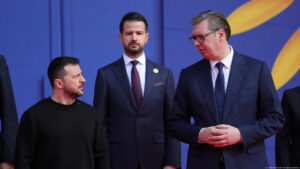
President of Ukraine Volodymyr Zelenskyy may visit Serbia as early as this week at the head of a Ukrainian delegation, Serbian television company N1 reported, citing diplomatic sources in Belgrade. But there has so far been no official confirmation of the visit from Kyiv.
In addition, according to the Telegram channel “Serbian Economist,” the Ukrainian delegation is expected to arrive in Serbia in the coming days, and it is not ruled out that it will be personally headed by Zelenskyy. If the trip takes place, it will be the first visit of the Ukrainian president to Serbia since he took office in 2019. N1 separately indicates that, because of the wartime situation, such a trip may be canceled at any moment. The Serbian television channel also reported that diplomatic sources expect the possible signing of a memorandum on trade cooperation between the two countries.
This directly coincides in time with the already announced Ukrainian business mission to Belgrade on May 19–21, 2026, which is to take place as part of the visit to Serbia by Ukraine’s Deputy Prime Minister Taras Kachka.
According to a statement by the Ukrainian Chamber of Commerce and Industry, the purpose of the business mission is the participation of the Ukrainian delegation in the Ukrainian-Serbian business forum, the holding of B2B meetings with Serbian companies, visits to enterprises, the establishment of new business contacts, and discussion of potential joint projects. Companies from the agro-industrial complex, fertilizer production, construction, the electrical engineering sector, agricultural machinery manufacturing, energy, and other industries were invited to participate.
On the Ukrainian official side, at the time of preparation of the material, there was no public confirmation of Zelenskyy’s possible visit to Belgrade. At the same time, the fact of the preparation of an economic mission with the participation of Ukrainian business and the visit of Taras Kachka had been publicly announced in advance through the Ukrainian CCI and Interfax-Ukraine.
Zelenskyy’s possible arrival would be a notable diplomatic event for the region. Since the beginning of the war, Serbia has maintained a complicated balance: Belgrade recognizes the territorial integrity of Ukraine, including Crimea, but has not joined Western sanctions against Russia. Contacts between Zelenskyy and Serbian President Aleksandar Vučić after 2022 have mainly taken place at international venues. In June 2025, Vučić visited Ukraine for the first time since the beginning of the full-scale war, taking part in the “Ukraine — South-Eastern Europe” summit in Odesa. At that time, he met with Zelenskyy but refused to sign the summit’s final declaration.
For economic relations, the possible visit of the Ukrainian delegation has independent significance even without confirmation of Zelenskyy’s participation. Ukraine and Serbia in recent years have been trying to intensify trade contacts, and the new business forum in Belgrade may become a platform for practical agreements between companies, including in the agricultural sector, energy, construction, and machine building.
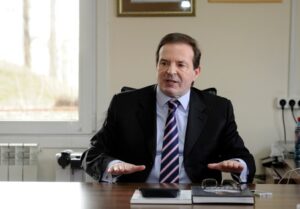
Serbian entrepreneur Bogoljub Karić said he is ready to join negotiations on the purchase of the Russian stake in Naftna Industrija Srbije (NIS) and offer around EUR 2 billion for it, the Telegram channel “Serbian Economist” reports. His appearance among potential buyers may change the configuration of the struggle for Serbia’s largest oil and gas company.
According to Serbian media, Karić said that a group of local industrialists is ready to submit an offer “that cannot be refused.” According to him, Serbian President Aleksandar Vučić, Russian President Vladimir Putin, as well as the management of the company itself, were informed of the intention to buy out NIS shares. Karić also claims that the Russian side received the corresponding letter of intent.
Vučić, commenting on this initiative, reacted with irony, saying that in Serbia “two people with two billion euros have already been found,” and expressed hope that these funds would be invested in the country’s economy. Reuters previously reported that the little-known Serbian group Senator had submitted an application to OFAC to purchase the Russian stake in NIS for $2.35 billion.
The issue of NIS’s future has intensified amid U.S. sanctions pressure on Russian energy assets. Washington demands the withdrawal of Russian shareholders from the Serbian oil company, and the deadline for completing the deal has been set for May 22. At the same time, any deal will require not only the consent of the current shareholders and the Serbian authorities, but also approval from the U.S. Treasury Department’s Office of Foreign Assets Control — OFAC.
In parallel, Belgrade is holding talks with Hungary’s MOL. Earlier, MOL signed an agreement to purchase the Russian stake in NIS, while the Serbian authorities, for their part, are seeking additional guarantees regarding the operation of the oil refinery in Pančevo — the only refinery in the country. The stability of its operations and the supply of fuel to the domestic market remain key conditions for Belgrade.
At present, Gazprom Neft remains the largest shareholder of NIS, with a stake of about 44.85%, while another 11.30% belongs to a structure linked to the Russian side. The Republic of Serbia owns approximately 29.87% of the shares, and the remaining securities are held by minority shareholders.
Karić’s public entry into the process strengthens the intra-Serbian scenario around NIS. Whereas Hungary’s MOL was previously named as the main contender, the possibility is now being discussed that the Russian stake could pass to Serbian capital. However, such an option remains complicated: it depends on the position of the Russian shareholders, the Serbian government, U.S. sanctions procedures, and the readiness of new investors to ensure not only the price of the deal, but also the stable operation of the country’s entire oil infrastructure.
NIS is Serbia’s largest oil and gas company. It is engaged in the exploration and production of oil and gas, oil refining at the Pančevo refinery, wholesale and retail trade in petroleum products, and also manages a network of filling stations in Serbia and the region.
Bogoljub Karić is a Serbian entrepreneur, one of the country’s best-known businessmen of the 1990s and 2000s. His business interests have historically been connected with the banking sector, construction, telecommunications and industrial projects.
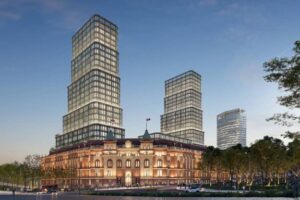
According to Serbian Economist, Jared Kushner’s company may demand up to EUR50 million in compensation from Serbia for failing to fulfill the terms of the contract regarding the construction of a hotel and residential complex on the site of the former General Staff building in central Belgrade, said Marinka Tepić, vice-chair of the opposition Freedom and Justice Party.
According to her, the contract between the Serbian government and Kushner’s company stipulated obligations on Serbia’s part regarding the preparation of the site for the project, but these were not fulfilled. Tepić claims that because of this, Kushner’s company may seek compensation of EUR50 million.
So far, this is merely a statement by an opposition politician, not a publicly confirmed lawsuit or an official claim by Kushner’s company.
The project involved the site of the former General Staff complex in Belgrade, which was damaged during the NATO bombings in 1999. The complex had long held cultural heritage status, but in 2024, the Serbian government removed its protected status, paving the way for the development project.
According to media reports, the Serbian side agreed to transfer the site to a company linked to Kushner under a long-term 99-year lease. The project called for the construction of a hotel, apartments, and office and commercial spaces in one of Belgrade’s most prominent locations.
The initiative sparked strong opposition from Serbian opposition groups, architects, and activists. For many Belgrade residents, the General Staff building remains not just a ruined structure in the city center, but a symbol of the 1999 NATO bombings and a reminder of Serbia’s modern history. Opponents of the project demanded that the complex retain its memorial and cultural status rather than be turned into commercial real estate.
The situation became more complicated following an investigation into the documents on the basis of which the complex was stripped of its cultural monument status. Serbian prosecutors had previously charged current and former officials in a case involving the possible forgery of documents used to remove the General Staff building’s protected status. Following this, Western media reported that Kushner had abandoned the project amid protests and legal issues surrounding the site.
Jared Kushner is an American entrepreneur, founder of the investment firm Affinity Partners, son-in-law of U.S. President Donald Trump, and former senior advisor to the White House during Trump’s first presidential term.
Serbian President Aleksandar Vučić sharply criticized the project’s collapse and stated that the country had lost a major investment.
According to him, the project involved at least EUR750 million in investments and thousands of jobs. Vučić promised to personally file criminal complaints against those who, in his words, participated in a “campaign” to destroy the project.
For Serbia, a potential claim for compensation marks a new phase in a politically sensitive case. On the one hand, the authorities presented the project as a major investment that could revitalize one of the most prominent locations in central Belgrade. On the other hand, opponents of the project believe that the state should not have transferred a symbolically important site to a private foreign investor for a hotel and commercial development.
The key question now is whether Kushner’s company will file a formal claim against Serbia and on what grounds. No official announcement from Kushner’s company regarding the filing of a lawsuit or a claim for EUR50 million has been published in open sources at this time.



