
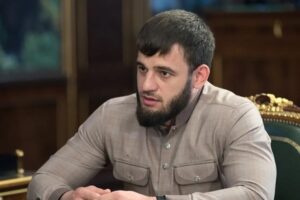
According to Serbian Economist, the Serbian government revoked the citizenship of Jakov Salmanovich Zakriev, the nephew of Chechen leader Ramzan Kadyrov, five days after granting it. This was reported with reference to a decision published in the “Official Gazette.”
The decision to revoke citizenship was signed on April 28 by Serbian Prime Minister Džuro Matsu. Zakriev initially received a Serbian passport under Article 19 of the Citizenship Law—as a foreigner whose admission to citizenship “is in the interest of the Republic of Serbia.”
The authorities later revised this decision. The government cited Article 184 of the General Administrative Procedure Act, which allows for the revocation of a decision that has already been implemented if necessary to eliminate a serious and immediate threat to human life and health, public safety, public order, or to prevent serious disruptions to the economy.
The story became public after Serbian media reported that citizenship had been granted to Zakriyev as a person of interest to the country. Less than a day later, the authorities revoked their decision.
Zakriyev is the son of Kadyrov’s older sister; he previously served as mayor of Grozny and later worked in the Chechen government.
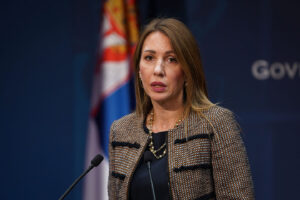
According to Serbian Economist, Serbian Minister of Mining and Energy Dubravka Jedović-Handanović stated that following meetings between the operational and legal teams of the Serbian government and Hungary’s MOL regarding the future of NIS, the parties expect to reach agreement on approximately 90% of the issues by the end of the week. According to her, some issues have already been resolved, while the rest will likely be escalated to a higher level of negotiations.
The negotiations are proceeding along two parallel tracks: MOL is in dialogue with the Russian majority owner regarding the purchase of its stake in NIS, while separately discussing with the Serbian government the rights and obligations of shareholders following a potential change in ownership structure.
Belgrade aims to use the negotiations to improve its position compared to the configuration that emerged after the 2008 agreements. Among Serbia’s priorities, the minister cited increasing the state’s stake in NIS by 5%, maintaining the company’s dominant role in the domestic market, and a commitment to sustaining a certain refining capacity at the Pančevo refinery.
For Serbia, this issue is of not only corporate but also strategic importance. The minister directly linked the stable operation of NIS and the Pančevo refinery to GDP, employment, and security of supply, emphasizing that against the backdrop of the current energy crisis, it is particularly important to have an independent refining base on which the country can rely.
A separate set of discussions focuses on NIS’s past financial obligations and how a potential new owner views their future fulfillment or possible replacement with other investments.
The minister also linked the negotiations regarding NIS to broader Serbian-Hungarian energy cooperation. She stated that Belgrade is counting on the continuation of construction of the joint Serbia-Hungary oil pipeline, which is set to become an important alternative supply route, particularly for the Pančevo refinery. Additionally, Jedović-Handanović noted that Hungary receives gas via Serbia, and part of Serbia’s gas reserves is stored on Hungarian territory.
If the agreement with MOL does indeed reach 90% finalization in the coming days, Belgrade will have a clearer framework for protecting its interests in the country’s largest oil company.
https://t.me/relocationrs/2688
According to Serbian Economist, the U.S. has granted Serbia’s oil company NIS a new 60-day exemption from sanctions, allowing it to continue its operations at least until mid-June. Serbia’s Minister of Mining and Energy, Dubravka Jedović-Handanović, announced the license extension. This refers to an OFAC authorization that maintains NIS’s ability to import crude oil and reduces the risk of disruptions to the country’s oil refining infrastructure.
For Serbia, this decision has not only energy-related but also macroeconomic significance. NIS operates the country’s only oil refinery—in Pančevo—and therefore this latest license extension reduces risks for the domestic fuel market, logistics, and price stability.
Meanwhile, negotiations continue regarding the sale of Russia’s stake in NIS to Hungary’s MOL. According to Reuters, Washington has set a deadline of May 22 for the deal’s completion. Belgrade hopes that the change of government in Hungary will not derail the process, though a final agreement has not yet been formalized.
NIS’s ownership structure remains the key reason for sanctions pressure. According to the report, 45% of the company’s shares are owned by Gazprom Neft, another 11.3% are linked to Gazprom, while Serbia owns nearly 30%, with the remainder held by minority shareholders. It is precisely the withdrawal of Russian entities from NIS’s capital that the U.S. views as a condition for a sustainable resolution of the situation.
For the Serbian economy, the current delay means buying time, but not a final solution to the problem. Until the deal with MOL is closed, NIS and the country’s entire oil sector remain dependent on temporary licenses from Washington. This creates uncertainty for the energy market, the budget, and the investment climate, particularly regarding long-term planning for supplies and the modernization of refining.
https://t.me/relocationrs/2658
According to Serbian Economist, Ukraine has resumed negotiations with Serbia on establishing a free trade area, as the current level of trade between the two countries remains relatively low. Ukrainian Ambassador to Serbia Oleksandr Litvinenko stated this in an interview with Interfax-Ukraine. According to him, a free trade zone could revitalize bilateral economic ties and, at the same time, fit naturally into the European integration of both countries. Among the promising sectors, the diplomat cited mechanical engineering, particularly agricultural machinery.
For the Serbian Economist, what matters in this story is not only the political signal but also the plain arithmetic. According to official data from the Statistical Office of Serbia, in 2025, Serbian exports to Ukraine amounted to €179.6 million, imports from Ukraine to €212.2 million, and total trade turnover reached approximately €391.8 million. At the same time, Ukraine’s share of Serbian exports and imports remains at only about 0.5%, which indeed confirms the thesis that the scale of trade is still limited.
The current range of trade between the countries still appears rather narrow and largely consists of raw materials. According to data from the Ukrainian Embassy in Serbia, the main items of Ukrainian exports to Serbia are iron ore and ferrous metals, wood and wood products, as well as plastics and polymer materials. More detailed product statistics show that among the largest Ukrainian shipments to Serbia were iron ore worth $61.6 million, hot-rolled iron products worth $11.9 million, and semi-finished iron products worth $8.92 million.
From the Serbian side, exports to Ukraine currently consist mainly of fertilizers, plastics and polymer materials, electrical machinery, ferrous metals, soap, and rubber.
If we look at the potential impact of the FTA in practical terms, the most logical outcome appears to be an expansion of trade in those niches where one side can offer the other either cheaper or scarcer goods. For Ukraine, in addition to the metallurgical and raw material products already being exported to Serbia, these could include agricultural machinery, certain types of metal products, wood processing, value-added food products, and niche consumer goods.
For Serbia, the most potentially attractive goods on the Ukrainian market in the event of an FTA could be fertilizers, polymers, electrical equipment, pharmaceuticals, rubber products, tires, and auto parts. In other words, an FTA could theoretically shift trade from a narrow exchange of raw materials toward a greater number of processed goods on both sides.
A separate sensitive issue is Serbia’s status in the WTO. Serbia is still not a member of the World Trade Organization. The latest European Commission report on Serbia explicitly states that the process has stalled primarily due to the lack of a WTO-compliant law on GMOs and due to unfinished market access negotiations with a small number of WTO members. Belgrade has not concluded some of the bilateral negotiations required for WTO accession, and older Serbian documents listed Ukraine, Brazil, Russia, and the United States among the problematic partners.
https://t.me/relocationrs/2646
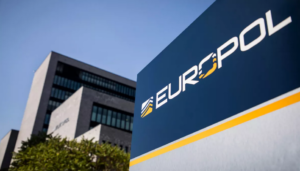
According to Serbian Economist, Europol has reported new progress in the investigation against the so-called “Balkan Cartel”: one of the alleged key members of the network, which investigators link to the supply of large shipments of cocaine from South America to the European market, has been detained in Montenegro. According to the agency, the case involves the smuggling of 2.7 tons of drugs.
As Europol clarifies, Montenegrin judicial authorities have filed charges against several suspects, and the investigation is focused on the international logistics of drug trafficking, financial flows, and the coordination of shipments within Europe. This involves a network that, according to investigators, operated across several countries and used the Balkans as part of a broader criminal network.
Earlier, in December 2025, the agency reported on a separate operation in Germany targeting key figures in this network; at that time, three individuals were detained and assets worth approximately 5 million euros were seized.
For Balkan countries, such cases have not only a criminal but also an economic dimension. Intensified international investigations, expanded data sharing between police and financial intelligence agencies, and pressure on illicit cross-border flows are becoming part of a broader agenda to reduce reputational and institutional risks in the region. For Montenegro, Serbia, and neighboring markets, this is also important from the perspective of investment image, as the fight against organized crime remains one of the EU’s key evaluation criteria.
https://t.me/relocationrs/2642
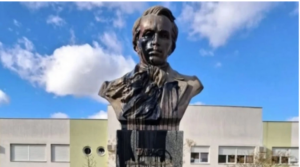
According to Serbian Economist, the monument to Ukrainian poet Taras Shevchenko in Novi Sad has been restored after being damaged and doused with black paint in February. The city’s Institute for the Protection of Cultural Monuments reported that the bust and pedestal have been restored to their original condition following an assessment of the damage and restoration work carried out at the monument’s site.
The restoration was carried out by sculptor Ljubomir Šćepanović. During the work, the missing letters in Shevchenko’s surname were restored, and the monument and pedestal were cleaned and treated with wax. The institute noted that the work was completed within an optimal timeframe and without the use of harsh chemicals to preserve the original material.
The monument was vandalized on February 24, 2026. The monument was installed in 2021 near the university campus as a gift from Lviv.
https://t.me/relocationrs/2634



