

Serbia will allocate EUR2 million to support Ukraine’s energy sector במסגרת a joint project with the United Nations Development Programme (UNDP), the Telegram channel “Serbian Economist” reported, citing official data.
According to the report, the Government of the Republic of Serbia and UNDP signed an agreement providing for the financing of the procurement and delivery of high-voltage transformers. These are critical pieces of equipment needed to restore electricity transmission systems and ensure stable power supply.
The funds will be provided under UNDP’s green energy recovery programme for Ukraine. The initiative is aimed at supporting basic services in the regions most affected by the war, including electricity, heating and water supply.
Serbian Ambassador to Ukraine Andon Sapundji said that Belgrade’s contribution is intended to support critical infrastructure and help ensure uninterrupted energy supply for the population.
In turn, UNDP Resident Representative in Ukraine Auke Lootsma stressed that Serbia’s assistance will contribute not only to the restoration of damaged facilities, but also to the modernization of Ukraine’s energy system.
According to international estimates, since 2022 Ukraine’s energy infrastructure has suffered extensive destruction. Total losses in the sector are estimated at $88.2 billion, of which about $17.1 billion relates specifically to the power sector, including generation and transmission.
The project is being implemented as part of cooperation between Ukraine and the United Nations in the field of sustainable development and is in line with the strategic goal of transitioning to a more resilient and modern energy system.

According to Serbian Economist, Serbian President Aleksandar Vučić announced from the headquarters of the Serbian Progressive Party in New Belgrade that the ruling party’s lists, featuring his name, had won in all 10 municipalities where local elections were held on March 29. “It’s 10 to 0,” he said following the vote count.
Elections were held in Bora, Smederevska Palanka, Bajina Bašta, Kula, Lučani, Aranđelovac, Kladovo, Knjaževac, Majdanpec, and Sevojno. Even before Election Day, Vučić had said he would be satisfied only with a victory in all 10 municipalities, although at the time he estimated the possible outcome as 7-3 or 6-4.
After the elections, government officials also publicly confirmed this result. In particular, SNS Chairman Miloš Vučević called the party’s victory in all ten municipalities “very significant” and repeated the 10:0 score.
At the same time, opposition and independent commentators interpret the results more cautiously. N1, citing political analyst Boban Stojanović, notes that despite the SNS’s formal victory in all ten municipalities, in nine of them the party, according to his assessment, saw a decline in support compared to previous election cycles.
https://t.me/relocationrs/2532

According to The Serbian Economist, Serbia has aligned itself with two European Union resolutions that extend existing restrictive measures related to the war in Ukraine.
The first EU resolution concerns measures against Russia’s actions regarding the occupied regions of Ukraine that are not under Kyiv’s control. Essentially, this is an extension of the special sanctions regime for another year—until February 24, 2027. Serbia supported this extension along with a number of other EU candidate countries and partners.
The second decision concerns sanctions against specific individuals, companies, and organizations in connection with the situation in Ukraine. These are not “general sanctions against Russia as a whole,” but rather an extension of the list of targeted restrictions on specific individuals until March 6, 2027.
The wording stating that Serbia “will ensure the alignment of its national policy” with this decision means the following: Belgrade has declared that it will act in line with EU policy on these two specific issues. The European Union separately noted and welcomed Serbia’s alignment in official statements.
This does not mean that Serbia has fully aligned itself with the entire EU sanctions package against Moscow. It concerns specifically these two separate decisions, not full alignment with Brussels on sanctions.
For Serbia, this is yet another example of partial foreign policy alignment with Brussels on issues related to Ukraine and Russia.
Serbia is a candidate country for EU membership and is regularly under close scrutiny by Brussels regarding the alignment of its foreign and sanctions policies with European decisions. Against this backdrop, such steps by Belgrade are usually seen as a signal of its willingness to maintain working-level coordination with the EU on specific international issues, primarily those related to the Ukrainian agenda.
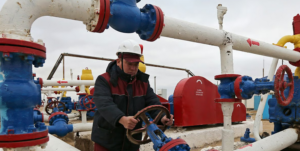
According to Serbian Economist, the Hungarian government has designated the “Hungary–Serbia” oil pipeline and related infrastructure as a priority investment project, which is expected to speed up administrative procedures and construction work. Budapest views the project as part of a broader strategy to better coordinate the energy and fuel markets of Hungary, Serbia, and Slovakia. The Hungarian side believes this will enhance the resilience of regional energy supplies and reduce dependence on external risks.
Hungarian media reports state that the government’s goal is to bring the system into full operation in 2027 or 2028. The new route is intended to create an additional foundation for oil supplies to the region amid the continued vulnerability of existing supply lines.
The issue is particularly sensitive for the region following supply problems with the Druzhba pipeline, a section of which on Ukrainian territory was damaged in January. Against this backdrop, Budapest has in recent weeks linked energy security issues to broader regional policy.
For Serbia, accelerating the project is important both in terms of diversifying supply routes and in the context of ongoing uncertainty surrounding NIS and oil imports. The new pipeline could become one of the country’s key energy infrastructure projects.
https://t.me/relocationrs/2509
According to Serbian Economist, Hungarian oil and gas company MOL has received approval from U.S. authorities to continue negotiations on the acquisition of a controlling stake in Serbian NIS until May 22, 2026. This was reported by Reuters, citing a statement from MOL.
The negotiations concern the purchase of shares held by Russian shareholders—Gazprom Neft and Gazprom, which own 44.9% and 11.3% of NIS, respectively. Initially, the U.S. Treasury Department’s Office of Foreign Assets Control (OFAC) set a deadline of March 24 for finalizing the Russian companies’ exit from NIS’s capital, but this deadline has now been extended to May 22.
In January, MOL signed a binding agreement with the Russian shareholders to purchase their stakes in NIS, and the Emirati company ADNOC is set to acquire a minority stake as part of this deal. The Serbian government retains a 29.9% stake in the company.
For Serbia, the issue of changing NIS’s ownership is of strategic importance, as the company remains the country’s largest fuel supplier and the operator of the only oil refinery in Pančevo. Last week, the U.S. also extended the sanctions waiver for NIS itself until April 17 so that the company could continue importing crude oil.
https://t.me/relocationrs/2499

According to Serbian Economist, Serbia’s real estate market continued to grow through the end of 2025: in the fourth quarter, the total volume of transactions reached €2.4 billion, marking the highest quarterly level since the Real Estate Price Register was established. This was reported by the Republic Geodetic Institute of Serbia (RGZ).
According to RGZ, in October–December 2025, the market value rose by 9% year-over-year, and the number of purchase and sale agreements increased by 6.9%, to 37,386. Apartments accounted for €1.4 billion, or 61% of the total value of all transactions.
Regionally, the number of transactions in the fourth quarter rose by 10.9% in Belgrade and by 5.8% in Kragujevac, while a decline of 6.5% was recorded in Niš and 8.7% in Novi Sad. A total of €768.5 million was spent on apartment purchases in Belgrade alone during this period.
The most expensive apartment of the quarter was sold in the municipality of Savski Venac for €1.4 million, with an area of 90 square meters, while the maximum price per square meter in the same municipality reached €15,298. The most expensive house was also sold in Savski Venac for €1 million, and a parking space for €60,000.
Earlier, RGZ reported that as early as the first quarter of 2025, the market showed a 9.3% increase in value alongside a 2.4% decline in the number of transactions, indicating further appreciation of assets. By the end of the year, this trend persisted, but the market simultaneously returned to growth in the number of transactions.
Vera Yegorova-Tolsta, owner of the real estate agency VIDOVSTAN, also noted the market’s growth in her review. Overall, RGZ data show that even with local fluctuations in individual cities, Serbia’s real estate market remained one of the most stable segments of the country’s economy through the end of 2025.
https://t.me/relocationrs/2490



