

According to Serbian Economist, the Czech Škoda Group has confirmed plans to localize the production of both trains and trams in Serbia, with MIND Park in Kragujevac being considered as the site for such a project. The company announced this in a comment to N1 following the signing of a memorandum of understanding with MIND Group.
Škoda stated that its strategy in the Serbian market is geared toward a long-term presence in the sustainable transport segment and includes not only the supply of rolling stock but also maintenance, as well as long-term availability of spare parts. To strengthen its local presence, the company has decided to transfer part of the production of solutions for the Serbian market to its partner’s site—the MIND Group.
The company clarified that it intends to localize the production of both trams and trains. This includes, in particular, trams that could be manufactured to Belgrade’s specifications, as well as electric trains for suburban, regional, and cross-border service on the Serbian railway network.
Škoda explains that the localization of the full production cycle depends on the volume of orders and investments. At the same time, the company explicitly states that Serbia is viewed as a priority market in the Western Balkans, particularly due to a large-scale investment program in railway infrastructure. The company also confirmed that it is in contact with the Serbian Development Agency regarding investment incentives.
The issue is particularly relevant for Belgrade amid protracted procurement processes for new urban rolling stock. Tenders for new trams in recent years have either been suspended or faced complaints from bidders. At the same time, Škoda stated that it is reviewing the recently announced tender for the procurement of 60 new trolleybuses, although it is not commenting on ongoing commercial negotiations.
The Škoda Group is one of the largest Czech manufacturers of rail transport and urban mobility solutions. The company produces trams, electric trains, trolleybuses, and related transport technologies; in 2024, it secured new orders worth €1.7 billion and significantly increased its EBITDA while continuing to expand in European markets.
MIND Group is a Serbian industrial group developing the MIND Park industrial zone in Kragujevac as a cluster for mechanical engineering, logistics, and high-tech manufacturing. The partnership with Škoda aims to strengthen the park’s position as a hub for the localization of complex transportation industry operations in Serbia.
According to Serbian Economist, Serbia’s economic growth in 2026 could reach about 2.75%, but this scenario largely depends on the further development of the crisis in the Middle East and its impact on oil prices and overall inflation trends.
The energy factor has become particularly sensitive for Serbia in recent days. Against the backdrop of the conflict surrounding Iran, Brent crude has risen above $100 per barrel, and supply disruptions have already forced international organizations and central banks to revise their inflation and economic forecasts. The IMF has warned that sustained growth in energy prices could accelerate inflation and slow global growth, while the ECB has already raised its inflation forecast for 2026 and lowered its estimate for eurozone economic growth.
For Serbia, this poses a double risk—due to imported inflation and the deterioration of conditions for external demand in European markets. The National Bank of Serbia is currently maintaining its own GDP growth forecast for 2026 at 3.5%, but the external shock caused by oil and gas makes this estimate less robust, especially if high prices persist for more than a few weeks.
Additional pressure stems from the domestic fuel market. On March 19, Serbian authorities extended the ban on oil and petroleum product exports until April 2, ordered the release of 40,000 tons of diesel fuel from reserves, and reduced fuel excise taxes by 20% in an effort to prevent shortages and price spikes. The following day, the U.S. also extended the sanctions waiver for NIS until April 17, allowing oil imports to the Serbian market to continue.
Thus, the baseline scenario for Serbia’s economy in 2026 remains positive for now, but it increasingly depends not only on domestic demand and investment but also on geopolitics. If the situation in the Middle East stabilizes, growth may remain closer to official forecasts. If, however, the energy crisis drags on, pressure on inflation, consumption, and industry may prove stronger than expected at the beginning of the year.

According to Serbian Economist, Princess Katarina T. Karadjordjevic has found herself at the center of a financial scandal in the UK after a private investor claimed to have lost 50,000 pounds in a project he invested in, trusting her and her business partner. This was reported by the British Daily Mail.
According to the publication, the investor in question is British dermatologist Robin Russell-Jones, who met the princess in London. Shortly thereafter, her close associate and business partner Sharon Rea offered him the opportunity to invest £50,000 in a purported international project promising returns of up to £4 million. It was claimed that the initiative allegedly had the backing of international institutions, including the International Monetary Fund.
However, the project later turned out to be a sham, and the invested funds disappeared. The investor took the matter to court and won the case, but the money has still not been returned to him. According to the court ruling, Sharon Rea must repay the debt in installments—£100 per month.
The publication notes that Princess Catherine’s collaboration with Rea lasted at least five years. During this time, they promoted a number of international initiatives, including hospital construction projects and the organization of the Tsunami of Sound charity concert series; however, according to the report, none of these projects were ultimately implemented.
When the investor began to doubt the project’s credibility, he tried to contact Princess Katarina to verify information about her partner but received no response. The princess herself did not respond to media inquiries, while some of her acquaintances suggest she may have been misled.
The Karadjordjevic dynasty is a Serbian and Yugoslav royal dynasty that traces its origins to Karadjordje, the leader of the First Serbian Uprising. Members of the dynasty ruled Serbia in the 19th and early 20th centuries, and later the Kingdom of Serbs, Croats, and Slovenes and the Kingdom of Yugoslavia from 1921 to 1941.
https://t.me/relocationrs/2466

According to The Serbian Economist, Serbia’s Elixir Group and Germany’s K+S have launched production of a new water-soluble fertilizer for agriculture at the Prahovo ChemPark site in Serbia. The product will be marketed in Europe under the brand name soluMAP®.
Simply put, production has begun in Prahovo of a fertilizer that dissolves quickly in water and is used in modern plant nutrition systems—primarily in drip irrigation and other precision application methods. This is important for the European market, as such supplies will be geographically closer and delivery times shorter. K+S explicitly states that the project is intended to strengthen the reliability of supply for European customers.
The site is located in Prahovo on the Danube, near the borders with Romania and Bulgaria. K+S notes that this simplifies logistics across Europe and to Turkey, while the proximity to Elixir’s phosphoric acid production facilities provides the project with a local raw material supply.
The Elixir and K+S project was announced back in 2023. At that time, it was reported that the investment would amount to €35 million, and the capacity of the new plant in Prahovo would be 50,000 tons per year. Production was planned to begin in 2026.
For Elixir, this launch also reinforces the role of Prahovo ChemPark as a major industrial and chemical hub. The group describes itself as the leading producer of phosphoric acid in the region and the largest producer of compound mineral fertilizers in Southeast Europe, with over 70% of its output exported to more than 85 countries.
The tMAP 12-61 product is a fertilizer with a high phosphorus and nitrogen content. The numbers 12-61 indicate the proportion of the main nutrients: 12% nitrogen and 61% phosphorus.
It is used in drip irrigation, fertigation, and foliar feeding, especially during the early stages of plant growth when crops need phosphorus for root system development.
https://t.me/relocationrs/2448

According to Serbian Economist, MK Group plans a new investment cycle worth between EUR1 billion and EUR2 billion in 2026-2030, said the group’s CEO Mihailo Jankovic, speaking at the Kopaonik Business Forum. According to him, about EUR 1 billion is expected to be allocated to renewable energy projects, more than EUR 200 million to agriculture, and the rest to the development of the hotel portfolio and premium tourism in the region.
Thus, the publication of the program for approximately EUR 1.6 billion in energy, agriculture, and tourism is generally in line with the group’s previously announced targets. The MK Group’s official website still states that the total volume of the previously announced investment cycle is EUR 1.6 billion, including EUR 900 million for green energy, EUR 350 million for agriculture, and EUR 380 million for tourism, while the latest March announcement extends the program’s horizon to 2030 and sets the range at EUR 1-2 billion.
Jankovic linked the new round of investments to the need to strengthen domestic investment amid a weakening of external capital. He noted that in 2022-2024, the average net inflow of foreign direct investment into Serbia was around EUR 4.5 billion per year, while in the first 11 months of 2025, it fell to EUR 1.94 billion. In his opinion, in such conditions, it is large national companies that should become one of the drivers of further growth.
MK Group also emphasizes that it already has a strong position in the energy segment. The company calls itself the largest independent electricity producer in Serbia: its portfolio includes four operating wind farms with a total capacity of 200 MW, which generate about 500 GWh of electricity annually, and in the next stage, the group intends to continue investing in wind, solar, and biomass projects.
MK Group was founded in 1983 by Miodrag Kostic. After he stepped down from active management, strategic leadership was transferred to his son, Aleksandar Kostic, who is now the group’s president. The business focuses on the agri-food sector, green energy, tourism, and real estate. The group’s structure includes, in particular, the agricultural companies PIK Bečej, Flora, Agrounija, and Erdevik, the sugar division Sunoko, and the meat division Carnex.
After purchasing sugar factories in 2002, Sunoko became the largest sugar producer in the wider region, while Carnex, acquired by the group in 2011, exports meat products to 15 countries. Sunoko, in turn, has announced plans to increase sugar exports to the EU and regional markets.
https://t.me/relocationrs/2416
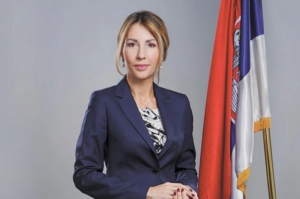
According to Serbian Economist, Serbia plans to start construction of its first nuclear power plant by 2035 and is cooperating with French energy company EDF as part of its preparations, Minister of Mining and Energy Dubravka Jedovic Handanovic said in an interview with RTS.
The minister stressed that EDF can help Serbia with its experience and knowledge in preparing the project. At the same time, she said, no decision has yet been made on the specific technology for the future nuclear power plant.
The preparatory process for the construction of the nuclear power plant is estimated to take approximately four years: by mid-2027, the authorities intend to complete the first phase, which involves analyzing the regulatory framework and requirements, after which the second phase, including preparation for construction, will begin. The ministry noted that the first additional studies are planned to be carried out jointly with EDF with the support of the French Development Agency (AFD) on the basis of an intergovernmental agreement between Serbia and France.
Against the backdrop of the launch of the nuclear agenda, Serbia is simultaneously in contact with other potential partners and technology suppliers.
Potential partners and companies involved in the preparation and negotiations:
France – EDF (as well as Egis Industries as part of the preliminary technical study contractors).
Serbia also signed a memorandum with Korea Hydro & Nuclear Power (KHNP, South Korea) on cooperation in the field of nuclear energy and personnel training.
Serbia considered Rosatom (Russia) as a possible partner for the exchange of experience.
Separately, it was reported that Emirates Nuclear Energy Company (ENEC, UAE) was ready to share its roadmap for the development of a nuclear program.
The United States (agreements/information exchange between regulators and willingness to support program preparation) and China (memorandum with the China Institute of Atomic Energy) were also mentioned in the context of contacts.
https://t.me/relocationrs/2404



