

According to Serbian Economist, Croatia is discussing a gas interconnector project with Serbia that could give the Serbian market access to liquefied natural gas (LNG) via a terminal on the island of Krk. Croatian Economy Minister Ante Šušnjar said that “only about 15 km of pipeline” is needed to connect the two gas systems, and Belgrade, according to him, is showing interest in such a route.
Serbian Minister of Mining and Energy Dubravka Jedovic-Handanovic confirmed that the option of supplies via Croatia is being considered, but noted caution due to past episodes of oil supply disruptions via the JANAF pipeline.
Serbian Economist interprets the possible interconnector primarily as a tool for changing the market structure: with Serbia’s annual gas consumption of around 2.7-3.0 billion cubic meters and high dependence on a single import corridor via TurkStream, even relatively small volumes of LNG could strengthen its negotiating position and create real “optionality” in procurement. Initial deliveries via the LNG route could amount to 0.5-1.0 billion cubic meters per year (15-35% of demand), and a realistic window for infrastructure commissioning is 2028-2031.
The emergence of an alternative entry point will gradually “tie” the discussion of prices within Serbia to European benchmarks, although this also means greater sensitivity to global volatility in the LNG market.
The context for the discussion is the ongoing search by countries in the region for alternative supply routes and the strengthening of TurkStream’s role as a key pipeline channel for Russian gas to Europe after the cessation of transit through Ukraine.

Presidents of Serbia Aleksandar Vucic and Azerbaijan Ilham Aliyev held the first session of the Strategic Partnership Council and outlined the priorities of the economic bloc – from energy and investment to trade, agriculture and tourism, Serbian Economist reports.
The key practical outcome was the formalization of a package of bilateral documents. Seven agreements and memoranda were exchanged in Belgrade, including agreements on the design, construction and operation of a gas turbine power plant in Serbia, cooperation in the field of food security, a memorandum between the ministries of economy, as well as documents on media and communications, culture (for 2026-2030), sports and interaction of health insurance systems.
The leaders explicitly call energy cooperation the basis for the next step – electricity production based on Azerbaijani gas. Aliyev said Baku has decided to increase natural gas exports to Serbia, linking this to plans for electricity generation and potential future exports.
In the Serbian interpretation, the gas-fired power plant project is already tied to the parameters: Vucic said that Srbijagas and SOCAR are in discussions, and the goal is to reach the launch of the plant with an installed capacity of 500 MW by 2029 (locations are considered in the Niš area).
Against the backdrop of the political increase in the level of relations, the sides are once again returning to the issue of trade turnover. According to the Serbian National Statistics Office, the foreign trade turnover with Azerbaijan in 2024 amounted to $512.6 million (5-fold growth), with the main contribution provided by the purchase of crude oil and oil products.
Baku, for its part, estimates trade turnover in 2025 at $135 million and notes the growth of imports of Serbian goods by 55% – this data was cited by Azerbaijani Finance Minister Sahil Babayev on the eve of the visit.
It was also noted at the Council meeting that direct flights between Baku and Belgrade should start in May 2026, which is expected to strengthen tourism and business contacts.
In the coming months, governments and line ministers should “land” political agreements in the form of concrete projects. Vucic and Aliyev have publicly recorded that they expect quick results before the next visit of the Serbian president to Azerbaijan during this year.
https://t.me/relocationrs/2271
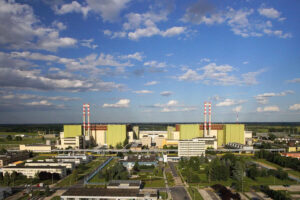
According to Serbian Economist, Serbia has publicly returned to the idea of buying a minority stake in the Hungarian Paks II nuclear power plant project amid the official start of the main stage of construction of the plant in early February 2026, industry sources report.
On February 5, Hungary held a “first concrete” ceremony, pouring concrete into the foundation slab of the reactor building. According to IAEA standards, this is considered the official start date of construction and transfers the facility to the status of “nuclear power plant under construction.”
Belgrade is interested in acquiring a 5-10% stake in the Paks II project. It is expected that such a stake would give Serbia the right to a fixed share of electricity production and could become a long-term source of “base” low-carbon generation for domestic demand.
Paks II involves the construction of two new power units with VVER-1200 reactors (approximately 1,200 MW each). The project is being implemented with the participation of the Russian state corporation Rosatom under a 2014 intergovernmental agreement and is financed in part by a Russian state loan. The goal is to commission the new units in the early 2030s.
This is not the first time Serbia has expressed interest in participating in the project: in November 2024, Serbian President Aleksandar Vučić said that he had asked Budapest to consider selling Serbia up to 10% of the project and emphasized his willingness to pay for the share at market price, with the Hungarian side promising to look into the matter at the time.
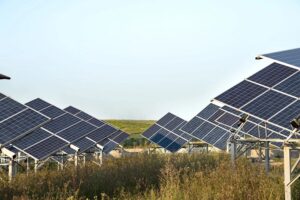
According to Serbian Economist, the municipality of Knyazhevats has begun the process of preparing a detailed regulation plan for the construction of the Knyazhevats solar power plant in the community, as follows from the decision to develop planning documentation.
The deadline for preparing the plan is set at 12 months. The municipal administration (urban planning and construction) has been designated as the project manager, Projektura d.o.o. (Belgrade) as the developer, and Central Europe Energy Company d.o.o. (Belgrade) as the initiator, which is also financing the preparation of the documentation.
The project involves the construction of Serbia’s largest solar park in Tresibabi with a capacity of 170 MW, with investments estimated at approximately €200 million.
Approximately 270 hectares of low-quality state-owned land have been leased for the project, with a lease rate of €1,050 per hectare per year, of which 40% goes to the community budget and 60% to the republican budget.
Central Europe Energy Company is registered in Belgrade, with Qin Zhang listed as the responsible person, according to CompanyWall data.

According to Serbian Economist, Chinese manufacturer of humanoid robots Agibot plans to start mass production in Serbia in 2026 or 2027, the company’s European director William Shi said after a presentation in Belgrade.
The project will be realized together with a strategic partner, Minth Holdings (a Hong Kong-listed auto component manufacturer). In the first phase, 1,000-2,000 humanoid robots are planned to be produced in Serbia.
Shi noted that robot production includes “hardware” and ‘software’ and the company will need a local contractor in Serbia to create AI data and train models, which effectively means forming a separate segment of the “data industry” around the project.
Agibot was founded in 2023 in Shanghai; its line of humanoid robots includes the Yuanzheng, Lingxi and Genies series. Minth has been present in Serbia since 2018, has facilities in Loznica and Šabac, and provides 3,500 jobs.
https://t.me/relocationrs/2220

According to Serbian Economist, the Italian manufacturer of automotive components and electric cars Tazzari is considering the possibility of investing in Serbia and plans to start investing as early as 2026, Deputy Prime Minister and Minister of Economy Adrijana Mesarovic said in Bologna.
According to her, representatives of the company will come to Serbia in the next 15 days to continue negotiations. The minister also said that the company produces cast aluminum parts for engines, and among its clients are Ducati, Lamborghini, Maserati and Ferrari.
Mesarovic added that Tazzari is interested in conditions of access to foreign markets, including free trade agreements that Serbia has concluded with a number of countries.
Tazzari Group was founded in 1963 and specializes in aluminum casting technologies and supply of lightweight components for the automotive and motorcycle industries; the group is also developing its own lightweight electric vehicles (Tazzari Zero project).
https://t.me/relocationrs/2214



