

According to Serbian Economist, the European Commission is preparing decisions within the framework of the new EU visa strategy, which should alleviate some of the problems for carriers from the Western Balkan countries amid the ongoing blockades of freight terminals on the borders with the European Union.
Executive Vice-President of the European Commission Hena Virkkunen said that the EC is aware of the difficulties faced by transport operators in the region due to the application of Schengen rules and stressed that the Entry/Exit System (EES) does not introduce new requirements for short stays. EES) does not introduce new requirements for short-term stays. At the same time, she said, the European Commission is seeking “more flexibility without compromising security” and “is addressing this issue as part of its visa strategy.”
In recent days, truck drivers in Serbia, Bosnia and Herzegovina, Montenegro, and North Macedonia have been blocking access to freight terminals on the EU border in protest against stricter enforcement of the 90-day stay rule within a 180-day period in the Schengen area, which, according to business estimates, leads to the detention and deportation of drivers and increases costs for carriers.
Serbian Chamber of Commerce and Industry President Marko Čadež previously stated that the blockades are estimated to have halted up to 93% of exports from the countries involved and caused daily losses of around €92 million, with companies incurring additional penalties for delivery disruptions.
The European Commission has indicated that the problem also affects other “highly mobile” professions, and solutions will be developed as part of a new visa strategy.
https://t.me/relocationrs/2196
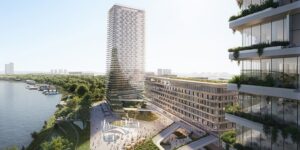
According to Srpski Ekonomist, several top international brands – InterContinental, Swissotel and Ritz-Carlton – are entering the Belgrade hotel market, amid expectations of increased demand in connection with preparations for EXPO 2027 and plans to expand the room stock in the capital.
According to estimates cited by market participants, in 2027, during the EXPO period, Belgrade could receive about 4 million guests in just three months, while Serbia as a whole had about 4 million tourists in 11 months of 2025. In this logic, the acceleration of hotel projects is perceived as an infrastructural necessity, but there is already a question whether the market after the EXPO will be able to sustainably “digest” the growth of supply, especially in the segment of high categories.
InterContinental returns to Serbia in partnership with Delta Holding: IHG reported that InterContinental Belgrade is planned to open by the end of 2026. The project is part of the Delta District mixed-use complex in Belgrade’s business and financial center; 203 rooms are announced, and features include a sky pool, rooftop restaurant and bar, spa and conference infrastructure.
Swissotel is planned in the EXPO zone in Surcin. Euro KB Rent will receive state aid in the amount of EUR 15.986 million, which will be paid in two tranches in 2026 and 2027. The minimum investment for the project is estimated at EUR 79.9 million; the materials also indicate that the hotel will include a congress center and spa/wellness with two swimming pools, and a room stock of 378 rooms.
The Ritz-Carlton in Belgrade is planned as part of the redevelopment of the former Hotel Jugoslavija site on the Danube waterfront. Marriott International reported that the property is envisioned with 193 rooms and more than 1,700 square meters of event space, while the project itself also includes residential and office towers, a conference center, a marina and a promenade area. Millennium Team, associated with the project through Danube Riverside, estimates the total investment in the complex at almost 500 million euros, with the hotel opening announced for 2027.
EXPO-2027 in Belgrade will take place from May 15 to August 15, 2027, with more than 130 countries having already officially confirmed their participation, according to the organizing committee’s data
https://t.me/relocationrs/2178
According to Serbian Economist, a number of Balkan media outlets reported that Turkey has become the largest foreign investor in Montenegro since 2020, with total investments estimated at over €417 million.
At the same time, official statistics show a more “volatile” picture over the years, with Serbia appearing as one of the key sources of capital. Thus, in an analytical review by the Parliamentary Budget Office of Montenegro, based on data on foreign direct investment (FDI) inflows for 2024, Serbia is named as the largest source with €118.2 million, followed by Russia with €109.7 million and Germany with €88.7 million. Turkey was in fourth place in 2024 with €39.5 million (the US with €37.2 million).
In 2025 (January-August), the ranking changed: Turkey took first place with €92.2 million, Serbia took second place with €91.8 million; followed by Russia (€45.3 million), Germany (€41.7 million), and the UAE (€34.7 million).
The key reason for these “swings” is the structure of investments. In 2024, the total gross inflow of SDI amounted to about €891.1 million, of which the largest part was accounted for by real estate transactions (purchase of properties) – €455.3 million, followed by intercompany debt (€292.1 million) and investments in companies and banks (€113.9 million). In other words, the ranking of investor countries largely depends on cycles in the real estate market and large one-off deals.
It is worth distinguishing between the “cumulative total since 2020” and the “leaders of a particular year.” Publications about Turkey’s leadership are based on the aggregation of several years and emphasize the acceleration of Turkey’s presence in the last 1-2 years. In particular, reports citing the Turkish-Montenegrin Chamber of Commerce estimate that investments from Turkey in 2024 amounted to approximately €100.9 million, and in 2025 (for 10 months) – approximately €110.8 million.
Serbia, in turn, remains a “structural” investor for Montenegro: in SDI statistics, it regularly ranks among the leaders, and in 2024 it took first place. In practical terms, this reflects the close connection between the two economies — from business and banking and service cooperation to active demand for real estate and tourism, which is why the Serbian share reacts significantly to the housing market situation and seasonality.
Overall, Montenegro’s SDI profile for 2020-2025 remains “real estate-tourism,” which means that the composition of leaders by country may change more rapidly than in economies dominated by long-term industrial projects.

According to Serbian Economist, the authorities in Injiya have confirmed that the Minth Group is moving forward with the launch of a mega-project in Vojvodina. The first stage involves land registration: part of the territory has already been purchased, and the package of documents for the remaining 210 hectares is “in the final stages.” If negotiations are completed without delay, construction could start as early as June 2026.
What has been announced about the project
According to the parameters that have been publicly discussed since 2024–2025, the project involves a plant for the production of components for the electric vehicle industry:
— investment — up to €870 million (over several years/phases),
— new jobs — about 2,200,
site size — 210 hectares, which is unusually large even by the standards of large-scale industry.
The size of the project will change the economy of the region.
For Inji, this means a jump in employment, tax base, logistics development, and demand for contractors — from construction companies to services and suppliers.
This is part of Minth’s “big package” in Serbia.
Minth already has a presence in the country: the company entered Serbia in 2018 (first production facility in Loznica, then Šabac) and is discussing expansion at several sites.
In addition to Inji, in 2025, the media reported on Minth’s additional plans for new factories and jobs in other cities in Serbia — the total scale of investment is close to billions of euros.
Serbia is consolidating its role as an industrial base for auto components.
Minth is a global supplier of auto parts and solutions for body/structural components, working with dozens of brands. For Serbia, this means strengthening its “auto cluster” and potential growth in export revenue.
At this scale, any bureaucratic delay will prolong the project by months.
Human resources and wage competition: 2,200 jobs in a single project will inevitably “pull” the labor market in the region.
Infrastructure and energy: a plant of this size will require a stable power supply, logistics, and supply chain, otherwise the effect will be lower than expected.
If the announced deadlines are met, Injiya could become one of the key points of Serbia’s industrial growth in 2026–2028, with a strong focus on components for the new automotive industry.
https://t.me/relocationrs/2159

Albania’s dependence on grain imports has increased in 2025 amid a decline in domestic production and an increase in abandoned farmland, with Serbia becoming the main supplier of grain, the Serbian Economist reports, according to Pamfleti website.
Albania imported more than 374,000 tons of grain in 2025, almost 40,000 tons more than in 2024, with wheat and corn being the main imports.
Agro-economist Zef Gjeta linked the increase in imports to the lack of real reforms and public funding of the agro-sector, emphasizing that without support for farmers, the country loses its production potential and becomes more dependent on external supplies.
The structure of supplies has changed – Serbia has become the first exporter of grain to Albania, while previously significant volumes came from Russia and Romania. At the same time, procurement costs, according to the source’s assessment, remained close to 2024 levels due to shorter logistics and the strengthening of Albania’s national currency, despite the increase in physical volumes.
Albania also exported 248 tons of grain worth about 28 million lek, almost double the amount from a year earlier, but these volumes remain small. The country’s farmland area is estimated at about 700,000 hectares, with the area under cereal crops shrinking and the area of abandoned land growing, experts warned.
https://t.me/relocationrs/2148

According to the Serbian Economist, Serbia’s preparations for the international specialized exhibition EXPO 2027 in Belgrade are accompanied by discussions about the scale of investments and their comparability with the effect of similar events in the world. The exhibition is scheduled to open on May 15, 2027 and close on August 15, 2027.
Serbian authorities earlier presented the “Leap into the Future – Serbia 2027” program, including 323 projects across the country, the total amount of which was estimated at €17.8 billion, with Finance Minister Sinisa Mali emphasizing that the direct costs of the exhibition itself will amount to about €1.2 billion, while the remaining amounts relate to broader infrastructure and development initiatives.
Separately, the EXPO 2027 orgs point out that the “EXPO project cost” in their interpretation is estimated at around €1.29 billion and includes the exhibition site and a number of related facilities and communications (including transport and engineering components), rather than the national investment program as a whole.
In parallel, the project is already reflected in the budget architecture. In the budget for 2026 adopted by Serbia, the Serbian Economist allocates the largest single item of capex for EXPO 2027 – 47.5 billion dinars.
Comparison with the experience of other exhibitions usually shows that direct revenues rarely offset the total bill, and the key is the “legacy” – infrastructure, tourist flows, business connections and reuse of facilities. For example, World Expo 2010 in Shanghai attracted about 73 million visitors and Expo 2015 in Milan about 21.5 million, while Expo 2020 Dubai reported 24.1 million visits. For Belgrade, as a specialized exhibition, the expected scale is lower: the official resource of EXPO 2027 states expectations of “more than 4 million” visitors.
In the Serbian case, the key question is how effectively the costs will be “landed” in the long-term economy: the utilization of the new exhibition infrastructure after August 2027, the impact on tourism and urban development, as well as the ability to contain budget risks and avoid underutilization of facilities.
https://t.me/relocationrs/2142



