
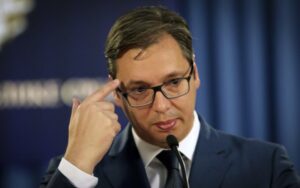
According to Serbian Economist, Serbian President Aleksandar Vučić has announced that the country will soon open its first large military drone factory in cooperation with a foreign partner. According to him, serial production in the republic should begin by the end of April. The announcement was made during the presentation of the national development strategy “Serbia 2030.”
Vucic noted that in the current international environment, “might makes right,” and stressed that Serbia must not remain weak. He linked the development of defense production to the task of maintaining peace and stability, stating that strengthening the army and police is necessary precisely as a deterrent. According to the president, Serbia allocates more than 2.5% of its GDP to the army and police.
The president specified that smaller drones had previously been assembled and developed in Serbia, both in the army and in the private sector. In particular, he mentioned the Komarac 1 and Komarac 2 models. The existence of such systems is confirmed by materials from the Serbian Ministry of Defense, which mention the use of Komarac 1 and Komarac 2 drones, with the latter designed, among other things, to destroy more heavily defended targets.
At the same time, Vucic described the new project as significantly larger and more technologically advanced, calling it a product of “the highest global standard.” Neither the name of the foreign partner, nor the investment parameters, nor the estimated production volumes have been officially disclosed at this time.
https://t.me/relocationrs/2393
According to Serbian Economist, Serbia has introduced a special procedure that determines which EXPO 2027 Belgrade participants will be eligible for VAT (PDV) and excise duty exemptions, as well as the conditions and procedure for obtaining such benefits.
According to the explanations, the right to benefits is granted, in particular, to the offices of section commissioners of countries and international organizations participating in the exhibition for the purchase of goods and services related to the construction, installation, operation, and dismantling of national pavilions, as well as for administrative needs. A separate category is authorized personnel of national sections, and in some cases their family members, on a principle comparable to the privileges enjoyed by diplomatic personnel.
The privileges apply to operations directly related to EXPO, including the temporary importation of exhibition equipment and materials, as well as certain supplies within the exhibition infrastructure, such as power supply and operating resources. For official personnel, there are conditions under which VAT exemptions may also apply to personal goods, including furniture and one car per person, and excise duty exemptions may apply to fuel and lubricants for transport serving the commissioners’ offices, within established limits.
Exemptions are not automatic – participants must obtain confirmation from the EXPO organizer. This document, known as the EXPO 2027 certificate, is issued upon request and must be presented before the goods are imported or before the goods and services are delivered within the country; the certificate is issued in triplicate, and without it, the exemption does not apply.
At the end of January 2026, the Expo 2027 organizing committee reported that more than 130 countries had already officially confirmed their participation in the exhibition. Among the largest economies listed as confirmed participants are China, the United States, India, Germany, and many others. Ukraine has not yet confirmed its participation in EXPO-2027 in Belgrade.
https://t.me/relocationrs/2368
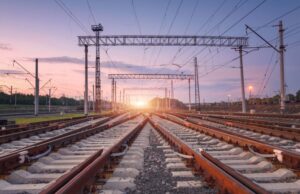
According to Serbian Economist, Hungary and Serbia have agreed to launch passenger service on the Belgrade-Budapest high-speed railway line no later than March 27, Hungarian Minister of Foreign Affairs and Trade Péter Szijjártó said in Belgrade.
Responding to questions about border procedures, including the introduction of the EES system, Szijjártó said that checks are planned to be kept to a minimum and organized so that they do not significantly affect the speed of transport. According to him, on the Hungarian side, inspectors, police, and customs officers will board the train before the border station, and checks will be carried out jointly with colleagues from the other side while the train is in motion.
The statement was made after the ceremonial signing of four documents during the 15th session of the Joint Commission on Economic Cooperation between Serbia and Hungary in the Serbian Chamber. In particular, the parties formalized a package of agreements on expanding cooperation in the nuclear sphere, interaction between chambers of commerce and industry under the Széchenyi program in Serbia, a memorandum on expert support for Serbia’s EU accession negotiations, and the minutes of the joint commission meeting.
Earlier, Serbian authorities reported that joint passport and customs control for passenger trains is planned to be carried out on Hungarian territory at the Kelebia station, and the time required for the procedures is estimated at about 30 minutes; the issue of specific EES requirements falls within the competence of the Hungarian border police.
The Belgrade-Budapest high-speed line is being modernized for speeds of up to 200 km/h and a reduction in travel time to less than three hours; in Serbia, the Belgrade-Novi Sad (2022) and Novi Sad-Subotica (October 2025) sections have already been put into operation. On February 27, it was also reported that freight traffic had started on the line.
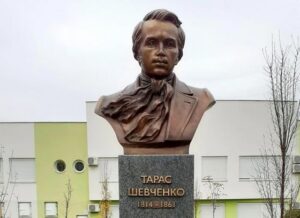
According to Serbian Economist, unknown persons damaged the monument to Ukrainian poet Taras Shevchenko in Novi Sad, Serbia.
According to available information, the monument was splashed with black paint, and the letters of the surname on the monument were also damaged.
The Ukrainian Embassy in the Republic of Serbia said it was deeply outraged by the incident and called it a “shameful act,” urging Serbian law enforcement agencies to investigate the incident and bring those responsible to justice. The diplomatic mission also noted that such actions are aimed at undermining Ukrainian-Serbian relations.
The Serbian Embassy in Ukraine also condemned the actions of the vandals and stated that it was deeply outraged by the incident and, after returning to Ukraine in 2025, is actively working to restore mutually beneficial cooperation between the two countries.
The Shevchenko monument in Novi Sad was erected in February 2021 on the initiative of the Ukrainian-Rusyn community in Serbia.

According to Serbian Economist, the total volume of investment in Belgrade’s office real estate in 2025 grew to EUR 131 million, compared to EUR 14 million a year earlier, amid steady demand for prime-class properties and moderate new space supply, Serbia Business reports.
The total volume of modern office space in Belgrade reached 1.46 million square meters at the end of 2025, with more than 65,000 square meters of new space added during the year (about +5% year-on-year). Annual take-up amounted to 180,000 sq m, which is 9% lower than in 2024.
Vacancy in the market at the end of 2025 is estimated at 5.67% (within the “healthy” range of 5-10%), while in the prime segment it fell to 2.5%, reflecting a shortage of quality space. In the transaction structure, 43% were contract renewals and 40% were new leases.
Rental rates remained stable: prime offices – EUR 16-18 per sq. m per month, with rates exceeding EUR 19 in top properties, and class B remaining in the range of EUR 12-14.
Industry consultants generally confirm the trend of stable supply and sustained demand for high-quality space. CBRE indicated that in 2025, Belgrade’s office stock increased by more than 72,000 sq m of speculative supply, while IO Partners recorded stable prime rates at EUR 18-19 and an increase in stock of 86,900 sq m over the year.
https://t.me/relocationrs/2308

According to Serbian Economist, the energy partnership between Belgrade and Baku is rapidly moving beyond symbolic diversification and beginning to transform into a separate supply chain capable of significantly influencing the balance of the Serbian gas market. Azerbaijan’s Deputy Minister of Energy Orkhan Zeynalov said that by the end of 2026 – early 2027, Azerbaijan could cover up to 20% of Serbia’s gas needs, which, according to him, directly strengthens energy security by reducing dependence on a single source.
The context is simple: Serbia has remained predominantly dependent on gas imports in recent years, and the issue of diversification has become part of a broader agenda, ranging from heating and electricity prices to negotiations with the EU on energy integration. Reuters previously estimated that Serbia receives about 80% of its gas from Russia, with alternative volumes currently serving as insurance and a bargaining chip.
The legal framework for the Azerbaijani route has already been established. The contract between SOCAR and Srbijagas, signed in November 2023, provides for the supply of up to 400 million cubic meters per year in 2024-2026, with the possibility of increasing volumes after 2027. At the same time, official statements by the governments of Serbia and Azerbaijan have recorded separate seasonal agreements for additional volumes during the winter period.
Actual deliveries from Azerbaijan began in 2024, but so far have remained small compared to the overall market. According to data cited by Azerbaijan’s State Statistics Committee, Serbia received about 72.6 million cubic meters of Azerbaijani gas between February and December 2024. For comparison, according to estimates by Azerbaijani and regional sources, in January-November 2025, supplies had already grown to 192 million cubic meters.
Why is Belgrade taking this more seriously than “just another contract”? Because gas is beginning to be linked to industrial projects. In mid-February 2026, the leaders of Serbia and Azerbaijan confirmed plans to build a 500 MW gas-fired power plant, which is seen as a joint project with an estimated commissioning date of 2029. Industry media estimate the investment at around €600 million. Such a plant is capable of creating stable demand for fuel and, accordingly, pushing forward discussions on long-term supply terms — which is why Baku’s statements separately mention the topic of gas prices for future generation.
The stated target of 15-20% seems realistic precisely as a “market share” rather than the maximum technical capacity of the route. Even with Serbia’s moderate consumption, this means the need to reach several hundred million cubic meters per year on a sustainable basis and to secure a commercial supply formula after 2026. At the same time, Baku is making it clear that it sees Serbia as a potential energy hub for the Western Balkans and is looking for additional areas of cooperation, including projects in the field of green energy and hydrogen.



