
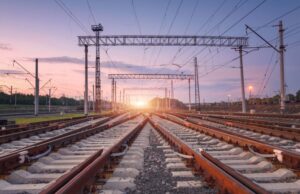
According to Serbian Economist, Hungary and Serbia have agreed to launch passenger service on the Belgrade-Budapest high-speed railway line no later than March 27, Hungarian Minister of Foreign Affairs and Trade Péter Szijjártó said in Belgrade.
Responding to questions about border procedures, including the introduction of the EES system, Szijjártó said that checks are planned to be kept to a minimum and organized so that they do not significantly affect the speed of transport. According to him, on the Hungarian side, inspectors, police, and customs officers will board the train before the border station, and checks will be carried out jointly with colleagues from the other side while the train is in motion.
The statement was made after the ceremonial signing of four documents during the 15th session of the Joint Commission on Economic Cooperation between Serbia and Hungary in the Serbian Chamber. In particular, the parties formalized a package of agreements on expanding cooperation in the nuclear sphere, interaction between chambers of commerce and industry under the Széchenyi program in Serbia, a memorandum on expert support for Serbia’s EU accession negotiations, and the minutes of the joint commission meeting.
Earlier, Serbian authorities reported that joint passport and customs control for passenger trains is planned to be carried out on Hungarian territory at the Kelebia station, and the time required for the procedures is estimated at about 30 minutes; the issue of specific EES requirements falls within the competence of the Hungarian border police.
The Belgrade-Budapest high-speed line is being modernized for speeds of up to 200 km/h and a reduction in travel time to less than three hours; in Serbia, the Belgrade-Novi Sad (2022) and Novi Sad-Subotica (October 2025) sections have already been put into operation. On February 27, it was also reported that freight traffic had started on the line.

Ukrainian agrarians have applied to the authorities of the Republic of Poland with a request to lay a broad-gauge railway line (with a gauge of 1520 mm) across its territory, which will connect the port of Polish Gdansk with the Ukrainian and Lithuanian railway networks to export agricultural products and ensure strategically important imports through western borders of Ukraine.
The corresponding appeal to the President of the Republic of Poland Andrzej Duda and its Prime Minister Mateusz Morawiecki was sent by the leading Ukrainian agrarian associations: the All-Ukrainian Agrarian Council (VAR), the Agrarian Union of Ukraine, the Ukrainian Agrarian Business Club, the All-Ukrainian Association of Communities, the Union of Poultry Breeders of Ukraine and the Ukrainian Agrarian Confederation, reportedly on the VAR website on Friday.
According to the appeal, one of the largest and closest European ports to Ukraine is the port of Klaipeda (Lithuania), which has significant free transshipment capacities. However, due to differences in the gauge between Poland, Ukraine and the Baltic countries, there is a need to reload the contents of wagons at border crossings between countries or rearrange wagon bogies, which does not allow to fully realize the export-import potential of the port of Klaipeda.
In turn, the use of vehicles or containers as an alternative to railway transportation is poorly suited for transporting bulk bulk cargo (coal, ore, grain, metal) over long distances and increases their cost to an uncompetitive level. In addition, in the case of using container terminals, the capacity of the railway line will be limited by their capacity, which will also prevent full use of the potential.
“In our opinion, the laying of a railway line with a gauge of 1520 mm across the territory of the Republic of Poland, which will connect the Ukrainian and Lithuanian railway networks, as well as connect the port of Gdansk to them for the transport of goods and passengers, will solve the above-mentioned problems,” the appeal of the Ukrainian farmers.
At the same time, it is emphasized that such a logistical path will give significant positive financial and economic effects for Poland and Ukraine, not only due to an increase in export-import capacities, but also due to the unification of the economic space of Poland, the Baltic countries and Ukraine.
Such a project can be implemented through the reconstruction of the existing railway network and the construction of a combined track, or the construction of a separate railway branch.
As reported, in June 2022, Polish Deputy Prime Minister Yaroslav Kaczynski said that the issue of building this broad-gauge railway track had already been tentatively approved by the Polish and Ukrainian governments.
In early June, the VAR already proposed to build 300 km of broad-gauge railway tracks in Poland for direct grain deliveries to the Lithuanian port of Klaipeda, which would allow not to overload the contents of wagons at the Ukraine-Poland and Poland-Lithuania border crossings due to the difference in railway gauge in these countries.
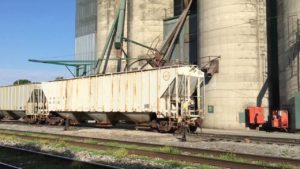
The grain terminal of MV Cargo, a joint project of MV Cargo with Cargill (the United States) in Pivdenny port, has launched the second railway line.
“In May, the grain terminal of MV Cargo launched the second railway line. Now we will be able to accept grain twice as fast – 24 wagons simultaneously on two tracks. At the same time, we will be able to unload four cars at the speed of one car in three minutes,” according to a report on Facebook.
MV Cargo expects that such rates will allow increasing the average daily unloading to 300 wagons, which is equivalent to 18,000 tonnes per day or up to 540,000 tonnes of grain per month.
As reported, MV Cargo postponed the official opening of the terminal until September 6, 2019.



