
Hungary plans to meet the country’s natural gas needs without supplies from Russia by October 2027, said István Kapitány, the country’s Minister of Economy and Energy.
“If everything goes as we expect, Hungary’s gas supply will be secured from other, non-Russian sources by the deadline set by the European Union in October of next year,” the minister said in an interview with Telex published on September 18.
According to Kapitány, Hungary’s high dependence on Russian gas did not arise from a lack of technical capacity to purchase fuel from other countries. Hungary is connected by gas pipelines to several neighboring countries, and the Russian supply system was used for a long time primarily because it was considered the most cost-effective option. The minister did not specify by how much the share of Russian gas has already decreased in recent months.
The deadline is directly linked to new EU regulations. EU Regulation 2026/261 provides for the cessation of imports of Russian pipeline gas under long-term contracts after September 30, 2027. In exceptional cases, if a country is unable to ensure the required level of storage filling, the deadline may be extended to November 1, 2027.
For Hungary, the transition is particularly significant, as the state-owned MVM maintains a long-term contract with Gazprom Export for approximately 4.5 billion cubic meters of gas per year. The contract originally runs through 2036; however, MVM’s own documents note that the European ban will effectively prevent the use of Russian long-term supplies after the fall of 2027. The company is already expanding its portfolio of alternative gas sources.
LNG is becoming one of the key areas of focus. MVM ONEnergy has signed a five-year contract with the U.S.-based Chevron for approximately 2 billion cubic meters of liquefied natural gas. Deliveries under this contract are scheduled to begin on October 1, 2027, immediately after EU restrictions on Russian pipeline gas take effect.
In addition, MVM has reached an agreement with Azerbaijan’s SOCAR for the supply of 800 million cubic meters of gas over a two-year period starting in 2026.
Romania is emerging as another potential source. The development of the Neptun Deep field in Romania’s sector of the Black Sea is expected to begin production in 2027. Once it reaches full capacity, it is projected to supply approximately 8 billion cubic meters of gas per year, which will create additional opportunities for deliveries to Central Europe, including Hungary.
Thus, Captain’s statement signals a significant shift in Hungarian energy policy: Budapest, which in previous years had opposed an accelerated phase-out of Russian fuel, is now preparing its gas supply balance to meet EU requirements by the fall of 2027. At the same time, the minister emphasized that the country has sufficient gas supplies for the current heating season and that the authorities do not anticipate any problems with the physical availability of fuel.
Transgaz, the Romanian gas transmission system operator, has signed a memorandum of understanding with the U.S. company Argent LNG, which provides for the possibility of investing in the construction of a large LNG terminal in Louisiana.
The project will have a capacity of 25 million metric tons of LNG per year, or approximately 35 billion cubic meters of gas. The first deliveries are expected in 2030.
One of the main goals is to establish a long-term supply route for American gas through Romania to Moldova and Ukraine, and further on to Hungary, Austria, the Czech Republic, Slovakia, and Germany.
The project is intended to strengthen the so-called Vertical Gas Corridor, which is gradually becoming one of the key routes for supplying non-Russian gas to Central and Eastern Europe.
The corridor connects the gas transmission systems of Greece, Bulgaria, Romania, Hungary, Slovakia, Ukraine, and Moldova. It can be used to transport both Azerbaijani gas and LNG from the U.S., which arrives via the Revithoussa and Alexandroupolis terminals in Greece.
For the Balkans, the project is significant because it provides the region with another major source of gas and fosters additional competition among supply routes. The more American and other non-Russian LNG that flows through Greece and Romania, the more the gas infrastructure of all of Southeast Europe will change.
Moldova has already tested this route: U.S. LNG was delivered via Greece and then injected into Ukrainian underground storage facilities.
Transgaz also controls 75% of the Moldovan gas transmission system operator Westmoldtransgaz.
Due to reduced availability of liquefied natural gas (LNG) on the European market, Belgium switched entirely to importing this fuel from Russia in July, a move driven by supply disruptions and high gas prices, according to Bloomberg.
Total LNG shipments to Belgium in July fell by more than 40% compared to the same period last year. At the same time, the country purchased about 0.4 million metric tons of this fuel from Russia, although the volume of Russian imports was lower than in early 2026.
One reason for the increased role of Russian LNG was disruptions in fuel supplies from the Middle East due to shipping problems in the Strait of Hormuz. At the same time, most European buyers were postponing LNG purchases for winter stockpiles due to high gas prices.
“Europe received 16% more Russian LNG in the first half of 2026 compared to the same period the previous year, paying a total of 5.96 billion euros ($6.9 billion). The largest buyers were France, Belgium, and Spain,” the publication reports, citing data from the German nongovernmental organization Urgewald.
Low gas storage levels ahead of the winter season posed an additional challenge for Europe—they are the lowest for this period since records began in 2009.
According to Bloomberg, the last time Russia was the sole supplier of LNG to Belgium was in early 2021—before Russia’s full-scale invasion of Ukraine and after European economies had begun to recover from the COVID-19 pandemic.
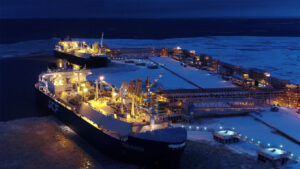
European Union countries imported a record amount of liquefied natural gas from Russia’s Yamal LNG project in the first half of 2026, despite the gradual implementation of a ban on Russian gas supplies, the Financial Times reported, citing data from the analytics firm Kpler and the environmental organization Urgewald.
According to the publication, European countries received approximately 9.9 million metric tons of LNG from “Yamal LNG” between January and June, which is about 18% more than during the same period in 2025. This marks the highest half-year figure since exports from the project began in 2017.
Reuters cites slightly different operational data: according to Kpler, shipments to the EU totaled 9.97 million metric tons and increased by 16%. The discrepancy between the figures may be due to updates in information regarding tanker movements and the actual unloading dates of the shipments. Overall, both sources confirm imports of approximately 10 million metric tons and the setting of a new record.
In total, 140 tanker shipments were dispatched from Yamal LNG in the first half of the year. Of these, 136—or more than 97%—arrived at EU ports. China received only four shipments during the same period. Thus, the European market effectively absorbed nearly all exports from Russia’s largest Arctic LNG project.
The estimated value of the shipments delivered to the EU is 5.96 billion euros, or about 6.82 billion dollars. The main destinations were terminals in France, Belgium, and Spain.
The increase in imports occurred as European companies prepared for the final cessation of Russian gas supplies. According to estimates by the EU Agency for the Cooperation of Energy Regulators (ACER), Russian LNG imports increased by 11% year-over-year in January–May 2026, while Russian pipeline gas supplies rose by 7%. Among the reasons cited by the agency is the early delivery of part of the contracted volumes before new restrictions took effect.
However, it is not yet accurate to say that the purchase of all Russian LNG is already banned in the EU. As of April 25, 2026, the ban applies to imports under short-term contracts concluded before June 17, 2025. Deliveries under previously concluded long-term contracts may continue until January 1, 2027. After that date, a complete ban on Russian LNG imports is set to take effect.
Therefore, a significant portion of Yamal LNG deliveries in the first half of the year could have been made under existing long-term contracts and did not formally violate European restrictions.
Data on the increase in the share of Russian gas in EU imports from 12% to 14% also requires clarification. According to the European Commission and the Council of the EU, Russian LNG and pipeline gas accounted for approximately 12% of European gas imports in 2025 overall. ACER estimated Russia’s share during the 2025–2026 winter season at approximately 14%. These figures relate to different periods and therefore cannot be directly interpreted as a definitive annual increase in market share of two percentage points.
The increase in supplies was also driven by the current restriction on the transshipment of Russian LNG at European ports for onward shipment to third countries. As a result, most of the gas arriving at EU terminals remains on the European market rather than being transshipped to other vessels for transport to Asia.
These record purchases highlight the tension between the EU’s policy of phasing out Russian energy sources and the need to ensure stable gas supplies amid a tight global market. At the same time, they highlight the Yamal LNG project’s dependence on European port, shipping, and financial infrastructure: with limited access to Asian routes, Russia has so far been unable to redirect a significant portion of its Arctic LNG to China.
The Yamal LNG project is located on the Yamal Peninsula in the Russian Arctic and is controlled by the Russian company Novatek. Novatek owns 50.1% of the project, with France’s TotalEnergies and China’s CNPC each holding 20%, and the Silk Road Fund holding 9.9%. The project’s production capacity is approximately 17.4 million metric tons of LNG per year.
The EU finalized its phased phase-out of Russian natural gas on January 26, 2026. A complete ban on Russian LNG is set to take effect on January 1, 2027, and on pipeline gas in the fall of 2027. In the event of a serious threat to energy supplies, the European Commission will be able to temporarily suspend certain restrictions for up to four weeks.
Original source Financial Times

According to Serbian Economist, Croatia is discussing a gas interconnector project with Serbia that could give the Serbian market access to liquefied natural gas (LNG) via a terminal on the island of Krk. Croatian Economy Minister Ante Šušnjar said that “only about 15 km of pipeline” is needed to connect the two gas systems, and Belgrade, according to him, is showing interest in such a route.
Serbian Minister of Mining and Energy Dubravka Jedovic-Handanovic confirmed that the option of supplies via Croatia is being considered, but noted caution due to past episodes of oil supply disruptions via the JANAF pipeline.
Serbian Economist interprets the possible interconnector primarily as a tool for changing the market structure: with Serbia’s annual gas consumption of around 2.7-3.0 billion cubic meters and high dependence on a single import corridor via TurkStream, even relatively small volumes of LNG could strengthen its negotiating position and create real “optionality” in procurement. Initial deliveries via the LNG route could amount to 0.5-1.0 billion cubic meters per year (15-35% of demand), and a realistic window for infrastructure commissioning is 2028-2031.
The emergence of an alternative entry point will gradually “tie” the discussion of prices within Serbia to European benchmarks, although this also means greater sensitivity to global volatility in the LNG market.
The context for the discussion is the ongoing search by countries in the region for alternative supply routes and the strengthening of TurkStream’s role as a key pipeline channel for Russian gas to Europe after the cessation of transit through Ukraine.
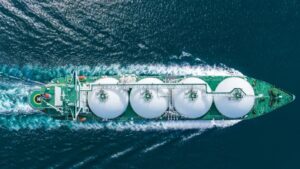
The Naftogaz Group and Greek company ATLANTIC-SEE LNG TRADE S.A. have signed a memorandum of cooperation with the aim of diversifying liquefied natural gas (LNG) supply routes to Ukraine, according to Sergey Koretsky, CEO of Naftogaz of Ukraine.
“On the sidelines of P-TEC, we signed a memorandum with the Greek company ATLANTIC-SEE LNG TRADE S.A. It concerns future regular supplies of American gas to Ukraine via Greek gas terminals and the Vertical Corridor,” Koretsky wrote on Facebook on Friday.
The long-term partnership is set to last until 2050 and will allow for the gradual implementation of new strategic projects.
He mentioned ensuring stable long-term LNG supplies for Ukraine, integrating Ukrainian infrastructure into LNG logistics routes to Europe, and creating a sustainable system for the supply and storage of American LNG.
“We are laying a new foundation for transatlantic cooperation with our partners. This is another step towards long-term energy stability for Ukraine and new opportunities,” commented the head of Naftogaz.
As reported, on the same day at P-TEC, Naftogaz Group agreed with Poland’s ORLEN and American partners on new supplies of American LNG to Ukraine in the amount of at least 300 million cubic meters for a stable heating season.
As of October 1, Ukraine had already received 400 million cubic meters of American LNG.



