
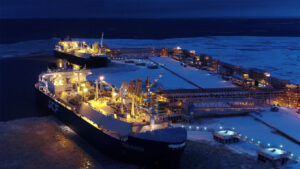
European Union countries imported a record amount of liquefied natural gas from Russia’s Yamal LNG project in the first half of 2026, despite the gradual implementation of a ban on Russian gas supplies, the Financial Times reported, citing data from the analytics firm Kpler and the environmental organization Urgewald.
According to the publication, European countries received approximately 9.9 million metric tons of LNG from “Yamal LNG” between January and June, which is about 18% more than during the same period in 2025. This marks the highest half-year figure since exports from the project began in 2017.
Reuters cites slightly different operational data: according to Kpler, shipments to the EU totaled 9.97 million metric tons and increased by 16%. The discrepancy between the figures may be due to updates in information regarding tanker movements and the actual unloading dates of the shipments. Overall, both sources confirm imports of approximately 10 million metric tons and the setting of a new record.
In total, 140 tanker shipments were dispatched from Yamal LNG in the first half of the year. Of these, 136—or more than 97%—arrived at EU ports. China received only four shipments during the same period. Thus, the European market effectively absorbed nearly all exports from Russia’s largest Arctic LNG project.
The estimated value of the shipments delivered to the EU is 5.96 billion euros, or about 6.82 billion dollars. The main destinations were terminals in France, Belgium, and Spain.
The increase in imports occurred as European companies prepared for the final cessation of Russian gas supplies. According to estimates by the EU Agency for the Cooperation of Energy Regulators (ACER), Russian LNG imports increased by 11% year-over-year in January–May 2026, while Russian pipeline gas supplies rose by 7%. Among the reasons cited by the agency is the early delivery of part of the contracted volumes before new restrictions took effect.
However, it is not yet accurate to say that the purchase of all Russian LNG is already banned in the EU. As of April 25, 2026, the ban applies to imports under short-term contracts concluded before June 17, 2025. Deliveries under previously concluded long-term contracts may continue until January 1, 2027. After that date, a complete ban on Russian LNG imports is set to take effect.
Therefore, a significant portion of Yamal LNG deliveries in the first half of the year could have been made under existing long-term contracts and did not formally violate European restrictions.
Data on the increase in the share of Russian gas in EU imports from 12% to 14% also requires clarification. According to the European Commission and the Council of the EU, Russian LNG and pipeline gas accounted for approximately 12% of European gas imports in 2025 overall. ACER estimated Russia’s share during the 2025–2026 winter season at approximately 14%. These figures relate to different periods and therefore cannot be directly interpreted as a definitive annual increase in market share of two percentage points.
The increase in supplies was also driven by the current restriction on the transshipment of Russian LNG at European ports for onward shipment to third countries. As a result, most of the gas arriving at EU terminals remains on the European market rather than being transshipped to other vessels for transport to Asia.
These record purchases highlight the tension between the EU’s policy of phasing out Russian energy sources and the need to ensure stable gas supplies amid a tight global market. At the same time, they highlight the Yamal LNG project’s dependence on European port, shipping, and financial infrastructure: with limited access to Asian routes, Russia has so far been unable to redirect a significant portion of its Arctic LNG to China.
The Yamal LNG project is located on the Yamal Peninsula in the Russian Arctic and is controlled by the Russian company Novatek. Novatek owns 50.1% of the project, with France’s TotalEnergies and China’s CNPC each holding 20%, and the Silk Road Fund holding 9.9%. The project’s production capacity is approximately 17.4 million metric tons of LNG per year.
The EU finalized its phased phase-out of Russian natural gas on January 26, 2026. A complete ban on Russian LNG is set to take effect on January 1, 2027, and on pipeline gas in the fall of 2027. In the event of a serious threat to energy supplies, the European Commission will be able to temporarily suspend certain restrictions for up to four weeks.
Original source Financial Times



