
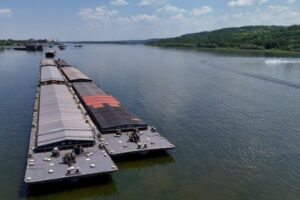
Romanian authorities plan to conduct a controlled sinking of four barges loaded with rocks in the Bala branch of the Danube to redirect more water to the Cernavodă Nuclear Power Plant and prevent the shutdown of its only operating reactor unit.
The operation is scheduled to begin on August 5 after 2:00 p.m. The barges are intended to form a temporary underwater dam and divert part of the flow from the Bala branch to the Old Danube, from where water enters the nuclear power plant’s cooling system. Authorities expect to raise the water level near the plant by 10–12 cm.
Currently, only Power Unit No. 2 is operating at “Cernavodă.” The first of the two reactors was shut down last week due to critically low water levels in the Danube. Under normal conditions, the plant’s two units account for about one-fifth of Romania’s electricity production.
Before flooding the barges, the Romanian military carried out a controlled demolition of part of the Pirjoaia underwater rock formation, which had been hindering the redistribution of the river’s flow. Following this intervention, the drop in water levels near the plant temporarily ceased. Previously, the Danube’s water level in this area had been falling by approximately 2–3 cm per day.
As of the morning of August 5, the water flow at the Danube’s entry into Romania was approximately 1,450 cubic meters per second. By August 7, this figure could drop to 1,400 cubic meters per second—nearly one-third of the long-term average for August, which stands at 3,900 cubic meters.
As early as August 1, representatives of the National Administration “Waters of Romania” warned that without emergency measures, the second power unit would be able to operate at its maximum capacity for only four to five days. If the water level drops below operational thresholds, the reactor will be shut down in a controlled manner in accordance with safety procedures.
At the same time, dredging operations are continuing in the Old Danube–Bala Branch section. Specialists must remove some of the debris left over from the explosion and secure the submerged barges, as the current could displace them and reduce the effectiveness of the temporary dam.
Romania has declared a state of energy readiness for August. Due to reduced output at nuclear power plants and other power stations, the country has increased electricity imports and called on businesses, government agencies, and the public to reduce consumption during peak-load hours.
The critically low water level of the Danube is causing problems not only for Romania. The Paks Nuclear Power Plant in Hungary has also sharply reduced production: three of the four turbines were shut down, and the remaining one was operating at only a fraction of its capacity.

According to Serbian Economist, Serbia may decide on the location and technology for its future nuclear power plant in 2027, said Minister of Mining and Energy Dubravka Jedović-Handanović. According to her, the country has already entered the first phase of developing its nuclear program and has corrected a “historic mistake” by lifting the ban on considering nuclear energy.
The minister stated that an analysis is currently underway to determine where and how a nuclear facility could be integrated into Serbia’s power grid. A preliminary study has already examined possible options for connecting the future nuclear power plant to the grid, and next year the authorities expect to reach a decision on the site and technology.
Serbia views nuclear energy as part of a long-term response to rising electricity consumption, decarbonization, and the need for stable baseload generation. Serbia’s first nuclear power plant could be connected to the grid by 2040, and the country aims to become part of the global “nuclear renaissance.”
Authorities expect to complete the initial stages of preparation for construction by 2032. This involves not only selecting a site and technology but also establishing a regulatory framework, training personnel, forming a national organization to implement the nuclear program, assessing financing, and engaging with public opinion.
For Serbia, nuclear energy is becoming part of a broader discussion about the future structure of its energy mix. The country remains heavily dependent on coal-fired generation, while simultaneously developing solar and wind projects, battery storage, and gas infrastructure. However, for energy-intensive industries, data centers, artificial intelligence, and the future electrification of transportation, the authorities consider it necessary to have a stable source of baseload power.
Serbia’s most likely international partners for its nuclear program could be France, Russia, China, South Korea, the United States, Slovenia, and Hungary. France’s EDF has already presented Serbia with a roadmap for a nuclear program comprising 19 key steps: completion of studies by 2027, selection of technology and preparation of a construction contract by 2032, and commissioning of the nuclear power plant by 2040.
Russia, through Rosatom, has also discussed with Belgrade possible cooperation during the preparatory phase, primarily in the areas of knowledge exchange and support for the development of a nuclear program. However, political and sanctions-related risks make the Russian option more complicated, especially if Serbia aligns itself with European standards for financing and regulation.
China already has a memorandum of cooperation with Serbia in the nuclear sector, covering issues such as radioactive waste, radiation protection, personnel training, and technical support. South Korea’s KHNP has also signed a memorandum of cooperation with Serbia on nuclear energy and hydrogen, making Korea one of the potential technology partners.
The U.S. may be of interest to Serbia primarily through small modular reactors (SMRs) and technological cooperation, as Belgrade has previously spoken of seeking support to obtain approximately 1.2 GW of capacity based on SMR technology. Separately, the option of Serbia participating in the Hungarian Paks NPP by purchasing 5–10% of the capacity or a stake was discussed, which could be a faster way to access nuclear power generation without immediately building its own plant.
https://t.me/relocationrs/2800
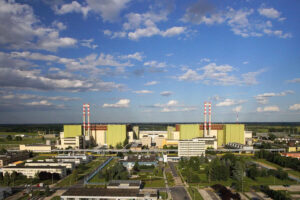
According to Serbian Economist, Serbia has publicly returned to the idea of buying a minority stake in the Hungarian Paks II nuclear power plant project amid the official start of the main stage of construction of the plant in early February 2026, industry sources report.
On February 5, Hungary held a “first concrete” ceremony, pouring concrete into the foundation slab of the reactor building. According to IAEA standards, this is considered the official start date of construction and transfers the facility to the status of “nuclear power plant under construction.”
Belgrade is interested in acquiring a 5-10% stake in the Paks II project. It is expected that such a stake would give Serbia the right to a fixed share of electricity production and could become a long-term source of “base” low-carbon generation for domestic demand.
Paks II involves the construction of two new power units with VVER-1200 reactors (approximately 1,200 MW each). The project is being implemented with the participation of the Russian state corporation Rosatom under a 2014 intergovernmental agreement and is financed in part by a Russian state loan. The goal is to commission the new units in the early 2030s.
This is not the first time Serbia has expressed interest in participating in the project: in November 2024, Serbian President Aleksandar Vučić said that he had asked Budapest to consider selling Serbia up to 10% of the project and emphasized his willingness to pay for the share at market price, with the Hungarian side promising to look into the matter at the time.

Moldova’s Ministry of Energy has prepared an energy strategy for the period up to 2050, which envisages a twofold reduction in electricity imports and a multiple increase in local generation, according to the country’s Minister of Energy, Dorin Jungiatu.
“We are striving to ensure that by 2050, more than 80% of electricity is produced locally from renewable sources (currently about 30%). The strategy envisages new connections with Romania and the European Union, an exchange capacity of 2,000 MW, and the availability of gas and electricity reserves,” he said at the presentation of the strategy. He is quoted by the state agency Moldpres.
According to Jungi, the modernization of the heating systems in Chisinau and Balti will be a priority. The authorities also propose to support the most vulnerable citizens with compensation, develop infrastructure for electric vehicles, launch electrified trains, and install 100,000 “smart” meters in households across the country by 2027.
According to mold-street.com, the cost of the measures planned in the strategy exceeds €41 billion, or more than €1.5 billion per year for the period of its implementation. The bulk of the investment—€17.5 billion—will be needed to transition from hydrocarbons to renewable and alternative energy sources, as well as to expand and modernize the electricity transmission system. More than €9 billion is planned to be allocated to the reconstruction and renovation of buildings and other energy efficiency measures. Another €8.5 billion is earmarked for increasing the capacity of electricity sources.
Overall, the strategy envisages reducing the share of energy imports in the energy balance from 77% to 40% in 2050 by reducing hydrocarbon consumption and completely phasing out coal by 2030.
It is planned that by 2050, Moldova’s own generation capacity will exceed 5,000 MW, doubling the current energy sources (including the Moldovan GRES in Transnistria). There are also plans to increase the capacity of wind farms 12-fold, to 2,600 MW.
At the same time, the authors of the strategy do not rule out the construction of a small modular reactor with a capacity of 300 MW in Moldova by 2050.
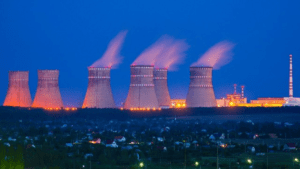
A mission of the international atomic energy agency has opened its presence at the Pivdenno-Ukrainian nuclear power plant, an Interfax-Ukraine correspondent reports.
The flag of the IAEA, in the presence of its head Rafael Grossi, was hoisted on the territory of the plant on Monday.
Grossi said the mission was badly needed because of the military situation in Ukraine.
“I am happy to be here. After Zaporizhzhia NPP, we are expanding our presence to other nuclear power plants in Ukraine. Today is the first step, and we will continue to work in this direction,” Grossi said after the flag-raising ceremony.
For his part, Energy Minister Herman Galushchenko welcomed the start of the IAEA mission, saying that it was important because of Russia’s aggression against Ukraine and the threats that the aggressor poses by terrorizing Ukrainians even on New Year’s Eve.
As reported, the IAEA announced the deployment of its permanent missions to three nuclear power plants in Ukrainian-controlled territory – in addition to the PAEC, the Khmelnytsky and Rivne nuclear power plants, and the Chernobyl nuclear power plant area. The IAEA permanent mission has been working for several months at the Russian-occupied Zaporizhzhia NPP, the largest in Europe.
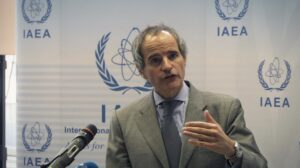
The IAEA Director General announced the end of his “long-awaited” visit to the Zaporizhia Nuclear Power Plant (NPP) and the establishment of a permanent presence of the agency at the plant.
“I have just completed the first tour of the key locations we wanted to see in this first approach to the entire facility. Of course, there is still a lot to be done. My team remains, and most importantly, we establish our permanent presence from the IAEA here,” he said in a video from ZNPP posted on his Twitter.
Earlier, Energoatom, which includes Zaporizhia NPP, reported that as of 18:00 on Thursday, Grossi had left the station. Most of the members of the delegation left the station with him.
According to Energoatom, five representatives of the IAEA mission remained at the ZNPP, who are unloading the equipment they brought and will continue to work at the plant.
The IAEA mission arrived at the ZNPP captured by Russian troops on September 1, approximately after 14:00. According to the statements of the occupying authorities, the IAEA experts who left the station “should leave the territory controlled by the Russian Federation before 20:00.”



