
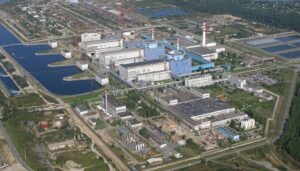
Ukraine has stopped power unit No. 1 of the Khmelnytsky NPP, which remained in operation after power unit No. 2 was taken out for repair, as a result of which only seven of the 15 existing power units are operating in the power system, the International Nuclear Energy Agency (IAEA) reported, citing the Ukrainian nuclear regulator SNRIU.
According to the IAEA’s daily report on Ukraine on its website late on Saturday evening, the agency explained the shutdown of the remaining power unit by taking it out for scheduled repairs.
“Seven reactors are operating in the country, including two at the Russian-controlled Zaporozhye Nuclear Power Plant, three at the Rivne Nuclear Power Plant and two at the Yuzhno-Ukrainian Nuclear Power Plant. Other reactors have been shut down for regular maintenance, including both units of the Khmelnytsky Nuclear Power Plant,” the statement said.
As reported, since February 18, KhNPP power unit No. 2 was shut down for scheduled preventive maintenance, lasting approximately 92 days.
According to the IAEA, power unit No. 2 of the Rivne NPP was recently put into repair, after which 8 out of 15 power units remained in operation.
Earlier, NNEGC Energoatom reported that three ZNPP power units were put into reserve after the station was occupied by Russian invaders, only one is under repair.
Khmelnytsky NPP consisting of two power units (VVER-1000) with a total capacity of 2000 MW is located in Netishyn (Khmelnytsky region).
In total, there are 15 power units in Ukraine equipped with water-cooled power reactors with a total installed electrical capacity of 13.835 GW.
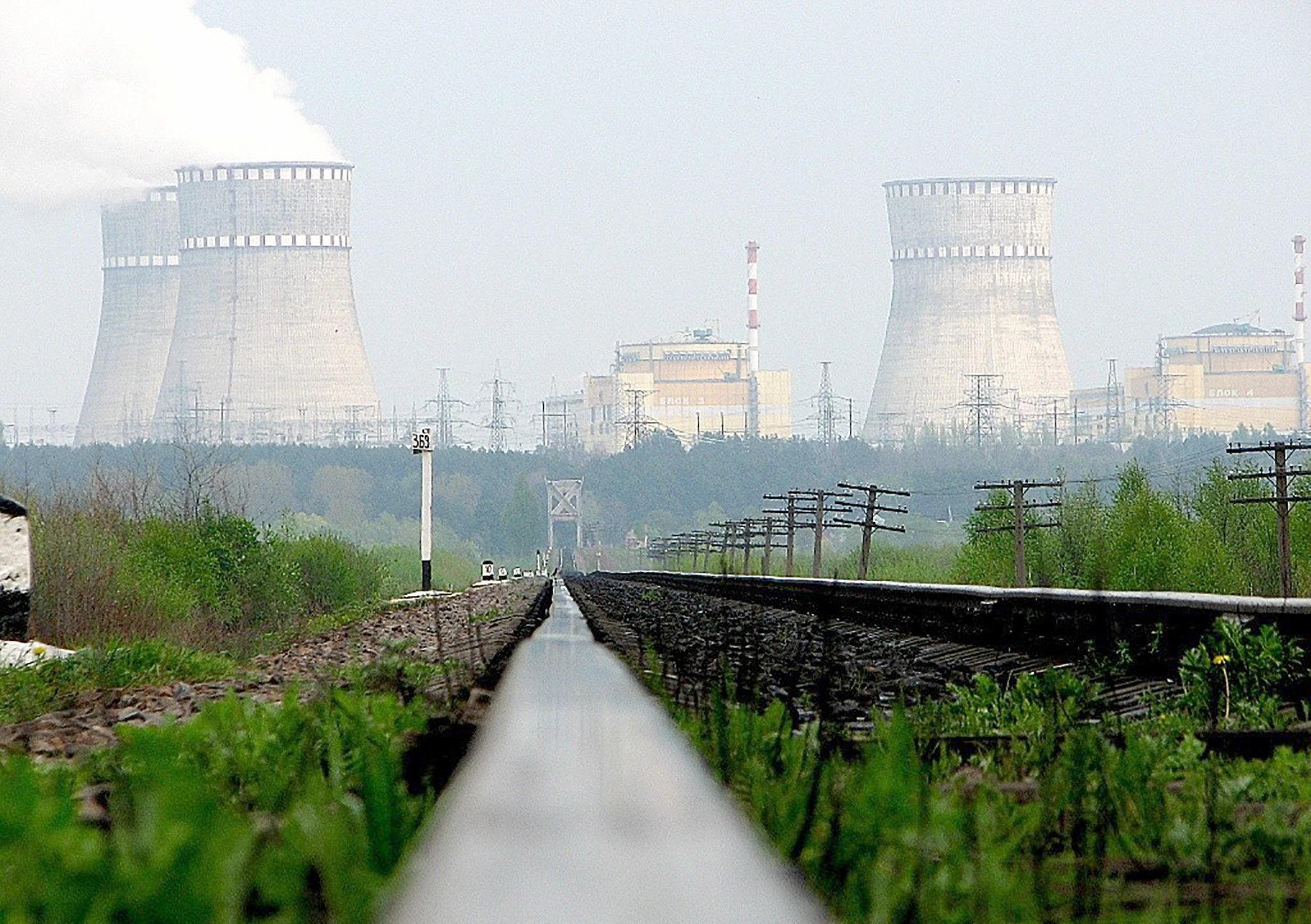
The Rivne nuclear power plant on July 18 reduced the output of its power unit No.1 (VVER-440) to 50%, having disconnected the TG-2 turbo generator at 05:26 a.m. Kyiv time on Thursday, July 18, after the leakiness of the condensate electric pump line of a turbine unit had been revealed, National Nuclear Energy Generating Company Energoatom’s press service said.
The causes of the incident are being checked. The TG-2 turbo generator is to be put into operation before 02:00 p.m. on the same day.
Energoatom said the incident is rated as “zero,” according to the INES nuclear event assessment scale, or “out-of-scale.”
Thus, as of Thursday morning, 10 of the 15 power units of four operating Ukrainian nuclear power plants were in operation.

Chornobyl nuclear power plant has officially received a new safe confinement (NSC) for subsequent commissioning from Novarka.
According to an Interfax-Ukraine correspondent, the handover ceremony took place at Chornobyl nuclear power plant with the participation of Ukrainian President Volodymyr Zelensky on July 10.
Upon completion of the transfer process, the plant will receive a license and proceed to operating the confinement complex and dismantling unstable structures of the Shelter facility.
“To implement this stage, additional financial resources are needed, first of all, from Ukraine,” the State Agency of Ukraine on Exclusion Zone Management said.
Earlier on July 10 Senior External Affairs Advisor at the European Bank for Reconstruction and Development (EBRD) Anton Usov wrote on Facebook that “22 years after the Chornobyl Shelter Fund was set up, the new safe confinement has now been launched and handed over to Ukraine.”
The international community raised EUR1.5 billion for the project, Usov said. The EBRD invested over EUR700 million. The confinement will serve at least 100 years and help solve the problem of removing the ‘sarcophagus’ over reactor No. 4, he said.
The construction of the NSC over the old Shelter began in 2012 following massive preparations on the site. The project was carried out by Novarka Consortium.
Due to the massive size of the NSC it had to be built in two parts, which were erected and successfully joined in 2015. Inside the NSC arc is a crane for removing the existing old Shelter Structure, or ‘sarcophagus,’ and the remainder of reactor No. 4.
The NSC has a service life of 100 years and cost EUR1.5 billion to build.
Pre-installation work and individual and comprehensive tests on its equipment and technological systems were carried out at the plant’s industrial site in March. In late April, the NSC was put into trial operation. It will run experimentally for no more than a year, after which, depending on its performance, it will receive the relevant license and proceed to full operation and the removal of the old Shelter.



