According to Serbian Economist, the event will take place at Porto Montenegro, and city authorities are already preparing temporary traffic restrictions, changes to access procedures, and enhanced security measures.
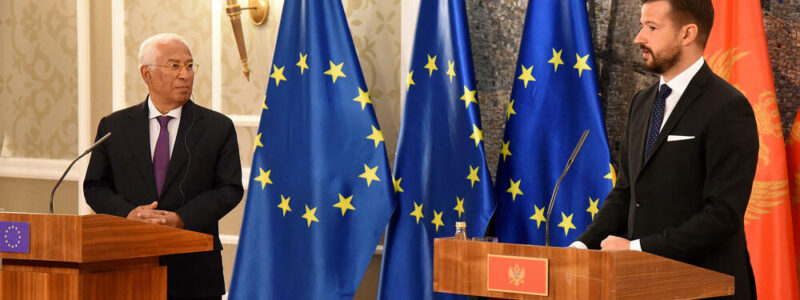
Montenegrin President Jakov Milatović and European Council President António Costa have sent joint invitations to the leaders of EU countries and Western Balkan states. The summit is set to bring together European leaders at a time when enlargement policy is once again high on the EU’s agenda.
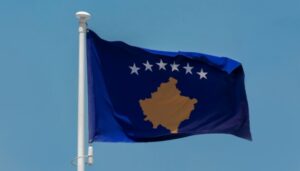
The summit is expected to be attended by European Union member states and six Western Balkan countries: Albania, Bosnia and Herzegovina, Kosovo, Montenegro, North Macedonia, and Serbia. These six economies are traditionally part of the EU-Western Balkans format, which is used to discuss the region’s European integration, reforms, security, infrastructure, energy, and economic convergence with the EU.
Earlier, local authorities reported the arrival of over 30 European delegations, though the final number may be higher when accounting for representatives of EU institutions, EU member states, countries in the region, and accompanying teams.
For Montenegro, hosting the summit is of particular significance. Milatović called it a historic moment, as the country is hosting such a major meeting between the European Union and the Western Balkans for the first time.
Tivat will operate under special arrangements in connection with the forum. On June 4–5, the city expects temporary traffic restrictions, heightened security measures, and changes to access in the Porto Montenegro area, where the summit will take place. Short-term road closures are possible, primarily on the route from Tivat Airport to the city center, as well as special traffic arrangements on Arsenalska and Istarska Streets.
Some parking lots will be temporarily closed, and Tivat Airport will adjust its operations to accommodate the international forum. Authorities are also considering changes to school schedules on June 4–5 and are preparing a cultural program for residents and visitors on the city waterfront on June 4.
The main political theme of the summit is the European perspective for the Western Balkans. Against the backdrop of the war in Ukraine, intensifying geopolitical competition, and the EU’s desire to accelerate expansion, the region has once again found itself in the spotlight in Brussels. Montenegro and Albania are considered the most advanced candidates for EU accession, while Serbia, Bosnia and Herzegovina, Kosovo, and North Macedonia face more complex political and institutional dynamics.
For the region’s economy, the summit is important not only as a political meeting. The focus is expected to be on infrastructure connectivity, access to European funds, energy security, a common regional market, transport corridors, and investments.
https://t.me/relocationrs/2850