
How to conduct sanctions screening of a foreign company, its owners and executives, and reduce the risk of payments and contracts being blocked. The strengthening of international sanctions has made counterparty screening a mandatory part of the work of Ukrainian exporters, importers, banks, logistics companies, and enterprises attracting foreign financing.
Searching for a partner’s name in an open sanctions list is only the initial stage. A company may not be directly subject to restrictions but may be linked to a sanctioned owner, director, parent company, or another legal entity from the same corporate group.
Additional complexity is created by different spellings of company names and surnames, transliteration, trade names, changes in registered addresses, and the use of intermediaries. Because of this, a simple check based on an exact name match may fail to identify a significant risk.
D&B compliance solutions are used to screen legal entities, beneficial owners, and related persons against sanctions lists, lists of politically exposed persons, information on legally significant events, and negative media coverage.
“Sanctions screening should not be reduced to entering a company’s name into a search bar. It is necessary to identify its owners, executives, parent companies, and subsidiaries. Amid tightening international restrictions, an error can lead to a payment being blocked, a contract being terminated, or reputational losses,” said Maksym Urakin, Director of Development and Marketing at Interfax-Ukraine, Head of the D&B-Interfax-Ukraine business unit, PhD in Economics.
Before concluding a contract, a Ukrainian company should identify the legal entity, verify its registration details, establish its ownership structure, and compare the information obtained against sanctions and other risk lists.
Banks, carriers, insurance companies, and other participants in the future transaction require particular attention. Even when the seller and buyer are not subject to sanctions, a payment or delivery may be stopped due to the involvement of a high-risk intermediary, vessel, financial institution, or related company.
Based on the results of the screening, a business may refuse the transaction, request additional documents, change the payment route, include sanctions clauses in the contract, or provide for the right to terminate cooperation if the partner’s status changes.
Sanctions compliance does not end after a contract is signed. The status of a company or its owner may change while a long-term contract is already being performed. That is why regular monitoring is advisable for key partners.
Dun & Bradstreet has been operating in the field of business information since 1841. The company provides solutions for third-party screening, analysis of corporate relationships, identification of beneficial ownership, sanctions screening, credit risk management, and supply chain monitoring.
In Ukraine, Dun & Bradstreet products and data are represented by the Interfax-Ukraine News Agency. Its specialized division helps Ukrainian companies screen foreign counterparties and work with international business information. Interfax-Ukraine is an independent Ukrainian news agency that has been operating since 1992 and is headquartered in Kyiv.
Questions can be submitted through the specialized D&B resource — dnb.ua, by email at Urakin@interfax.kyiv.ua, or by phone at +38 (044) 270-65-74.

Verification of the beneficial owner helps Ukrainian companies establish who actually controls a foreign partner and reduce sanctions and reputational risks.
Before concluding an international transaction, it is not enough for a Ukrainian business to check only the name, address, and registration number of a foreign counterparty. A company may be part of a large corporate group, controlled through several legal entities, or have its ultimate owner in another jurisdiction.
Identifying the ultimate beneficial owner, or UBO, makes it possible to understand who actually controls the company and receives economic benefits from its activities. This is important for banking compliance, international payments, investment transactions, exports, imports, and cooperation with large corporate customers.
The formal owner indicated in the register is not always the final link in the structure. Between the operating company and an individual, there may be holding companies, foundations, trusts, nominee owners, or enterprises registered in several countries.
Dun & Bradstreet uses corporate relationships and ownership information to build company structures, identify parent companies and subsidiaries, and determine beneficial owners. Corporate ownership information can be used for KYC checks, sanctions screening, and third-party risk assessment.
“A company’s name and country of registration do not always provide a complete picture of who controls the business. Before a significant transaction, it is necessary to see the entire corporate structure — from the local legal entity to the parent company and the ultimate owners,” emphasized Maksym Urakin, Director of Development and Marketing at Interfax-Ukraine, Head of the D&B-Interfax-Ukraine business unit, PhD in Economics.
According to him, particular attention should be paid to the ownership structure in cases where a counterparty has recently changed shareholders, is registered in a jurisdiction where access to corporate registers is complicated, or belongs to a group with a large number of related legal entities.
Verification of the beneficial owner helps answer several practical questions. A Ukrainian company needs to understand who controls its partner, whether this owner is connected with sanctioned persons, whether the declared structure corresponds to the actual business activities, and whether reputational or legal risks are hidden behind it.
At the same time, the mere fact of a complex corporate structure does not indicate a violation. International groups often have dozens or hundreds of enterprises in different countries. Risk arises when the structure remains opaque, contradicts the documents provided, or does not make it possible to establish actual control.
Ownership should preferably be checked not only before the first transaction. A change of shareholders, parent company, or ultimate beneficial owner may affect sanctions status, creditworthiness, and the ability to continue making payments through international banks.
Dun & Bradstreet is an international provider of business data and analytical solutions whose history began in 1841. The company provides tools for identifying legal entities, analyzing corporate relationships, identifying beneficial owners, checking counterparties, and conducting compliance procedures.
The official representative of Dun & Bradstreet in Ukraine is the Interfax-Ukraine News Agency. The D&B-Interfax-Ukraine division helps Ukrainian businesses obtain information about foreign companies, their owners, executives, and corporate relationships. Interfax-Ukraine has been operating since 1992 and produces more than 50 information products in Ukrainian, English, German, and Russian.
COMPANY VERIFICATION, COMPLIANCE, D&B, ULTIMATE BENEFICIAL OWNER
According to “Serbian Economist,” the Financial Action Task Force (FATF) has added Bosnia and Herzegovina to the list of jurisdictions under enhanced monitoring—the so-called “gray list.”
At the same time, Iraq was also added to the “gray list.”
According to the FATF, countries on the “gray list” have strategic deficiencies in their systems for combating money laundering, terrorist financing, and the financing of the proliferation of weapons of mass destruction, but are committed to addressing these issues within agreed-upon timeframes.
FATF President Elisu de Anda Madrazo stated that Bosnia and Herzegovina must strengthen the protection of its financial system against exploitation by criminals and terrorists, as well as ensure more effective oversight of the banking sector.
This is a significant signal for the region. Bosnia and Herzegovina remains part of the Western Balkan economic space, closely linked to Serbia, Croatia, Montenegro, and EU countries through banking, trade, remittances from the diaspora, transportation, construction, and small businesses.
Being placed on the “gray list” does not imply sanctions or a ban on transactions, but it typically leads to stricter compliance requirements on the part of banks and financial institutions. International payments, opening accounts, servicing companies, transfers, and transactions with counterparties from such a jurisdiction may be subject to additional checks.
This is important for Serbia for two reasons. First, Bosnia and Herzegovina is a neighboring market and a key destination for regional trade. Second, Serbian banks, companies, and exporters working with partners in Bosnia and Herzegovina may face more detailed inquiries regarding the origin of funds, ownership structure, beneficial owners, and the purpose of payments.
From a practical standpoint, businesses working with Bosnia and Herzegovina should prepare transaction documents in advance, verify the authenticity of goods and services, and properly draft contracts and payment justifications. This applies particularly to financial services, trade, real estate, logistics, import-export, and companies with complex ownership structures.
For reference: as of June 19, 2026, the current FATF “gray list” includes Angola, Bolivia, Bosnia and Herzegovina, Bulgaria, Cameroon, Côte d’Ivoire, the Democratic Republic of the Congo, Haiti, Iraq, Kenya, Kuwait, Laos, Lebanon, Monaco, Nepal, Papua New Guinea, South Sudan, Syria, Venezuela, Vietnam, the British Virgin Islands, and Yemen.
The FATF blacklist—that is, the list of high-risk jurisdictions for which the FATF calls for enhanced measures or countermeasures—includes North Korea, Iran, and Myanmar.
Bosnia and Herzegovina, COMPLIANCE, FATF, financial monitoring, SERBIA
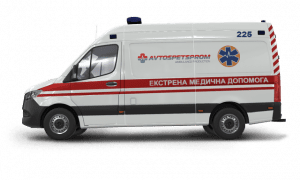
The manufacturer of ambulance vehicles Avtospetsprom LLC (Kyiv region) has received a certificate of compliance from the French company Groupe PSA.
According to a press release from Avtospetsprom, the certification was carried out by the French inspection and certification company Bureau Veritas. The criteria were divided into groups, compliance with which was measured on a 100-point scale. Avtospetsprom received a score of 93 points for the production process, 92 points for quality control and 93 points for the supply chain.
“With an average score of 90 in all parameters, the company received the highest third level of assessment. This is the first time in history of the country when a document of this level was received by a Ukrainian company that converts the base chassis into ambulances. The certificate testifies that the quality of ambulance vehicles assembly at Avtospetsprom LLC fully complies with the requirements of Groupe PSA,” the company reports.
As the Interfax-Ukraine agency was told by the company, since the beginning of 2020, Avtospetsprom has produced 210 ambulances. In 2019, the company produced over 700 ambulances of all types.
Avtospetsprom LLC has been operating since 2012, it is one of the leading manufacturers of emergency (ambulance) medical care vehicles and the main supplier of such vehicles for public and private medical institutions in Ukraine.
In April and May 2020, the second largest autoproducer in Europe, Groupe PSA, together with Avtospetsprom, implemented a campaign to assist the Ministry of Health of Ukraine and regional medical institutions in maintaining the proper technical condition of Peugeot and Citroën ambulances. The companies jointly repaired 100 ambulances.



