

Ukraine’s trade surplus in ferrous metals and products made from them in January–July 2026 fell by approximately 40% compared to the same period last year—to approximately $465 million.
The calculation is based on data from the State Customs Service of Ukraine.
Over the first seven months, Ukraine exported $1.678 billion worth of ferrous metals and an additional $507.5 million worth of metal products. Total export revenue for these two groups amounted to approximately $2.185 billion.
At the same time, imports of ferrous metals reached $1.023 billion, while imports of ferrous metal products amounted to $697.6 million. Thus, total imports amounted to approximately $1.720 billion.
The difference between exports and imports narrowed to approximately $465 million.
For comparison: based on the annual trends published by the State Customs Service, in January–July 2025, total exports of these two commodity groups amounted to approximately $2.385 billion, imports to approximately $1.612 billion, and the trade surplus to approximately $773 million.
Thus, the annual trade surplus decreased by approximately $308 million, or nearly 40%.
The main reason for this decline is the opposing trends in export and import flows. Total exports of ferrous metals and metal products over the seven-month period decreased by approximately 8.4%, while imports of these goods increased by approximately 6.7%.
The imbalance is particularly noticeable in the metal products segment: exports here totaled $507.5 million, while imports amounted to $697.6 million, resulting in a trade deficit of about $190 million.
Ferrous metals are currently offsetting this deficit: their exports exceed imports by approximately $655 million. However, at the same time, foreign exchange proceeds from their exports fell by 7.6%, while imports rose by 7.2%.
This trend indicates a noticeable decrease in the positive contribution of metallurgical products to Ukraine’s foreign trade balance in 2026.

According to Serbian Economist, Serbia has extended tariff quotas on imports of cement and certain types of steel products through the end of 2026. Once the established import volumes are exhausted, additional duties of 50% will be imposed.
The restrictions were originally introduced from January 1 through June 30, 2026, based on a government decree aimed at protecting industries of strategic importance to Serbia’s economy. However, the measure’s validity has been extended through December 31, with a simultaneous revision of some quotas and the list of commodity codes.
The quotas apply to Portland cement, hot-rolled and cold-rolled steel, rebar, hot-rolled wire rod, and certain other iron and steel products.
Quotas have also been established for certain categories of nails and wire, welded pipes, reinforcing mesh, and lattice structures. Goods that are not produced in Serbia have, in certain cases, been exempted from the restrictions.
The additional duty is added to the standard customs rate. For example, if the standard duty is 10%, once the quota is exhausted, the total burden on the importer can reach 60%.
In the first phase, the total quota volume was 421,1 thousand metric tons. Of this, 250,35 thousand metric tons were allocated to cement, 44,7 thousand metric tons to hot-rolled steel, and approximately 7,2 thousand metric tons to cold-rolled products.
Another 67,85 thousand metric tons consisted of quotas for rebar and wire rod in coils, and 51 thousand metric tons—for rebar in bars.
The quotas are allocated among countries based on their share of shipments to the Serbian market in 2020–2024. The largest volumes are allocated to the European Union, Turkey, Bosnia and Herzegovina, North Macedonia, and Albania.
Ukraine also received a separate country quota; in previous years, it supplied Serbia with rolled steel, rebar, wire, and other iron and steel products.
For hot-rolled steel, the total quarterly quota is approximately 22,000 metric tons. Products of Ukrainian origin account for just over 1,000 metric tons per quarter.
An additional 600 metric tons per quarter is allocated for shipments of rebar and hot-rolled wire rod in coils from Ukraine. Once these volumes are exhausted, the relevant products may be subject to an additional 50% duty.
In 2024, Serbia imported $23.15 million worth of iron and steel from Ukraine, as well as an additional $9.55 million worth of finished iron and steel products.
However, not all Ukrainian exports are subject to the new restrictions. The application of quotas depends on the specific customs code of the product.
For Ukrainian metallurgical and metalworking enterprises, Serbia’s decision means that small, regular shipments will be eligible for preferential terms only within the established quotas.
Larger shipments or goods cleared after the quota has been exhausted may become uncompetitive due to a sharp increase in customs costs.
The Serbian government explains the restrictions as necessary to preserve domestic cement and steel production, support traditional trade flows, and ensure the stability of the domestic market.
Additional factors include the tightening of European protective measures against steel imports and the rising costs Serbian companies face for energy and compliance with environmental requirements.
For Serbian manufacturers, the decision may provide additional protection against foreign competition. At the same time, the quotas pose a risk of rising raw material costs for construction companies, manufacturers of metal structures, pipes, wire mesh, and other businesses that rely on imported rolled steel and wire.
https://t.me/relocationrs/3280
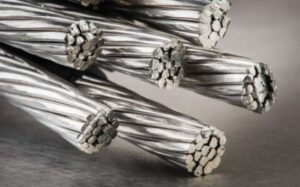
In January–June 2026, Ukraine increased its imports of nickel and nickel products by 5.2% compared to the same period last year, reaching $11,119 million.
According to customs statistics, nickel and nickel product imports in June totaled $1.946 million.
Exports of nickel and nickel products in January–June 2026 totaled $310,000, and in June—$118,000, compared to $608,000 for the first six months of 2025.
As previously reported, Ukraine reduced its imports of nickel and nickel products by 2.7% in 2025 compared to 2024, down to $26,011 million. Exports of nickel and nickel products totaled $1,420 million, compared to $602 thousand in 2024.
Nickel is used in the production of stainless steel and for nickel plating. It is also used in battery manufacturing, powder metallurgy, and chemical reagents.
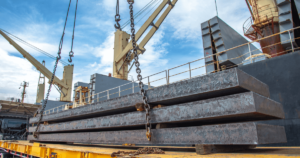
In January–June of this year, Ukraine’s metallurgical enterprises saw a 3.9% decrease in revenue from ferrous metal exports compared to the same period last year—down to $1 billion 478.041 million from $1 billion 538.513 million.
According to statistics released by the State Customs Service (SCS), ferrous metals accounted for 7.02% of total export revenue during this period, compared to 7.68% in January–June 2025.
In June 2026, export revenue totaled $293.644 million, compared to $291.757 million the previous month.
At the same time, Ukraine increased imports of similar products by 4.5% in January–June 2026, to $845.622 million. In June, imports totaled $140.744 million.
In addition, in January–June of this year, Ukraine reduced exports of metal products by 14.8% to $436.062 million. In June, exports of these products totaled $84.777 million.
Imports of metal products during this period rose by 13.6% to $590.757 million. In June, $125.767 million worth of these products were imported.
As previously reported, Ukraine’s metal enterprises increased their revenue from ferrous metal exports by 7.85% in 2025 compared to the previous year, reaching $3,339,487,000. Ferrous metals accounted for 8.25% of total export revenue for the year, compared to 7.42% in 2024. At the same time, Ukraine increased imports of similar products by 12.9% over the year—to $1 billion 669,544 million. In addition, Ukraine reduced exports of metal products by 3%—to $916,151 million. Imports of metal products rose by 24.4%—to $1 billion 290.608 million.
In 2024, metal companies increased their revenue from ferrous metal exports by 16.9% compared to 2023—to $3 billion 96.343 million. At the same time, Ukraine increased imports of similar products by 13.1%—to $1 billion 478.814 million.
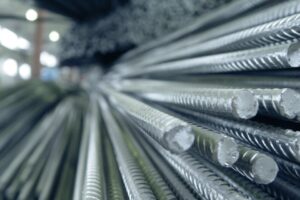
In January–May 2026, Ukraine’s exports of metal products fell by 17.9% compared to the same period last year, to $351.285 million.
According to statistics from the State Customs Service, exports of metal products amounted to $78.032 million in May of this year.
The decline in metal product exports was more pronounced than the drop in export revenue from ferrous metals, which fell by 6.2% over the same period.
As reported, in 2025 Ukraine reduced exports of metal products by 3% compared to the previous year—to $916.151 million.

In January–May 2026, Ukraine increased its imports of metal products by 12.3% compared to the same period last year, reaching $464.694 million.
According to statistics from the State Customs Service, $109.894 million worth of metal products were imported into the country in May of this year.
Thus, for the January-May period, imports of metal products exceeded exports of these products: $464.694 million versus $351.285 million.
As reported, in 2025 Ukraine increased imports of metal products by 24.4% compared to the previous year—to $1.290608 billion.



