
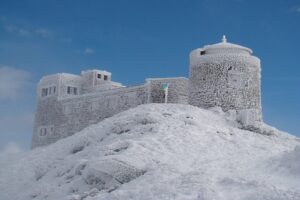
Andriy Butenko, Ukraine’s Minister of Education and Science, together with Marcin Kulasek, Poland’s Minister of Science and Higher Education, opened a new International Center for the Shared Use of Scientific Equipment on Mount Pip Ivan and signed a declaration of cooperation.
“We agreed to develop the Carpathians as a shared European space for science and education: joint research, student and researcher exchanges, and support for young researchers. A telescope has been installed here under a dome, specifically designed for challenging high-altitude weather conditions. Next, a robotic system will be added to the telescope—and it will be possible to control it remotely. This is one of four high-altitude observatories of this caliber,” Budenko wrote on Facebook.
According to him, the observatory was restored by the Vasyl Stefanyk Carpathian National University in collaboration with Polish partners.
“They will work here together, but the equipment is also open to others: any research team will be able to submit an application,” the minister said.
He noted that astronomy is not the only field of study here, as the Chornogora range features high-altitude flora and distinct ecosystems where the climate and nature can be studied. There are meteorological laboratories on site.
The minister recalled that the observatory was built back in 1938 as a research station for the University of Warsaw. Later, the Soviet authorities destroyed it, and for decades, ruins stood on the mountaintop. Ukrainians and Poles restored it together. The project began back in 2012.
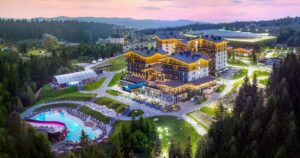
Apartel Skhidnytsya is a 5-star wellness resort in Skhidnytsia featuring 269 rooms of various types and 12 cottages. From the very beginning, the resort was conceived as a year-round destination, so the summer season here boasts extensive amenities and a packed calendar of events.
The Summer Series 2026 kicked off on May 16 with a performance by MONATIK. A series of major concerts and events is scheduled at the resort throughout the summer. One of the highlights will be a performance by Dorofeeva & Positiff, who are reuniting as a duo after a long hiatus. This is a major event for the Ukrainian music scene and a comeback that fans have been waiting for for years. Also on the season’s lineup are Druga Rika, CHEEV, Vitaliy Kozlovskyi, ARKUSH, DZIDZIO, Anna Trincher, Ochi v Ochi, Mila Nitić, YAKTAK, KOLA, and other artists.
One of the main summer venues will be Central Park, a large outdoor space on the grounds of Apartel Skhidnytsya. In winter, it served as an ice rink, and this season it will become an active recreation area with a roller rink, two padel courts, a tennis court, and a multi-purpose field for soccer, basketball, and volleyball.
An outdoor pool with a waterfall has already been prepared for the summer, featuring the renowned Chornomork restaurant, which adds a touch of the Black Sea to the Carpathian getaway. They have also renovated one of Apartel Skhidnytsya’s signature features—the Infinity Pool. This pool offers a panoramic view of the Carpathians, bringing “a piece of the sea to the mountains.”
One of the resort’s strongest offerings is wellness. In 2025, Apartel Skhidnytsya received an award from the World Luxury Hotel Awards. It combines a 2,000 m² spa, a medical Biohacking Center, physical therapy, wellness programs, and personalized bodywork sessions. Guests can come for a few days to unwind or undergo longer restorative treatments to improve sleep, reduce fatigue, and give their bodies time to fully recharge.
This summer, a day camp featuring a program in the format of a large-scale game will be launched for children. Participants will have their own journals, complete challenges, collect badges, and take part in various activities throughout the day. The program will include quests, creative workshops, games with non-toxic paints, water balls, and boats. A special highlight will be evening stargazing through a telescope.
The culinary offerings at Apartel Skhidnytsya complement the resort’s overall experience. There are two restaurants, a lobby bar, and a food court on the premises, and the menu combines European cuisine, local products, and signature dishes so that guests can choose a dining experience that suits their vacation rhythm.
Gastronomic evenings, creative workshops, orchestra performances, and open-air events are also planned for the summer. At Apartel Skhidnytsya, we aim to create a vacation experience where every day has its own atmosphere and a reason to make it brighter and more fulfilling.
“You shouldn’t directly compare the sea and the mountains. These are different vacation scenarios. Our goal is to give guests everything they come for on vacation—and a little more. Pools, sports, a spa, medical rehabilitation, children’s programs, concerts, gastronomy, and service should work together as a single experience. When a person gets all of this in one place, there’s no need to explain why they should come back,” comments Vasyl Krulko, co-owner of the Apartel Resorts hotel chain.
The resort holds the international Green Key eco-certificate, which confirms the resort’s compliance with modern standards of eco-friendly and responsible hospitality. At the same time, Apartel Resorts works with the local community to develop the region as a year-round resort.
Apartel Skhidnytsya Wellness Resort is the kind of destination that is increasingly drawing visitors to Skhidnytsya for a full, enriching vacation—a place to spend time with family, have fun, attend large-scale concerts, and truly recharge.

Climate change is already having practical consequences for Ukraine — from energy and agriculture to the condition of the Carpathian ecosystem and the prospects for winter tourism, experts from the Institute of Industrial Ecology and the Institute of Engineering Thermophysics of the National Academy of Sciences of Ukraine said. According to them, global warming in the Ukrainian region is manifesting itself more intensely than in a number of Western European countries, while Russia’s full-scale war is further increasing climate risks.
Corresponding Member of the National Academy of Sciences of Ukraine Nataliia Fialko stressed that the current climate crisis has already gone beyond the bounds of a purely scientific discussion and is directly affecting issues of security, energy and long-term state policy.
“In recent years, the threshold value of 1.5 degrees Celsius has already been reached. In 2023, this anomaly amounted to 1.54 degrees, in 2024 to 1.6, and in 2025 to 1.55. These are data from leading research centers and the World Meteorological Organization, which means humanity has already received a signal that global warming is moving toward its critical limit,” she said at a press conference at the Interfax-Ukraine agency on Thursday.
According to the scientist, the response to climate challenges must focus on decarbonization of the economy, energy efficiency and a transition to climate-neutral energy sources, including nuclear generation.
“The problem of climate security is directly linked to the decarbonization of the economy. And the latter, in turn, is determined by the transition to climate-neutral energy sources, and this concerns not only renewable energy, but also nuclear energy, which is very important for Ukraine. This problem is also linked to increasing energy efficiency overall and to the introduction of a circular economy,” Nataliia Fialko added.
In turn, Director of the Institute of Industrial Ecology and Full Member of the Academy of Construction of Ukraine Oleksandr Sihal noted that Ukraine already has domestic opportunities to reduce fossil fuel consumption, but this requires systematic modernization of heat supply infrastructure.
“If we look at the heating seasons in Ukraine over the past 20 years, we will see that they have already shortened by about 20%. That means we already need about 20% less fossil fuel even without additional measures. Then there is the block of energy efficiency, there is modernization of heating networks, there are individual heating substations, there is biomethane, the sun, the wind — all this makes it possible to significantly reduce the volumes of fossil fuel,” the scientist said.
The participants in the press conference paid special attention to the Carpathians, where, according to Oleksandr Sihal, climate change is already having a fully measurable effect. He noted that historical data, in particular Austrian observations, already record a significant temperature increase in the Carpathian region.
“According to Austrian data, since 1850 we have already seen a temperature increase of 2.4 degrees. If we interpolate this curve further, even without any acceleration of the process, then by 2050 we will have another 1.4–1.9 degrees of average increase. And this means not just a change in the average temperature, but an increase in imbalance — more very cold and very warm days and fewer stable moderate periods,” the expert added.

He emphasized that one of the most noticeable consequences of warming for the Carpathians has already been a reduction in the period of stable snow cover that can be used during the tourist season.
“If we are talking about our Carpathians, then already now the season when people can use snow for skiing holidays has shortened by 8–10 days. And if this process is not supported by artificial snow, this reduction will only continue to grow. We can already see that the snow disappears and then appears again, and these gaps have to be covered,” the scientist said.
At the same time, according to him, replacing natural snow with artificial snow will require significant water and electricity resources, which the country currently lacks under present conditions.
“To replace that same snow, 250–400 liters of water are needed for 1 cubic meter of snow, and in total, 3,000–4,000 cubic meters of water per hectare. In addition, the energy costs of producing artificial snow amount to 0.3–0.7 kilowatts per cubic meter, and if we calculate even minimal ski slopes, we are talking about millions of kilowatt-hours of electricity. In the situation Ukraine is currently in, we do not have such volumes of electricity, no matter how much money it might cost,” Oleksandr Sihal said.
According to the expert, this will inevitably affect the cost of recreation in the Carpathians as well.
“If we still want to preserve resorts in Ukraine, then we must be ready for the fact that for those who will отдыхать, this will mean additional costs. This may amount to between EUR100 and EUR800 for a vacation period of 10–20 days — in fact, this is how much will have to be paid to maintain such resort infrastructure. And if at some resorts, with the exception of Bukovel, which has sufficient water resources of its own, water also has to be transported, then all these costs will ultimately fall on the end consumer,” he stressed.
Nataliia Fialko also drew attention to the fact that for Ukraine the problem is even more acute than for some other European countries because of climate features and the consequences of the war.
“In Ukraine, global warming is taking place somewhat more intensely than in Western Europe, and this is primarily due to a drier climate. In addition, the situation is significantly affected by Russia’s full-scale invasion, which has led to a considerable increase in CO2 emissions. This is the so-called carbon footprint of war,” she said.

According to her, military actions have already become one of the main sources of additional climate pressure on Ukraine. In 2022, according to the scientist, military actions themselves, rather than energy or industry, became the main source of CO2 emissions, which caused emissions to rise by 23% immediately. Additional CO2 emissions from military actions in 2025 amounted to 77 million tonnes of CO2 equivalent, and for the period from February 2022 to February 2025 they totaled 175 million tonnes. The total related damage is estimated at $57 billion. The expert also outlined a broader list of risks that warming poses for states and societies.
“The main components of this problem include shortages of drinking water, food insecurity, soil degradation, competition for land, climate migration and energy vulnerability. In response, adaptive agriculture, international tools for resource management, energy decentralization and early warning systems are needed. And, what is especially important, armed forces and intelligence services must include climate forecasts in their strategic planning,” Fialko added.
Oleksandr Sihal expressed doubt about the possibility of quickly launching a separate state support program for ski resorts under wartime conditions and financial shortages, while at the same time naming the preservation of forests in the Carpathians as the first priority.
“The countries around us have similar problems, and the first piece of advice is not to cut down forests in the Carpathians. In fact, other countries are increasing forest cover, while Ukraine is cutting down century-old oaks and beeches. So we need to copy what is being done abroad and stop cutting down the Ukrainian Carpathians,” he concluded.
CARPATHIANS, CLIMATE CHANGE, NATALIIA FIALKO, OLEKSANDR SIHAL

A large inter-museum project, “Carpathians. These Mountains Know No Submission,“ which will use paintings, graphics, and decorative and applied arts to tell the story of the cultural image of the mountainous region and its significance for Ukrainian identity. This was reported by the museum’s press service.
”The Carpathians are an inexhaustible source of creative inspiration and national spirit. The region of Cheremosh and Prut was a Ukrainian citadel even in times when artists were deprived of the freedom to freely create national art,“ said Oksana Pidsukha, acting director general of the National Museum ”Kyiv Art Gallery.”
According to the organizers, the exhibition reveals the multifaceted image of the Carpathians through mountain landscapes, portraits of the freedom-loving inhabitants of the region, and genre scenes from the life of the highlanders. The museum emphasizes that the natural landscape has shaped the national character of Ukrainians for centuries, influenced the historical fate of the people, and found reflection in art.
The official presentation of the project will take place on March 10 at 5 p.m.
The exhibition is based on paintings, graphic works, and decorative and applied art by Ukrainian artists from the 1950s to the 1970s. A special place among them is occupied by the works of the Shistdesiatnyky artists — a generation of artists for whom the Carpathians became a symbol of spiritual freedom and a space for the search for national identity.
After World War II, artists went to the mountains to learn more about Ukrainian culture, feel the power of traditions, and demonstrate their inner freedom at a time when the Soviet system was trying to subordinate art to the canons of socialist realism. It was in the Carpathians that they sought new meanings and explored the interconnection between nature, man, and everyday life.
The exhibition features works by famous Ukrainian artists, including Veniamin Kushnir and Lyubov Panchenko, whose paintings convey the atmosphere of the mountainous region and its cultural depth.
A separate section of the exhibition is dedicated to the Transcarpathian school of painting, represented by works by Yosyp Bokshay, Adalbert and Janos Erdeli, Ernest Kontratovich, Gavril Gluck, Zoltan Sholtes, Anton Kashshay, Adalbert Marton, and Vladimir Sidoruk. In their works, the beauty of the Carpathians is conveyed through a subtle sense of light, a rich color palette, and the special atmosphere of the highland landscapes.
The thematic and stylistic palette of the exhibition is complemented by works by Ukrainian classics of the 20th century — Mykola Hluschenko, Serhiy Shyshko, Mykola Maksymenko, and Roman Selsky.
Special emphasis is placed on the graphic works of Heorhii Yakutovych, in particular the illustrations for Mykhailo Kotsyubynsky’s novel “Shadows of Forgotten Ancestors,” as well as his linocuts from the series “People of the Village of Dzembronia,” which deeply convey the spirit of Carpathian culture and the life of mountain communities.
The exhibition is also complemented by porcelain figurines and majolica by famous Ukrainian sculptors. Some of these works were created for the anniversary dates of the Soviet period associated with the so-called annexation of Western Ukraine to the USSR.
The exhibition includes works from the collections of the National Museum “Kyiv Art Gallery,” the Museum of the Sixties — a branch of the Museum of the History of Kyiv, the galleries “NYU ART,” ARS Kerylos, “Nostalgia,” “Vernissage,” as well as from private collections.
The magazine DNA is the project’s information partner.
The museum is open from 11:00 a.m. to 6:00 p.m. (except Mondays and Thursdays), and until 7:00 p.m. on Tuesdays. The full ticket price is 200 UAH, and 100 UAH for eligible categories.
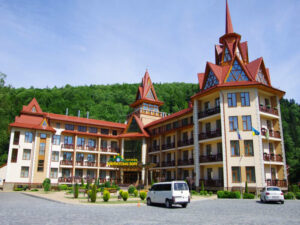
Hotel occupancy in the Carpathians in winter 2026 is expected to be 85-95%, and in cities — 50-65%, according to a study by the Ribas Hotels Group.
According to analysts, an increase in average hotel occupancy is expected in mountainous regions. With normal snow cover, peak occupancy in Bukovel will be 85-95%.
In cities, according to Ribas Hotels Group forecasts, hotel occupancy will be approximately 50-65%. Winter hotel occupancy in Odesa will reach 45-65% depending on the concept of the enterprise.
According to a survey conducted by the company, this year people prefer aparthotels and cottages that satisfy their need for privacy and autonomy. City business hotels are also in stable demand, allowing guests to work comfortably thanks to quiet areas and uninterrupted internet.
Among the trends is an increase in group bookings among different population groups. Stable demand in December and February comes from corporate groups. An increase in interest among families and friends is expected, with the number of family bookings likely to grow by 10–15% and the size of “groups of friends” from 4–6 to 6–8 people. This is why there is a growing need for family rooms, two-room apartments, and cottages, which necessitates booking rooms for groups in advance during peak dates. In 2026, a significant increase in the “booking window” is predicted — from 7–14 days to 21–35 days.
“Guests are taking vacation planning more seriously. In search of more favorable offers, they prefer early bookings with a fixed price,” the company’s analytics note.
This winter, there has been a 25-30% increase in direct bookings through the website. At the same time, although OTA platforms such as Booking, Expedia, etc. provide stable demand, their share is declining to 10-20% this winter season. The most effective booking channels are currently social networks (especially Instagram/Telegram) and quick sales through administrators and chatbots (up to 60%). This is due to their convenience, transparent special offers, more active advertising, and bonuses for repeat guests.
“For the first half of 2026, we predict the rise of major trends: guests’ desire for comfort and privacy, hyper-personalization of service, and the workation format (combining leisure with work). Due to affordability, people are traveling more often within Ukraine and spending more time on travel. A partial return of deferred demand is expected this winter season,” the study notes.
A number of factors influence the dynamics of domestic tourism: transportation prices, stability of energy supply in hotels, and healthy lifestyle trends. That is why the number of wellness hotels is actively growing in Ukraine.
Ribas Hotels Group is an international management company founded in 2014 in Odesa, whose flagship service is the operational management of hotel and restaurant complexes. The company also provides services in concept development, design, support for all stages of project implementation, consulting, and franchising for developers.
The company comprehensively manages and exclusively books 28 city, beach, and ski hotels under the Ribas Hotels, Ribas Rooms, WOL home + hotel, and Mandra Glampings brands. The operator’s total room capacity is over 1,000 rooms. In total, the portfolio includes more than 50 projects, including those in the design and construction stages. The company is also currently developing properties in Poland and Indonesia.
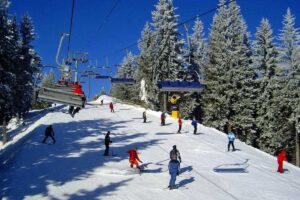
The National Agency of Ukraine for the Identification, Investigation, and Management of Assets Derived from Corruption and Other Crimes (ARMA) has put up for auction land plots of ski resorts in the Zakarpattia region and the lower station with a chairlift and the upper station of a ski lift with the consent of the owners for a total amount of over UAH 347 million.
According to the announcement on the Prozorro.Prozori platform, one of the lots included 115 land plots with a total area of about 98 hectares in the Khust district (Pylypetska OTG), 93 land plots with a total area of over 98 hectares in the Svalyava (Bereznykivska SR) and Khust (Pylypetska OTG) districts of Zakarpattia region, as well as the lower station with a chairlift and the upper station of a ski lift.
The starting price of the lot is UAH 150.4 million.
The other lot includes 145 land plots belonging to Borzhava Development LLC, 56 land plots belonging to Borzhava Invest LLC, 42 land plots belonging to Borzhava Land LLC, and two land plots belonging to Dumka LLC. The land is located in the Mukachevo and Khutsk districts of Zakarpattia.
The starting price is UAH 176.5 million.
The third lot includes 41 land plots owned by Taurus Invest LLC, also located in the Mukachevo and Khutsk districts of Zakarpattia.
The starting price is UAH 20.9 million.
It is noted that consent to the sale of the seized property was given by the owners of the assets of Borzhava Development LLC, Taurus Property LLC, Taurus Land LLC, Taurus Invest LLC, Dumka LLC, Borzhava Land LLC, and Borzhava Invest LLC.
Auctions based on the English model are scheduled for December 2.
According to Opendatabot, the ultimate beneficiary of these companies is Austrian citizen Gernot Leitner, a representative of the Austrian ski industry and a long-time participant in the preparation of the Summer and Winter Olympic Games.
As reported, the state began searching for investors for the construction of the Borzhava ski resort back in 2013 to implement the project “Olympic Hope 2022: Creation of Sports and Tourism Infrastructure.” However, a number of projects, including Olympic Hope 2022, were not implemented due to embezzlement by officials of the State Agency for Investment and National Projects Management and the State Investment Company, as revealed by detectives from the National Anti-Corruption Bureau of Ukraine.
Later, in 2020, Leytner presented the resort project. Construction was scheduled to begin in 2021.



