The International Monetary Fund (IMF), in cooperation with Ukraine, is working to improve corporate governance in all state-owned enterprises, not just selected ones. This work includes transparency in the formation of supervisory boards, improving the efficiency of the decision-making process, and transparency, as reflected in the new four-year Extended Fund Facility (EFF) program, said Suchanan Tambunleurtchai, Deputy Head of the IMF Mission to Ukraine.
“One of the commitments made by the authorities is to start publishing the financial statements of key state-owned enterprises in order to make these key performance indicators available to the public so that the public and other stakeholders can also assess the performance of these state-owned enterprises,” she said at a briefing on Friday.
At the same time, Tambunleurtchai clarified that the IMF does not have specific quantitative targets for state-owned enterprises under the program.
According to Ukraine’s economic and financial policy memorandum published by the Fund on Friday, the publication of financial statements of leading state-owned enterprises in accordance with IFRS standards will resume by the end of June 2026, with appropriate edits to protect critical infrastructure and an extended publication period of up to one year.
“We will introduce mandatory annual financial audits for leading state-owned enterprises, for which adequate funding will be provided, by making appropriate legislative changes if necessary. We will ensure the publication of audit reports, starting with the 2025 financial audits, by the end of August 2026,” the memorandum also states.
By the end of June 2026, the development of an annual report for state-owned enterprises will also begin in accordance with the requirements of the Standard Operating Procedure (SOP), which will be appropriately expanded to include information on the financial performance of leading state-owned enterprises using a common set of indicators, payments to the state budget and fiscal support, specific PSO obligations, and quasi-fiscal activities of each enterprise. Such a report will be published annually, starting at the end of September 2026 for 2025, and will be gradually expanded to cover more state-owned enterprises.
In addition, Ukraine has committed to ensuring the publication of financial statements reflecting the separation of PSO-related and non-PSO-related activities for all state-owned enterprises subject to PSOs by the end of June 2027.
“We will amend the State Property Policy and the Law ”On Joint Stock Companies” (2465-IX) to provide that all charters of state-owned enterprises require a simple majority of votes for supervisory board decisions, except for the approval of the strategic development plan, and we will avoid provisions allowing veto or dominant majority requirements by the end of June 2026,” the memorandum also states.
According to the memorandum, all nominations and dismissals of CEOs of state-owned enterprises will be decided by a simple majority vote of the supervisory boards, with corresponding amendments to the charter, if necessary.
“We will ensure that a comprehensive financial audit, compliance audit, and performance audit for all non-defense state-owned enterprises by reputable independent auditors is initiated by the end of June 2026,” the document states.
Another commitment is to publish a revised State Ownership Policy by the end of May 2026, which will more closely align with the OECD Guidelines for Corporate Governance of State-Owned Enterprises, as recommended in the 2025 OECD Review.
The government also noted that, in close consultation with international partners, it is exploring options for improving the management of state-owned enterprises, which also includes the potential introduction of a centralized model. This involves, in particular, defining the roles and mandates of key state institutions involved in the management of state-owned enterprises, such as the Ministry of Finance, the Ministry of Economy, the Cabinet of Ministers, other relevant sectoral ministries, and the State Property Fund (SPF).
“We will ensure a strong role for the Ministry of Finance as the body responsible for financial oversight of state-owned enterprises, limit quasi-fiscal risks, and help protect debt sustainability. It is important that any new system of state-owned enterprise management should not erode the government’s authority over dividend policy, ensuring that dividends from state-owned enterprises are directed to the state budget and reported transparently to ensure accountability and oversight,” the memorandum also notes.
Overall, the ultimate goal of centralizing state-owned enterprise ownership should be to professionalize the state’s ownership function, and any centralized management system should operate with caution, the memorandum says.
“This should be based on a clear legal mandate, ensure proper oversight by the Ministry of Finance and fiscal transparency, include reliable safeguards against political interference to ensure professional merit-based management, and require strict, internationally agreed reporting and accountability,” the memorandum emphasizes.
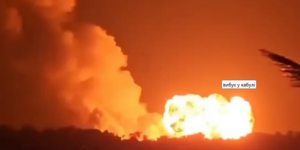
The Afghan TV channel Ariana News reported, citing local sources, that Afghan forces struck a “nuclear facility” in Pakistan, as well as a military base near Abbottabad (Khyber Pakhtunkhwa province).
At the same time, there was no independent confirmation of the claim that the “nuclear facility” had been hit at the time of publication. Reports by international agencies on the sharp escalation between Pakistan and the Afghan authorities referred to the use of drones and strikes on military targets, but without indicating that nuclear infrastructure had been hit. Specifically, Reuters reported that Afghan authorities said drones were used against military targets in Pakistan, while Pakistan’s information minister said attempted drone strikes were intercepted and damage was avoided.
The escalation between the countries in recent days has been accompanied by mutual strikes and conflicting statements from the sides about the results of the attacks.
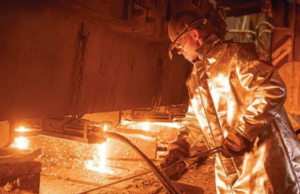
ArcelorMittal Krivoy Rog Mining and Metallurgical Combine PJSC (AMKR, Dnepropetrovsk region) has announced the forced termination of production activities of its subsidiary Foundry-Mechanical Plant LLC (LMZ).
According to the company’s press release on Friday, the decision to cease production activities of LMZ, which is an auxiliary division of AMKR’s main production facility, will take effect three months from the date of the announcement.
AMKR notes that the decision is dictated by the current economic and market circumstances in which the company is operating in Ukraine amid a full-scale war. AMKR. A key reason for the move is the high cost of electricity in Ukraine. Constant attacks on the energy infrastructure have led to electricity shortages and the need to import electricity at even higher prices, which has led to a significant increase in production costs and a drop in production. For example, due to the shortage of e/e in January 2026 compared to November 2025 figures, there was a 30% drop in pig iron production, a 40% drop in steel production and a drop in rolled steel production by up to 60%.
“Compared to 2024, when we asked the Ukrainian government to urgently develop measures to curb the growth of electricity prices and support producers in the mining and metallurgical industries, the price of electricity rose from $120 per MWh (in Q2 2024 with delivery without VAT) to $230 in February 2026, reaching up to $370 per MWh during peak hours,” the press release states.
An additional negative factor was the decision of the European Commission to introduce CBAM (cross-border carbon adjustment mechanism) from January 1, 2026 without any exemptions and transition period for Ukrainian producers. This resulted in the loss of the European market for a significant part of Ukrainian steel producers and critically affected their production volumes and utilization of certain divisions and capacities.
“It is worth noting that AMKR made significant efforts to reorient sales to the EU market after the outbreak of a full-scale war. However, the implementation of CBAM without taking into account the realities of the war in Ukraine thwarted these efforts,” the press release explains.
The company notes that the decision to close LMZ will result in the reduction of 1.7 thousand jobs, and together with the closure of the blooming shop and related production processes, the number of job cuts will exceed 2,400. At the same time, LMZ employees will be offered jobs at AMKR with the possibility of retraining at the employer’s expense.
Foundry-Mechanical Plant LLC (LMZ) is one of the largest machine-building enterprises in Ukraine. The enterprise is a powerful machine-building and repair-mechanical complex, which includes a number of machine-building chains and such production branches as foundry, forging and pressing, thermal, welding and surfacing production, mechanical processing, metalworking and assembly, production of rubber and technical products, repair of mechanical products and others.
National postal operator Ukrposhta has started auctions for the sale of 20 unused real estate objects with a total area of 32.8 thousand square meters with a starting price of more than UAH 200 million, the company’s CEO Igor Smilyansky said on Thursday.
According to his message in Telegram, the objects offered on the site Prozorro.Sale range from a small room in a village in Transcarpathia to a sorting center in Lviv with an area of 5.6 thousand square meters.
The head of the company expects profits from the sale in the tens of millions of hryvnias, which will be used for investments, as well as savings on the maintenance of these facilities and payment of taxes of more than 3 million hryvnias.
“The funds to be received from the sale, according to the decision of the shareholder ”Ukrposhta” Ministry of Development of Communities and Territories, will be immediately directed to investments in fixed assets,” Smilyansky said.
General Director of “Ukrposhta” specified that the starting price for investors, put up for auction sorting center, which was built in the 1920s in the heart of Lviv near the railway station, 56.9 million UAH.
The day before, Ukrposhta also completed the second auction of 716 units of decommissioned vehicles on Prozorro.Sales, receiving UAH 9 million, and is preparing to start the final sale of about 250 more cars.
In the fourth quarter of 2025, Ukrposhta made a net profit of UAH 257.9 million, which was 69.2% higher than in the same period of 2024 due to additional income from the sale of the company’s property, which amounted to UAH 168 million.
The national postal operator increased its revenue by UAH 10.7m in the fourth quarter compared to the corresponding period of 2024 – up to UAH 3bn 601.6m.
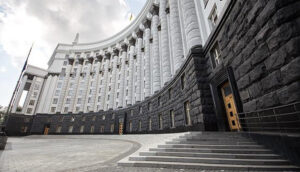
The Cabinet of Ministers of Ukraine is planning to approve a new procedure for using state support funds for industrial parks in the next week or two with an additional program for receiving monetary compensation for infrastructure damaged by Russian attacks in the amount of up to UAH 200 million, Deputy Minister of Economy Vitaliy Kindrativ said.
“In the near future, we will come up with a new procedure for the use of funds, which will include an additional program for receiving compensation for damaged infrastructure in industrial parks. That is, if there was a Russian attack, something was lost or destroyed, the state will be able to give you up to UAH 200 million to restore the infrastructure. I think it will be adopted by the government in a week or two, and we will soon receive applications,” he said during the annual Eco-Industrial Parks Conference in Kyiv on Friday.
He expressed hope that there will be few applications for restoration, but reminded that there are already “two bad cases, and it is on them that we have developed this mechanism of support from the state for those who suffered.”
Mr. Kindrativ also noted that the incentives provided by the state for the development of industrial parks are enough to develop a network of them.
“For our part, we see one big gap that we have been working on for two years now, and we hope to achieve results – a program to support and develop the capacity of IPs, management companies, and participants. That is, it is not enough to create and register an IP, it is necessary to fill it with appropriate meanings and tools, to bring in residents and give it life, and this requires additional competence and those who create the park do not always have it,” said the Deputy Minister of Economy.
According to him, launching this program this year is one of the government’s priorities.
Mr. Kindrativ also reminded that Ukraine is probably the only country in the world that has developed and approved the standard of an eco-industrial park at the state level.
“And it seems to me that for businesses that are planning and looking towards industrial parks, this is a good beacon of what they should do to develop in this direction,” he summarized.
As reported, as of the end of 2025, 37 industrial enterprises were built or under construction in Ukrainian industrial parks, of which 22 plants have already been built and 15 are under construction.
Currently, the Register of Industrial Parks includes more than 113 objects. Industrial parks are part of the investment component of the Made in Ukraine policy for the development of Ukrainian producers.
In October 2025, for example, a Russian missile destroyed the Sparrow Industrial Park in Lviv.
The EIP Ukraine 2026 conference is being implemented as a flagship national event within the framework of the Global Eco-Industrial Parks Program II – Ukraine: National Implementation (GEIPP-II Ukraine) project.
https://interfax.com.ua/news/economic/1147910.html