

The National Bank of Ukraine has revoked the licenses of Ardian Leasing Company LLC and FC Aktiv+ LLC on the basis of submitted applications, the regulator’s website has reported.
In addition, these companies are excluded from the State Register of Financial Institutions due to the revocation of licenses.
Another two non-banking financial institutions (NFIs) on the basis of their own applications, the regulator has agreed to change the scope of licenses for the activities of financial companies: LLC FC “Percent” – to exclude from the license such services as financial leasing and provision of guarantees, LLC “Siroko Finance” – to exclude the service of financial leasing from the license.
At the same time, the NBU notes that after the change in the scope of licenses for the activities of the financial company LLC “FC “Percent”, LLC “Siroko Finance” have the right to provide funds and bank metals on credit, as well as factoring service.
The corresponding decisions of the NBU Committee on supervision and regulation of non-banking financial services markets adopted at a meeting on April 5, 2024.
On April 5, Ukrhydroenergo announced a tender for voluntary motor vehicle insurance (CASCO) for the branches of the Cascade of Kyiv HPPs and PSPs, according to the Prozorro electronic public procurement system.
The expected value of the insurance services procurement is UAH 192.041 thousand.
The deadline for submitting documents for the tender is April 15.
“Ukrhydroenergo operates all major hydroelectric power plants located on the Ukrainian sections of the Dnipro and Dniester rivers. The total installed capacity of the company’s hydroelectric power plants is 5,744.8 MW. The state, represented by the Ministry of Energy, owns 100% of the company’s shares.
hull insurance, hydroelectric power plants, motor vehicle insurance, Prozorro, PSPPs, TENDER, UKRHYDROENERGO

The Polish Inspectorate for Agriculture and Food Quality (IJHARS) in Lublin has decided to ban the circulation of three batches of ice cream with a total weight of 8.48 tons imported from Ukraine due to defrosting.
The decision was immediately implemented, the inspectorate said in a post on the social media platform X on Sunday.
It is also noted that the day before IJHARS in Poznan decided to ban from the Polish market another batch of ice cream imported from Ukraine, totaling 1.44 tons, due to the lack of declaration of sweetener (aspartame) in the composition.
Earlier this week, the Polish Trade Inspectorate announced the largest ever fine of 1.5 million zlotys (about $380,000) imposed on an importing company for importing 11,500 tons of technical rapeseed and feed wheat from Ukraine as counterfeit products for further use in the form of food products.
In addition, it was decided to ban the import of 57.66 thousand tons of tomato paste from Ukraine due to the presence of mold.
A week earlier, IJHARS chief inspector Przemyslaw Rjodkiewicz said that 1.4% of batches of products from Ukraine, which the commission checked at the border, were rejected last year.

The Reserve Bank of Zimbabwe is putting into circulation a new currency – Zimbabwe Gold (Zimbabwe Gold, or ZiG), writes MarketWatch with reference to its message.
ZiG will replace the Zimbabwean dollar and will be backed by gold, other precious metals and foreign currencies.
The new currency will help simplify monetary and financial relations, bring certainty and predictability to them, said the head of the national central bank John Mushayaavanhu.
The central bank will set the interest rate for borrowing in Zimbabwean gold at 20 percent against a global maximum of 130 percent for the former currency.
Banks will start converting account balances into the new currency on Friday. It will be put into circulation on Monday at a rate of 13.56 gold pieces per U.S. dollar, CNBC Africa reported.
Zimbabwe’s annual inflation accelerated to 55 percent in March from more than 47 percent a month earlier amid the collapse of the former national currency and the country’s economy’s reliance on the U.S. dollar.
The Reserve Bank of Zimbabwe also cited problems with change in payments, including its issuance in the form of coupons or candy.
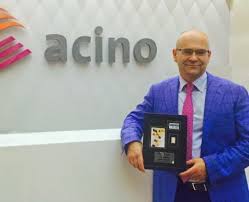
Since the beginning of 2024, the demand for neurological drugs, including antidepressants, as well as drugs used to treat dementia, epilepsy and antipsychotics, has been growing, Yevhen Zaika, regional director of the Acino pharma company, shares his observations.
“We see a significant increase in demand for neurological drugs: antidepressants, drugs for the treatment of dementia, epilepsy and antipsychotics,” he told Interfax-Ukraine.
Zaika noted an increase in demand for cardiac and endocrinology drugs, as well as an increase in the share of nutritional supplements in the sales structure.
Commenting on the current situation in the pharma market, the expert noted that since the beginning of the full-scale invasion, logistics has risen in price by 20-30%. To counteract blackouts, the Pharma Start plant in Kiev, which produces products for Acino, was equipped with two diesel generators, the office and production are provided with Starlink Internet.
Zaika said that Acino currently has 17 new products in development.
At the same time, he emphasized that Ukrainian requirements for the quality and manufacture of drugs are “very severe.”
“For example, the Ukrainian market applies the requirement for separate registration of active pharmaceutical ingredients (APIs), which significantly increases the development time of new products, and also increases the cost of both developing and maintaining the active registration status of the product. In Europe, where we all aspire to, there is simply no such thing as AFI registration,” he said.
Commenting on the strategy of the company’s participation in budget procurement, Zaika noted that the volume of tender shipments grows annually in hryvnia equivalent, but the share of budget shipments remains approximately at the same level.
As reported, pharmacy sales in Ukraine in January-February 2024 increased in monetary terms by 21.6% compared to the same period of 2023 – up to UAH 32.331 billion, in physical terms – by 2.9% to 201.828 million packages. Pharmacy sales of medicinal products for two months of 2024 amounted to UAH 25.265 billion, which is 20.65% more than in the same period of 2023. At the same time, sales of drugs in physical terms increased by 2.6% to 142.869 million packs.



