

In January-October 2025, Express Insurance (Kyiv) collected insurance premiums totaling UAH 997 million, which is UAH 238 million, or 31.3%, more than in the same period of 2024, according to the insurer’s website. Premiums under CASCO contracts for this period amounted to UAH 660.3 million, which is UAH 66.4 million, or 11.2%, more than in January-October 2024, under OSAGO – UAH 315.9 million (+118%), and for other types of insurance, UAH 20.9 million (+3.1%).
The company reports that in January-October 2025, the total amount of insurance claims for insured events amounted to UAH 420.5 million, including payments to customers under CASCO – UAH 329.3 million, and to victims under MTPL – UAH 84.2 million.
As reported, as of October 1, 2025, the assets of Express Insurance amounted to more than UAH 1 billion, which is UAH 209.3 million more than a year ago, and their share in cash amounted to 87%, which ensures the company’s operational ability to pay compensation for insured events.
Express Insurance was founded in 2008 and is part of the UkrAVTO group of companies. It specializes in auto insurance.

From the beginning of next year, the Louvre Museum in Paris will significantly increase the cost of admission tickets for most visitors from countries outside the European Union and the European Economic Area (EEA). This was reported by Euronews Serbia and the Serbian newspaper Politika, citing a decision by the museum’s board and BBC reports.
From 14 January 2026, tickets for tourists from countries outside the EU and the EEA (which, in addition to EU countries, includes Norway, Iceland and Liechtenstein) will increase in price from €22 to €32, i.e. by 45%.
The new rates will apply, in particular, to citizens of the United States, the United Kingdom, China, and all countries that are not members of the EU or the EEA – the countries of the Western Balkans (including Serbia, Montenegro, North Macedonia, Albania, Bosnia and Herzegovina), Ukraine, Russia, Turkey, the Middle East, Africa, Latin America and most of Asia.
According to the Louvre itself, the museum was visited by about 8.7 million people in 2024, of whom approximately 69% were foreign tourists; more than 10% of the flow was accounted for by US citizens, and about 6% by Chinese visitors. The French authorities and the museum’s management expect that the price increase for non-Europeans will bring in tens of millions of euros in additional revenue, which will be used to strengthen security and carry out a large-scale renovation of the building and exhibition spaces.

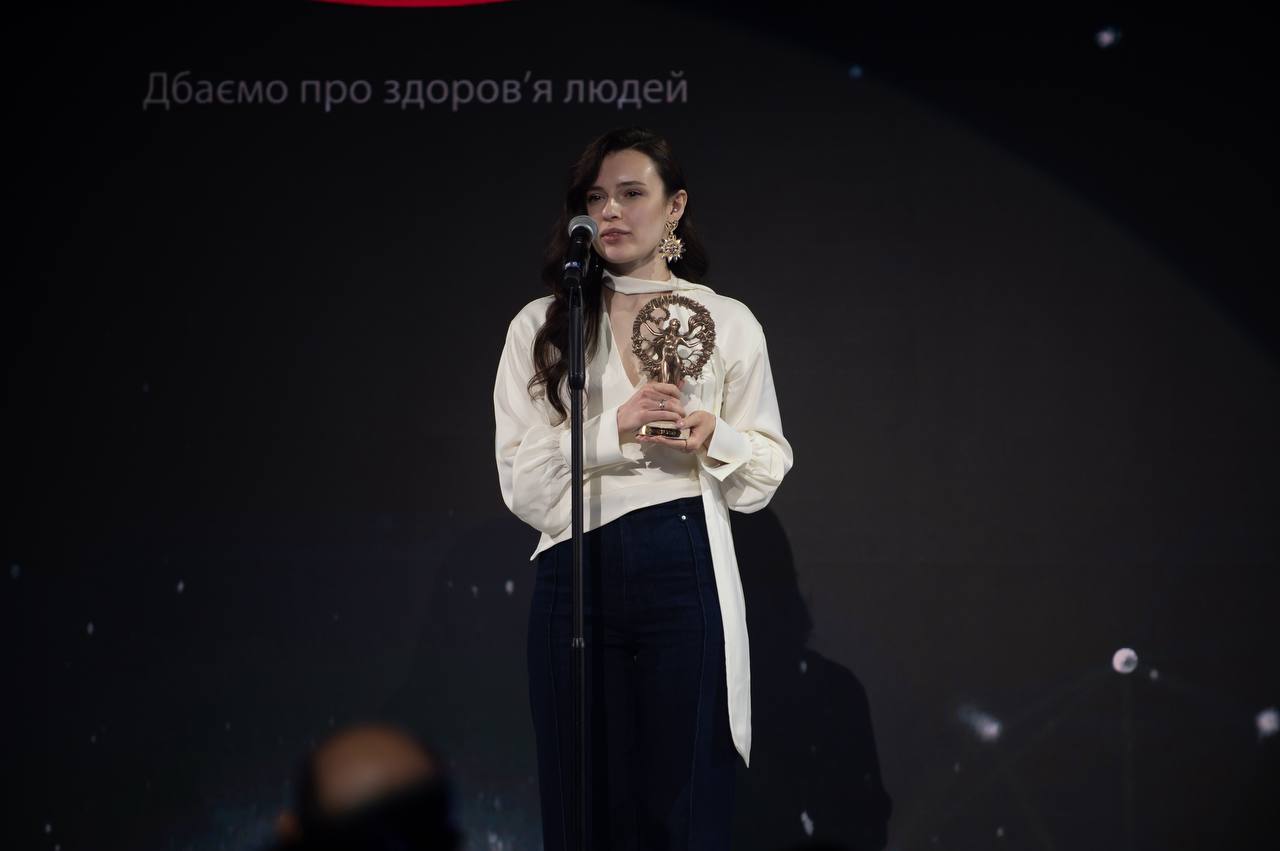
On 25 November 2025, the Ukrainian House hosted a gala ceremony to award the winners of the annual competition for professionals in the Ukrainian pharmaceutical industry, Panacea-2025, the main national event that recognises market leaders, innovations and industry achievements.
The ceremony was traditionally hosted by Timur Miroshnichenko, and the musical atmosphere of the evening was created by the band KADNAY.
The pharmaceutical industry in 2025: a year of courage, innovation and resilience
The awards ceremony brought together the leading companies, experts and innovators of the year.
In 2025, the Ukrainian pharmaceutical industry continues to operate in conditions of full-scale war and economic instability. Despite the pressure of circumstances, the market demonstrates a unique ability to adapt: companies invest in innovation, develop new approaches to products and services, implement digital solutions and support patient access to quality treatment.
This year’s ceremony was an evening of gratitude to all those who are making the Ukrainian healthcare system stronger and the pharmaceutical industry more competitive on a global level. Before announcing the winners, guests honoured the defenders of Ukraine with a minute of silence.
Winners of Panacea-2025
COMPANY OF THE YEAR
AI Excellence Award, Artificial Intelligence in Pharmacy
Winner: Roche
The company was recognised for its breakthrough in the application of artificial intelligence and the implementation of the project ‘Screening for diabetic retinopathy using AI’ — an innovation that gives patients access to fast and accurate diagnostics.
Investors in innovative treatment during wartime. International sponsors of clinical trials
Winner: MSD
The company was recognised for its continued support of clinical trials in Ukraine, increased investment in scientific programmes, and ensuring patients have access to modern treatments even during wartime.
PROJECT OF THE YEAR
Introduction of eCTD in Ukraine
Winner: State Expert Centre of the Ministry of Health of Ukraine
Ukraine has switched to the international format of registration dossiers eCTD, used by the EU, the US and leading regulators around the world, in record time. This step has already been recognised as one of the most important digital breakthroughs in Ukrainian pharmaceuticals.
EDUCATIONAL PROJECT OF THE YEAR
Polpharma Academy
The project was recognised for creating a modern interactive educational space for doctors with a focus on practice, professional support and uniting the medical community around knowledge and development.
DRUG OF THE YEAR — OVER-THE-COUNTER GROUP
2025 winners:
• AMIKSIN IS, Interchem
• PROKTOZAN NEO, STADA
• LAFEROBION, STADA
• NIKSAR, Berlin-Chemie Menarini
• HILO-KOMOD, Sona Exim
These drugs have become reliable ‘first-line solutions’ for patients in 2025.
Dynamic leader in the low-cost segment
Winner: PULMOBRIZ, MOVIHealth
The drug was recognised for its high efficacy, affordability and significant contribution to the treatment of seasonal respiratory diseases.
Panacea-2025 was made possible thanks to the support of:
• Analytical partners: IQVIA, SMD, Business Credit
• Professional associations: AIMP, AVLU, APRAD, APAU, Association of Medical Device Market Operators, Pharmaceutical League of Ukraine, Ukrainian Association of Evidence-Based Healthcare
• Legal partner: GelOn
• Tourism partner: DinAdis
• Media partners: Pharmaceutical Industry, Interfax-Ukraine
• Organiser: Zdorovo production company
This year’s Panacea has once again proven that the Ukrainian pharmaceutical industry is not just holding its own during the war — it is growing, reforming and boldly implementing global standards.
Innovative solutions, educational projects, support for clinical research and modern approaches to treatment — all this is shaping a new, strong and competitive Ukrainian pharmaceutical industry.
The organisers of the competition thanked all partners and participants for their contribution to the development of the industry and invited the community to the Panacea-2026 ceremony.
Interfax-Ukraine is the information partner of the Panacea Award
Turkmen President Serdar Berdimuhamedov signed a law on virtual assets, which will legalize cryptocurrency mining and crypto exchanges in the republic from January 1, 2026. The text of the document was published on Friday in the Neutral Turkmenistan newspaper.
The law defines the legal and organizational basis for the use of virtual assets and regulates activities in this area in the country. The document includes a list of key concepts, including blockchain, tokens, mining, smart contracts, as well as service providers of virtual assets.
Types of mining, as well as requirements for exchange operators and crypto exchanges are separately defined.
The document does not apply to securities, currencies, electronic money, bank deposits and gambling activities.
The law establishes that mining can be private and industrial. Private mining is carried out by an individual entrepreneur – resident and (or) non-resident of Turkmenistan. Industrial mining is carried out by a legal entity – resident and (or) non-resident of the country. Hidden mining is prohibited on the territory of the country. All miners must undergo mandatory state registration with the Central Bank in electronic form. The certificate is issued indefinitely.
According to the document, virtual asset service providers (crypto exchanges) may be legal entities registered in Turkmenistan, acting on the basis of a license and providing services related to virtual assets established by law.
Crypto exchanges are obliged to ensure protection of personal information and virtual assets of their customers. The following persons may not be founders or participants (shareholders), officials of crypto exchanges: individuals permanently residing in an offshore zone and (or) legal entities registered in it – non-residents of Turkmenistan; individuals and legal entities with bank accounts in offshore zones; political parties, trade unions and other public associations; legal entities and individuals in respect of whom there is information about involvement in terrorism, financing of terrorism and financing of proliferation of weapons of mass destruction; legal entities and legal entities and individuals with respect to whom there is information about involvement in terrorism, financing of terrorism and financing of proliferation of weapons of mass destruction; legal entities and legal entities with respect to whom there is information about involvement in terrorism, financing of terrorism and financing of proliferation of weapons of mass destruction.
The procedure for the establishment, operation and reporting of crypto exchanges is determined by the Cabinet of Ministers.
The law introduces restrictions on the use of state symbols in the crypto industry. Miners, issuers of virtual assets and providers of crypto services are prohibited to use the words “state”, “Turkmenistan”, “Turkmen”, ‘Turkmen’, “national” in any form, in any language and in any combinations in their names and symbols.
There are also strict requirements for advertising of cryptocurrencies: it must contain warnings about risks, information about possible total loss of funds and the fact that virtual assets are not secured by the state. It is prohibited to use images of minors in advertising and to present cryptocurrency transactions as an easy way to get rich.
The state is not liable for the depreciation or loss of virtual assets.
According to the law, miners and service providers of virtual assets are obliged to take measures to combat money laundering, financing of terrorism and financing of proliferation of weapons of mass destruction and to implement the requirements of the legislation of Turkmenistan in this area.
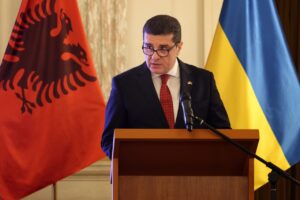
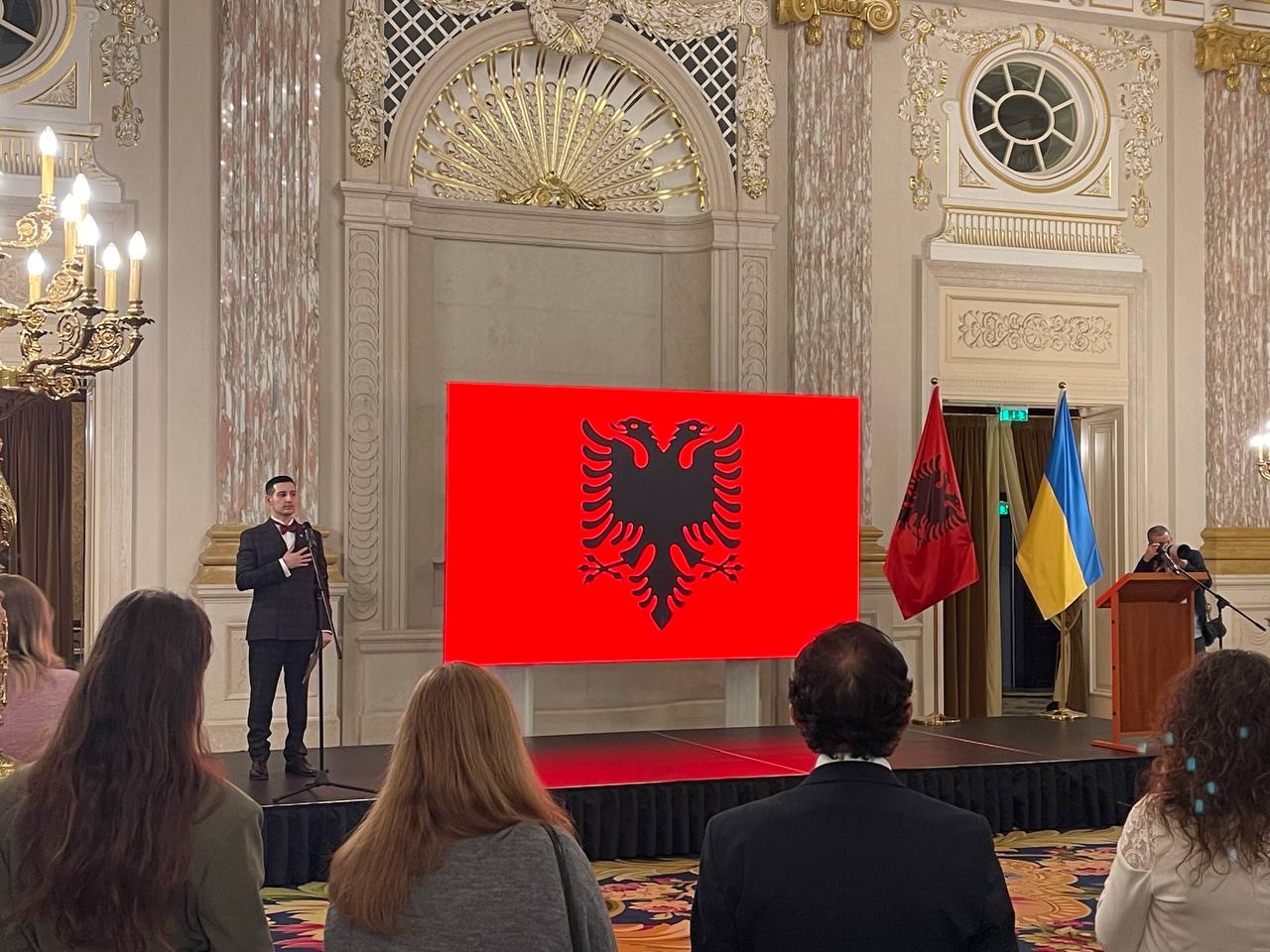
On Thursday, 27 November, the Fairmont Grand Hotel Kyiv hosted a reception organised by the Embassy of the Republic of Albania in Ukraine to mark the 113th anniversary of Albania’s independence. The event was attended by Deputy Minister of Foreign Affairs Yevhen Perebyinis, members of parliament, representatives of the military and local authorities, the diplomatic corps, scientific and cultural institutions, as well as the Albanian community in Ukraine.
In his speech, Albanian Ambassador to Ukraine Ernal Filo recalled that on 28 November 1912, the creation of the Albanian state was proclaimed in the city of Vlora, and stressed that this year’s anniversary is being celebrated in Kyiv for the first time since the opening of the Albanian Embassy. He described this as a ‘new chapter in diplomatic relations’ and a symbol of the deepening of relations between the two countries and solidarity with Ukraine in the face of Russian aggression.
The ambassador emphasised Albania’s unwavering support for Ukraine’s sovereignty and territorial integrity, as well as our country’s European course. He recalled that Albania, as a member of NATO, consistently stands on the side of Ukraine in the UN, the Council of Europe and the NATO Parliamentary Assembly, opposing attempts to change Europe’s borders by force.
A separate section of the speech was devoted to economic cooperation. According to the ambassador, bilateral trade between Albania and Ukraine has exceeded €65 million in recent years, with positive dynamics in the agro-industrial sector, metallurgy, construction materials and food products. Ukrainian companies are showing interest in the Albanian market in the areas of grain supply, energy, logistics and agricultural technology, while Albanian exports to Ukraine include minerals, medicinal plants, building materials and tourism services.
The ambassador noted that 57 companies with 100% Ukrainian capital and six joint ventures with Albanian partners are already operating in Albania, primarily in the Vlora region, which is becoming a ‘gateway’ for investment, tourism and maritime activities. In his opinion, this creates a basis for further expansion of economic cooperation.
Filo also highlighted Albania’s growing role as a tourist destination and invited more Ukrainian tourists and investors to the country, emphasising the potential of the Albanian Riviera, the mountainous north and the historic cities of Berat and Gjirokastër. He called culture ‘the most beautiful bridge’ between nations, mentioning Albanian polyphonic music, Mediterranean cuisine and contemporary art.
The ambassador made a special mention of the long-standing Albanian diaspora in Ukraine – communities in Odesa, Zaporizhzhia, Mykolaiv and Kharkiv, which have preserved their language and traditions for generations and serve as a ‘living bridge of friendship’ between the two countries.
Speaking about the war, Ernal Filo stated that Albania will continue to stand with Ukraine, freedom and international law, and that true peace is impossible without justice. He cited the example of the reconstruction of a school in Kharkiv with the support of the municipality of Tirana as a symbol of human solidarity.
In the final part of his speech, the ambassador emphasised the common goal of Albania and Ukraine – full integration into the European Union, welcomed the European Council’s decision to open negotiations on Ukraine’s membership and called Europe the ‘common home’ of the two nations.
Diplomatic relations between Ukraine and the Republic of Albania were established on 13 January 1993. The Embassy of Ukraine in Albania began operating in Tirana in 2020, marking a new stage in the development of bilateral relations. The Albanian Embassy in Ukraine was officially opened in Kyiv on 17 January 2025 – it is the first foreign diplomatic mission opened in Ukraine after the start of the full-scale invasion by the Russian Federation.
Issue No. 2 – November 2025
The purpose of this review is to provide an analysis of the current situation on the Ukrainian currency market and a forecast of the hryvnia exchange rate against key currencies based on current data. We consider the current conditions, market dynamics, key influencing factors and likely scenarios for future developments.
Analysis of the current situation on the currency market
International context
In the second half of November, expectations intensified on the international currency market regarding a future reduction in the Fed’s rate at the Fed Committee meeting on 9-10 December. In addition, at the end of the month, Fed Vice Chair and New York Federal Reserve Bank President Williams said that the Fed could cut rates ‘in the near term’ without jeopardising its inflation target.
Investors are now focusing on the Fed’s upcoming decision on the key rate. It is expected that a decision to cut the rate by 25 basis points will be made at the December meeting. This will be influenced, in particular, by new US statistics showing a decline in applications for state unemployment benefits. However, the new data failed to strengthen the US currency, and expectations of a decision to appoint a new Fed chair who will pursue a more accommodative policy are also weighing on the dollar. Currently, the media is reporting that the leading candidate for the post is White House economic adviser Kevin Hassett, who has previously stated that interest rates should be lower than they are under current Fed Chairman Jerome Powell.
November 2025 brought nothing unexpected for the dollar: there were minor fluctuations throughout the month, with the US currency weakening to a low of 1.1648 in the middle of the month. At the end of November, the market reached a certain equilibrium, and the exchange rate reached 1.1584, effectively returning to its level on 31 October.
It is important to note that the situation with the expected rate cut also affects other markets. For example, gold traded at $4,186 per ounce at the end of November, and in January-November this year, the growth rate exceeded 53%. The prospect of another round of monetary policy easing in the US is fuelling demand for precious metals. US tariff policy had the least impact on the dollar in November, as the trade truce between the US and China continues.
Meanwhile, the euro is expected to remain stable and strengthen slightly against the dollar in the near future amid the upcoming Fed meeting and the likely decision on the next stage of easing. A cut in the key rate usually weakens the dollar somewhat, i.e. it strengthens the euro. However, the European Union is closely monitoring the situation in the banking sector: the European Central Bank recently called on lenders to maintain dollar liquidity buffers, highlighting concerns about financial stability that could negatively affect risk sentiment. However, the eurozone economy is currently showing decent growth, thanks in particular to the steady development of the services sector, so there is cautious optimism in Europe that risks capable of undermining the stability of the euro will be avoided.
Internal Ukrainian context
Throughout November, the Ukrainian currency market was dominated by a devaluation trend, and while at the beginning of November the official NBU exchange rate was 41.89 hryvnia per dollar, by the end of the last week of the month it was already 42.30 hryvnia per dollar. The exchange rate did not change abruptly, with a certain smoothness in the devaluation fluctuations, and the National Bank was present on the interbank market with foreign currency offers. However, the level of interventions did not increase significantly compared to the previous month: during the period from 3 to 21 November, the NBU sold $1.925 billion on the market (for comparison, during the last three weeks of October, the volume of interventions amounted to $1.935 billion). Thus, the volume of currency sales by the NBU in October and, ultimately, in November should be almost the same (last month, the volume of NBU interventions amounted to about $3 billion).
Of course, there were also devaluation movements in the cash market in November. While at the beginning of November the average selling rate in the cash market was 42.14 UAH/USD, at the end of the month it was 42.56 UAH/USD.
In Ukraine, demand for foreign currency remains high due to increased imports caused by the need to repair energy facilities damaged by Russian attacks, as well as expectations among both businesses and the population of further devaluation of the national currency. The National Bank of Ukraine is curbing sharp fluctuations with interventions, but is trying not to inject too much into the market, as reserves are still high (49.5 billion dollars at the beginning of November) and must remain so to ensure macro-financial stability.
An important event in November for Ukraine was the announcement that the International Monetary Fund mission and the Ukrainian authorities had reached a staff-level agreement on a new four-year programme under the Extended Fund Facility (EFF) with potential access to financing of $8.1 billion. The new agreement provides for a set of fiscal and monetary policy measures that will form the basis of the programme. The main objectives are to support macroeconomic stability, restore debt and external sustainability, fight corruption, and improve governance. According to the IMF statement, the NBU commits to reducing inflation to a target level of 5% over its three-year policy horizon, while allowing greater exchange rate flexibility to adjust to fundamentals and strengthening the role of the exchange rate as a shock absorber, which will also help maintain adequate central bank foreign exchange reserves. This means that further IMF financing is clearly tied to the devaluation trend, and therefore expectations of a weakening hryvnia in the medium term are entirely justified.
Among the risks that will put pressure on the exchange rate, in addition to geopolitical issues and the difficult situation in the energy sector, there is also the rather vague prospect of financing the budget gap (the difference between state budget revenues and expenditures in 2026). In fact, this will require at least $45 billion in external financing, but the sources of some of these funds are still unknown.
US dollar exchange rate: dynamics and analysis
General characteristics of market behaviour
In November, the US dollar strengthened on the Ukrainian market, and a clear devaluation trend remained.
During November, the exchange rate changed as follows: on the interbank market, the rate rose from 41.01 UAH/USD to 42.25 UAH/USD, and the official NBU rate rose from 41.89 to 42.19 UAH/USD. Interestingly, at the end of the month, the NBU decided to suddenly strengthen the hryvnia: on 27 November, the official exchange rate was 42.30 UAH/USD, and on 28 November, it was 42.19 UAH/USD. On Thursday, 27 November, the interbank market opened with a selling rate of 42.26 UAH/USD, and by the evening, the market closed at 42.22–42.25 UAH/USD. On Friday, 28 November, American banks are closed (as it is the day after Thanksgiving, which is a public holiday), which has a certain impact on the Ukrainian currency segment.
In November, the average purchase rate was in the range of 41.7–42.05 UAH/USD on the cash market, and the sale rate was in the range of 42.15–42.48 UAH/USD. At bank cash desks, the spread between the buying and selling rates is no longer growing; on the contrary, there is a tendency for the spread to narrow: at large retail banks at the end of November, it was 0.45–0.6 UAH/USD.
Key influencing factors
Forecast
Euro exchange rate: dynamics and analysis
General characteristics of market behaviour
The euro exchange rate on the Ukrainian market strengthened gradually in November: over two weeks, the official euro exchange rate shifted from UAH 48.51/EUR to UAH 48.87/EUR. The fluctuations were mild and did not cause panic reactions either on the interbank or cash markets.
Key observations
Ø Exchange rate geometry:
o The euro selling rate at the beginning of November was around 48.52 UAH/EUR. In the second ten days of the month, there was a clear trend towards the strengthening of the euro, with the exchange rate reaching 48.91 UAH/EUR on 25 November, followed by a slight pullback to 48.87 UAH/EUR.
Ø Supply and demand:
o Demand for cash euros remains fairly high, but is losing out to demand for US dollars due to more active fluctuations and the weak predictability of the euro’s trajectory.
o The spread between the buying and selling rates of the euro on the cash market remains high: 0.6–1 UAH/EUR in large banks.
Key influencing factors
Forecast
Recommendations: dollar or euro — buy, sell or wait?
USD/UAH
The US dollar is under pressure from economic activity data and ahead of the Fed Committee meeting. According to new data, economic activity in the US has remained virtually unchanged in recent weeks, although employment has been weaker in about half of the 12 Fed districts and consumer spending has declined, heightening concerns about the labour market. The US is also experiencing a freeze on new hiring and is only recruiting new staff to replace those who have left. This situation in the labour market is motivating the Fed to take further steps to ease monetary policy, and interest rate futures markets are already reflecting a high probability of another 0.25% cut in borrowing costs at the Fed meeting on 9-10 December.
In December, the dollar may strengthen if it is supported by new statistical data and in the absence of new risk factors. The dollar is likely to trade in the 1.1470–1.1680 range.
However, for investors, the dollar remains an important haven for solid savings, so investors should consider purchasing the American currency for various strategies.
In Ukraine, the dollar will only strengthen, and dollar savings will continue to serve as a solid basis for currency strategy, both in the short and medium to long term.
EUR/UAH
The euro is actively strengthening on the Ukrainian market, although short-term exchange rate rollbacks are likely, but the overall trend is for the euro to appreciate against the backdrop of a gradual strategy of weakening the hryvnia. The euro in the portfolio will help diversify part of the currency savings, as well as carry out short-term speculative transactions during periods of rapid peak exchange rate changes. There are no strategic reasons to get rid of the euro from portfolios. This means continuing to buy, although it is possible to exit some euro investments if this is part of the investor’s updated strategy.
Overall strategy
Expectations of a Fed rate cut in December and data on the rather unstable state of the US labour market are affecting the global currency market and leading to a fall in the US dollar. The euro is strengthening thanks to the absence of sharp changes in the ECB’s monetary policy and data on inflation and economic development in the eurozone.
In the medium term, investors would be wise to focus on the dollar as the base currency for savings, while holding on to the euro for a likely short position, when it will be possible to exit investments with maximum profit due to sharp exchange rate fluctuations. The forecast strengthening of the euro due to the unstable situation in the US and the Fed’s policy may provide additional incentives to buy the euro within the framework of a medium-term investment programme.
In Ukraine, further devaluation of the national currency is expected, which will increase demand for dollars and euros on the cash market. Demand for currency is also being driven by expectations of a difficult winter and further large-scale shelling of major cities and energy facilities by the aggressor. The weakening of the hryvnia gives investors room to form their savings strategy in foreign currencies, with the dollar and euro as the base currencies. A well-thought-out and cautious investment strategy will allow you to form a stable and profitable currency portfolio that is protected from the risks of exchange rate volatility.
This material has been prepared by analysts at the international multi-service FinTech platform KYT Group and reflects their expert, analytical and professional judgement. The information presented in this review is for informational purposes only and should not be construed as a recommendation for action.
The company and its analysts make no representations and assume no responsibility for any consequences arising from the use of this information. All information is provided ‘as is’ without any additional guarantees of completeness, obligations of timeliness or updating or supplementation.
Users of this material should independently assess the risks and make informed decisions based on their own assessment and analysis of the situation from various available sources that they themselves consider sufficiently qualified. Before making any investment decisions, we recommend consulting with an independent financial advisor.
REFERENCE
KYT Group is an international multi-service FinTech marketplace platform that provides financial companies with access to services for promoting their services, as well as advertising and consulting services.



