
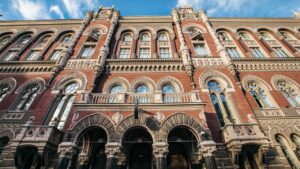
The National Bank of Ukraine has withdrawn the license for insurance activities and excluded from the State Register of Financial Institutions ALC Insurance Company “Garant & Ya” (Lviv) on the basis of the submitted application.
As reported, the NBU on July 18, 2025 granted to ALC “IC ”Garant & Ya” permission to exit the market by fulfilling the insurance portfolio and coordinated to this insurer the plan of exit from the market by fulfilling the insurance portfolio.
According to the company’s statements for the nine months of 2025, its insurance portfolio was formed by 100% of CASCO. The volume of insurance premiums of the company in the specified period amounted to UAH 14,312 million, insurance payments – UAH 23,437 million.
“The insurer adhered to solvency requirements. As of October 1, 2025 he has no obligations under insurance and reinsurance contracts,” – is emphasized in the information.
Insurance company “Garant and I” works in the insurance market since 2010. Since July 2011, the head office of the company was located in Lviv.
Authorized capital is UAH 33 mln.

On November 25, the Board of the insurance company ARKS (Kyiv) has decided to terminate the activity of Dnipro branch of Kyiv regional directorate. As the company reported in the information system of the NCSSM, the decision was made in connection with optimization of the company’s activities.
It is also specified that the separate subdivision is different from branches and representative offices, has no registration in the Unified state register.
ARKS is a part of the international insurance holding Fairfax Financial Holdings Ltd.
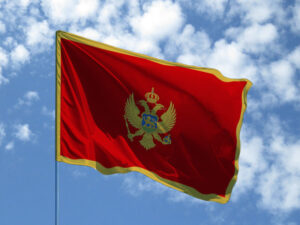
According to Serbian Economist, Montenegro will cancel visa-free entry for Russian citizens and introduce a visa regime by the end of the third quarter of 2026 as part of the harmonization of visa policy with the rules of the European Union.
“In accordance with the commitments undertaken by Montenegro on its path to full membership in the European Union, the country must fully harmonize its visa policy with the EU policy by the end of the third quarter of 2026. This includes, among other things, the introduction of a visa regime for Russian citizens,” the commentary reads.
Russian citizens can now enter Montenegro without a visa and stay in the country for up to 30 days under a bilateral agreement.
According to the national statistical service Monstat, in 2023 Montenegro was visited by about 247 thousand tourists from Russia, which provided 24% of all overnight stays of foreign guests; in 2024 their share amounted to 18.3% with a total flow of 2.6 million tourists. According to the Ministry of Internal Affairs of Montenegro, about 20 thousand citizens of the Russian Federation with temporary or permanent residence permits are officially registered in the country.
Thus, the tightening of the visa regime will potentially affect annually hundreds of thousands of tourist trips and tens of thousands of Russians living or regularly vacationing in Montenegro. Experts expect that part of this flow will be reoriented to other visa-free or easier destinations for Russians – primarily Turkey, Egypt, UAE, Serbia and a number of Asian countries.
https://t.me/relocationrs/1822

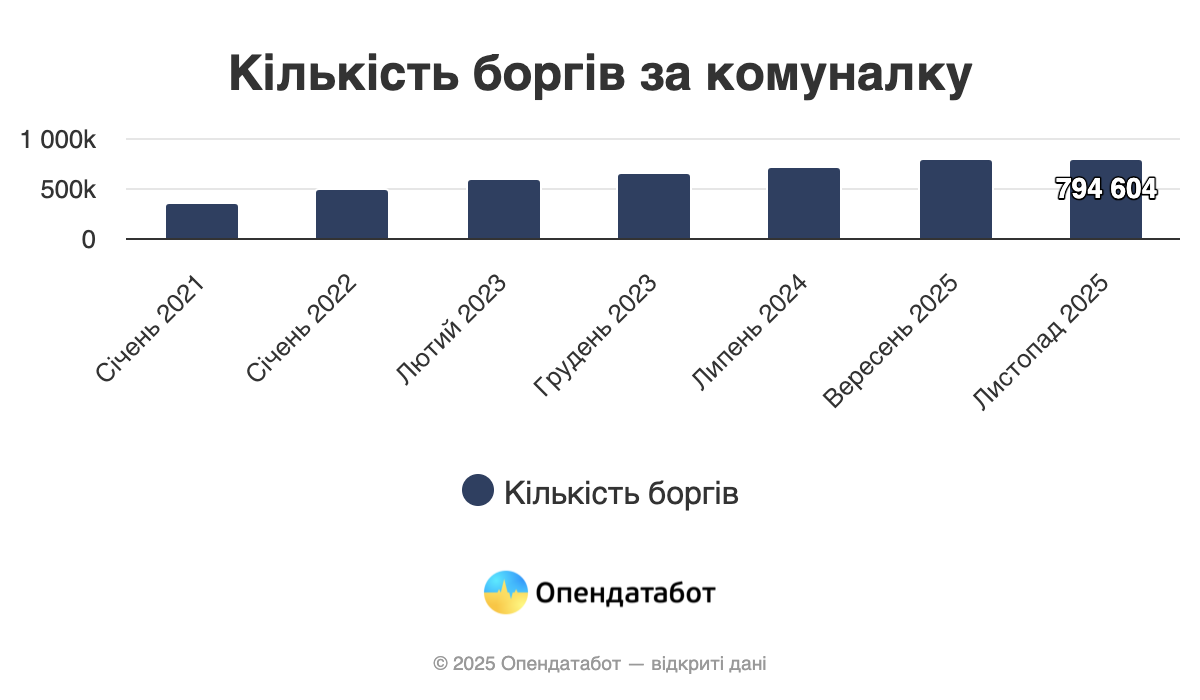
More than 794,000 enforcement proceedings for utility debts are currently registered in the Unified Register of Debtors. 60% of these debts have reached a dead end: they have been formally completed but not closed, and no money has been collected. 194 thousand new debts were added to the Register this year. Most often, Ukrainians accumulate debts for heat supply. More than a quarter of debtors are pensioners. A 71-year-old pensioner from Mykolaiv region holds the anti-record for the number of debts: 28 proceedings, all for electricity.
As of the beginning of November 2025, there were 794,604 active debts for utilities in Ukraine. Despite their active status, most of these proceedings have actually reached a dead end: 60% of the cases, or more than 476,000, have already been completed without any real recovery. The debts have remained in the Register, but the enforcers have simply failed to collect the debt.
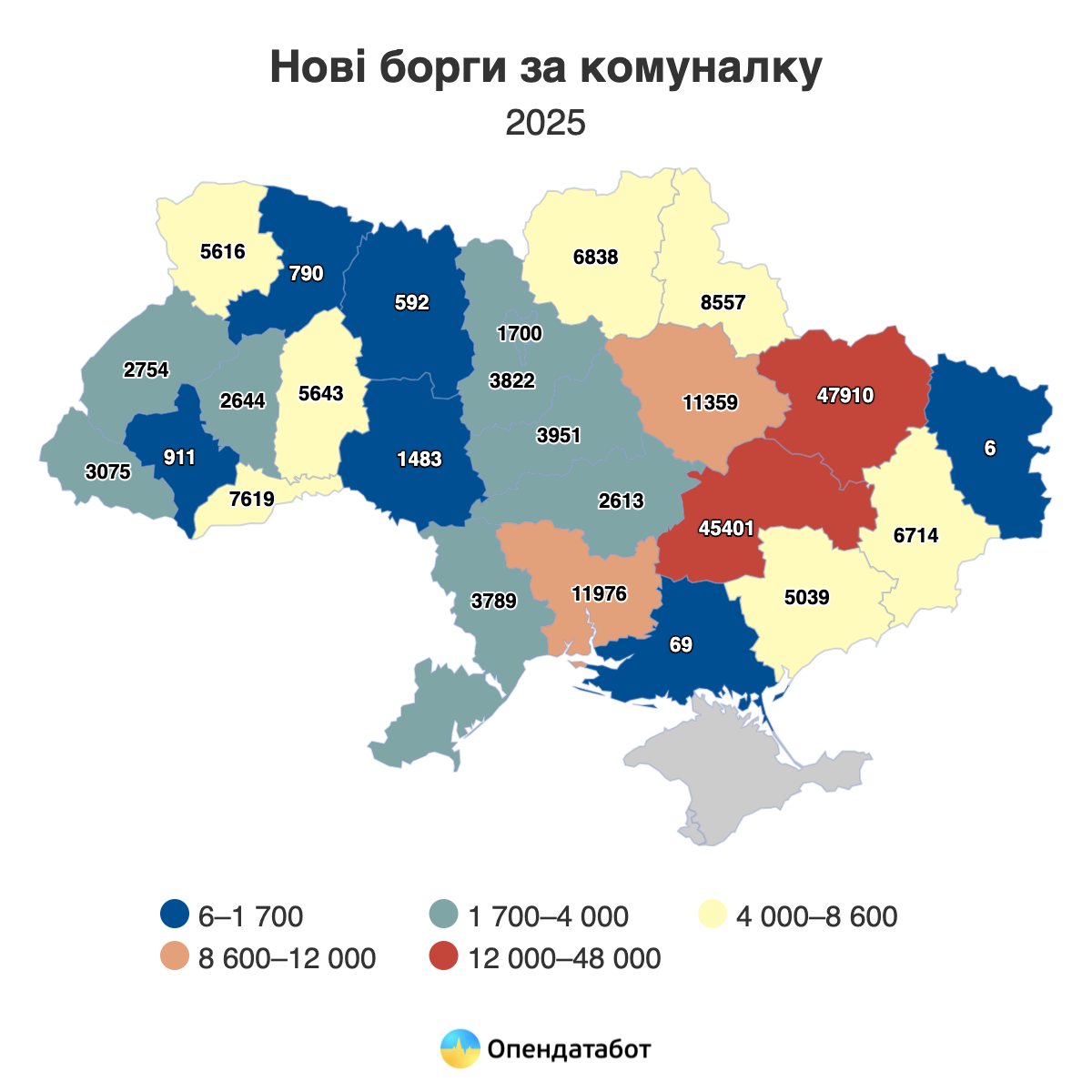
194 thousand new proceedings for utility debts have already been opened this year. Two-thirds of them are still open (132,578 proceedings).
The largest amount of utility debt is owed in Kharkiv region: 47.9 thousand proceedings. Dnipropetrovs’k region is slightly behind with 45.4 thousand proceedings. Other regions are at least three times behind: Mykolaiv region (11.9 thousand), Poltava region (11.3 thousand) and Sumy region (8.5 thousand).
In 40% of cases, Ukrainians will owe for heat supply in 2025. Water supply is in second place (18%), followed by gas supply (15%) and housing services (10%). Garbage collection and electricity account for 8% and 6%, respectively.
This year, the largest number of proceedings were opened against people aged 46-60, accounting for almost 36% of all cases. And every fourth debt falls on pensioners.
More than half of the proceedings (55%) were opened against women this year. And the anti-record belongs to a 71-year-old pensioner from Mykolaiv region, against whom 28 proceedings were opened for electricity debts this year alone. All of them were terminated due to the impossibility of collection. In fact, the debts remained, and the system only accumulated new “dead” cases.
Context
As a reminder, the Verkhovna Rada supported in the first reading the draft law No. 14005, which is supposed to significantly change the rules for working with debtors. The document proposes automatic inclusion of debtors in the register and a ban on the sale or donation of property until the debt is fully repaid. The new rules will make it easier to seize assets and prevent attempts to re-register them.
Andriy Avtorgov, a private enforcement officer, comments on the hype surrounding the yet-to-be-adopted law:
“Some of the loud statements around the project are based on a misunderstanding of the current legislation: the Unified Register of Debtors has been operating since 2017, and foreclosure on the only housing, under certain conditions, was possible even earlier. The new draft law actually brings back the rules that existed before and makes life easier for debtors by making it easier for them to pay the debt, as the enforcement proceedings will be automatically closed and the debtor will be excluded from the Unified Register of Debtors.”
The bailiff notes that the implementation of such decisions should be carried out with some caution so as not to destroy the already fragile architecture of the enforcement process, as the percentage of enforcement is already extremely low.
Despite the panic on social media, even if the law is passed, the mechanism for seizing a single home will not change significantly. It will be possible, as it is now, only if the debts exceed 20 minimum wages (UAH 160,000) and with the mandatory involvement of guardianship authorities if children are registered in the home. The law is still being finalized for the second reading, so the final rules may change.
https://opendatabot.ua/analytics/debts-bills-2025-11

The 10th anniversary of the Deloitte Ukraine Forum “Conductors of Change” summarized ten years of changes, achievements and challenges. At the event, held on November 19 in Kyiv, business owners and executives, government officials, public and cultural figures summarized their experience, identified priorities for the next decade, and discussed how to strengthen existing efforts and where strategy changes are needed.
“Over the past ten years, we, as representatives of business, government and society, have not succeeded in everything we dreamed of. But we have succeeded in many things, even though we rarely take the time to realize it. These achievements are a sign that we will succeed in the future. Yes, not everything we dream of today. But we will succeed in many things,” said Serhiy Kulyk, Managing Partner of Deloitte Ukraine.
This idea became the leitmotif of the anniversary Forum.
Serhiy Kulyk, Managing Partner of Deloitte Ukraine, Oleksandr Bogutsky, CEO of Starlight Media, Serhiy Chernenko, Chairman of the Board of FUIB, Olga Rudneva, CEO of Superhumans, a war trauma center, and Major Robert “Magyar” Brovdi, Commander of the Unmanned Systems Force, spoke about the transformation in society, the financial sector, institutions, technology and the army.
The issue of the army and security has become one of the central issues in the context of the future. “Magyar” emphasized the critical role of the private sector in military and technological development: “Private business should focus on air defense. There are four areas that are already determining the nearest R&D project: electronic intelligence, electronic warfare, radar stations and means of destroying the enemy. Businesses should be involved in these developments to create solutions that will be needed by Ukraine and the whole world.”
Sergiy Chernenko shared his thoughts on how today’s business initiatives will become the foundation for significant changes in the next decade: “We are already helping the military, investing in blood donation projects and developing programs for veterans – from financial literacy training to grant support for their businesses. We will continue this work in the future, because the most important task is to make the service accessible and inclusive for everyone.”
Andriy Bulakh, deputy chairman of the board of MHP, Natalka Vorozhbyt, playwright, screenwriter, director, Oleksandr Khomenko, director, co-founder of the MUR cultural association, Pavlo Shylko, co-founder of the YUNA music award, and Serhiy Zhadan, writer, soldier of the 13th Brigade of the National Guard of Ukraine “Charter”, discussed whether the current stage can be called a real cultural revival and what role business should play in shaping a new Ukrainian identity.
During the full-scale war, interest in Ukrainian culture increased, demand for our own culture increased, and a desire to be proud of our own identity emerged, which manifested itself in the rapid development of cinema, theater, literature, and other areas.
Explaining the origins of the current cultural surge, Natalka Vorozhbyt noted: “Culture has become a matter of life and death – it has never been felt so acutely before. But it all started back in 2014. Then a large number of Ukrainian films appeared, our films were selected for A-class festivals, and Ukraine really appeared on the world cinema map. It was the beginning of the process of self-identification, when we first really asked ourselves who we are and where we are going.”
Oleksandr Khomenko addressed the business and explained why supporting cultural projects is of practical importance today: “Culture is now almost the only thing that keeps people in the country. The more Ukrainians stay inside the country, the more future consumers there will be. Now there is darkness, shelling, and death. Globally, people are supported by the opportunity to live interesting lives: literary evenings, theaters, movies, performances. If this does not happen, people will leave the country and businesses will lose some of their customers.”
The Forum also featured a conversation between Yegor Grygorenko, Partner at Deloitte Ukraine, and Taras Kachka, Vice Prime Minister for European and Euro-Atlantic Integration of Ukraine.
Taras Kachka emphasized that over the past decades Ukraine has passed the point of no return in its transformation and implemented fundamental European integration reforms: “Ukraine plays a crucial role in changing the EU’s security architecture: we are the ”shield” of Europe, as we have the strongest army and unique combat experience. Our role is not limited to security. Ukraine is becoming an indispensable element of European strategic autonomy – from a highly developed IT sector and digital solutions to food security, agricultural production, energy and critical materials.”
Representatives of the government, business, and culture continued to discuss how Ukraine and Europe should respond to new challenges in the areas of security, energy independence, innovation, and demographics: Oleksiy Sobolev, Minister of Economy, Environment and Agriculture of Ukraine, Taras Kitsmei, co-founder and member of the Board of Directors of SoftServe, and Tamara Trunova, playwright and chief director of the Left Bank Theater.
Answering the question of what the world will look like in 10 years, Oleksiy Sobolev emphasized that the future depends on the current efficiency of the state: “What the world will look like depends on our actions. I think the world in the future is a world of opportunities, because it is transforming. How we build alliances and economic integration and with what speed and efficiency depends on us. Unfortunately or fortunately, this will involve a lot of government work.”
Summarizing the discussion, Yehor Hryhorenko said: “Perhaps we did not want to be a ”shield” of Europe. We may have to become one. The main thing is that we find ourselves inside the country, mature, become more confident in our actions and ready to take responsibility.”
Roman Bondar, CEO of Korn Ferry Ukraine, Sergiy Koretsky, Chairman of the Board of Naftogaz of Ukraine, Oksana Syroyid, officer of the 2nd Corps of the National Guard “Charter”, Associate Professor of the Kyiv School of Economics, and Aivaras Abromavičius, Chairman of the Supervisory Board of the Ukrainian Corporate Governance Academy (UCGA), discussed what the leadership of the new generation should look like and what common values can unite business, the state and the military.
Speaking about the necessary qualities of a leader, Oksana Syroyid cited a formula that, in her opinion, pragmatically explains the nature of leadership: “A good leader is someone who combines restrained tendencies to narcissism, paranoia, intellectual will and virtue. After all, without healthy narcissism, a person will not strive for anything.”
Answering the question of how to fight the feeling of hopelessness, Sergii Koretskyi emphasized that the way is through action and responsibility: “If you have the inner confidence that you can do something and be useful here and now, you need to do it. If you know how to do it better, do it. You need to look for motivation, find it, and involve as many people as possible in the cohort of those who are willing, able to make decisions, and take responsibility no matter what.”
Traditionally, the Conductors of Change Forum has a social component. This year, Deloitte Ukraine, together with the Forum participants and partners, raised and donated UAH 800,000 to the Children of Heroes Charitable Foundation, which provides assistance to children who lost one or both parents due to the war.
The partners of the 10th Conductors of Change Forum were: MHP, FUIB, SQUAD, Korn Ferry, Maison Castel, and the social enterprise POG “Inclusively Welcoming”.
Media partners: LIGA.net, Starlight Media, NV, Kyiv Post, Interfax-Ukraine, FOCUS, Ekonomichna Pravda.
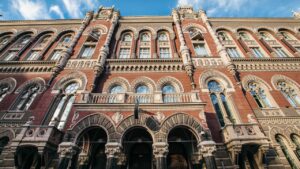
Banks in Ukraine in September 2025 issued 851 mortgage loans worth UAH 1.62 billion, which is 13.1% more than in August, when 789 loans worth UAH 1.43 billion were issued, according to the results of the monthly survey of the National Bank of Ukraine (NBU).
“The quality of the mortgage portfolio remains high: the share of non-performing loans is kept at 12%,” the National Bank commented on the results.
According to the central bank, compared to September 2024, the volume of loans issued increased by 35.4%.
As specified by the NBU, among the 39 banks surveyed, together forming more than 95% of the gross mortgage portfolio, in September new loans were issued by 14 financial institutions.
Most transactions were concluded in the primary housing market: 532 in September for the amount of UAH 1 billion against 480 in August for the amount of UAH 0.89 billion.
In the secondary housing market, 319 transactions were concluded for UAH 0.62 billion, while in August – 309 transactions totaling UAH 0.54 billion.
The weighted average effective rate in the primary market in September remained at the level of 8.13% per annum, while in the secondary market it increased to 9.37% from 8.99% in August.
The survey data show that the most loans in September were issued in Kyiv and Kyiv region – 458 for UAH 949 mln (58.6% of the total volume). Next come Lviv region – 46 for UAH 95 million, Ivano-Frankivsk region – 53 loans for UAH 90 million and Volyn region – 35 for UAH 61 million.
As reported, the National Bank on July 18 this year released a strategy for the development of mortgage lending. The document prioritizes risk reduction through the launch of mass insurance of war risks and updating the rules in the field of housing construction.
The strategy also provides for easier access to mortgages through modernization of state support mechanisms and increased transparency of information in accordance with EU requirements, as well as strengthening the protection of creditors’ rights by updating procedures for dealing with bad debts.



