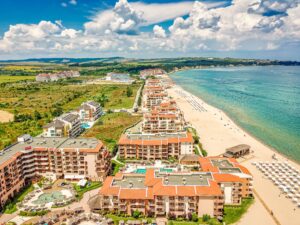
In early 2026, the Bulgarian housing market began to emerge from the frenzy associated with the country’s transition to the euro and is returning to a more stable demand pattern. The number of transactions fell by approximately 10%, while the supply increased by more than 25%, strengthening buyers’ bargaining power and extending the time properties remain on the market.
One of the main factors behind last year’s surge was the so-called “euro effect”—the expectation that housing prices would rise even faster after the currency change. However, judging by current trends, this driver has largely run its course. Bulgaria adopted the euro on January 1, 2026, and Central Bank Governor Dimitar Radev told Reuters that the inflationary effect of the transition turned out to be limited and largely one-time.
At the same time, the market does not appear weak in the classical sense of the word, as it continues to be supported by mortgage lending. Mortgage rates will remain low—around 2.47%—and official data from the Bulgarian National Bank, published via BTA, show that the volume of residential loans to households as of the end of February 2026 grew by 27.8% year-over-year—to €17.299 billion. This indicates that demand from end buyers remains strong, although the speculative component is noticeably weakening.
Thus, the Bulgarian real estate market is not entering a phase of sharp decline but is rather transitioning to a more realistic configuration: less hype, more supply, and a more cautious buyer. For investors, this marks the end of a period when the mere fact of joining the Eurozone automatically fueled expectations of rapid price growth, and for ordinary buyers, it signals the emergence of a more favorable window for selection and negotiation.
Source: https://relocation.com.ua/bulgarias-real-estate-market-is-shifting-from-a-boom-to-a-slowdown/